Start with the smell. Somewhere in a Chinese city right now, a Haidilao server is ladling chilli-red broth into a split pot, a teenager is licking a cheap soft-serve cone from a shop guarded by a cartoon snowman, and an office worker is tapping an app for a latte that will be ready before she reaches the counter. Three meals, three moods. Each one a lesson in brand building.
China’s top F&B brands are the food and drink names with the greatest reach, recognition and commercial weight in the Chinese market, from century-old breweries and state-owned liquor houses to dairy giants and fast-growing tea and coffee chains.
This is a menu of ten. Some dishes are ancient. Others were invented the week before last, or feel like it.
How the menu was chosen
The basis of this list: brands selected on market presence, recognition and growth, cross-checked against the 2026 brand-valuation tables from Kantar BrandZ and Brand Finance where they appear. This is not a ranking by value. We serve the ten in order of founding, oldest first, because the story of Chinese F&B branding reads best as a timeline, and we quote a valuation only where a current published table includes the brand.
One serving suggestion before we begin. Several of these names will already be familiar to Singapore readers. Haidilao, Luckin and Chagee all chose Singapore among their very first overseas markets, which tells you something about where Chinese F&B brands go to practise.
The heritage courses
1. Tsingtao (founded 1903)
The oldest bottle on the table was opened by foreigners. Germania-Brauerei, an Anglo-German venture, was founded in Qingdao on 15 August 1903, when the port was a German-leased territory, and served its first beer in December 1904. It passed to Japanese brewers in 1916 and became state-owned after 1949.
What it did next is a lesson in turning history into a label. The logo shows the Huilan Pavilion at the end of Qingdao’s Zhanqiao Pier, so every bottle carries a postcard of its hometown. For decades the beer was advertised as brewed with Laoshan spring water.
Then came the firsts. In June 1993 Tsingtao became the first Chinese company to list in Hong Kong. The Qingdao International Beer Festival, held every summer since 1991, turns the hometown itself into a fortnight-long brand experience.
Tsingtao is now sold in 62 countries and regions and accounts for more than half of China’s beer exports.
Tsingtao’s own "The Right Move" advert, aimed at the export markets that now drink half of China’s beer exports.
In Brand Finance’s 2026 China table it was rated the strongest of all Chinese brands, with a brand strength score of 95.7 out of 100. Not the biggest. The strongest. Consistency, poured for a century, does that.
Why is a liquor China’s most valuable food brand?
Diners abroad often ask this. The answer lies in what the next entry is for.
2. Moutai (state company formed 1951)
Moutai belongs to the “sauce aroma” family of baijiu, named for its savoury, soy-like nose. It comes from the town of Maotai in Guizhou. The modern company was created in 1951, when three private distilleries were merged into a state enterprise.
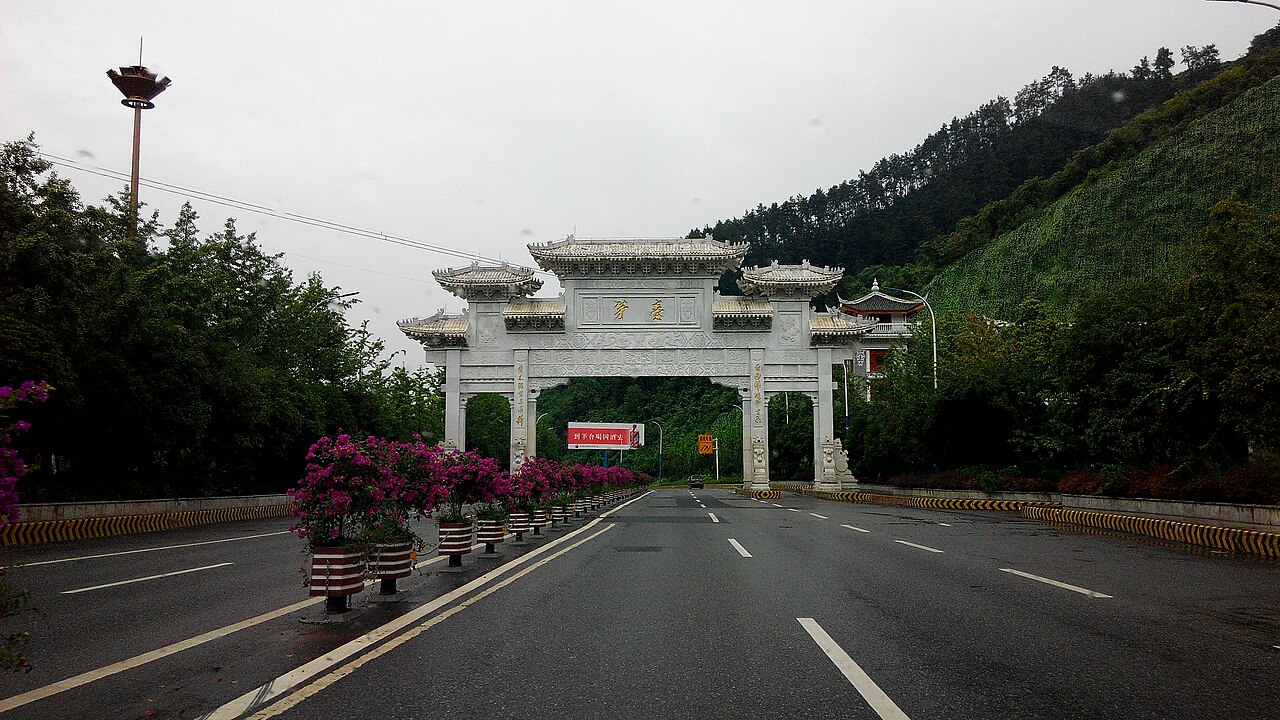
No food or drink brand in China is worth more. In the 2026 Kantar BrandZ Chinese ranking it sits fourth overall at about US$82.1 billion, and the 2026 Brand Finance spirits table names it the world’s most valuable spirits brand for another year, well ahead of fellow baijiu maker Wuliangye.
The brand works because it is ceremonial. Moutai was poured at the banquet for Richard Nixon’s 1972 visit and has stayed on the table for state occasions since. It is served to show respect as much as it is sipped for pleasure, so it behaves like a luxury good with a taste attached. Few beers or noodles can say that.
Then, on 4 September 2023, the old guard did something wonderfully unstuffy: a Moutai-laced latte with Luckin Coffee, priced for young drinkers. It sold more than 5.42 million cups on day one. Heritage brands, take note. Borrowing a younger brand’s reach can renew you without cheapening you.
Milk, noodles and national moments
3. Yili (roots in 1956)
Yili began in Hohhot, Inner Mongolia, as a small cattle-breeding team in 1956, and was formally established as Yili Group in 1997, when it switched on its first Tetra Pak line. Today it sells everything from Satine organic milk to Joyday ice cream, and in 2019 it bought New Zealand’s Westland Milk Products.
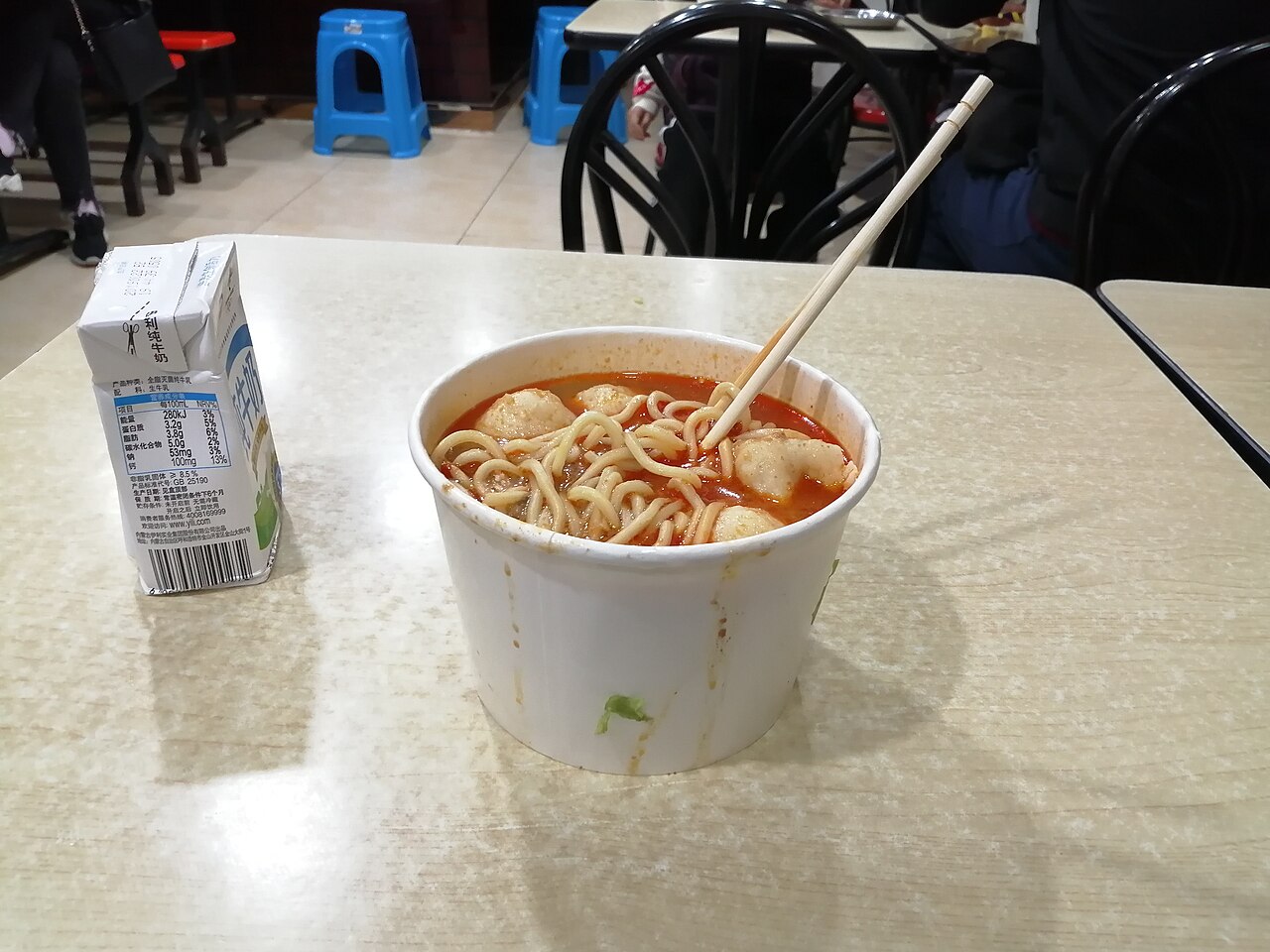
Notice the division of labour. The sub-brands carry the premium messages, which leaves the master brand free to stay familiar and reassuring.
Its branding has leaned hard on national moments. Yili was the official dairy sponsor of the 2008 Beijing Olympics and exclusive dairy supplier to the 2022 Winter Games. That stage matters more than usual, because Chinese dairy carries a scar: Yili was among the companies caught up in the 2008 melamine scandal, and few platforms say “trust us” as loudly as an Olympic one. The 2026 Brand Finance table values the brand at US$14.5 billion, up 29 per cent.
4. Master Kong (founded 1991)
Master Kong, Kang Shi Fu in Chinese, was founded in Tianjin in 1991 by the Wei brothers from Changhua County in Taiwan. The English name has a homely, avuncular ring that suits a supper staple.
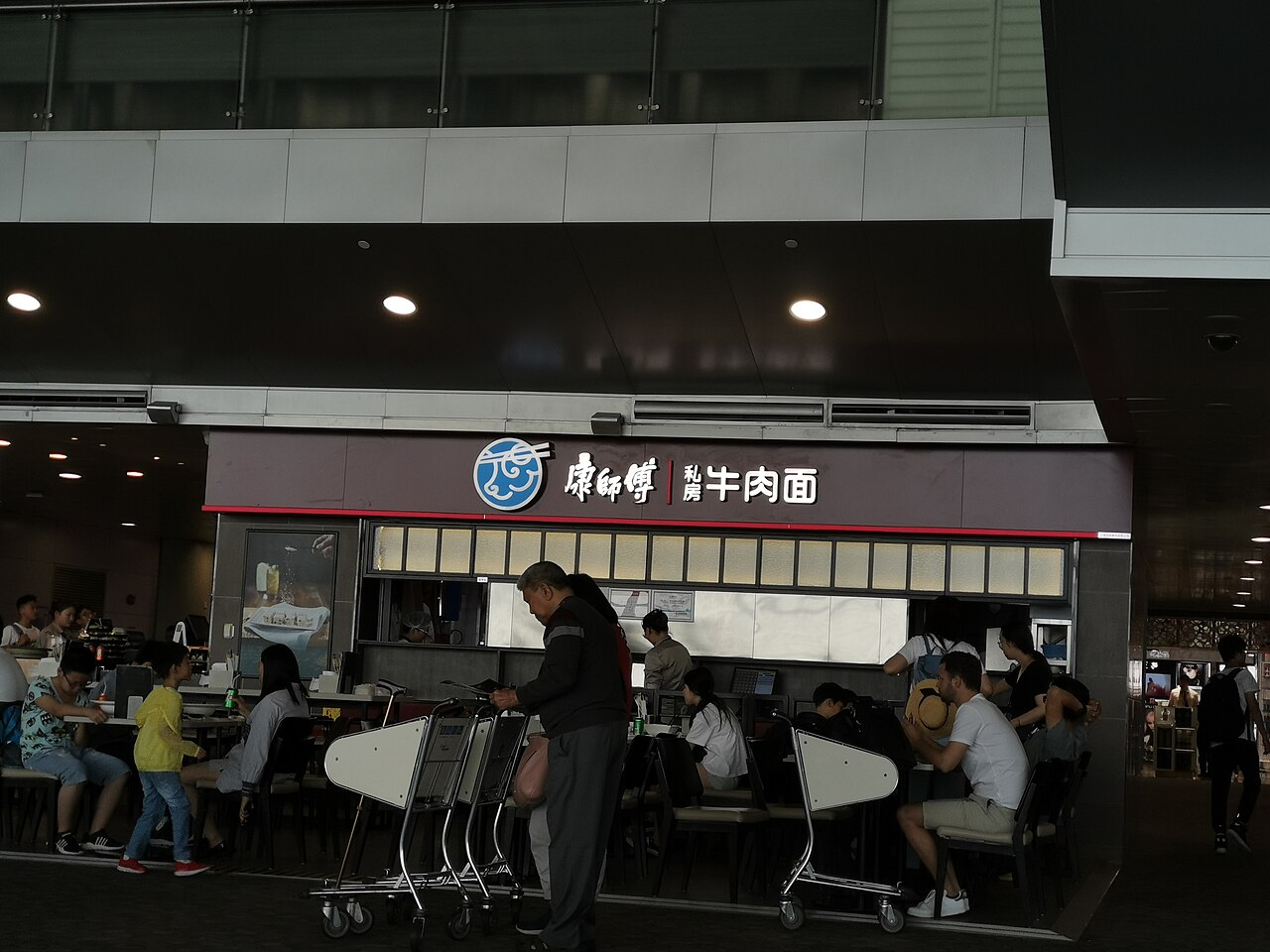
It built its empire on instant noodles and then stretched into drinks. Since 2011 it has produced PepsiCo’s soft drinks in China, and since 2015 it has made bottled coffee for Starbucks. A brand trusted for a three-minute supper turned out to be trusted for a bottle of tea too.
In 2026 it returned to the Kantar BrandZ Chinese top 100, at number 100. Last place, but back at the table.
Can service be the whole brand?
5. Haidilao (founded 1994)
Zhang Yong and three partners opened the first Haidilao in Jianyang, Sichuan, on 20 March 1994, with 8,000 yuan in capital. The broth is good. It is not, by most accounts, the reason people come.
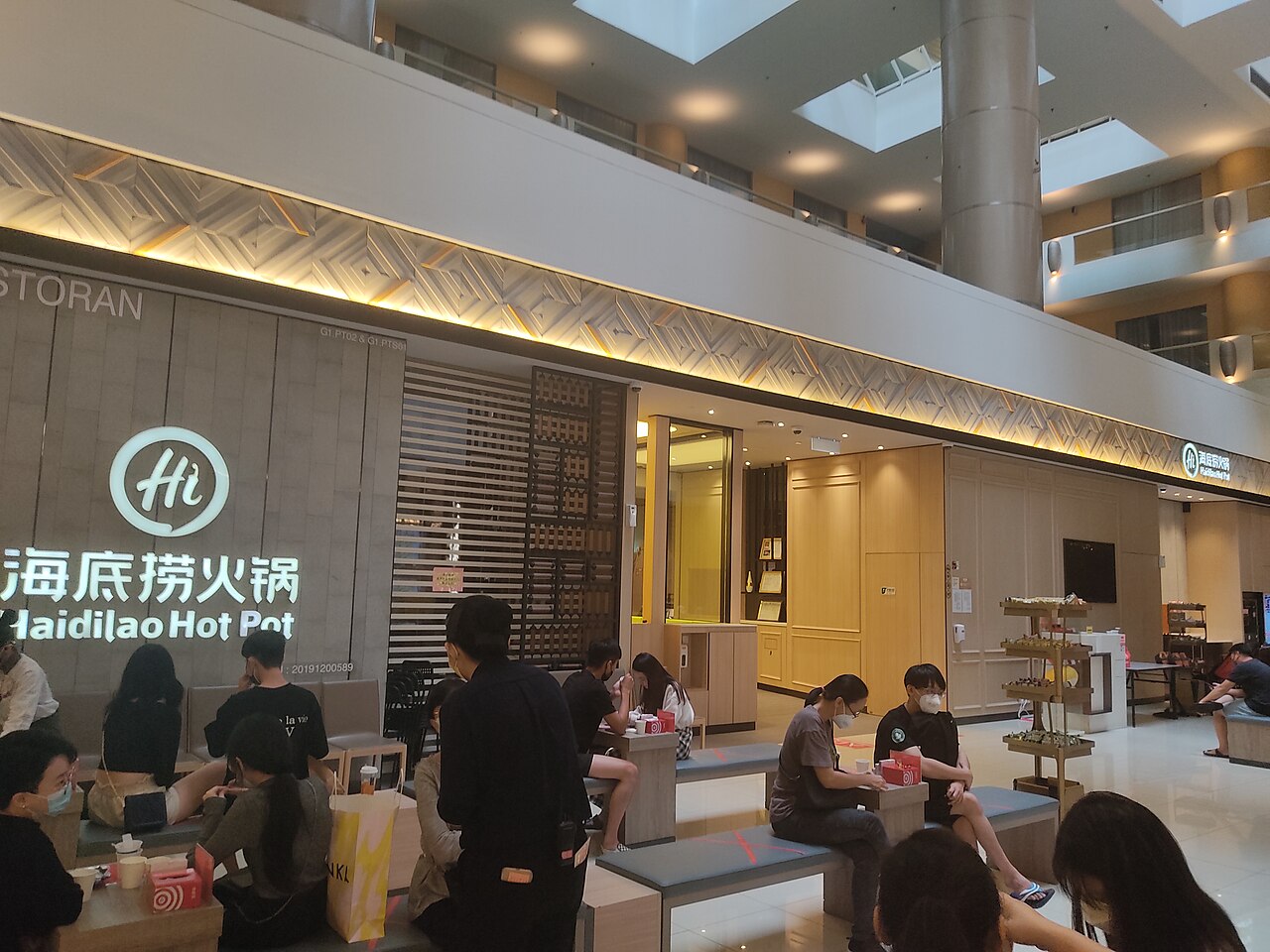
They come for the service. Free snacks while you wait, board games, manicures, and at some branches a noodle-maker who stretches dough into ribbons while dancing at your table. Some diners have waited up to two hours for a seat.
Behind the theatre sits an unusual people system: generous welfare, fast promotion and a family-style culture designed to make staff want to look after guests. The brand is, in effect, the waiter.
Its first restaurant outside mainland China opened at Clarke Quay in Singapore in 2012. By 2025, the group and its overseas arm, Super Hi, ran more than 1,400 restaurants.
6. Nongfu Spring (founded 1996)
If Haidilao’s brand is its staff, Nongfu Spring’s is its words. The company was established in Hangzhou in September 1996 and sold its first bottled water a year later, drawn from Zhejiang’s Thousand-Island Lake. In 1999 it stopped stripping natural minerals from its water, a choice that set it apart from purified bottled water.
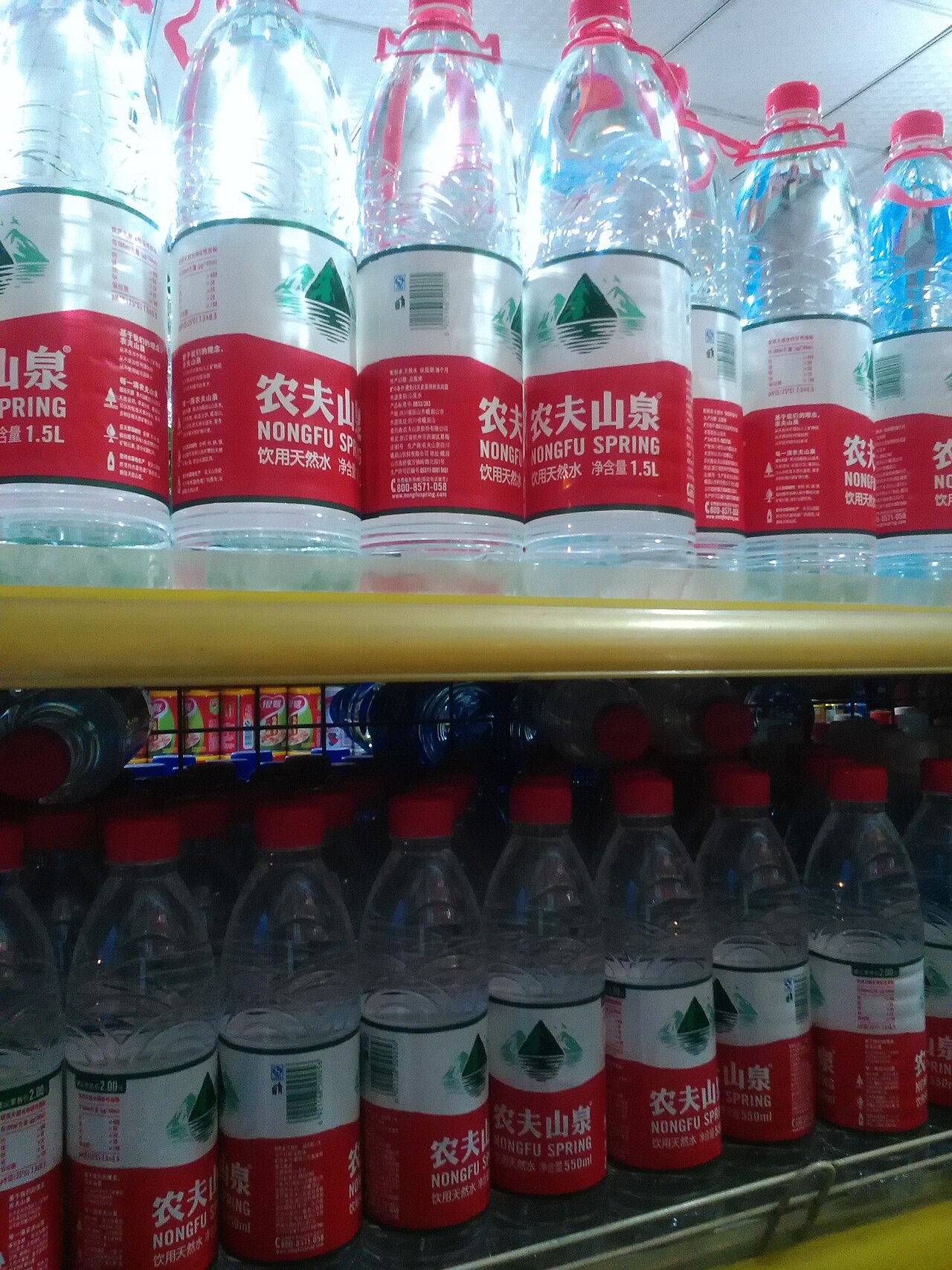
The rest is copywriting. A slogan promising that the water was “a little bit sweet” became famous. In 2011 it launched Oriental Leaf, an unsweetened tea that looked eccentric then and prescient now.
Its Hong Kong listing in 2020 raised about US$1 billion. Few brands have made something as plain as water and tea taste so particular.
Why is Chinese bubble tea suddenly everywhere?
Walk through Singapore, Kuala Lumpur or Bangkok and part of the answer is obvious: these chains arrived with low prices, bright stores and formats already tested on millions of demanding customers at home. The next three entries show how, starting with the biggest.
7. Mixue (founded 1997)
Zhang Hongchao opened a shaved-ice stall in Zhengzhou in June 1997 with a 3,000-yuan loan from his grandmother. Around 2005 he began selling soft-serve for one yuan, and the formula for an empire was set: cheap, cold and everywhere.
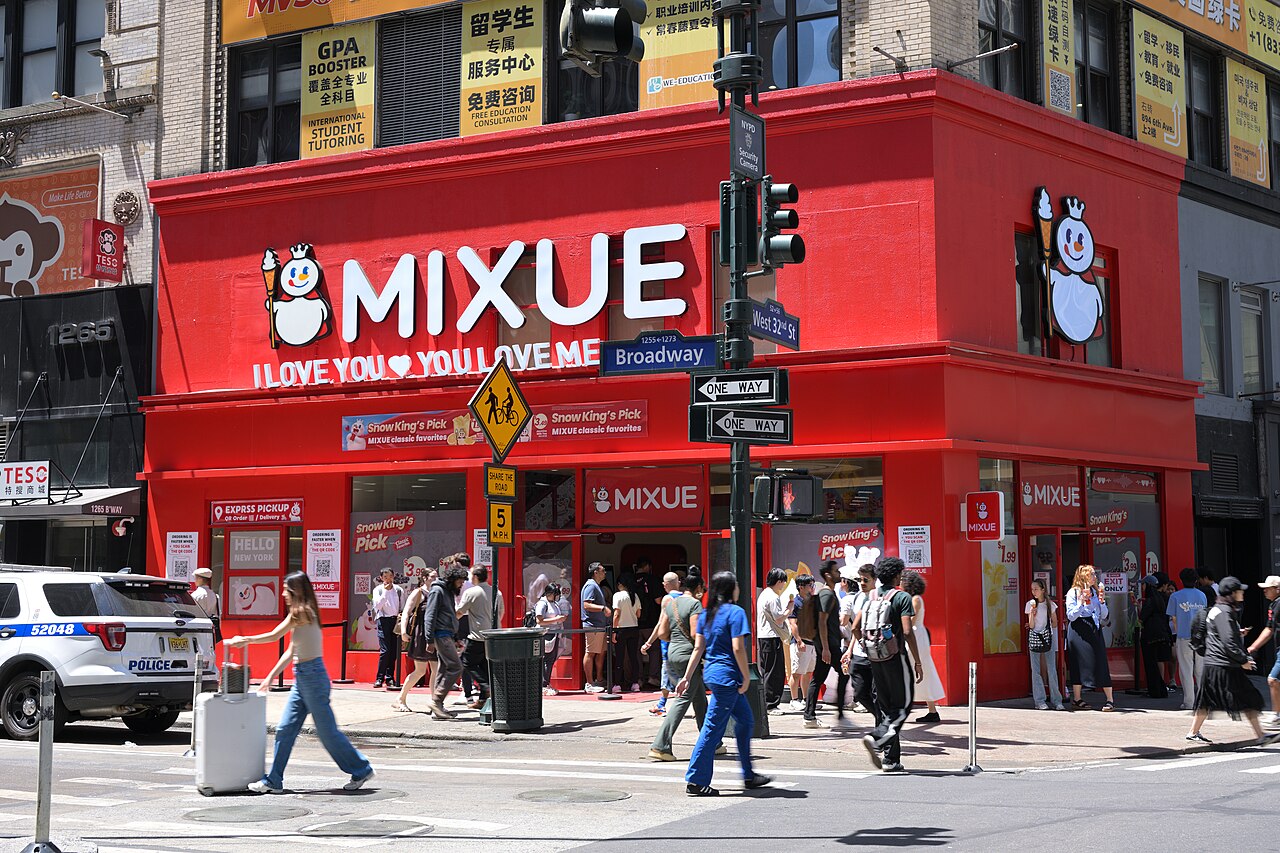
Everywhere is not an exaggeration. By the end of 2025 Mixue had 59,823 outlets, making it the world’s largest food-service chain by store count.
In November 2018 it introduced Snow King, a cheerful snowman mascot, and the character did more for the brand than any price promotion. Its Hong Kong listing in March 2025 jumped around 40 per cent on day one, and Mixue had already entered the Kantar BrandZ Chinese top 100 in 2025.
The lesson is lovely in its simplicity. When your product is cheap, your character must be rich.
Tea in costume
8. Heytea (founded 2012)
Heytea began in Jiangmen, Guangdong, in 2012 under the name Royal Tea, and became Heytea in 2016 after a trademark dispute. The forced rename turned out to be a gift: a short, ownable, global-sounding word.
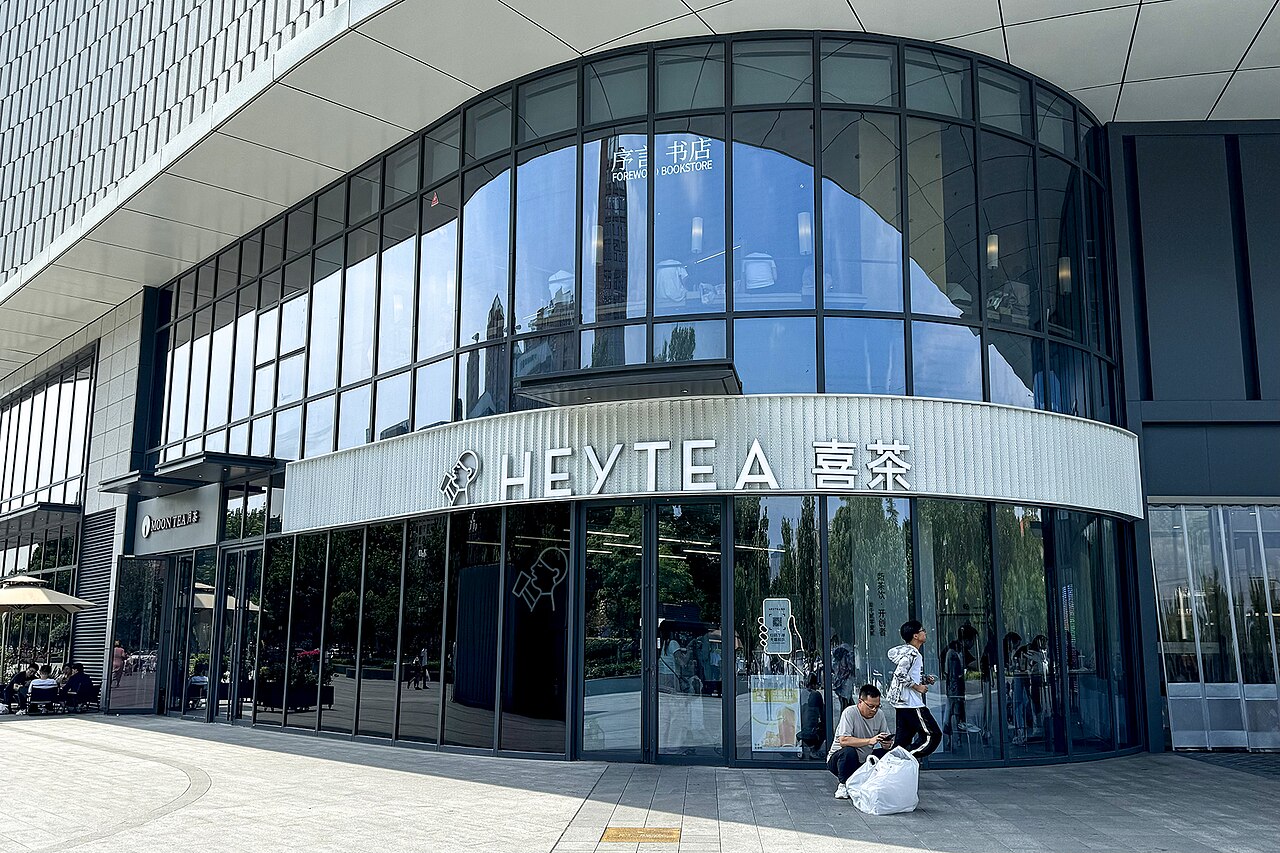
Its signature is cheese tea, topped with a salty cream-cheese foam, but its real product is design. Modern, photogenic stores and themed formats such as Heytea Lab and Heytea Pink made it a textbook wanghong, or social-media-famous, brand. Collaborations with Adidas and Fenty Beauty in 2020 pushed it beyond the drinks aisle.
It reached New York in December 2023 and now has more than 4,000 locations.
9. Chagee (founded 2017)
Zhang Junjie founded Chagee in Kunming in June 2017. Its Chinese name, Ba Wang Cha Ji, nods to the classic opera The Hegemon-King Bids His Lady Farewell, and its logo is drawn from a huadan opera performer.
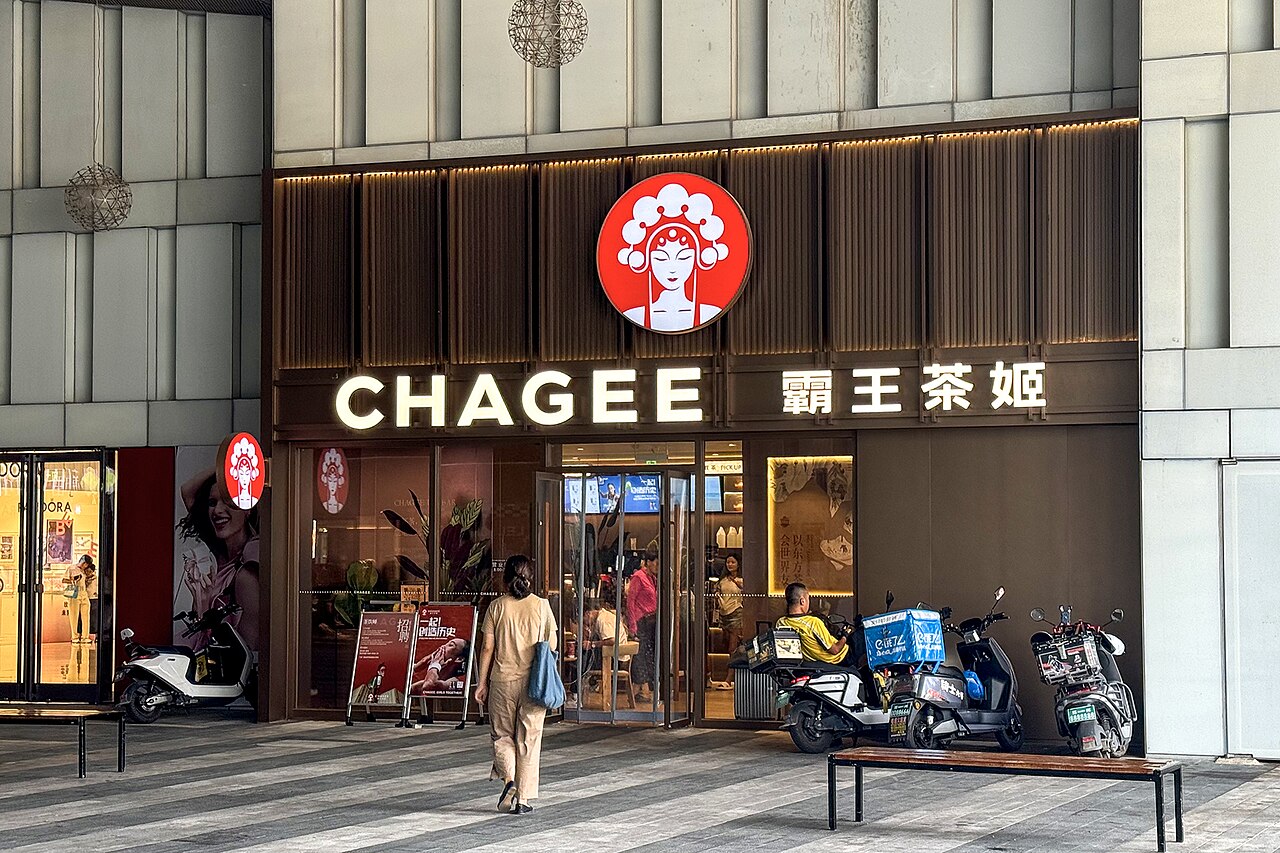
Few beverage brands dare to wear that much culture so lightly. The reference does a clever double job: it signals heritage to customers at home and hands curious customers abroad a story to ask about.
The drink is simple: fresh milk and whole-leaf tea, at around 16 to 20 yuan. Its first stores outside China opened in Malaysia and Singapore in 2019. In April 2025 it listed on Nasdaq, raising US$411 million, and opened its first American store in Los Angeles the same month.
By late 2025 it had more than 7,000 stores. Elegant, fast and unmistakably Chinese.
How did Luckin survive a fraud scandal?
It is the question every business reader asks about the last entry.
10. Luckin Coffee (founded 2017)
Luckin was incorporated in October 2017 and, by 2019, had more stores in China than Starbucks. Then came the fall. In April 2020 it admitted that its chief operating officer had fabricated about 2.2 billion yuan of 2019 sales, and it was delisted from Nasdaq that June.
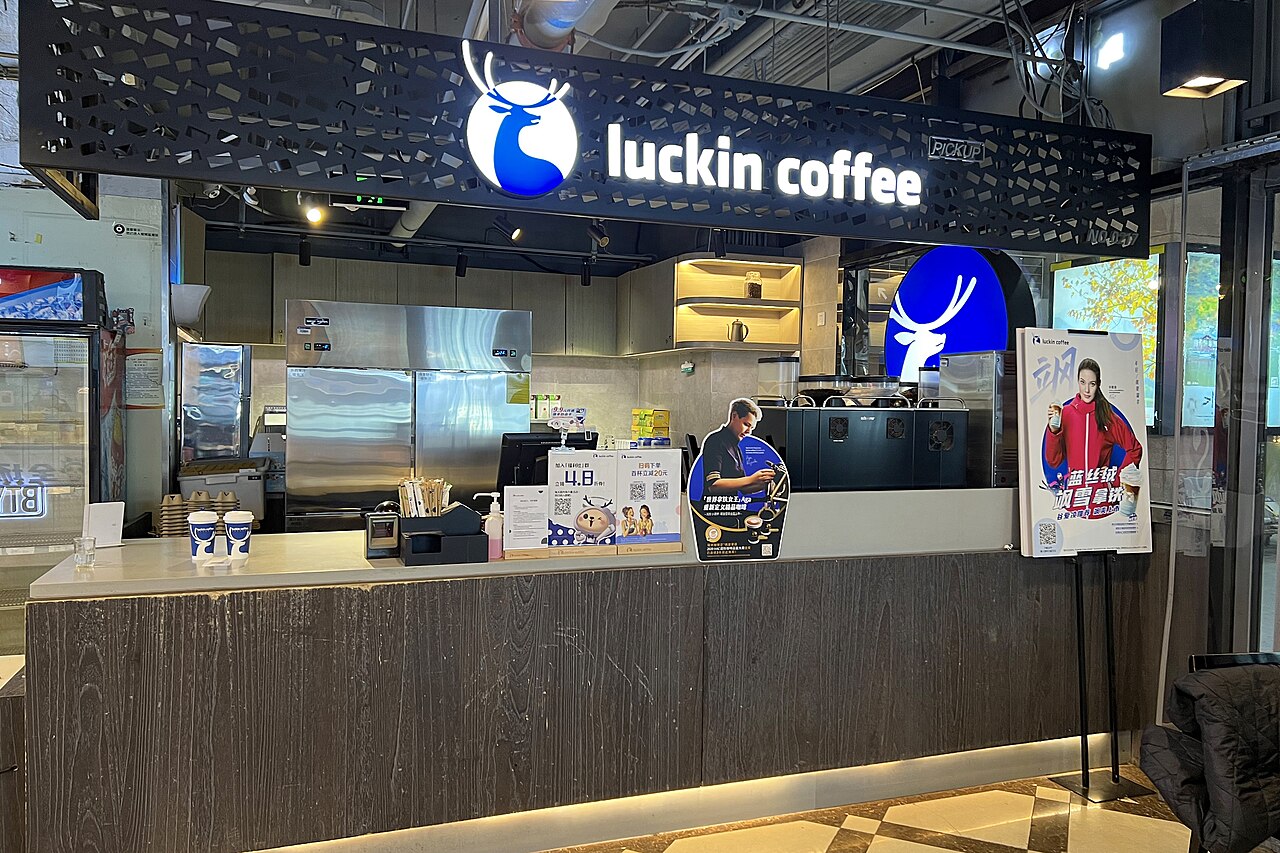
Investors fled. The counters stayed open, and the daily habit its drinkers had already formed did the rest. When the Moutai latte launched in September 2023, it went on sale across 10,800 Luckin stores in China.
Its first overseas branches opened in Singapore, at Marina Square and Ngee Ann City, on 31 March 2023, followed by New York in 2025.
A brand built on daily habit can survive a scandal that would sink one built on image alone. It is not a strategy anyone would choose. It is a truth worth knowing.
What’s cooking across the ten
Taste the list as a whole and certain flavours return.
Place is an ingredient. Tsingtao has its pier, Moutai its town, Nongfu its lake. Origin, shown honestly, is the cheapest premium there is.
Characters do heavy lifting. A snowman king, a homely “master”, an opera heroine. Chinese F&B brands use mascots and cultural figures with a confidence many Western brands lost years ago.
Service can be the product. Haidilao proved that a meal can be remembered for the people rather than the plate. Picture a Joo Chiat café owner who borrows the spirit rather than the menu: a hair tie offered before the laksa arrives, a plastic sleeve for your phone against splashes. Small, cheap, unforgettable.
And Singapore keeps appearing as the first stop abroad. For brand builders here, that is both a competitive warning and a front-row seat.
Before the bill arrives
What is the most valuable food and drink brand in China?
Kweichow Moutai is China’s most valuable food and drink brand, ranked fourth among all Chinese brands in the 2026 Kantar BrandZ study at about US$82.1 billion and named the world’s most valuable spirits brand by Brand Finance in 2026.
Which Chinese F&B chain has the most stores?
Mixue Ice Cream & Tea had 59,823 outlets at the end of 2025, making it the world’s largest food-service chain by number of stores.
Where did Haidilao open its first overseas restaurant?
Haidilao’s first restaurant outside mainland China opened at Clarke Quay, Singapore, in 2012.
If you want customers to queue for your brand the way they queue for hot pot, let’s talk about brand activation.






