At eight in the morning in Far East Square, the order is almost liturgical. Toast, crisp and thin, sandwiched with kaya and a slab of cold butter. Two soft-boiled eggs, cracked into a saucer and seasoned with dark soy and white pepper. Coffee strong enough to stand a spoon in.
Nobody reads the menu. Nobody needs to.
That ritual is worth more than any logo. Singapore’s most famous dishes, chicken rice, chilli crab and laksa, belong to everybody and therefore to no one. The few food names that have become genuine brands did something harder: they attached a recipe, a ritual or a memory to a name people trust.
A Singapore F&B brand is a food or drink name created or built in Singapore whose recipes, rituals and identity customers associate with the city, whether it is sold over a counter at home or through a franchise abroad.
Here are the ten that matter most, and what each can teach anyone building a brand around food.
How we chose the list
There is no published brand-value ranking for Singapore’s food and drink brands, and most of the companies here are private or report inside larger groups. So this list is selected on market presence, recognition and growth: footprint at home and abroad, how strongly the name is tied to Singapore, and momentum in recent years. Where an independent valuation exists, we mention it.
The numbers are for navigation, not a league table. We open with the two names of greatest scale and reach, then group the rest by type: breakfast and snack classics, luxury storytellers and specialists.
Every brand was founded or rebuilt in Singapore and is run from here, with one exception we discuss openly. Local outposts of foreign chains are excluded, however beloved. So are dishes. Chilli crab is a national treasure; it is not a brand.
What makes a food name become a brand?
Heritage helps, but only when it is used. Heritage is more than age. It is a visible track record, core values that stay put, symbols customers recognise, and a company that genuinely believes its history matters.
A stall that has existed for eighty years but changes recipe, look and story every decade has age without heritage. The brands below either hold real heritage, or they have built or borrowed it deliberately. Watch for which is which.
The big names
1. Tiger Beer
Tiger was launched in 1932 by Malayan Breweries, a joint venture between Fraser & Neave and Heineken. Its slogan, “It’s Time for a Tiger”, has run in one form or another since the 1930s. It was popular enough in 1950s Malaya that the novelist Anthony Burgess borrowed it for the title of his first novel, Time for a Tiger.
Tiger Beer’s ‘Here Come the Uncaged’ film shows how the 1932 lager now sells a bold, creative attitude as much as a beer.
Today Tiger is sold in more than 60 countries and brewed at Tuas in Singapore and in Edinburgh. Its brand achievement is portability. The name and the slogan let a Singapore lager sit in bars from London to Detroit without needing an explanation.
2. BreadTalk
George Quek and Katherine Lee opened the first BreadTalk at Bugis Junction in July 2000. Quek had already built the food-court chain Food Junction, and before that had started with a dragon’s beard candy kiosk in Taipei. BreadTalk listed on the Singapore Exchange in 2003 and was later taken private.
BreadTalk Group’s corporate film presents the bakery that opened at Bugis Junction in 2000 as a regional F&B group.
The group’s real skill is portfolio building. Under one roof it runs Toast Box, which serves kopi and kaya toast, the Food Republic food courts and the Din Tai Fung franchise in Singapore, with outlets across Asia, Europe and the Middle East. Each brand has its own personality. None is asked to do another’s job.
The breakfast and snack classics
3. Ya Kun Kaya Toast
Loi Ah Koon arrived from Hainan in 1926, aged 15, and worked at a coffee stall before registering his own, Ya Kun Coffeestall, at Telok Ayer Basin in 1944. The stall moved to Lau Pa Sat in 1972 and to Far East Square in 1998, when it took the name Ya Kun Kaya Toast. His youngest son, Adrin, took over in 1999 and began franchising in 2000.
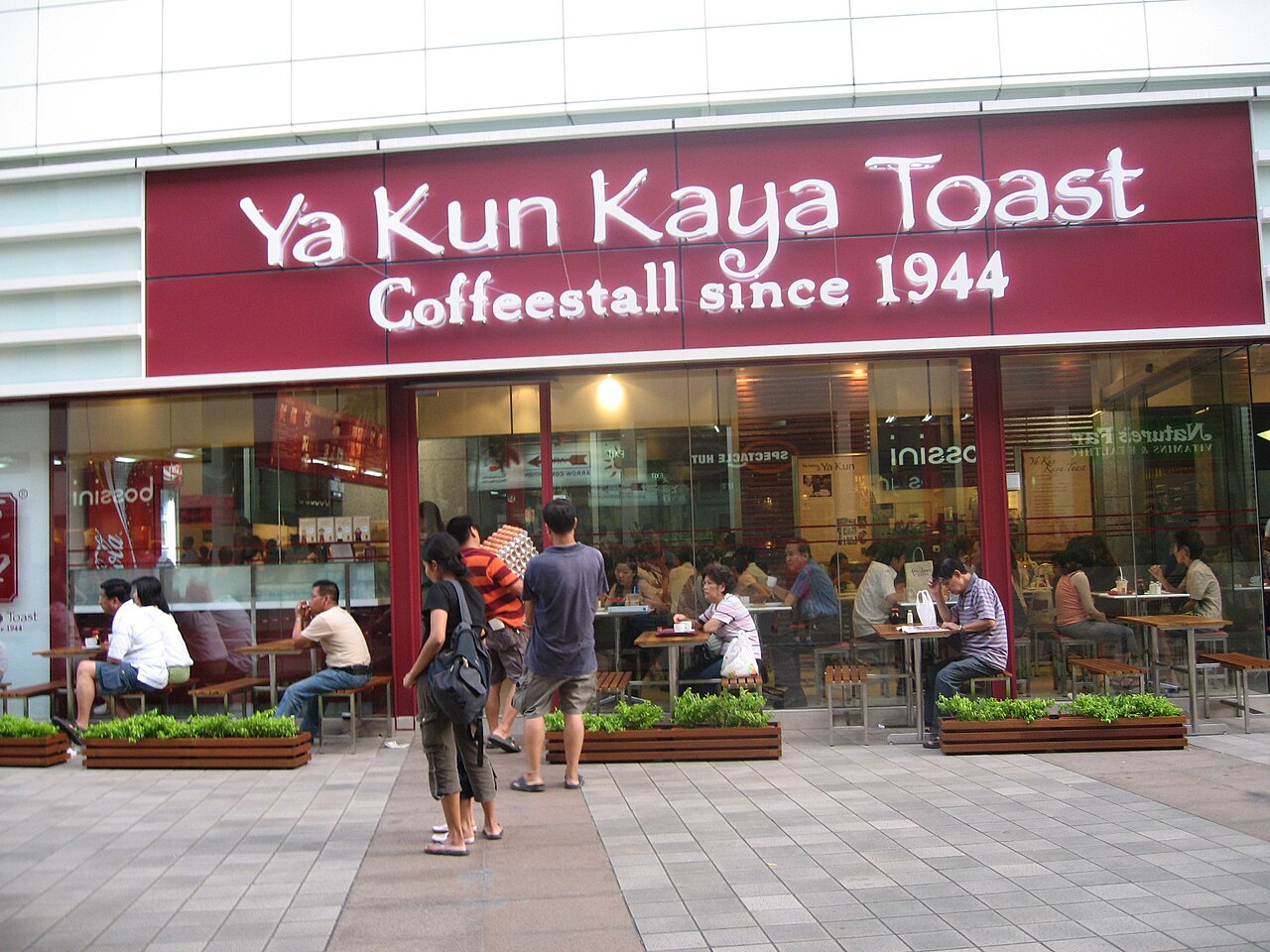
Ya Kun is the textbook heritage brand. The set breakfast is simple and fixed, the founder’s story is part of the offer, and franchising spread the ritual rather than diluting it. By 2024 it had 83 outlets in Singapore and franchises in markets including China, Dubai, Myanmar and the Philippines.
4. Old Chang Kee
Old Chang Kee began in 1956 as a curry puff stall, known to many as the “Rex curry puff” stall for its spot near Rex Cinema on MacKenzie Road. In 1986 Han Keen Juan bought the business, introduced a central kitchen and standardised the recipes. In 2008 the company listed on the Singapore Exchange’s Catalist board and named its curry puff Curry’O.
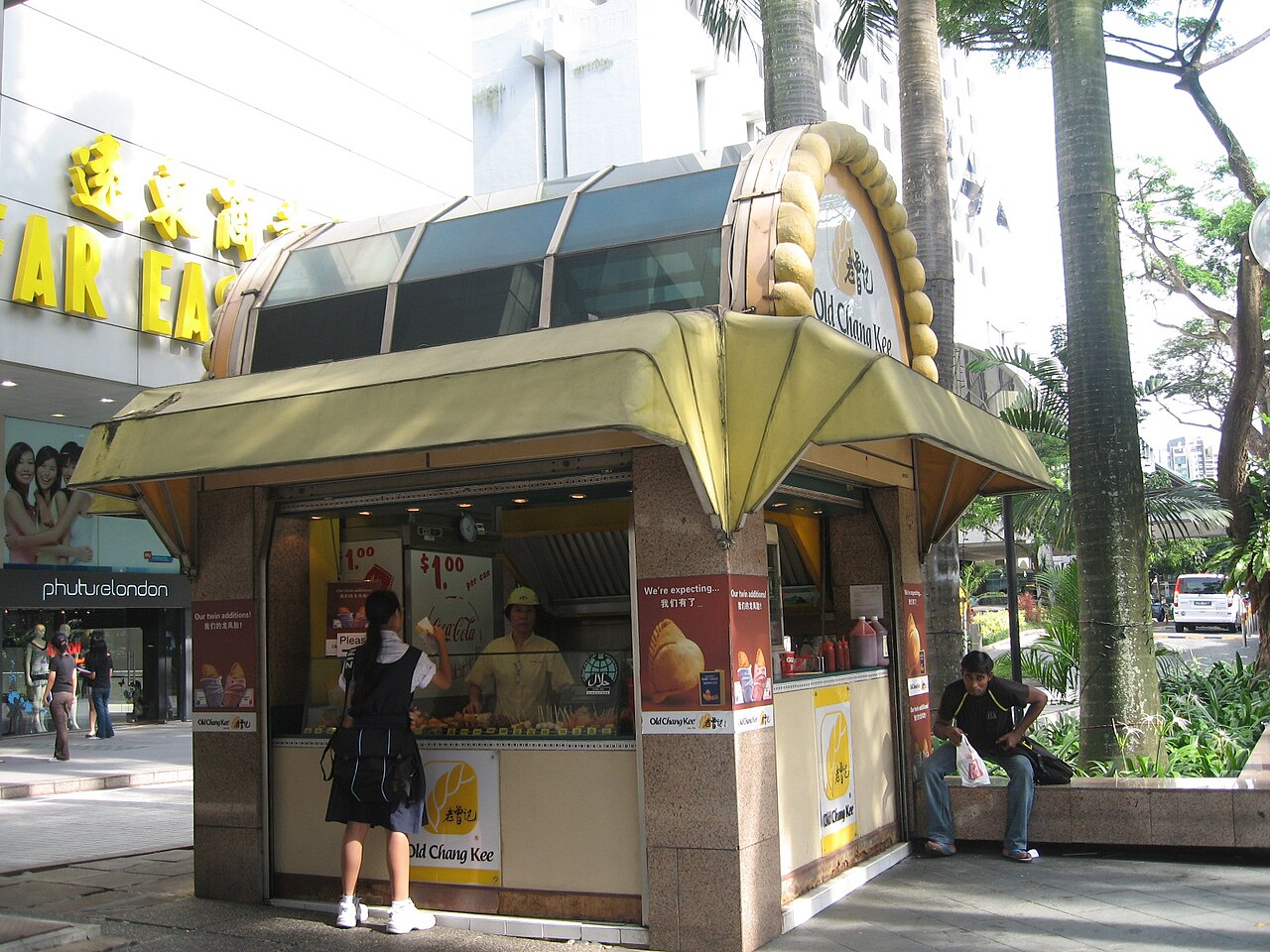
That central kitchen is the whole story. It turned a beloved stall into a repeatable product, which is what let Old Chang Kee open more than 100 outlets in Singapore and reach Malaysia, Indonesia, Australia and the UK. Brand Finance named it among the risers in its 2026 Singapore 100, at 85th.
5. Bee Cheng Hiang
Bee Cheng Hiang started as a market stall in Singapore in 1933 and is best known for bak kwa, smoked and roasted pieces of pork sold by weight. It now has more than 370 outlets in 72 cities across 13 territories, including mainland China, Hong Kong, Taiwan, South Korea, Japan and Indonesia.
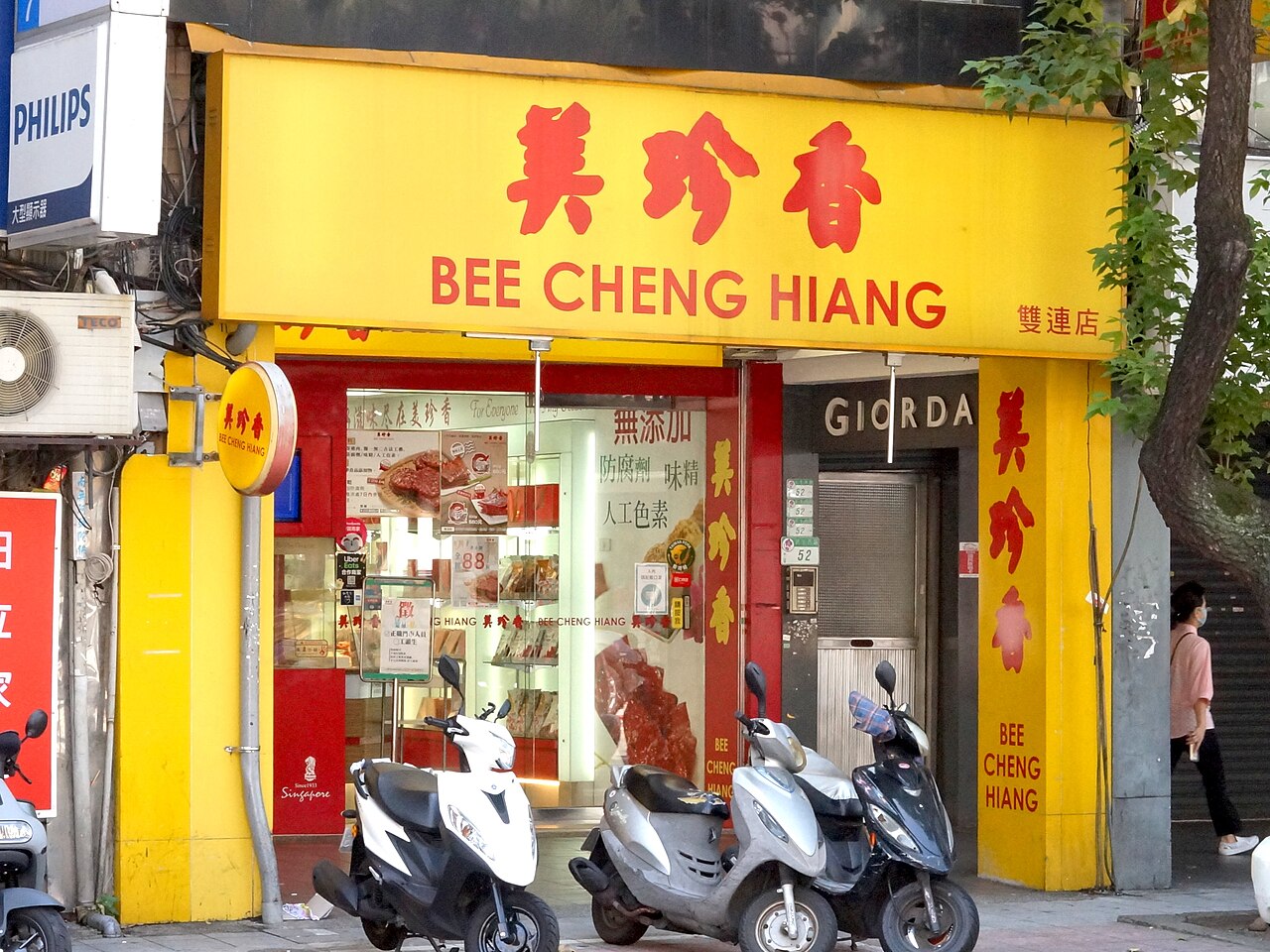
This is the power of owning one product. When a single item is good enough to carry the name, everything else can be added around it: Gourmet Bakkwa in 2003, a chilli version in 2005, then pork floss, prawn rolls and sausages. The extensions work because the core never moves.
The luxury storytellers
6. TWG Tea
TWG Tea opened its first tea salon at Republic Plaza in 2008, founded by Manoj Murjani and Taha Bouqdib, and moved into ION Orchard in 2009. Its logo carries the date 1837, which the company explains as the year Singapore became a trading post for tea, spices and fine goods. The date belongs to the city’s history, not the company’s.
TWG Tea’s ‘Origin Stories’ film on Darjeeling shows the sophisticated storytelling behind a tea house now present in more than 40 countries.
It is sophisticated positioning, and it has worked. TWG is present in more than 40 countries, and OSIM, now part of Ron Sim’s V3 Group, took a majority stake in 2014.
There is a cautionary footnote. In Hong Kong, the local tea company Tsit Wing, founded in 1932, won a court battle over the TWG name, and the brand trades there as Tea WG.
7. Bacha Coffee
This is the exception to our rule, and an instructive one. Bacha Coffee traces its origins to 1910, when coffee was served at the Dar el Bacha palace in Marrakech. The coffee room closed after the Second World War. In 2019 Taha Bouqdib restored it inside what had become a museum, and the same year the brand opened its first overseas branch in Singapore, where its coffee room and boutique at ION Orchard became the showcase.
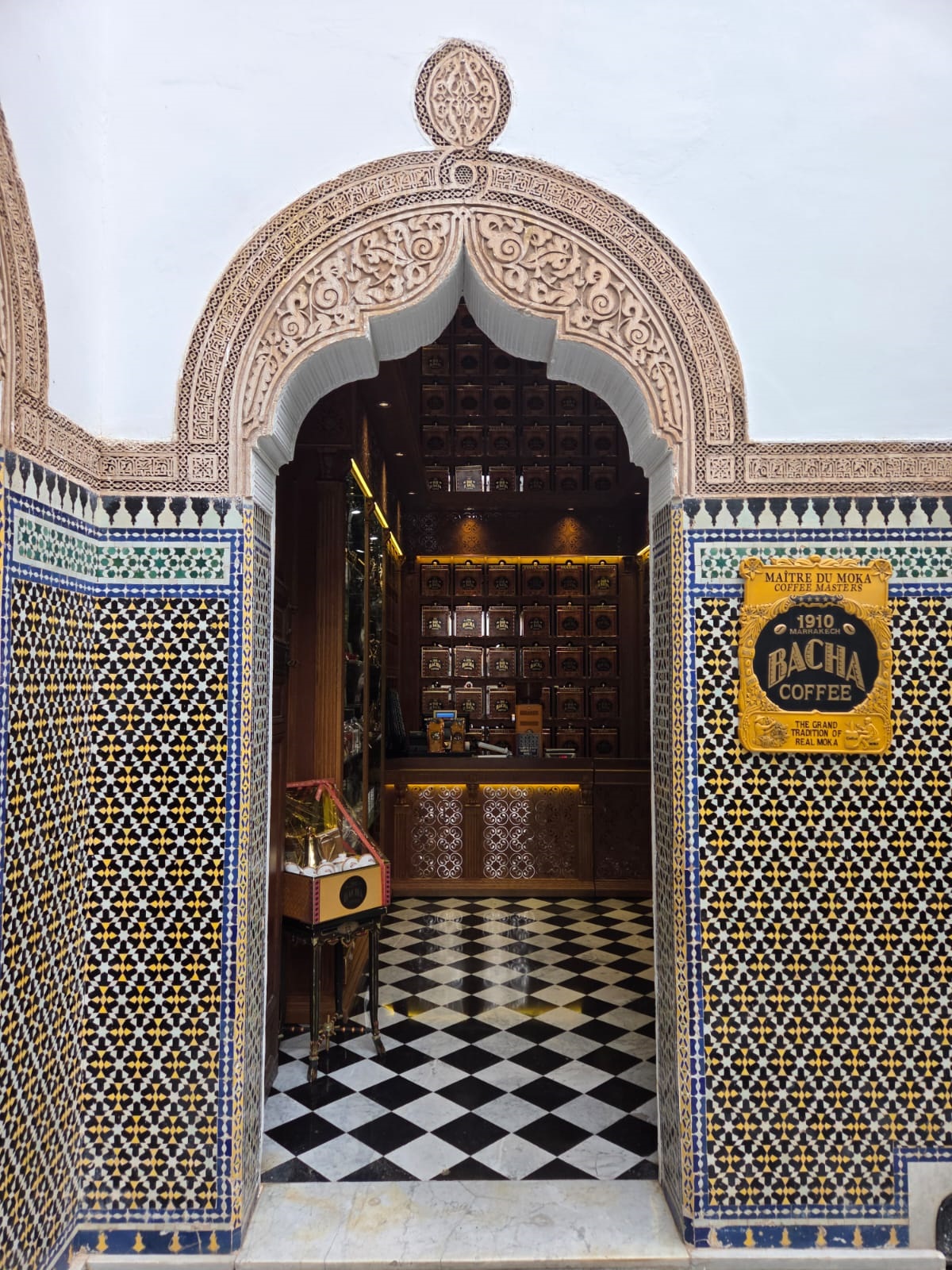
Bacha is owned by Singapore’s V3 Gourmet and run from here, but its heritage is Moroccan. It offers more than 200 Arabica coffees and, by March 2026, had 43 shops in 16 countries and regions, including Qatar, Kuwait, Malaysia and a Paris flagship on the Champs-Élysées.
The lesson? A Singapore company can revive a heritage it did not create, as long as the story is genuine and lavishly delivered.
The specialists
8. JUMBO Seafood
A group of friends opened the first JUMBO restaurant at East Coast Seafood Centre in 1987, and it became known for chilli crab and black pepper crab. Its first overseas restaurant, in Indonesia in 1995, did not work. Nearly two decades later it tried again in Shanghai, with BreadTalk Group as a 30 per cent partner. It now runs more outlets abroad than at home.
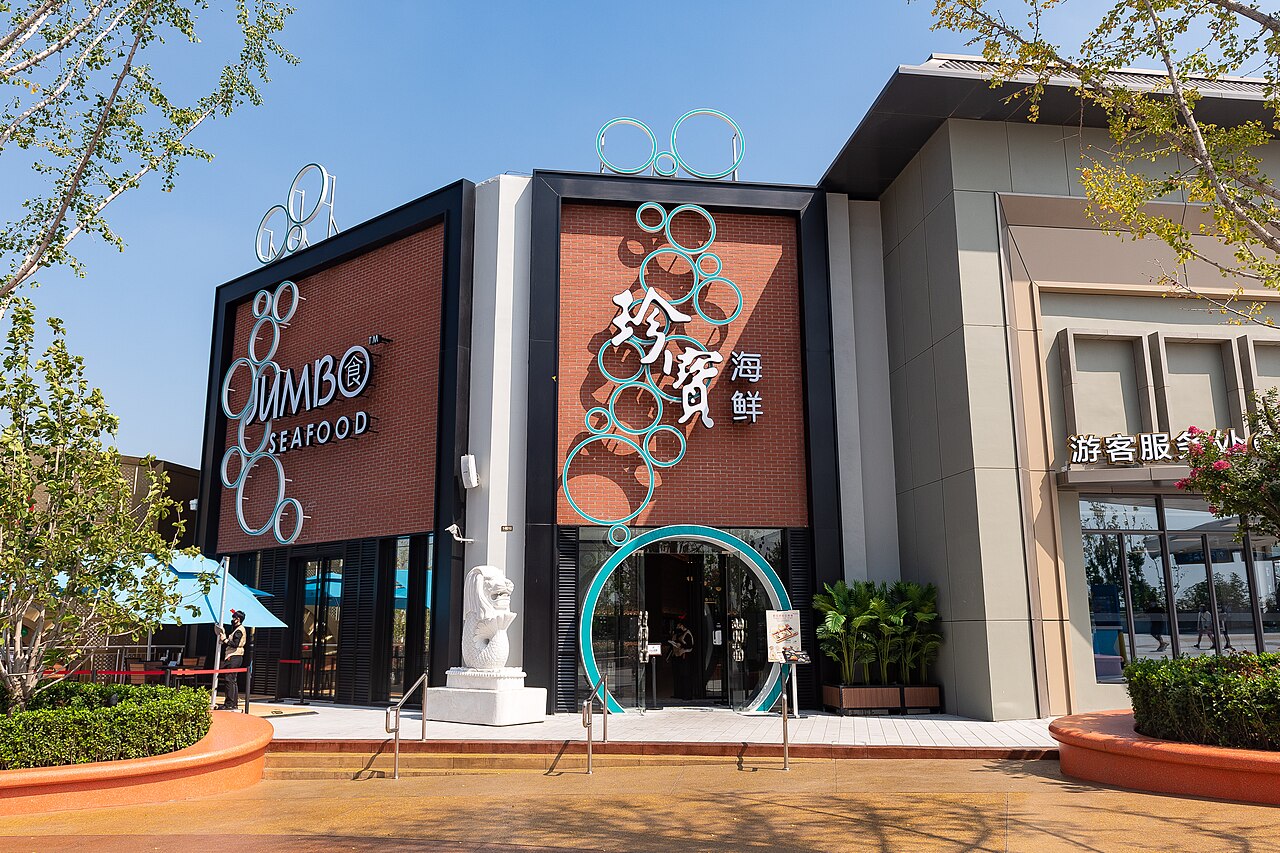
JUMBO’s lesson is that a brand can be linked to a national dish without owning the dish. Nobody holds the rights to chilli crab, yet JUMBO has made its name one of the most closely associated with it. Brand Finance listed it among the 2026 risers, at 75th.
9. Bengawan Solo
Anastasia Tjendri-Liew began baking cakes in her Marine Parade flat in 1975. In 1979 the Ministry of Health ordered her to stop operating without a food manufacturing licence, so she opened a proper shop on Marine Terrace instead. A second outlet followed at Centrepoint in 1983. Today there are more than 40.
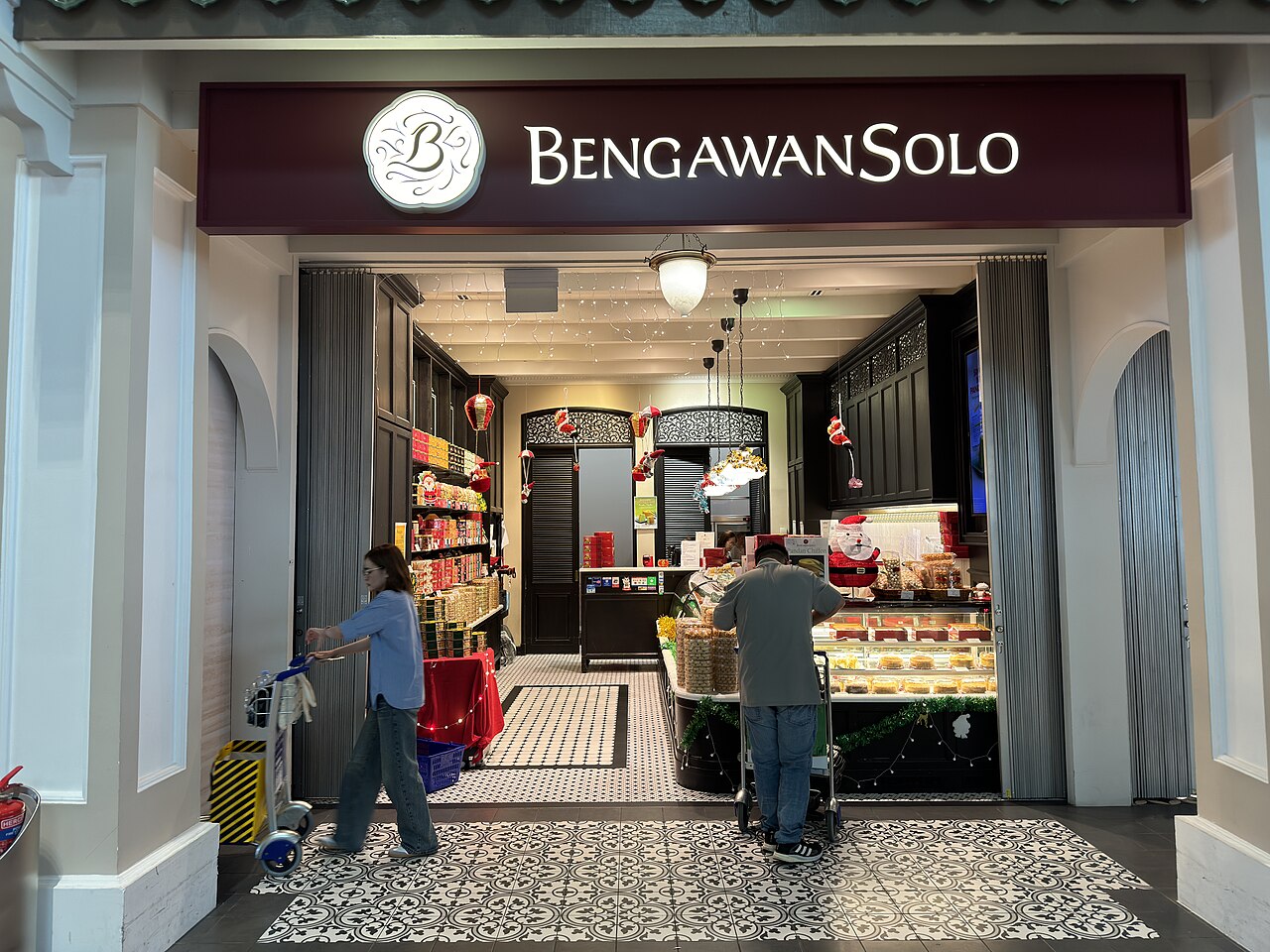
It is a founder story with a regulator as the plot twist. A home baker told to stop opened a shop instead. The brand promise since then has been consistency: the confidence that the cake you buy today tastes like the one you remember.
10. IRVINS
The youngest brand here. Irvin Gunawan and his brothers founded IRVINS in 2015, after the salted egg potato chips and fish skin they served as a side dish at their River Valley zi char restaurant took off as packaged snacks. They closed the restaurant to focus on the snacks.
IRVINS shows off its salted egg salmon skin, one of the snacks that grew out of the brothers’ River Valley zi char kitchen.
IRVINS built a cult brand on one flavour, then took it abroad through its own stores and retail partners including 7-Eleven in Hong Kong and Taiwan, Costco in the US and Canada and Don Quijote in Japan. When its shops closed in April 2020, sales more than halved, and those partnerships carried it through. It has since added flavours carefully, without losing the salted egg identity that made its name.
Is Tiger still a Singapore brand?
Fair question. In 2012 Fraser & Neave sold its stake in Asia Pacific Breweries, the company behind Tiger, to Heineken for US$4.1 billion, and the business was renamed Heineken Asia Pacific. Bacha Coffee, meanwhile, is Moroccan by birth and Singaporean by ownership.
Our view: a food brand’s nationality lives in its origin story and in where customers place it. Tiger was born in Singapore, is still brewed here and is still sold abroad as a taste of Singapore. Ownership changes the balance sheet. It does not, by itself, change what the name means to drinkers.
What do people actually want from a Singapore food brand?
Ask visitors and residents what they want from food here and the same themes come up. They want the real ritual, kopi and kaya toast eaten the local way. They are curious about origins, such as the story that kopi’s strong, dark style grew out of the cheap beans poor immigrants could afford.
And they notice what is missing. Why does chicken rice, arguably the national dish, have no famous brand of its own?
That gap is the opportunity. Each brand on this list claimed a ritual, a moment or a story and then made it repeatable. The dish is common property. The ritual can be owned.
Four lessons from the counter
Standardise before you scale. Old Chang Kee’s central kitchen and Ya Kun’s fixed set breakfast made each brand repeatable, and repeatability is what franchising sells.
Own one thing first. Bee Cheng Hiang has bak kwa, IRVINS has salted egg, JUMBO has crab. Each extended its range only after the core product had made the name.
Build a house of separate brands when the customers differ. BreadTalk never asked its bakery name to sell kopi or run food courts; each concept got its own identity.
Tell the truth about heritage. TWG and Bacha both trade on history, and both say plainly whose history it is. The date on the logo can be borrowed. The honesty cannot.
Takeaway questions
What is the most famous food brand from Singapore?
Tiger Beer has the widest reach of the brands on this list, sold in more than 60 countries since its launch in 1932. Among food brands, Bee Cheng Hiang has one of the largest footprints, with more than 370 outlets across 13 territories.
Is TWG Tea from Singapore?
Yes. TWG Tea was founded in Singapore in 2008 and opened its first salon at Republic Plaza. The “1837” on its logo refers to Singapore’s history as a trading post, not the company’s founding.
Is Bacha Coffee Singaporean or Moroccan?
Both, in different ways. Bacha Coffee began in Marrakech in 1910 and was revived in 2019 under Singapore-based V3 Gourmet, which owns the brand and opened its first overseas branch in Singapore that year.
If your recipe deserves a brand as memorable as the food, start with a clear brand strategy.






