In a small town in Central Java, a shopkeeper opens her stall at six. Before the first customer arrives she has checked her savings balance on a state bank’s app, paid for the morning’s stock by transfer and restocked the shelf with instant noodles made from flour milled by the same group that makes the noodles. By lunchtime, several names from Indonesia’s most valuable brand list have passed through her day. She has not noticed a single advertisement.
That is the quiet power of a corporate brand across an archipelago of thousands of islands.
A corporate brand is the reputation and identity of a company as a whole: the name that stands behind every product, branch, bill and parcel, and that customers, investors, regulators and employees decide whether to trust.
How this top 10 was ranked
This list follows a single published basis: ranked by brand value in Brand Finance’s Indonesia 100 2026, published in August 2026, with our commentary. Brand value here is an estimate of what a brand name is worth to its owner as a business asset, expressed in US dollars. Brand Finance also scores brand strength out of 100, a separate measure we mention where it tells a different story.
Two headline facts frame the table. The combined value of Indonesia’s top 100 brands fell 16% year on year to US$44.8 billion. And banking alone accounts for 45% of that total. The figures below are the 2026 values, rounded; the comments are ours.
Why are banks Indonesia’s most valuable brands?
Because in a country that is still bringing millions of people into formal finance, a bank’s name is a promise about the safest thing people own. Online, the questions people ask about Indonesian banking are telling: whether accounts are easy to open, whether apps work, whether sharia products are genuinely different. Trust and access come first. The banks that solved both sit at the top.
1. BRI (US$6.9 billion)
Bank Rakyat Indonesia, the “people’s bank”, was founded in Purwokerto in 1895 as a savings and loan bank for local nobility. Today it serves around 30 million retail clients through more than 8,600 branches, units and rural service posts, and its brand is built on small loans to small businesses.
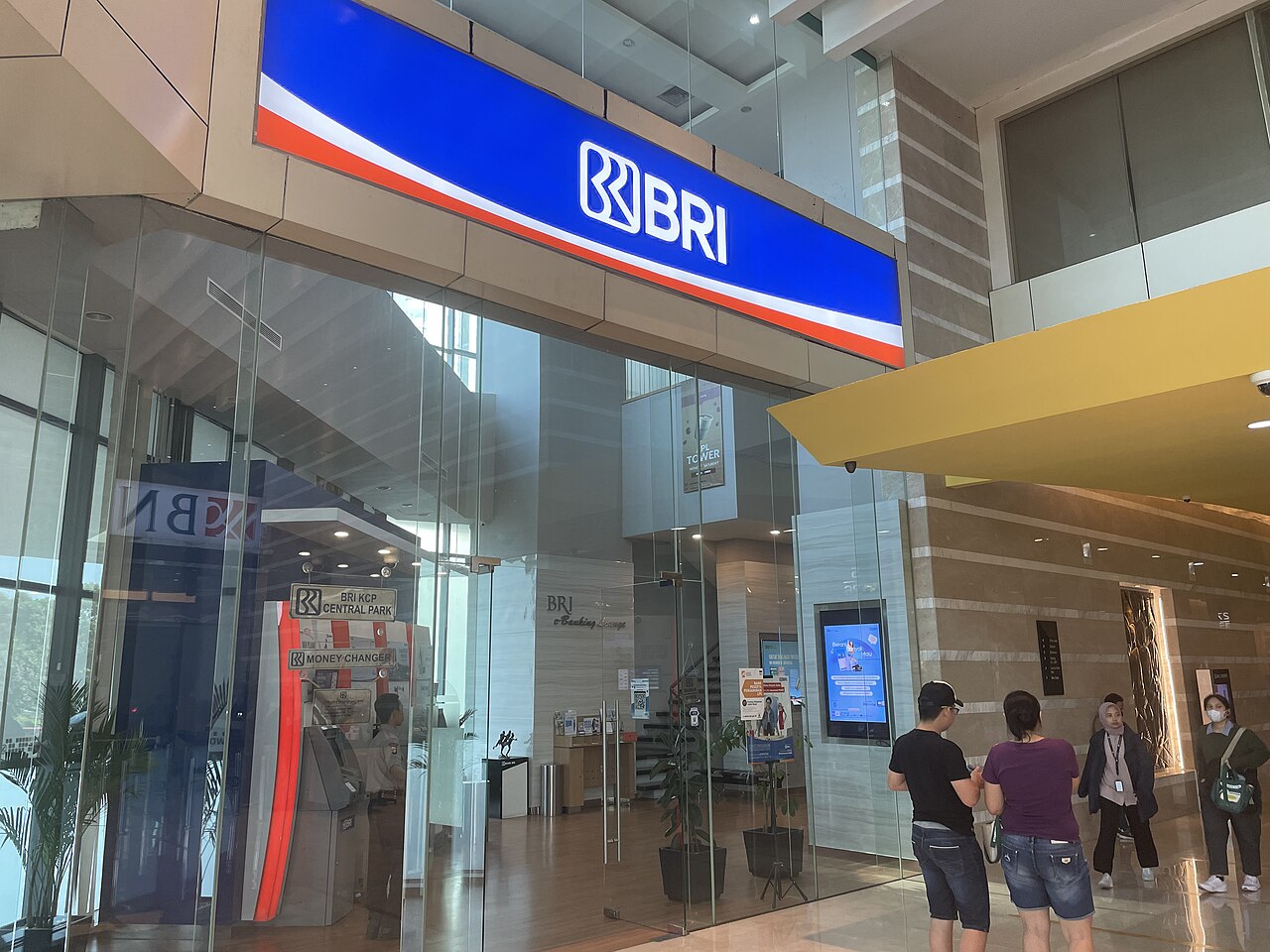
In 2016 BRI became the first bank in the world to own and operate its own satellite, BRIsat, to connect branches in remote parts of the archipelago. As brand theatre goes, launching a satellite to reach your customers is hard to beat. BRI also holds Indonesia’s highest Sustainability Perceptions Value in the 2026 study, at US$328 million.
2. Bank Mandiri (US$5.2 billion)
Mandiri is a brand born of crisis. On 2 October 1998, in the wreckage of the Asian financial crisis, the government merged four state banks (Bank Bumi Daya, Bank Dagang Negara, Bank Ekspor Impor Indonesia and Bapindo) into one. The new name meant “self-reliant”.
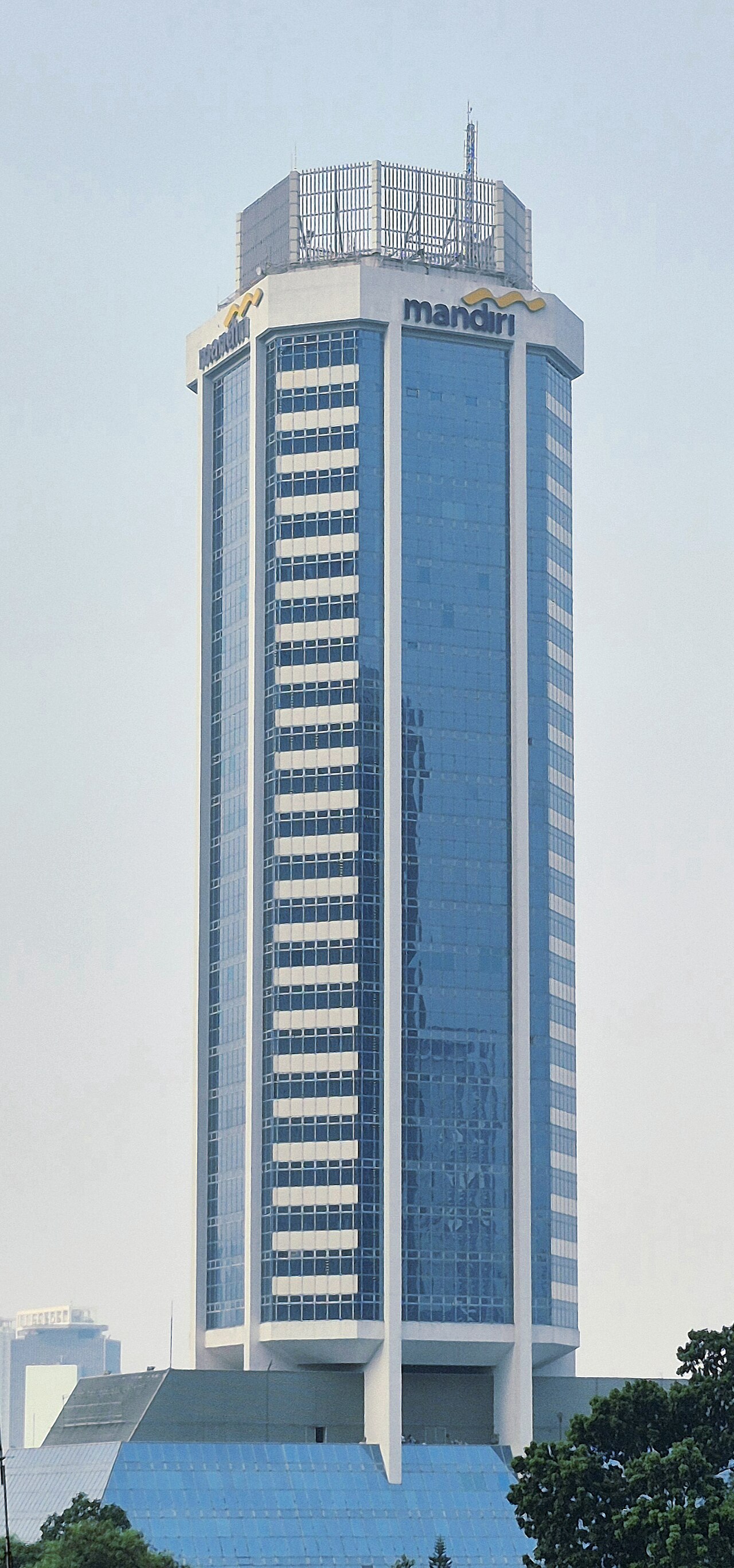
That is the corporate branding challenge in its purest form: four cultures, four sets of customers and one fresh identity that had to signal stability at the most unstable moment in modern Indonesian finance. Its mobile app, Livin’ by Mandiri, shows how far the brand has moved from its rescue-merger origins towards everyday, lifestyle language.
3. BCA (US$4.2 billion)
Bank Central Asia is third by value but first by strength, for the eighth year running, with a Brand Strength Index of 95.9 out of 100 and an AAA+ rating. It began operating in 1957, grew within the Salim Group, was taken over by the state’s bank restructuring agency in 1998 and has been controlled by the Djarum group’s investment vehicle since 2002. It is the country’s largest private bank.
A Ramadan film from Bank Central Asia’s own channel, from the private bank that has topped Indonesia’s brand-strength ranking for eight years running.
BCA is the proof that value and strength are different things. State banks are larger. BCA scores higher on strength. For brand owners, that gap is the most useful lesson in the table: size comes from scale, but strength is earned one transaction at a time.
The state’s energy brands
4. Pertamina (US$3.9 billion)
The national oil and gas company was formed in August 1968 from the merger of two earlier state firms. Its brand is everywhere in the physical world: on fuel stations, on lubricants and on the Mandalika street circuit in Lombok, where it is the main sponsor of the Indonesian motorcycle Grand Prix. It also partners the VR46 racing team and has been Lamborghini’s global lubricant partner since 2015.
Pertamina is the Energy: the state oil company’s own brand film for a name seen on every forecourt.
Pertamina’s 2026 value rose 2.6% despite a difficult 2025. In February that year, prosecutors named executives of Pertamina subsidiaries as suspects in a corruption case over crude oil procurement and shipping between 2018 and 2023, with alleged state losses of Rp193.7 trillion. That a brand can absorb such a shock says more about monopoly-like familiarity than about affection, a distinction any brand owner should keep in mind.
5. PLN (US$2.7 billion)
The state electricity company traces its roots to 27 October 1945, weeks after independence. In 2026 it climbed from eighth to fifth, with value up 20.5%, and ranks fourth for brand strength at 91.8.
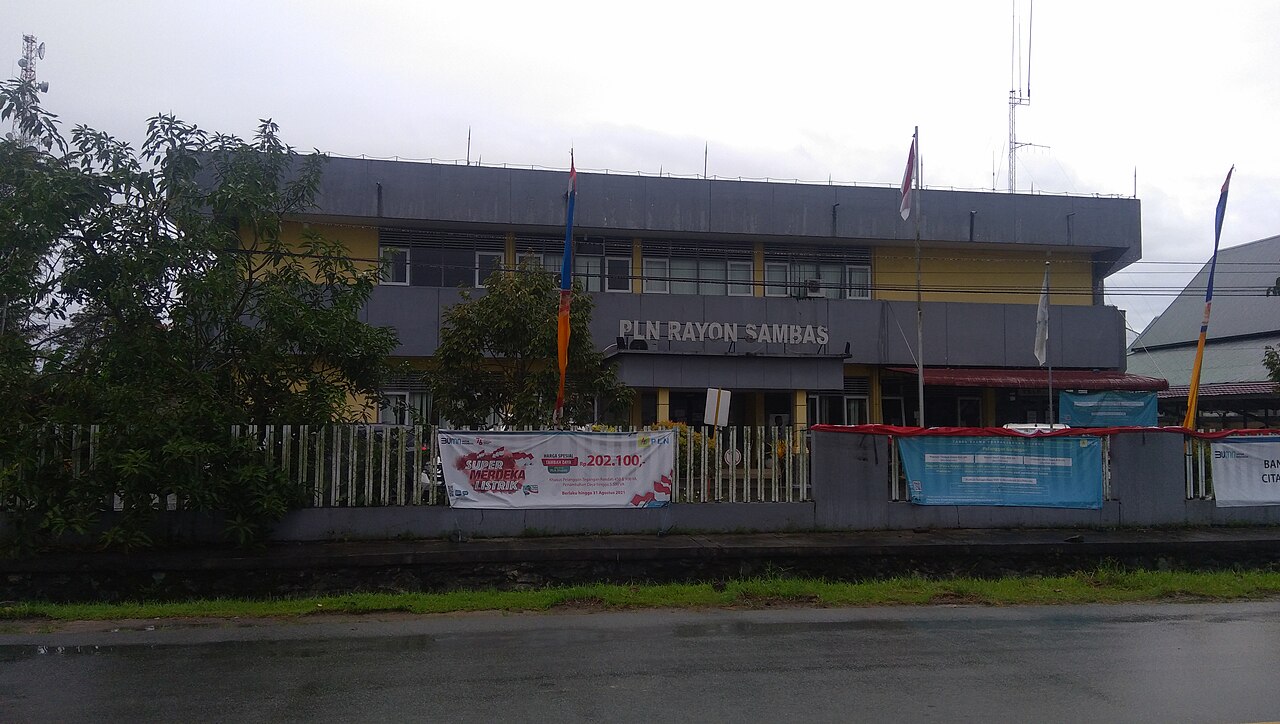
Utilities rarely think of themselves as brands until something goes wrong. A 2005 blackout across Java and Bali reportedly left around 100 million people without power for more than five hours, the kind of moment that defines a utility’s reputation for years. PLN’s rise suggests that steady service, more than slogans, is what moves a utility’s brand.
Who owns Indonesia’s biggest brands now?
Increasingly, one shareholder. In February 2025 Indonesia launched Danantara, a sovereign investment fund that took over the state’s holdings in seven major companies: BRI, Bank Mandiri, BNI, Pertamina, PLN, Telkom and the mining group MIND ID. Danantara now holds just over half of BRI and Mandiri, and around 59% of BNI.
For brand strategists, this creates a new architecture question. Each of these brands has a distinct identity built over decades. Sitting under one investment umbrella will test whether they stay distinct or drift towards a single state-enterprise voice.
6. Telkomsel (US$2.5 billion)
Telkomsel appears in the 2026 table without a prior-year value. In 2025 its parent, Telkom Indonesia, ranked sixth; this year the parent is absent from the top twenty and the customer-facing mobile name carries the flag instead, which is how most Indonesians meet the business anyway. Founded in 1995 and owned 69.9% by Telkom Indonesia and 30.1% by Singapore’s Singtel, it took over management of Telkom’s IndiHome home broadband business from July 2023.
That integration matters for the brand. A mobile operator that also runs the home internet line becomes the household’s connectivity brand rather than a SIM card. Telkomsel had already prepared the ground with a new logo in June 2021, replacing the identity it had used for its first 26 years, and a separate digital sub-brand, by.U, alongside long-running names such as simPATI and Halo.
Telkomsel’s Independence Day film shows the operator speaking as a national connectivity brand.
7. BNI (US$1.7 billion)
Bank Negara Indonesia was founded in Yogyakarta on 5 July 1946 and went on to distribute Oeang Republik Indonesia, the young republic’s first official currency. Few brands anywhere can claim to have handed out a nation’s first banknotes.
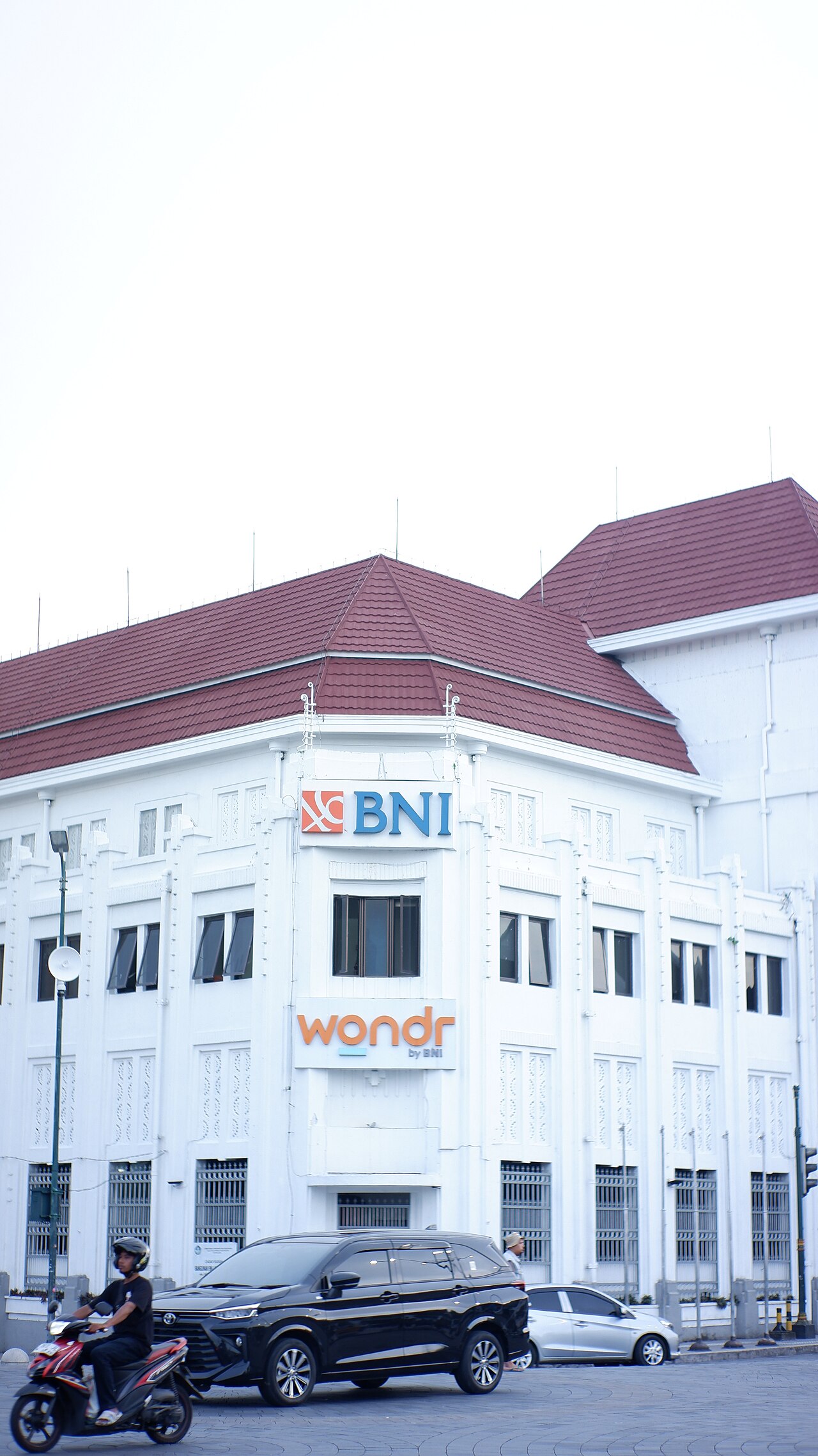
BNI’s value fell 11.6% in 2026, yet it climbed from ninth to seventh as others fell further. Its heritage is hard to match, but heritage alone does not lift a brand value. The bank’s overseas offices, in markets including Singapore, Japan, the UK and the US, give it an international role that a sharper brand story could make more of.
The consumer names
8. Indomie (US$1.3 billion)
Indomie is the only consumer product brand in the top eight and ranks sixth for brand strength at 89.9. First produced in June 1972 by Sanmaru Food Manufacturing and later absorbed into Indofood, it now makes more than 19 billion packs a year. Its Mi Goreng, the dry fried-noodle version launched in the early 1980s, made a 2019 Los Angeles Times list of the tastiest instant noodles. In Nigeria, where it arrived as an export in 1988, a joint venture between Indofood and Singapore’s Tolaram Group opened a local factory in 1995.
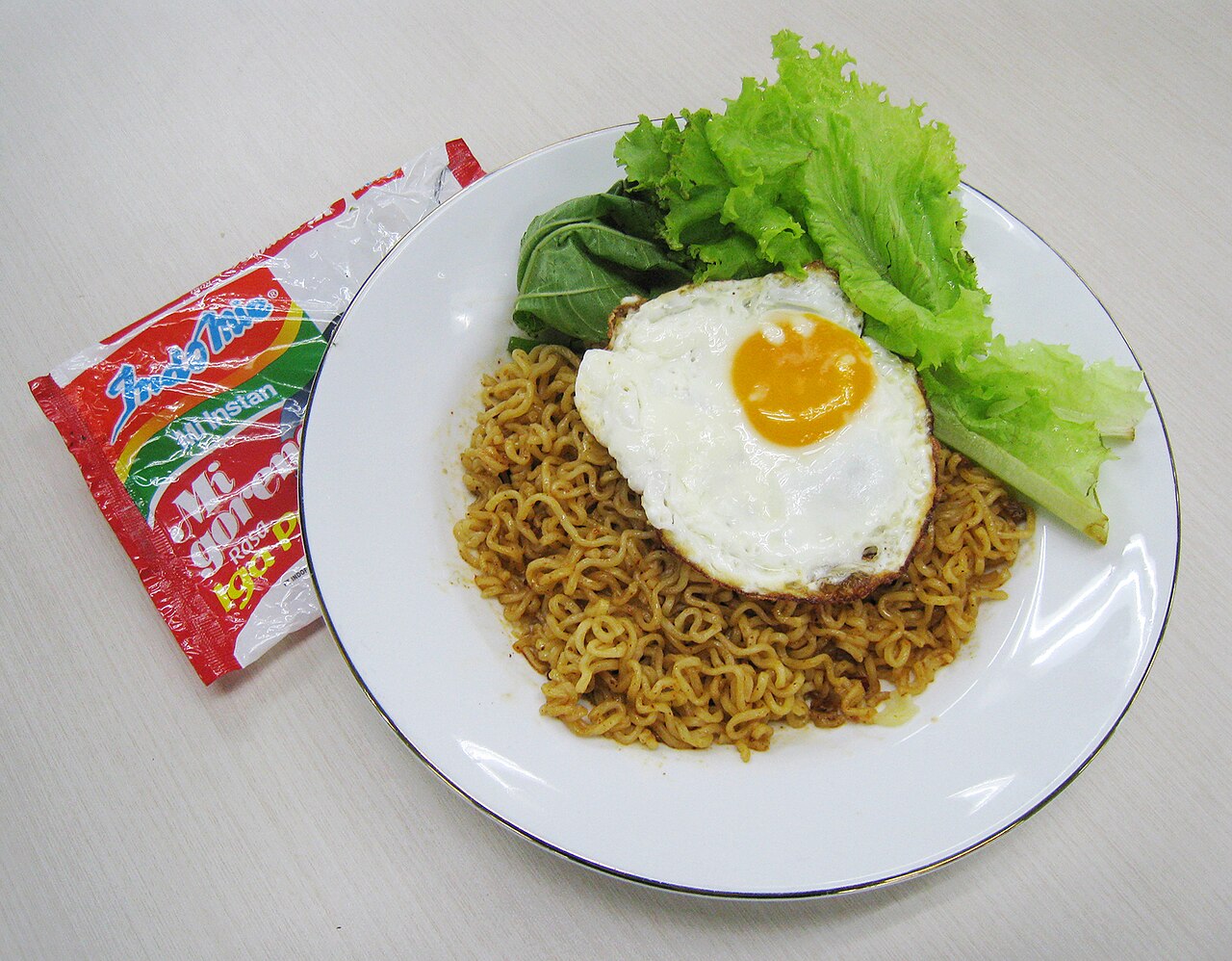
At home it was named the country’s most chosen consumer goods brand in Worldpanel’s 2024 Brand Footprint study. The tagline “Indomie, Seleraku” (“Indomie, my taste”) turned a cheap meal into a statement of identity, which is exactly what a brand is supposed to do.
9. J&T Global Express (US$917 million)
The courier rose from 13th to 9th. Founded in Jakarta in August 2015 by Jet Lee, formerly head of Oppo’s Indonesian business, J&T rode the e-commerce boom, expanded across Southeast Asia, entered China in 2020 and bought rival BEST’s Chinese express operations in 2021. By 2022 its network reached 13 countries, including the UAE, Saudi Arabia, Mexico and Egypt, and its parent listed in Hong Kong in October 2023.
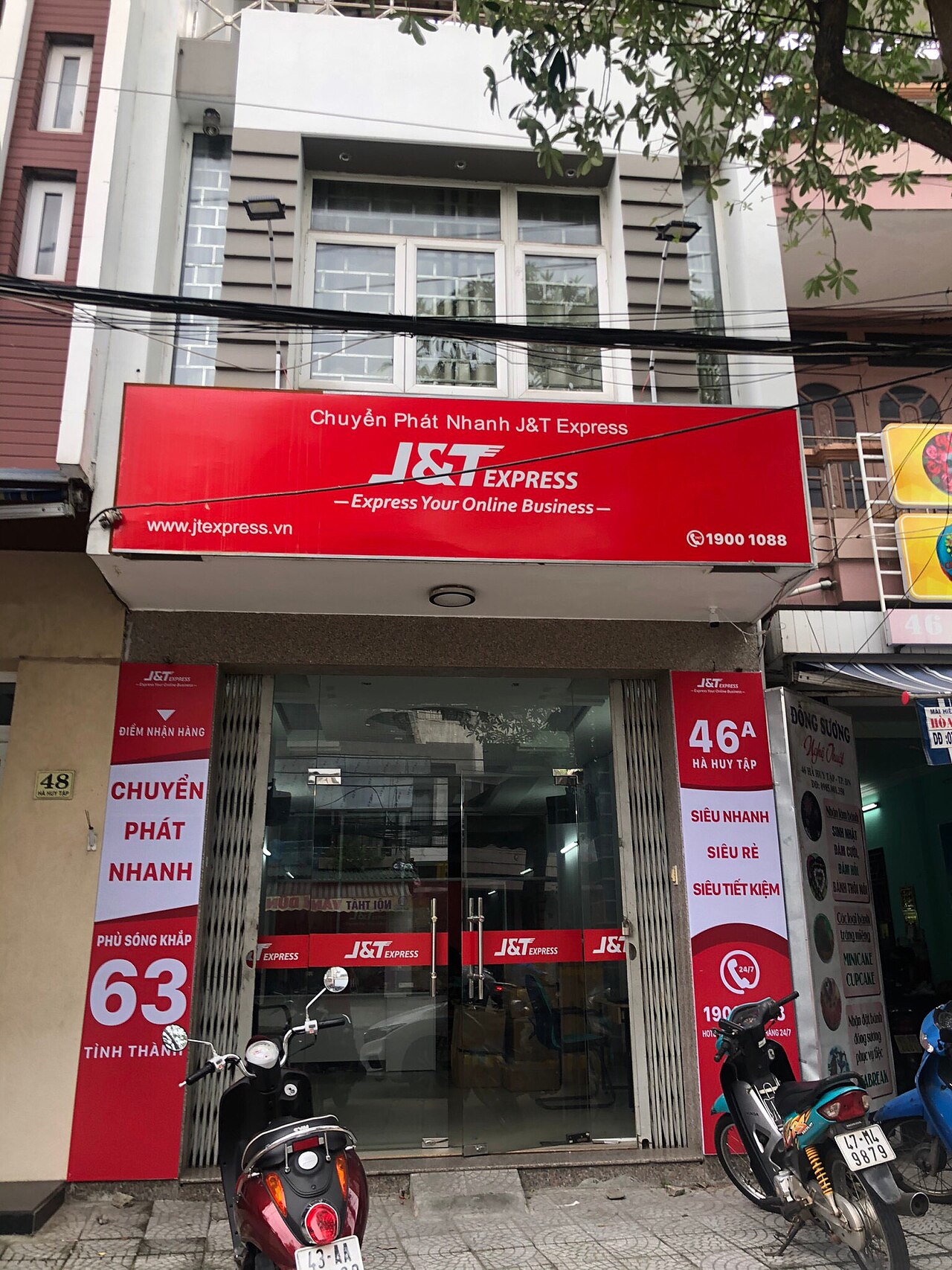
In China it trades under a name that translates as “speedy rabbit”, a reminder that a corporate brand can go by different names in different markets.
J&T shows how a logistics brand can become a consumer brand. Most people never choose a courier; the marketplace chooses it for them. J&T’s achievement was to make its name the one printed on millions of doorstep moments, so that a brand nobody selected became one everybody recognised.
Can a flour mill really be a top-ten brand?
It can, and the tenth name on the list is the clearest case in Indonesia for treating business-to-business brands seriously.
10. Bogasari (US$837 million)
The surprise of the list. Bogasari, the flour-milling arm of Indofood, jumped from 17th to 10th with value up 43.6%. Founded on 19 May 1969, it opened its first mill at Tanjung Priok in Jakarta in 1971, and under a state wheat-import system from the 1970s it grew to supply most of the country’s flour, with roughly 85% of the market by 1987.
Bogasari marks 50 years of growing with Indonesia, from the flour miller founded in 1969 whose brand sits behind many of the country’s noodles and breads.
Bogasari is the ingredient behind other brands, including the noodles at number eight. Its flour brands, Segitiga Biru, Kunci Biru and Cakra Kembar, are names bakers and noodle stalls know well, even if most consumers have never noticed. It also owns La Fonte, which Indofood describes as Indonesia’s leading pasta brand, and exports pasta to the Philippines, Korea and Japan.
Proof that a business-to-business brand can be worth a great deal without ever being famous.
Just outside the ten
The next places hold their own stories. Bank Syariah Indonesia sits 11th, a sign of how far Islamic banking has come. Alfamart, 13th, grew 34% to US$612 million on store expansion and digital services. Garuda Indonesia, 16th, was the fastest-growing brand in the study, up 53% after its restructuring and recovering passenger numbers.
Also notable is who is missing. The tobacco names that sat in the 2025 top ten do not appear in the 2026 top twenty. Rankings move, and a list like this is a snapshot, not a verdict.
What the table teaches
A few lessons stand out for any company building a corporate brand in Indonesia or the wider region.
Trust is the asset. Six of the ten are state-linked institutions whose brands rest on reliability across a vast archipelago. People do not love their electricity company. They trust it, or they do not.
Strength and value are different scoreboards. BCA is the strongest brand in the country and only the third most valuable. A smaller company can out-build a giant on loyalty and reputation long before it matches it on size.
Invisible brands can be enormous. Bogasari and J&T prove that being the name behind the product, or the van at the door, can be worth hundreds of millions of dollars, provided the people who do choose you know exactly what you stand for.
Questions from the trading floor
What is the most valuable brand in Indonesia?
BRI (Bank Rakyat Indonesia) is Indonesia’s most valuable brand in Brand Finance’s Indonesia 100 2026, valued at US$6.9 billion, ahead of Bank Mandiri and BCA.
What is the strongest brand in Indonesia?
BCA is Indonesia’s strongest brand for the eighth consecutive year, with a Brand Strength Index score of 95.9 out of 100 and an AAA+ rating.
Which sector dominates Indonesia’s top brands?
Banking accounts for 45% of the total value of Indonesia’s top 100 brands, and four of the top ten are banks.
If you want to know what your own corporate brand is worth before the market tells you, start with a brand audit.






