On 11 December 2025, Chick-fil-A opened its first restaurant in Singapore. A chicken sandwich chain from Georgia, closed on Sundays, arriving in a city that already has some of the best fried chicken on earth, much of it sold for a few dollars at a hawker stall.
Why would anyone cross the road for it?
Because they are not only buying chicken. They are buying a story absorbed from films, social feeds and holidays: a particular American politeness, a particular sauce, a particular cow holding a misspelt sign. That story is the brand. In food it is often worth more than the kitchen.
An F&B brand is the name, taste memory and set of promises attached to a food, drink or restaurant offer, and the top F&B brands in the USA are those whose names are worth the most, led by Coca-Cola, McDonald’s and Starbucks.
Here are the ten American food and drink brands with the highest brand values we could confirm, how we ranked them, and the recipe each one follows.
How did we rank these ten?
The basis is brand value, as estimated by Brand Finance in its most recent published sector tables, with our commentary. Restaurant figures come from the Restaurants 25 2026 ranking, published in February 2026. Drink figures come from the Food & Drinks 2026 rankings, published in August 2026. Brand Finance did not publish 2026 values for Pepsi or Lay’s in its summary of those tables, so for those two we use its 2025 food and drink figures, and say so.
Brand Finance’s method estimates the royalty a company would pay to license its own brand, then turns those payments into a present-day value. It measures the commercial power of a name, not the quality of the food. So this is a list of the most valuable brands, not the tastiest.
Domino’s Pizza, at US$7.1 billion, and Taco Bell, at US$6.9 billion, sit just outside our ten.
One more caution. The top of the table belongs to drinks and fast food, because those categories sell the same product in the same way in dozens of countries. Scale rewards consistency, and the ranking reflects it.
Does a brand really change how food tastes?
It does, and a famous marketing stunt hinted at it first. In 1975 Pepsi launched the Pepsi Challenge, blind taste tests in shopping malls where people sipped from two unmarked cups. More of them preferred Pepsi.
Decades later, the same contest went inside a brain scanner. With the cups unlabelled, tasters’ preferences tracked activity in a region of the prefrontal cortex. Tell them which brand they were drinking, and both their stated preferences and their brain responses shifted markedly.
The liquid had not changed. The meaning had.
That is the whole game in food branding. Taste is real, but expectation seasons everything. A brand is the flavour you taste before the first bite.
The giants: numbers 1 to 3
1. Coca-Cola
Coca-Cola was first sold in Atlanta on 8 May 1886. Its inventor was the pharmacist John Stith Pemberton, but its brand came from his bookkeeper, Frank Mason Robinson, who suggested the name and chose the flowing Spencerian script that is still on every can. The contour bottle, patented in 1915 and in shops from 1916, gave the drink a shape as recognisable as its name.
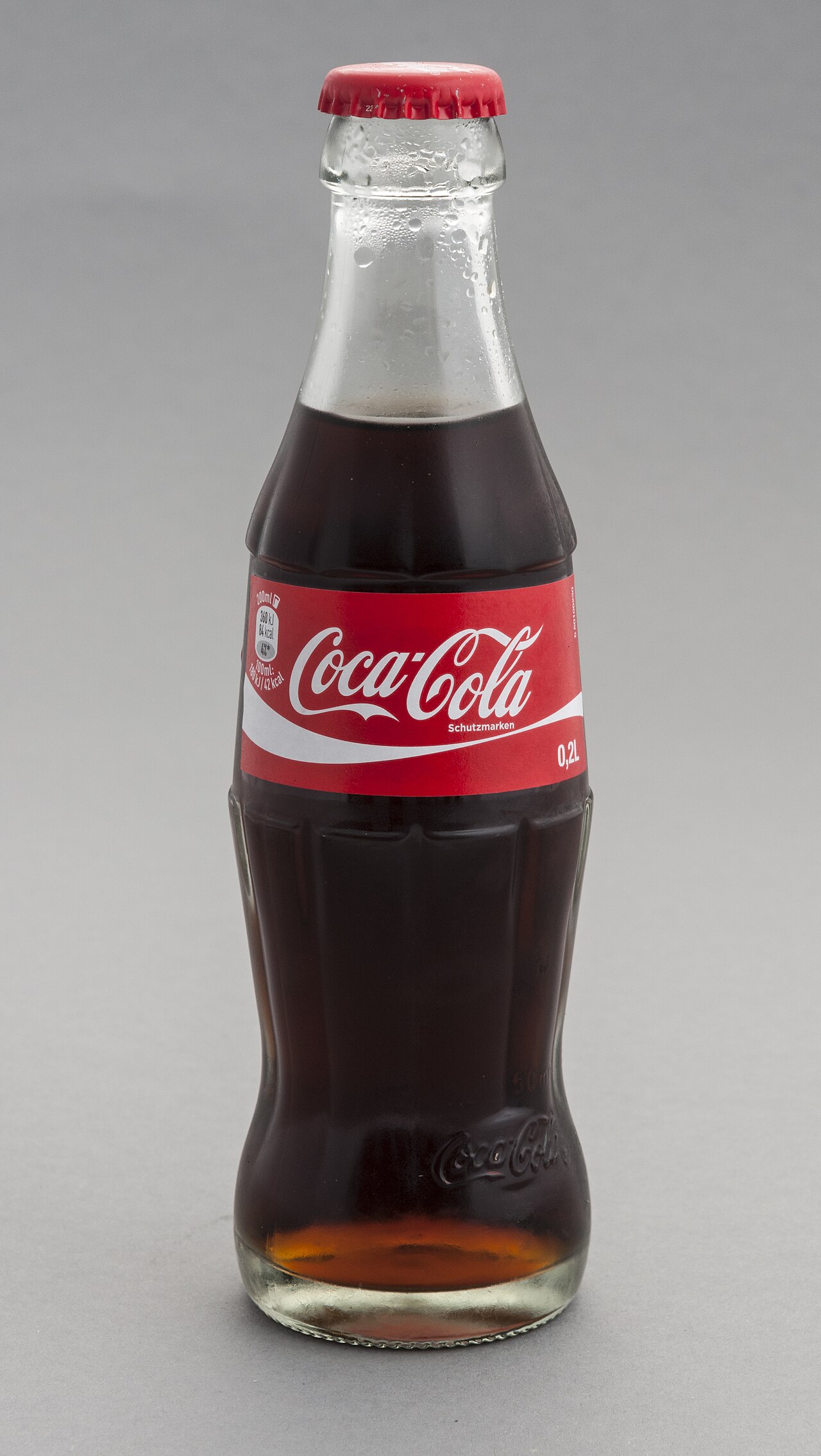
Coca-Cola is the most valuable non-alcoholic drinks brand in the world at US$46.1 billion in Brand Finance’s 2026 table, down 1%, though it lost its brand-strength lead this year to China’s Nongfu Spring.
Its great lesson came in 1985, when it replaced its formula with New Coke on 23 April and brought back the original as Coca-Cola Classic on 10 July. Customers had told the company, loudly, that they owned the brand.
Coca-Cola listened. It has treated its own heritage with near-religious care ever since, from the Santa Claus winter campaigns of the 1930s to the “Share a Coke” name bottles first tried in Australia in 2011.
2. McDonald’s
McDonald’s is the world’s most valuable restaurant brand, at US$42.6 billion, up 5%, and also one of the three strongest in Brand Finance’s restaurant table. Its menu matters less than its system: the same arches, the same rituals and the same broad promise of predictability in more than 100 countries.
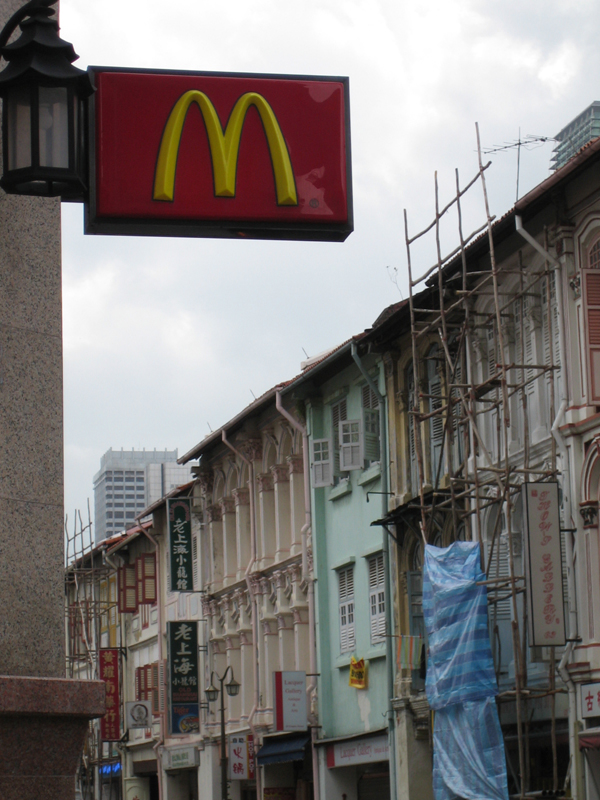
Yet the cracks show at the till. Brand Finance flagged affordability concerns and softer engagement in the United States, and American diners voice the same complaint: a family order that once felt cheap now costs restaurant money.
A fast-food brand built on value is uniquely exposed when prices climb. The arches still carry enormous trust. The question is how much more price they can carry.
Can a café brand survive the pick-up counter?
3. Starbucks
Starbucks opened in Seattle on 30 March 1971, founded by Jerry Baldwin, Zev Siegl and Gordon Bowker, its name an echo of Starbuck, the chief mate in Moby-Dick. Howard Schultz bought the company in 1987 and turned a bean shop into a global café habit. In January 2011 the company removed its name from the logo, leaving the green siren to speak alone, a sign of how far the brand had travelled.
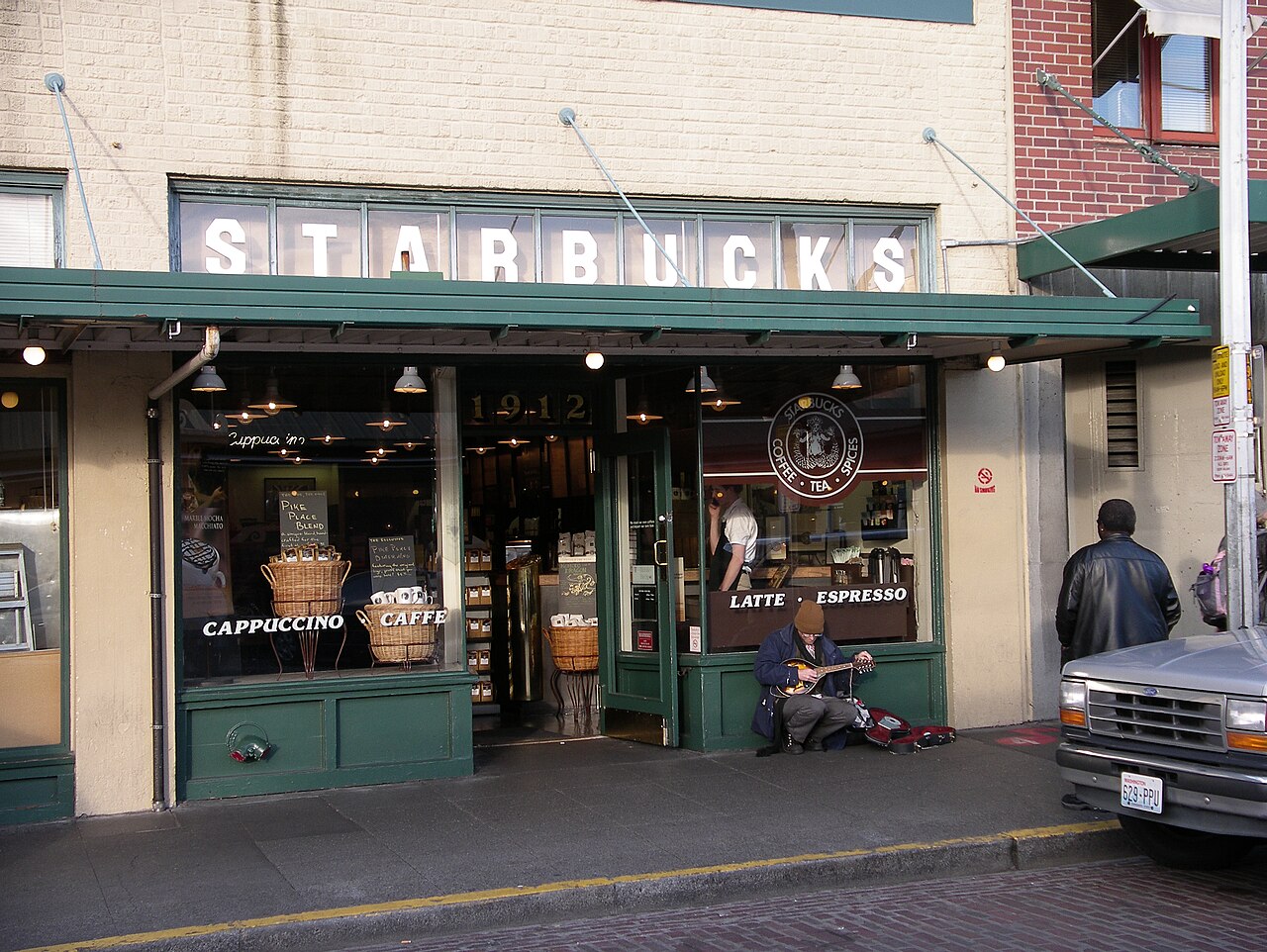
Recent years have been harder. Brand Finance puts Starbucks second among restaurants at US$37 billion, down 4%, and points to competition in China, its second-largest market.
Brian Niccol became chief executive in September 2024 and announced a “Back to Starbucks” plan aimed at restoring the warmth of the café. Starbucks has also agreed to let Boyu Capital take a stake of up to 60% in its China business.
When a brand built on lingering becomes a mobile-order pick-up counter, it has to decide what it is selling.
The challengers’ table: numbers 4 to 6
4. Pepsi
Caleb Bradham first sold his drink at his pharmacy in New Bern, North Carolina, in 1893 as Brad’s Drink, and renamed it Pepsi-Cola in 1898. It has spent most of the time since as the cheeky younger sibling, pitching itself as the choice of the next generation, from the “Pepsi Generation” campaigns of the 1960s to that blind taste challenge.
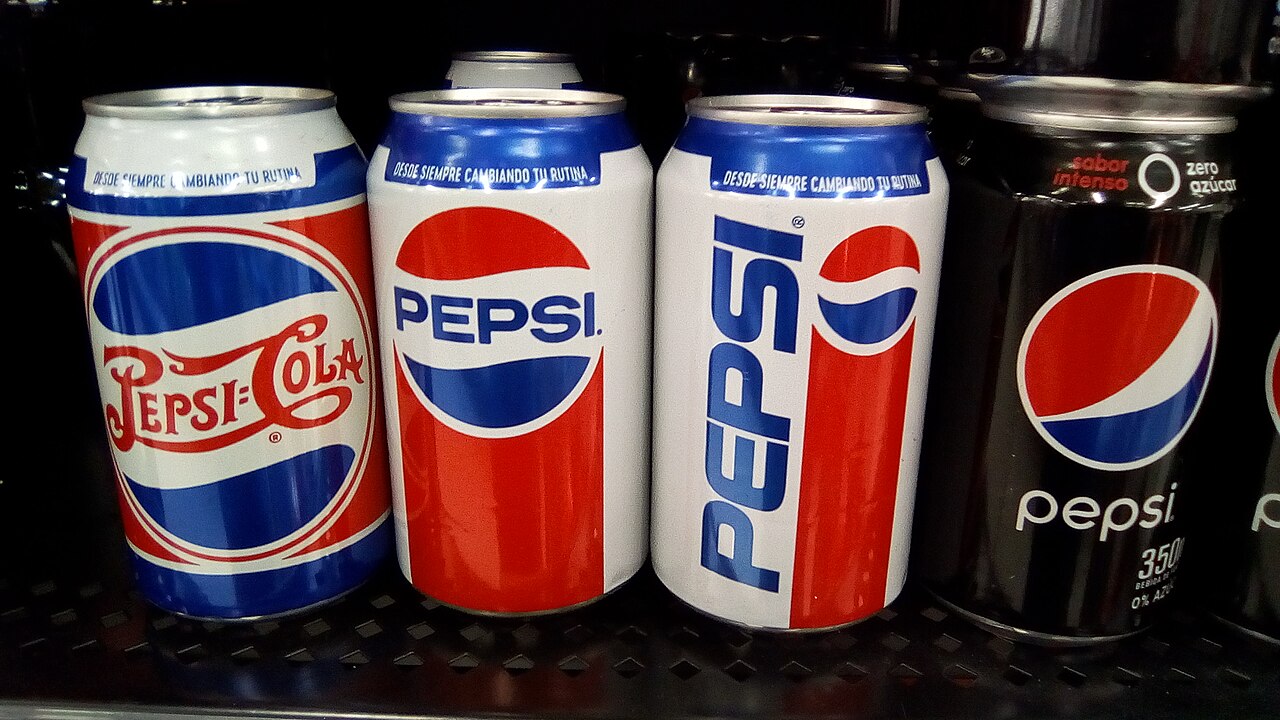
Being number two has shaped the brand beautifully. Pepsi was the runner-up drinks brand in Brand Finance’s 2025 table, at about US$22.5 billion, up 12%. India and Pakistan are among the few countries where it outsells Coca-Cola.
It unveiled a new logo in March 2023, the latest of many. A challenger brand works best when it knows exactly who it is challenging.
5. KFC
Harland Sanders began serving fried chicken to travellers at a filling station outside North Corbin, Kentucky, in 1930. He franchised his recipe to Pete Harman of South Salt Lake, Utah, in 1952, and “finger lickin’ good” became the slogan. The company formally adopted the initials KFC in 1991.
KFC’s most remarkable brand story is Asian. In November 1987 it opened in Beijing, the first Western restaurant chain in China, and China is now its single largest market.
Brand Finance values KFC at US$16.5 billion, up 8%, with growth driven by China and new restaurants. A white-suited colonel from Kentucky became a fixture of Chinese city life, proof that a founder’s face can travel further than his recipe.
6. Lay’s
Herman Lay started a snack business in Nashville in 1932. His company merged with the Frito Company in 1961, and Frito-Lay merged with Pepsi-Cola in 1965 to form PepsiCo. The slogan “Betcha can’t eat just one” arrived soon after the 1961 merger.
Lay’s is a master of local disguise. It trades as Walkers in Britain, Sabritas in Mexico, Chipsy in Egypt and Smith’s in Australia, and it sells flavours such as numb-and-spicy hot pot in China and tom yum in Thailand. Brand Finance’s 2025 table made Lay’s the second most valuable food brand in the world, at US$12.7 billion.
Global brand. Local mouth.
Sandwiches and energy: numbers 7 and 8
7. Subway
Fred DeLuca and Peter Buck opened a sandwich shop in Bridgeport, Connecticut, in 1965, funded by a US$1,000 loan. It grew into the world’s largest single-brand restaurant chain by number of locations, about 37,000 in more than 100 countries by 2023.
Subway is also a warning about what scale cannot fix. Its “US$5 footlong” promotion of 2008 became its most successful ever, but 2016 brought its first net loss of locations, and hundreds of American stores closed in the years that followed. A brand that stands on one idea, a cheap fresh sandwich, has nowhere to go when that idea stops feeling special.
Roark Capital completed its US$9.6 billion purchase of the chain in April 2024. Brand Finance values Subway at US$9.5 billion, fourth among restaurant brands.
8. Monster
Hansen Natural launched Monster Energy in April 2002, wrapped in a green claw-mark “M” created by the California design firm McLean Design. The logo looks like it was scratched into the can by something with opinions.
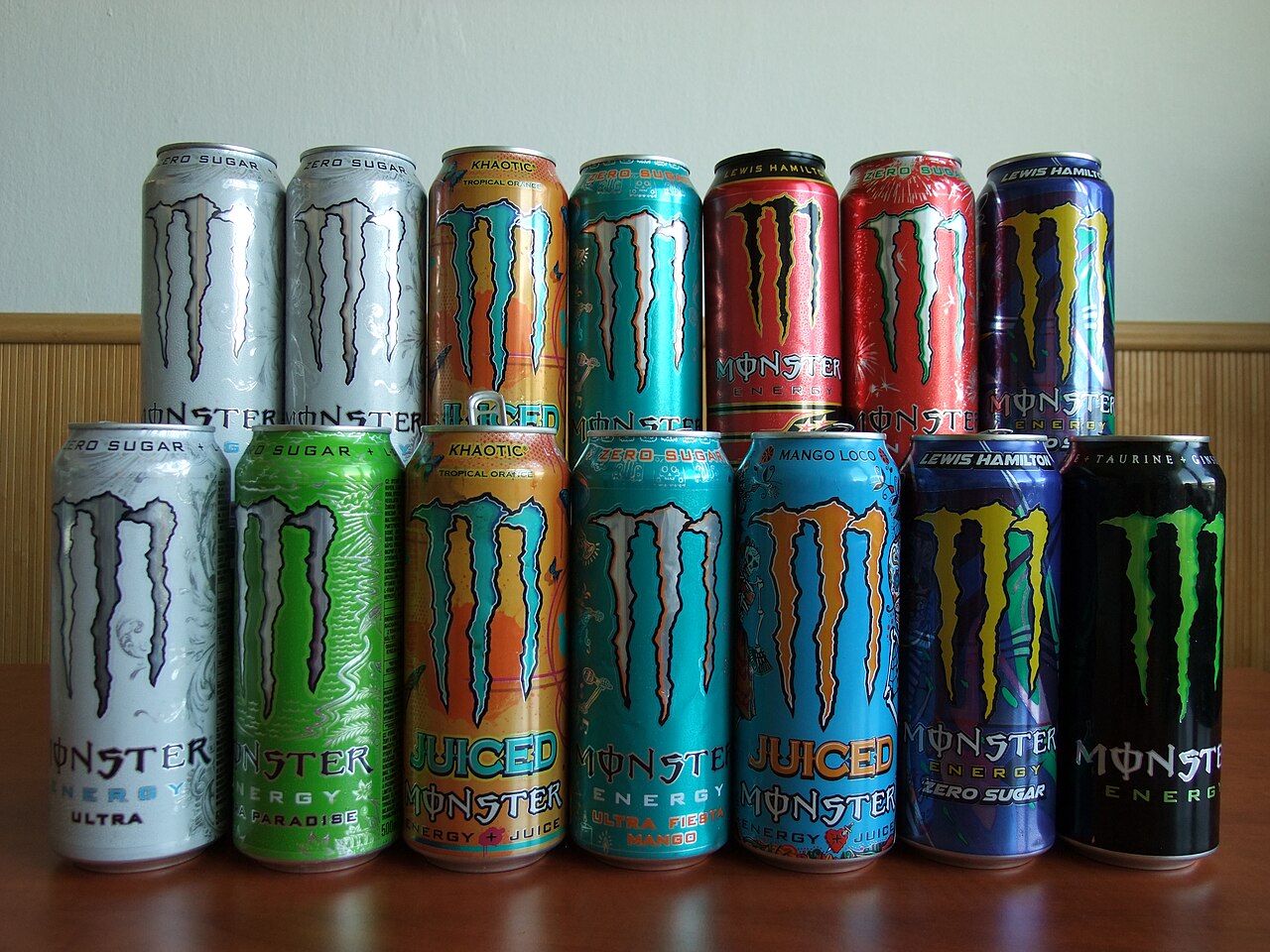
Monster has built its brand mainly through sponsorship rather than conventional advertising: motorcycle racing, mixed martial arts and NASCAR, where it was title sponsor of the Cup Series from 2017 to 2019. Brand Finance values it at US$9.1 billion, up 4%, second among functional drinks behind Austria’s Red Bull. Monster proves that an attitude, consistently applied, can be as distinctive as a taste.
Can a ritual be worth more than an advert?
9. Gatorade
Gatorade was developed in 1965 by researchers led by Robert Cade at the University of Florida, at the request of the Gators’ football coach. Quaker Oats bought it in 1983, and PepsiCo acquired Quaker, and with it Gatorade, in 2001. The “Be Like Mike” advertisements with Michael Jordan began in August 1991.
Gatorade’s brand is built on proof. It became the NFL’s official sports drink in 1969 and founded the Gatorade Sports Science Institute in 1985. Then it gained a ritual it never paid for: winning teams pouring a cooler over the coach, popularised by the New York Giants in the mid-1980s.
Gatorade’s "It Hasn’t Changed" spot leans on decades of athletic proof, the core of its brand.
It held about 61.6% of the American sports drink category in 2025, and Brand Finance values it at US$9.0 billion, up 21%. Science gives the brand its authority. Sport gives it theatre.
10. Chick-fil-A
S. Truett Cathy opened the Dwarf Grill in Hapeville, Georgia, on 23 May 1946, and the first Chick-fil-A restaurant followed in 1967 in an Atlanta shopping mall food court. The chain closes every Sunday, a rule that should hurt sales and instead became part of its legend.
In 1995 the agency The Richards Group gave it cows campaigning, with poor spelling, for people to “Eat Mor Chikin”.
Chick-fil-A is the brand on the move. It was the American Customer Satisfaction Index’s favourite fast-food chain for eight consecutive years to 2022, and has the highest sales per restaurant of any American fast-food chain. It is also the fastest-growing brand in Brand Finance’s Restaurants 25 2026, up 44% to US$8.1 billion.
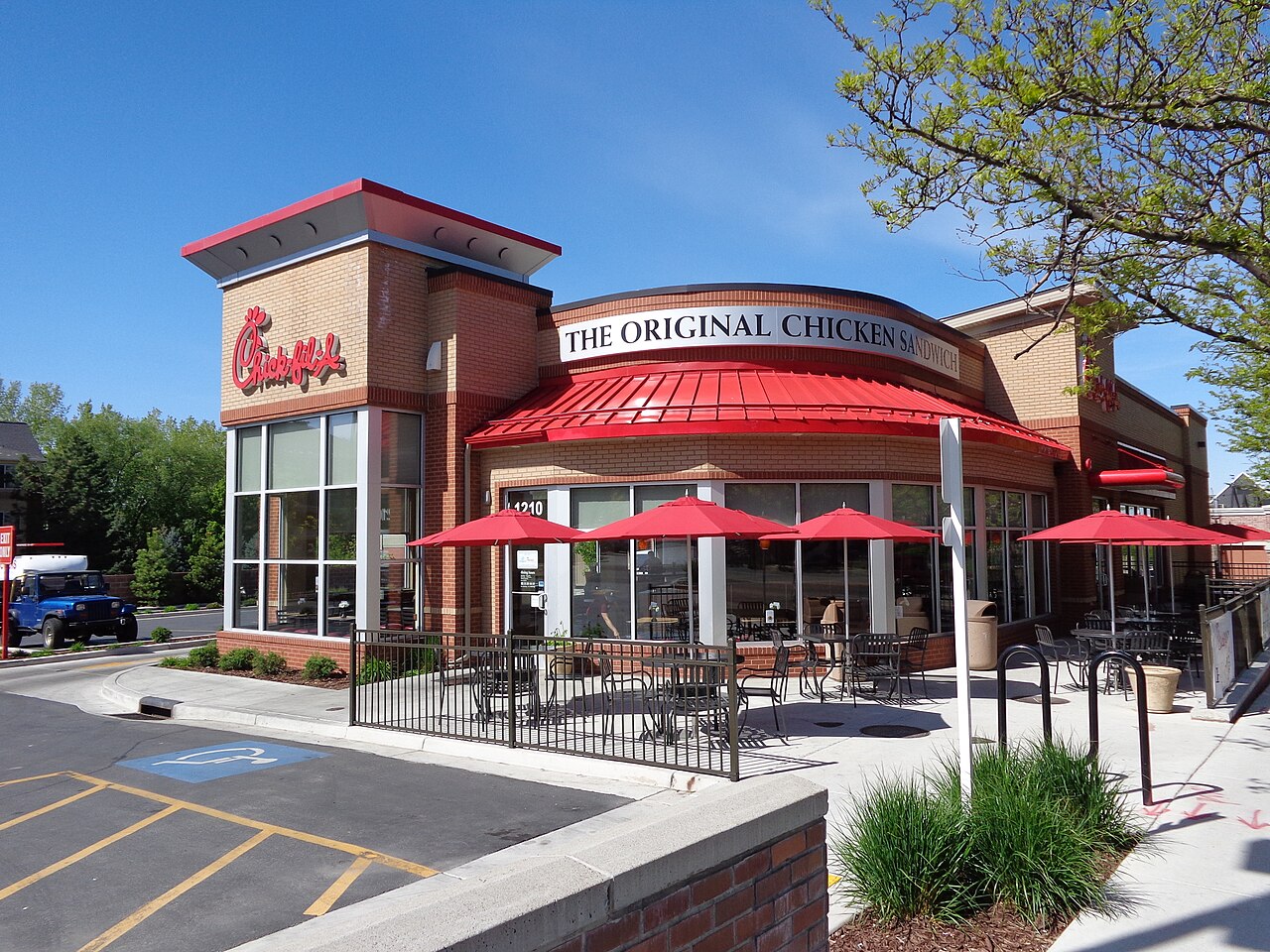
Its first full British restaurant opened in Lisburn, Northern Ireland, in January 2025, before Singapore that December. Service, it turns out, is a flavour too.
Why are American food brands losing ground in Asia?
The 2026 tables carry a clear message for the giants. Western restaurant brands face declining price acceptance while Chinese value-led chains surge. Mixue, the budget ice cream and tea chain, entered the Restaurants 25 at twelfth place. Luckin Coffee rose 40%.
Haidilao, the hot pot chain famous for its service, was rated the strongest restaurant brand in the world, and the Philippines’ Jollibee also made the list. In drinks, Nongfu Spring overtook Coca-Cola on brand strength.
None of this means the American brands are fading. It means their advantages (familiarity, consistency) are being matched by brands that are closer to local tastes and wallets.
What can a smaller food brand learn from the giants?
Strip away the billions and the recipe is simple. Own something your customers can recognise without reading: a bottle shape, a script, a colonel, a pair of arches. Build a ritual around it, whether a cooler dumped on a coach or a closed door on Sundays. Then adapt the menu and keep the face.
Picture a Katong laksa stall whose bowls, staff greeting and handwritten sign are so consistent that a regular could recognise them blindfolded. That is the same discipline Coca-Cola applies to its contour bottle, scaled down to one street. Consistency is the cheapest way to make people taste your name.
Before you order
What is the most valuable food and drink brand in the USA?
Coca-Cola is the most valuable American food and drink brand, valued at US$46.1 billion in Brand Finance’s 2026 drinks rankings, ahead of McDonald’s at US$42.6 billion among restaurants.
Which US restaurant brand is growing fastest?
Chick-fil-A grew fastest in Brand Finance’s Restaurants 25 2026, with its brand value rising 44% to US$8.1 billion on the back of strong US sales and expansion.
Does branding really affect taste?
Yes. In brain-scan tests with Coca-Cola and Pepsi, knowing which brand you are drinking changes both stated preference and brain activity, even though the two drinks are chemically very similar.
If your food or drink brand needs a story people can taste, see how we approach brand activation.






