Walk down Orchard Road on a Saturday afternoon and count the American uniforms. A pair of 501s on a student outside the MRT. A swoosh on almost every third foot. A polo pony on a banker’s weekend shirt, a tan Coach bag, a pale blue paper bag swinging from a wrist.
Nobody in the crowd is thinking about the United States. They are simply getting dressed.
That is the strange achievement of American fashion. It turned the country’s everyday clothes (the workwear, the sportswear, the preppy campus look) into a wardrobe the whole world borrows.
The top fashion brands in the USA are the American-founded clothing, footwear and accessory labels with the greatest market presence, recognition and global reach, including Nike, Tiffany & Co., Ralph Lauren, Levi’s and Coach.
What follows is a walk along ten rails. Not a stat sheet. Each entry asks what the brand understood about clothes, and people, that its rivals missed.
How did we choose these ten brands?
Fashion rankings disagree, and a list that pretends otherwise is not to be trusted. So here is our basis, plainly. These ten are American-born fashion brands selected on market presence, recognition and global reach, with our commentary. Where a brand appears in Brand Finance’s Apparel 50 2026 league table, published in August 2026, or its Luxury & Premium 50 2026, we say so.
Some context. That Apparel 50 table contains more American brands than any other country, twelve of them, worth a combined US$68.8 billion. Their total value slipped by 1%, while the global top 50 fell 4% to US$350.9 billion. And the top of the table is French: Chanel sits first and Louis Vuitton second, with Nike third.
Only two claims here are a ranking. Nike is the most valuable American apparel brand by a wide margin, and Tiffany & Co. is the next most valuable American name in that table. The numbers below are a route, not a rank: after Nike, we have grouped brands by the job they do in a wardrobe, because that is how buyers actually think.
The heavyweights: sport and prep
1. Nike
Nike began in January 1964 as Blue Ribbon Sports, a company founded by the runner Phil Knight and his coach Bill Bowerman to distribute shoes made by Japan’s Onitsuka Tiger. It took the name of the Greek goddess of victory in 1971, the same year it first used the swoosh drawn by Carolyn Davidson. Signing Michael Jordan in 1984 and adopting “Just Do It” in 1988, a line coined by the adman Dan Wieden, turned a shoe company into a belief system about effort.
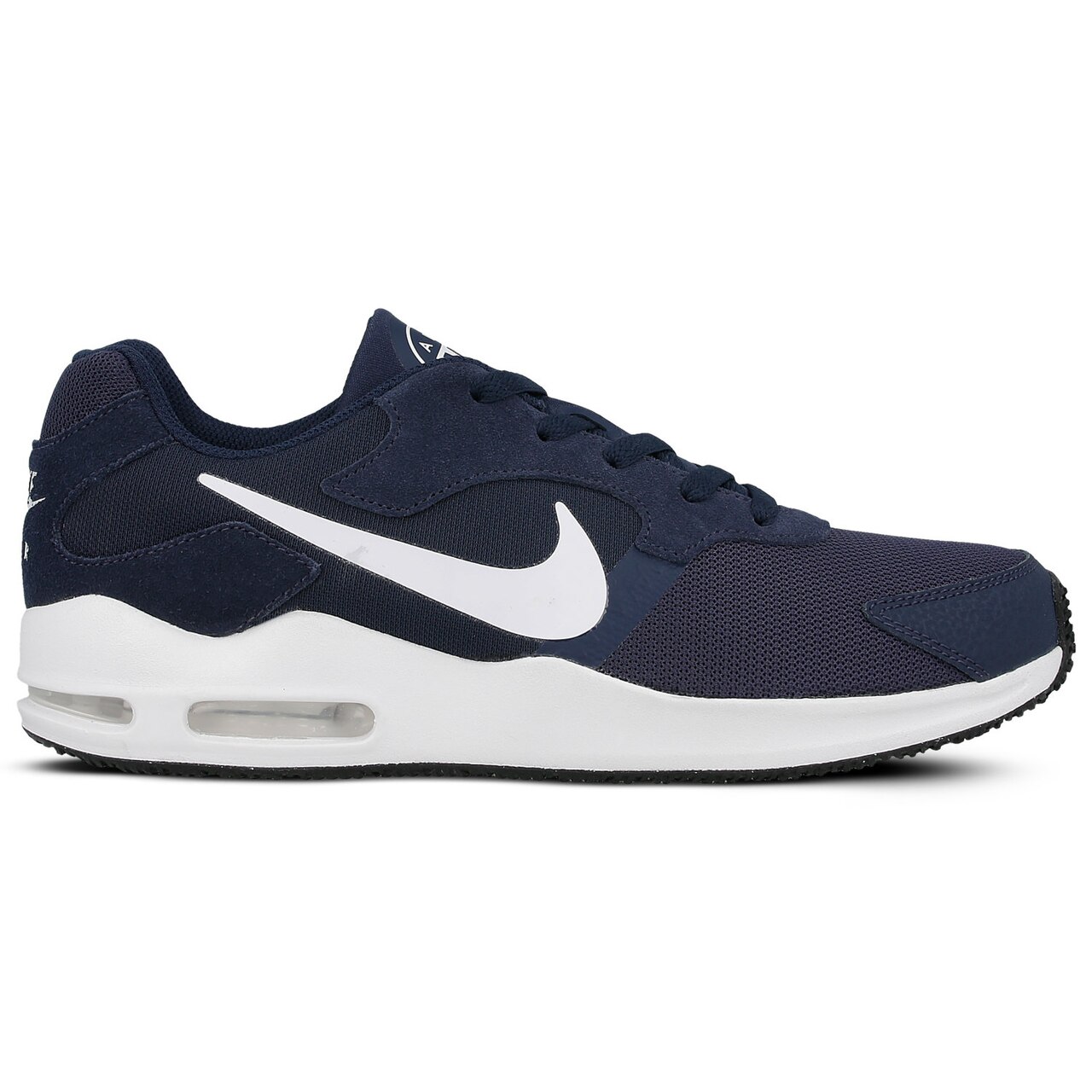
The recent chapter is more instructive. Nike pulled back hard from wholesale partners in favour of selling direct, and stopped selling through Amazon in 2019. Critics argue that the shelf space it vacated went straight to younger running brands.
Since Elliott Hill returned as chief executive in late 2024, Nike has rebuilt wholesale relationships and agreed a return to Amazon. It remains third in the Apparel 50 2026 at US$27.3 billion, down 7%, and still one of the strongest brands in the sector.
The lesson: a brand this big can survive a channel mistake, but it cannot be invisible where people shop.
2. Ralph Lauren
Ralph Lauren started in 1967 selling neckties, named his first full menswear line Polo in 1968, and in 1972 put a small polo player on a short-sleeved knit shirt. That shirt did more for the brand than any advertisement. It sold a membership card to a world of country houses, old money and summer lawns that most wearers had never visited.
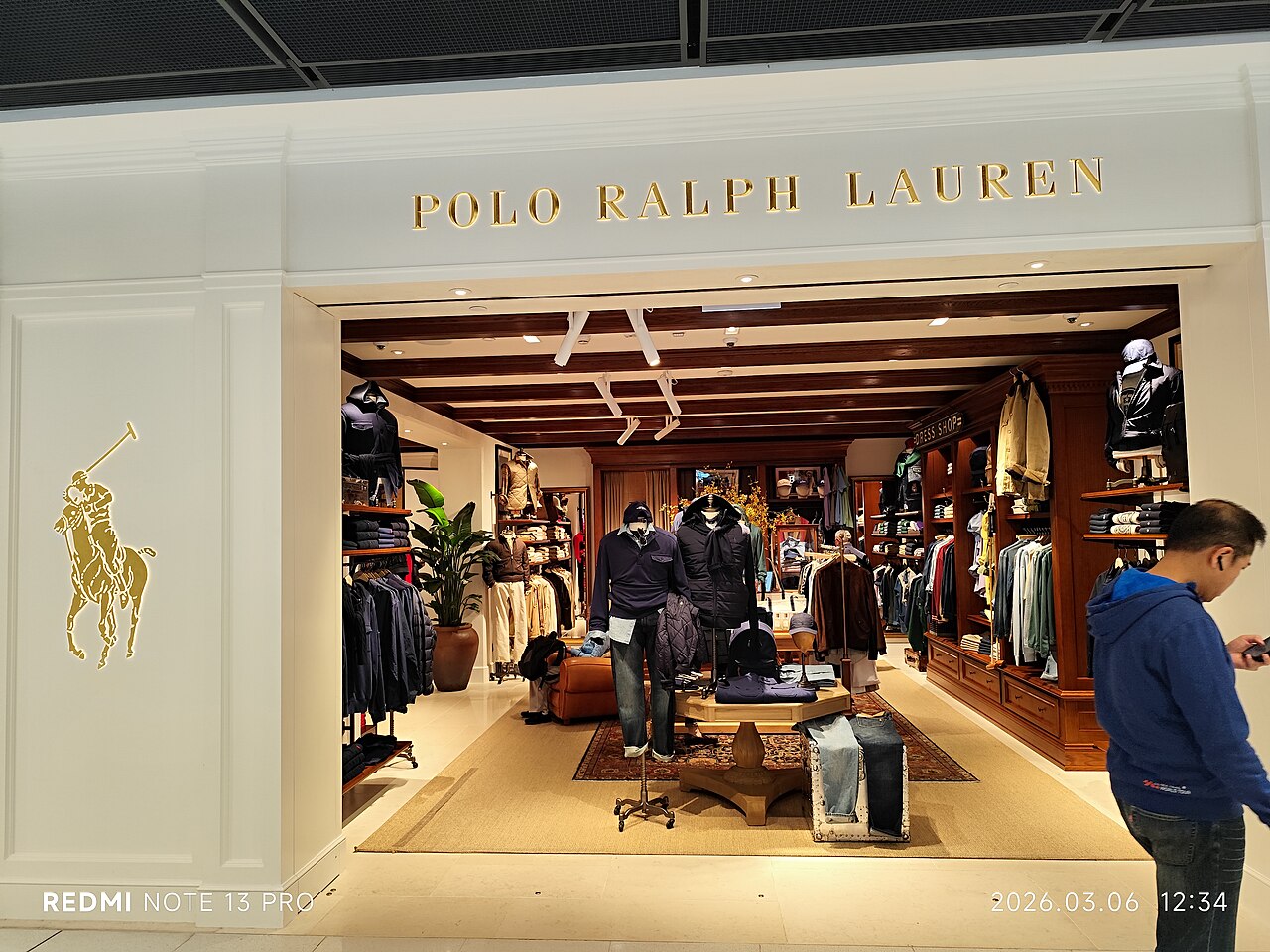
The genius is consistency of fantasy. Ralph Lauren has dressed Wimbledon’s on-court officials since 2006 and outfitted American Olympic teams since the 2008 Beijing Games, two stages that reinforce exactly the story the brand tells. Even Ralph’s Coffee, opened in the New York flagship in 2014, is a set piece in the same film. Where other labels chase trends, Ralph Lauren sells a place, and keeps selling it.
Why does a pocket stitch matter so much?
3. Levi’s
Levi Strauss opened his San Francisco dry-goods business in 1853. Twenty years later, on 20 May 1873, he and the tailor Jacob Davis received a patent for copper rivets at the stress points of work trousers. The double arc stitched on the back pocket has been there since that year.
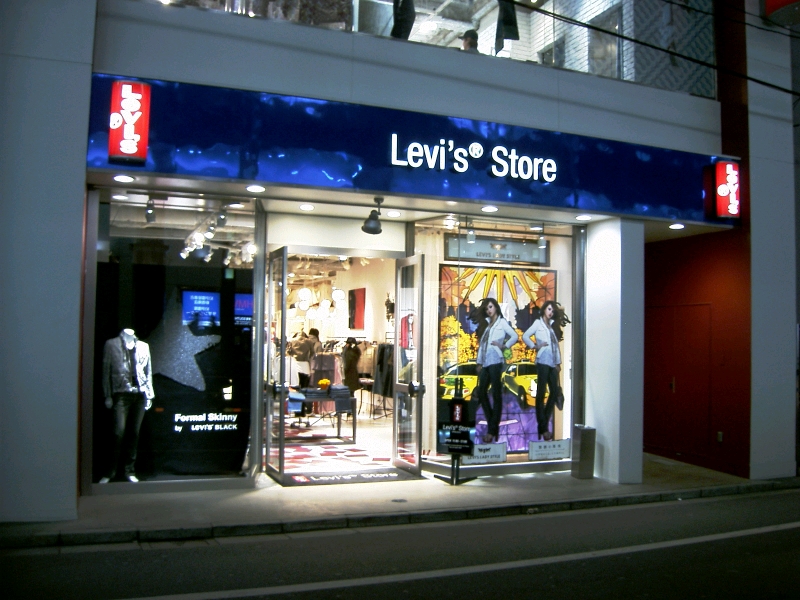
When the company gave its products lot numbers in 1890, the riveted waist overall became the 501. Nobody now knows why that number was chosen: the records burned in the 1906 earthquake.
Levi’s is the purest heritage brand on this list. It owns an origin, a product number and a pocket stitch: assets that cost little to maintain and that rivals copy at their legal peril. It sits 32nd in the Apparel 50 2026 at US$2.9 billion. The company sold its Dockers label to Authentic Brands Group, a deal announced in 2025 and completed in early 2026, to concentrate on the name that matters.
Every brand that follows is, in its way, chasing what Levi’s has. One small mark that carries a long story.
The accessories that became signals
4. Tiffany & Co.
Charles Lewis Tiffany and John B. Young opened a stationery and fancy goods shop in New York in 1837. The famous Blue Book catalogue dates from 1845, but the colour’s legal protection came much later: Tiffany registered the blue as a trademark in 1998 and standardised it with Pantone in 2001 as 1837 Blue, after the founding year. Audrey Hepburn and the 1961 film Breakfast at Tiffany’s did the rest.

LVMH bought the company in January 2021 for US$15.8 billion and began making it louder. The 2021 “About Love” campaign with Beyoncé and Jay-Z placed a Basquiat painting, Equals Pi, in a jewellery advertisement, and the rebuilt Fifth Avenue flagship reopened in April 2023.
The bet appears to be paying: Tiffany rose 16% to about US$8.7 billion in the Apparel 50 2026, the fastest growth of any American brand in the table, and returned to the global top ten of the Luxury & Premium 50. A colour can be an entire brand strategy.
5. Coach
Coach began in 1941 as a family workshop on 34th Street in Manhattan, making wallets and billfolds by hand. Lillian Cahn suggested adding women’s handbags, and the designer Bonnie Cashin, creative head from 1962 to 1974, brought brighter colours, side pockets and the silver toggle hardware that became a signature.
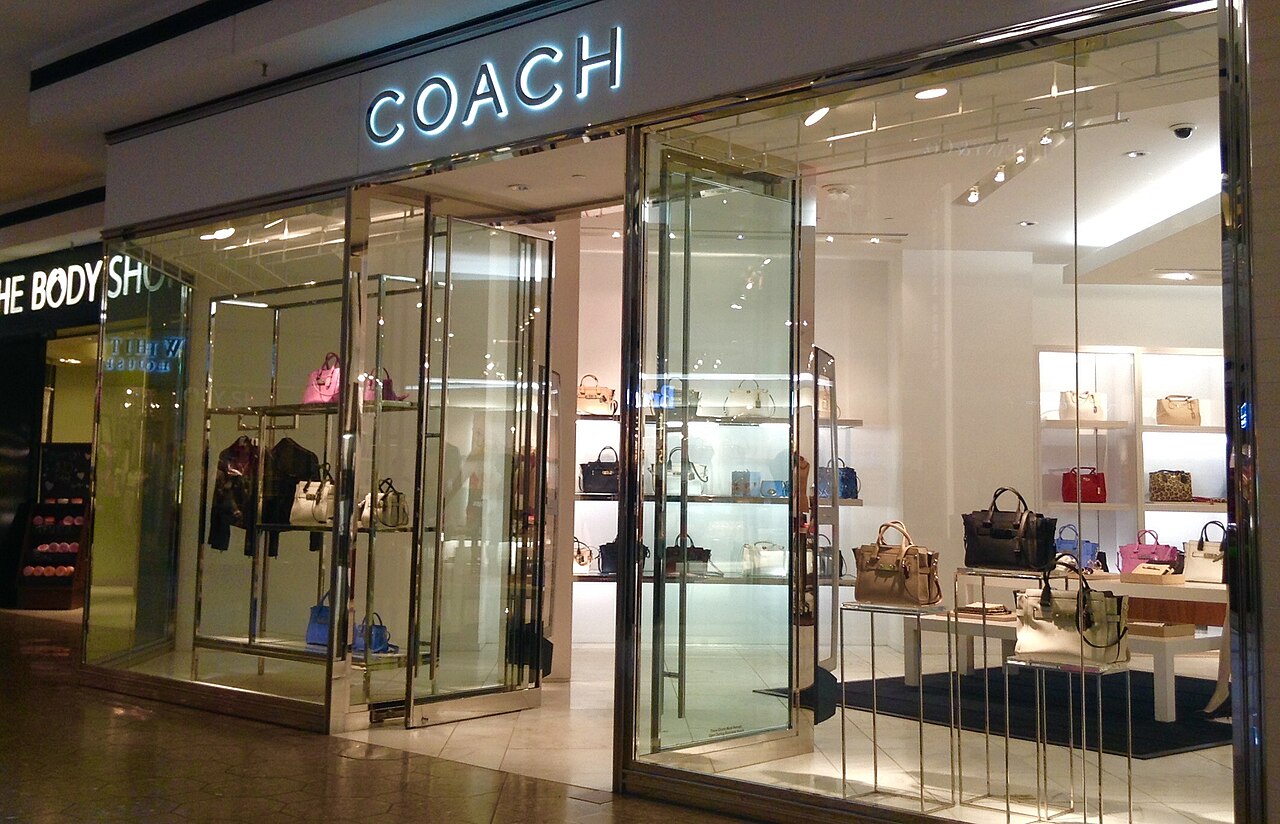
Coach’s modern story is about permission. Accessible luxury is an awkward middle, too common for the purist and too pricey for the mall.
The work of Stuart Vevers, executive creative director since 2013, under a parent company renamed Tapestry in 2017, has been to make an old New York leather name feel current. Brand Finance’s Luxury & Premium 50 2026 places Coach 15th, up 6% to US$4.9 billion. Accessible luxury works when the accessible part is said with confidence.
Underwear, sneakers and jackets
6. Calvin Klein
Calvin Klein and his childhood friend Barry Schwartz founded the company in New York in 1968. Its branding moment arrived in 1980, when Richard Avedon photographed a fifteen-year-old Brooke Shields for a jeans campaign so provocative that some of the advertisements were banned. In 1992 a young Mark Wahlberg made the brand’s boxer briefs famous in print ads.
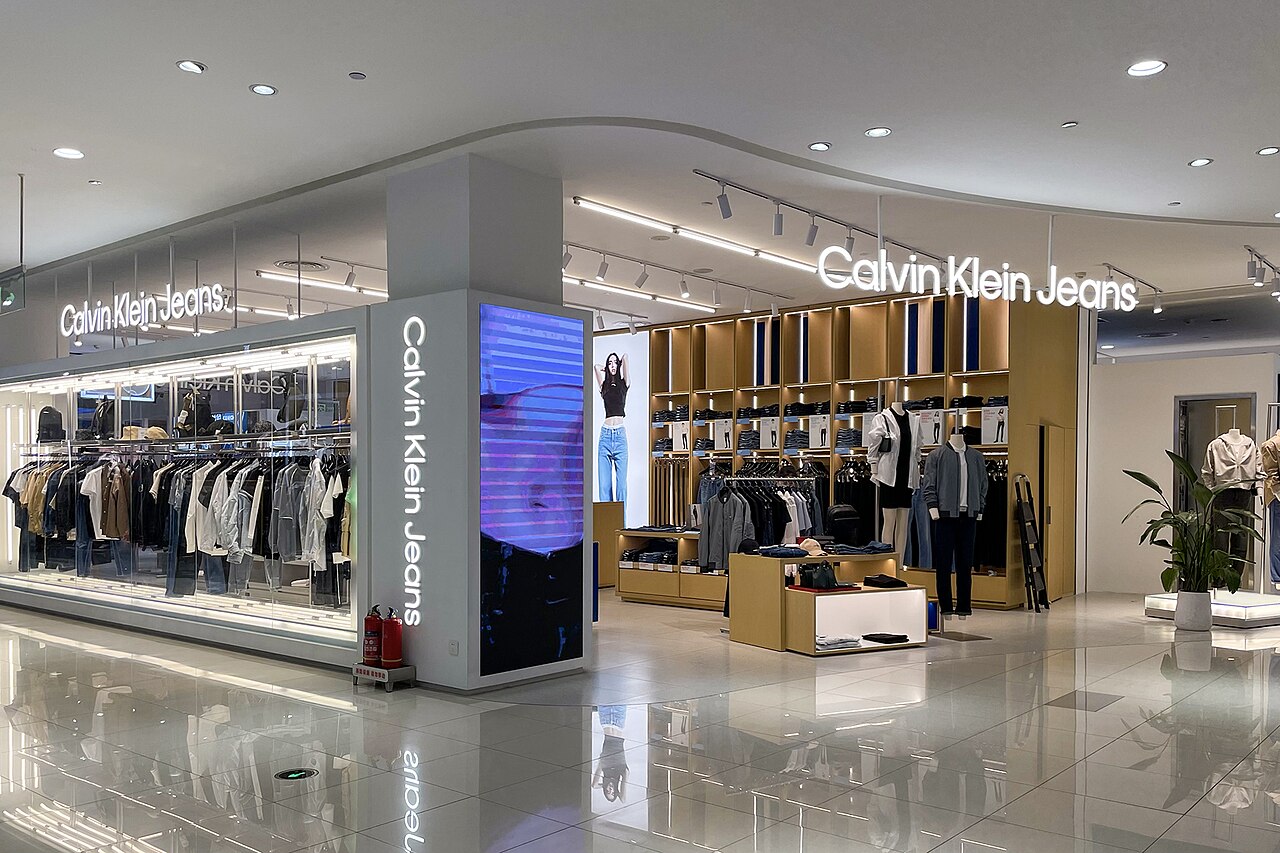
Calvin Klein’s lesson is that advertising can turn the most private garment into a public statement. The name on the waistband became the product. Acquired by PVH, then Phillips-Van Heusen, in the early 2000s, the brand has lived ever since on the same idea: minimal clothes, maximum attention.
7. Skechers
Robert Greenberg, who had earlier built L.A. Gear, founded Skechers in 1992 in Manhattan Beach, California. It never tried to beat Nike on athletic glamour. It went after comfort, walking shoes and the feet of people who had stopped pretending to train for marathons, signing endorsers as unlikely as Snoop Dogg, Martha Stewart and the baseball pitcher Clayton Kershaw.
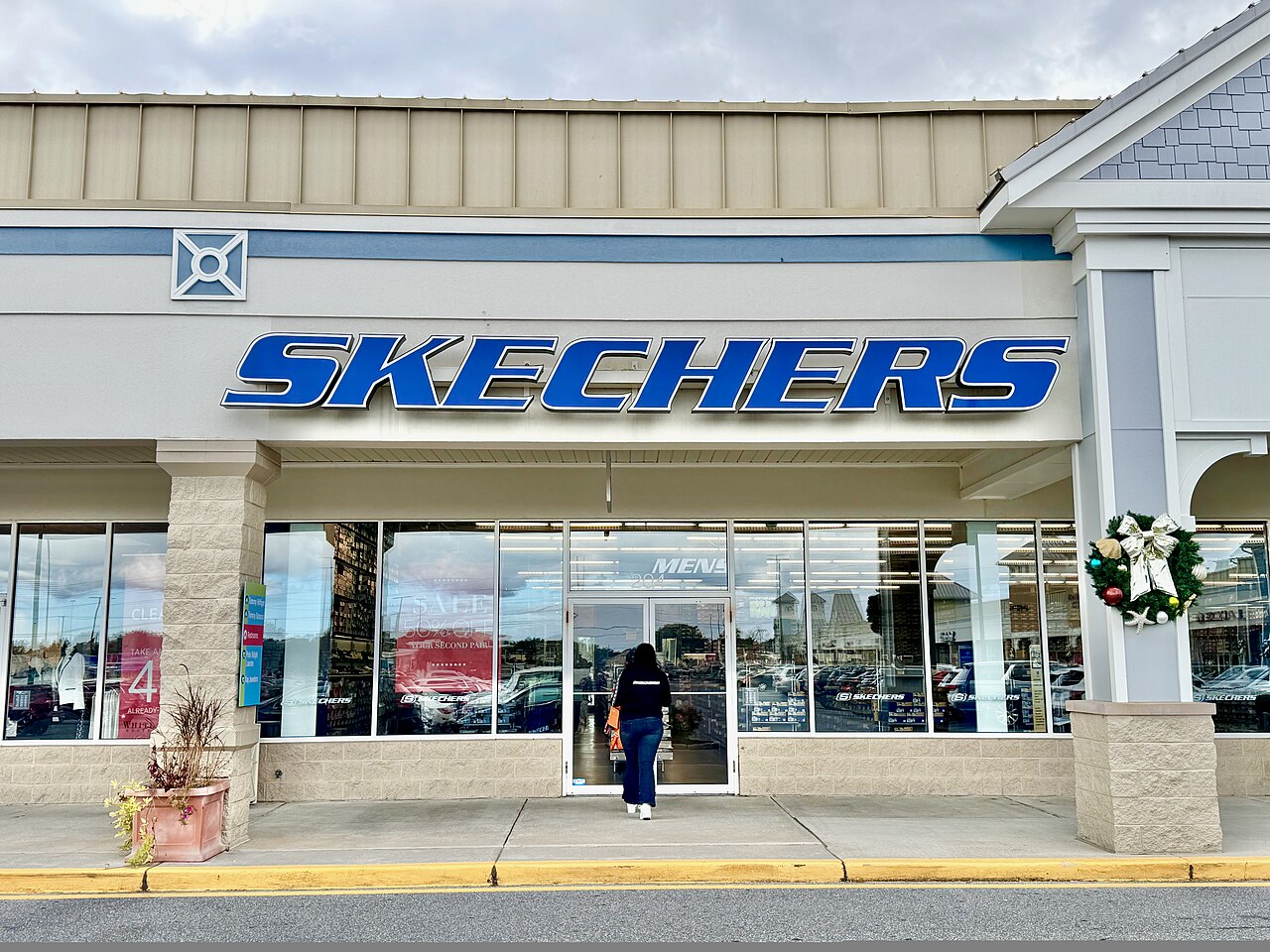
That is positioning by refusal, and it scaled. Skechers is counted among the world’s largest footwear brands by sales, and in 2025 the private equity firm 3G Capital agreed to buy it, completing the deal that September.
Not every fashion brand needs to be cool. Some just need to be the obvious answer to a specific need.
8. The North Face
The North Face was founded in San Francisco in the 1960s by Douglas and Susie Tompkins as a supplier to climbers, and its logo borrows the outline of Half Dome in Yosemite. VF Corporation bought it in 2000 for US$25.4 million.
Then something happened that no brand manager planned. By the late 1990s New York rappers were wearing the jackets, and since the 2000s the brand has been read as much as a streetwear label as an outdoor one.
The North Face kept its mountaineering credentials while city buyers wore them as a badge of toughness. Technical authority travels well into fashion, provided the brand never abandons it.
The North Face’s "Never Stop" campaign teaser keeps its exploration story alive for city and mountain buyers alike.
The high street and the work site
9. Gap
Donald and Doris Fisher opened the first Gap in San Francisco on 21 August 1969, named after the generation gap of the day. The group later bought Banana Republic in 1983, launched Old Navy in 1994 and acquired Athleta in 2008, building a family of brands across price points.
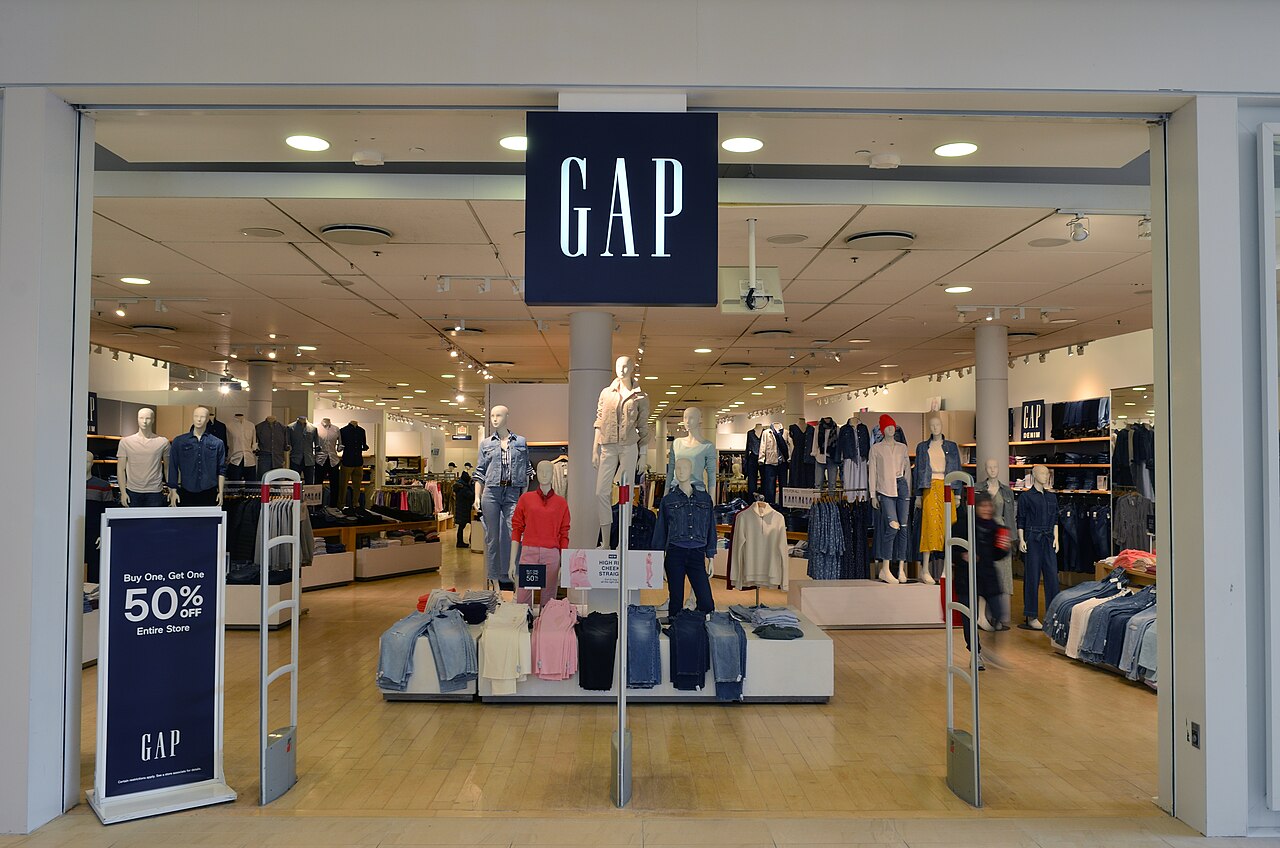
Gap is also every branding student’s favourite cautionary tale. On 4 October 2010 it unveiled a new Helvetica logo, and after a public backlash it went back to the familiar blue box on 11 October. A week.
The episode proved how much customers felt they owned the old mark. Gap has since hired the designer Zac Posen as creative director, in February 2024, signalling that the fix for a tired brand is product and point of view, not a new logo.
10. Carhartt
Hamilton Carhartt founded his company in Detroit in 1889 to make clothes for manual labourers, and its early growth came from railroad workers who needed bibs that lasted. It is still family-owned, still headquartered in Michigan, in Dearborn.
Carhartt is the clearest example of a brand adopted rather than marketed. Hip-hop artists including Tupac and Dr. Dre wore it, and a European licence granted in 1994 grew into Carhartt WIP, the streetwear line.
The brand’s authenticity comes from never pretending to be fashion. The work jacket is a work jacket first, which is exactly why it looks right on a designer in Tokyo or a student in Tiong Bahru.
Carhartt’s own "For The Love of Labor" film shows why the brand keeps its workwear roots front and centre.
What do America’s biggest fashion brands have in common?
Read the ten together and a pattern appears. Almost every one is built on a functional origin story: running shoes, riveted trousers, climbing gear, work bibs, leather wallets. The fashion came later, and it came from the culture, not the boardroom.
Call it heritage as strategy: an identity that rests on a track record, longevity, stable values, owned symbols and a company-wide belief that its history matters. Levi’s has its pocket arc, Tiffany its blue, Ralph Lauren its polo player, Nike its swoosh.
The second pattern: ownership matters less than meaning. Tiffany is now French-owned, Calvin Klein and The North Face sit inside American holding groups, Skechers belongs to private equity, Carhartt to a family. Buyers do not care. They buy the story attached to the symbol.
Are American fashion brands losing their edge?
Shoppers ask it often. They grumble that heritage names no longer guarantee quality, that the same jeans sell at very different prices in different stores, and that the logo now carries much of the price. Others point to Nike: abandon the shop floor and rivals will happily fill it.
The competition is real. In the Apparel 50 2026, Japan’s Uniqlo rose to tenth place, China’s Bosideng was the fastest-growing brand globally, up 21%, and Li-Ning entered the ranking. Asian brands are no longer simply making clothes for American labels. They are building their own meaning.
Yet the numbers argue for resilience rather than decline. American apparel brands lost less value than the global table as a whole in 2026. What protects them is not size but distinctiveness, provided the product underneath stays honest. The grumbles about quality are the real warning.
For a Singapore or regional label, the takeaway is practical. Find the functional truth in your origin. Give it one ownable symbol. Protect it for decades.
Picture a Jalan Besar tailoring shop whose signature pocket stitch becomes, over twenty years, as recognisable to its customers as the arc on a pair of 501s. That is how small brands get big without shouting.
Quick answers
What is the most valuable fashion brand in the USA?
Nike is the most valuable American fashion brand. Brand Finance’s Apparel 50 2026 values it at US$27.3 billion, third in the world behind Chanel and Louis Vuitton.
Is Tiffany & Co. still an American brand?
Tiffany & Co. was founded in New York in 1837 and its identity is thoroughly American, but it has been owned by the French luxury group LVMH since January 2021.
Why did Gap change its logo back in 2010?
Gap introduced a new Helvetica-based logo on 4 October 2010 and returned to its blue box logo on 11 October after strong public backlash from customers.
If you are building a brand that hopes to travel as far as these ten, start with a clear brand strategy and a symbol worth protecting.






