The front row has moved. A decade ago, a Chinese label on an international catwalk was a curiosity, applauded politely and forgotten by the next show.
Now China’s biggest down-jacket maker shows in Paris, a gymnast’s sportswear company dresses the national Olympic team, and shoppers in Shanghai queue round the block for gold pendants shaped like gourds. The clothes changed. So did the confidence.
China’s top fashion brands are the home-grown apparel, footwear and jewellery labels that pair national scale with rising recognition, ranging from sportswear groups such as Anta and Li-Ning to down specialist Bosideng and gold houses such as Chow Tai Fook.
This guide picks ten of them and asks a fashion editor’s question of each. Not “how big?” but “what is the brand actually saying, and is anyone listening?” The answers show where Chinese fashion is heading, and what any ambitious label, in Singapore or anywhere else, can borrow.
How we chose the ten
The basis of this list is plain. Brands were selected on market presence, recognition and growth. The first five all appear in Brand Finance’s Apparel 50 2026 league table, published in August 2026, and are ordered by the brand values it assigns them. The remaining five, numbered 6 to 10, are our own selection on scale and cultural influence, presented in no strict order, because no single published ranking covers them consistently.
We include jewellery because Chinese consumers, and the valuers, do. Gold is fashion in China: worn daily, gifted at every milestone, and now styled with the same care as a handbag.
One caveat on borders. Shein was founded in Nanjing and still runs its supply chain from China, but it moved its headquarters to Singapore in 2022. It earns its place for its origins and its influence, with that footnote attached.
The valued five
1. Chow Tai Fook: the jeweller with a stock code for a birthday
Chow Tai Fook opened in Guangzhou in 1929, moved through Macau to Hong Kong, and grew into the most valuable Chinese brand in the global apparel table, at US$4.7 billion and 19th place.
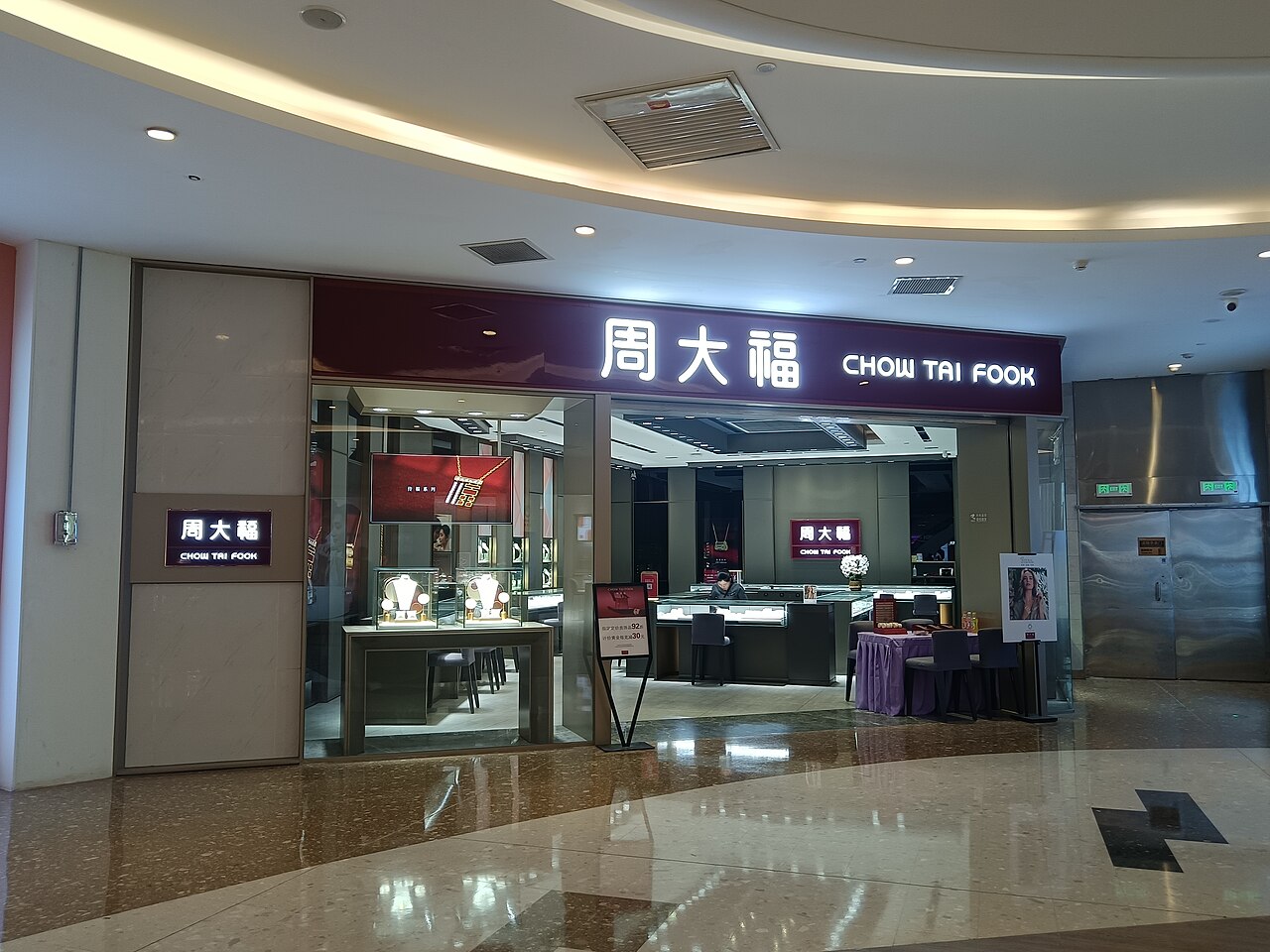
When the jewellery business listed in Hong Kong in December 2011, it took stock code 1929. That is heritage branding at its most compact.
The brand’s quiet genius was standardisation. Under Cheng Yu-tung, who took over from his father-in-law in 1956, the company introduced gold of 99.99 per cent purity, a figure that became the Hong Kong industry benchmark. Trust, in other words, was built into the metal.
The challenge now is the opposite of scarcity. At the end of 2024 the group had more than 7,000 points of sale, almost all in mainland China, and it has since been closing hundreds. A jeweller everywhere risks feeling like a utility. Watch how it makes fewer, better stores feel special.
2. Anta: the group that bought the gallery
Ding Shizhong founded Anta in Jinjiang, Fujian, in 1991. Its domestic brand is solid, but Anta’s real branding lesson is about portfolios.
An ANTA brand film from the company’s official Malaysian channel, showing its home-grown sportswear identity.
In 2009 it bought the rights to Fila in mainland China, Hong Kong and Macau, and turned an ageing tennis label into a premium fashion line. In late 2018 an Anta-led consortium launched its offer for Amer Sports, owner of Arc’teryx, Salomon and Wilson. In January 2026 it took a 29 per cent stake in Puma.
The result is a Chinese company that owns some of the most coveted logos in outdoor fashion, while keeping its own name on basketball shoes worn by Klay Thompson, signed since 2017, and Kyrie Irving, whose first Anta shoe launched in 2024. The 2026 table values Anta at US$3.5 billion, 26th globally.
The lesson for founders: you do not always need to build the dream brand. Sometimes you buy it, and keep your hands off the parts that work.
Gold and down: the fastest movers
3. Laopu Gold: the Hermès of gold, by popular decree
Here is the newest entry and the most fashion-literate. Xu Gaoming started in gold jewellery in 2009 and launched the Laopu Gold brand in 2016; the name means “old store”. Its pieces borrow from Chinese symbolism (gourd-shaped pendants for good fortune, dragon-and-phoenix boxes), but the styling is modern and the finish exacting.
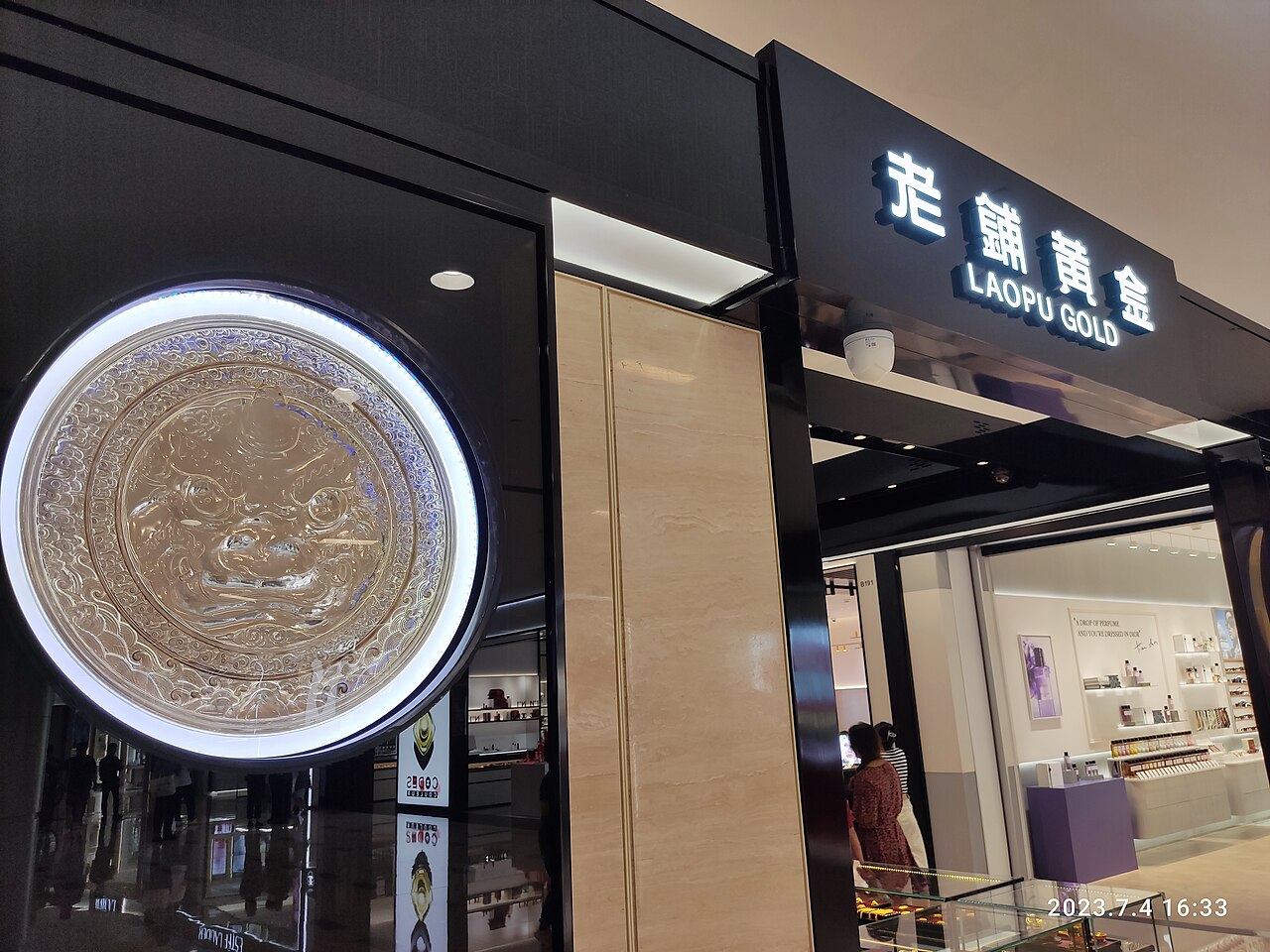
The radical move is pricing. Laopu does not peg its prices to the spot gold price. It charges for design and brand, which is exactly how a luxury house behaves. Shoppers responded by nicknaming it the Hermès of gold.
Its Hong Kong listing in June 2024 was followed by a tenfold rise in the share price, and in 2026 it entered the global apparel table at 35th, worth US$2.7 billion.
Laopu proves that the most powerful word in Chinese luxury may be “Chinese”, provided the craft earns it.
4. Bosideng: one garment, all the way up
Bosideng is the largest down clothing company in China and was the country’s leading down brand for 16 consecutive years from 1995. For most of that time it was what your parents wore: warm, reliable, a little shapeless.
Then it went to the catwalk. From 2017 it began showing at international fashion weeks, first New York, Milan and London, and in July 2024 it presented its “Fusion” collection in Paris. In October 2025 it named Kim Jones artistic director of Areal, a new high-end urbanwear line. By the 2026 table’s reckoning it is the fastest-growing apparel brand in the world, with value up 21 per cent to US$2.5 billion.
Bosideng’s own highlights from its Milan show, the catwalk move that made down desirable.
This is the cleanest repositioning story on the list. Bosideng did not abandon down. It made down desirable. Specialism, held for decades, became the platform for a premium leap.
The founder’s name on the shoe
5. Li-Ning: the gymnast who wrote his own story
Li Ning won six medals at the 1984 Los Angeles Olympics, three of them gold, and was already known as the Prince of Gymnastics. In 2008 he was hoisted on cables to run around the rim of the Beijing National Stadium and light the cauldron, dressed, awkwardly, by official supplier Adidas. Few founder stories are this cinematic.
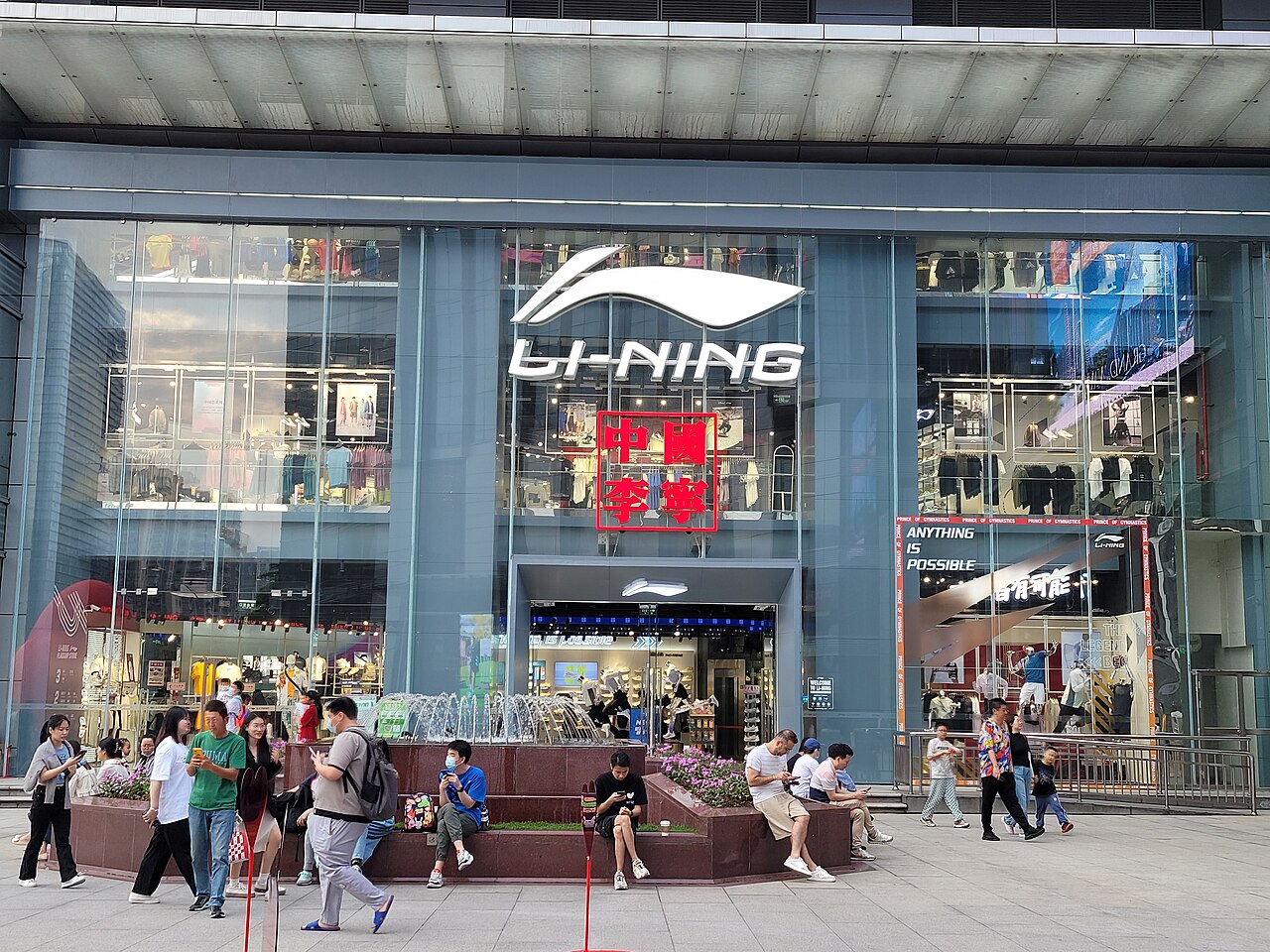
His company has had a bumpier ride. A 2010 relaunch brought a new logo and a slogan translating as “Let the change occur”, and in 2012 it signed Dwyane Wade. The turn came in 2018, when Li-Ning debuted at New York Fashion Week with a confidently Chinese take on streetwear. That show is now treated as a founding moment of guochao, the “national trend” movement that made home-grown labels cool for younger shoppers.
The 2026 table enters it at US$1.7 billion and rates it the ninth strongest apparel brand worldwide. Strength without matching size is a signal. People believe in this name more than its balance sheet yet shows.
Is Shein actually a Chinese brand?
Shoppers ask it constantly. The honest answer: by birth, yes; by address, no.
6. Shein: the algorithm in a dress
Chris Xu founded the business in Nanjing in 2008 as ZZKKO. It became SheInside, then in 2015 simply Shein, chosen to be simpler and easier to find online. That rename tells you everything. Shein is a brand designed for search boxes.
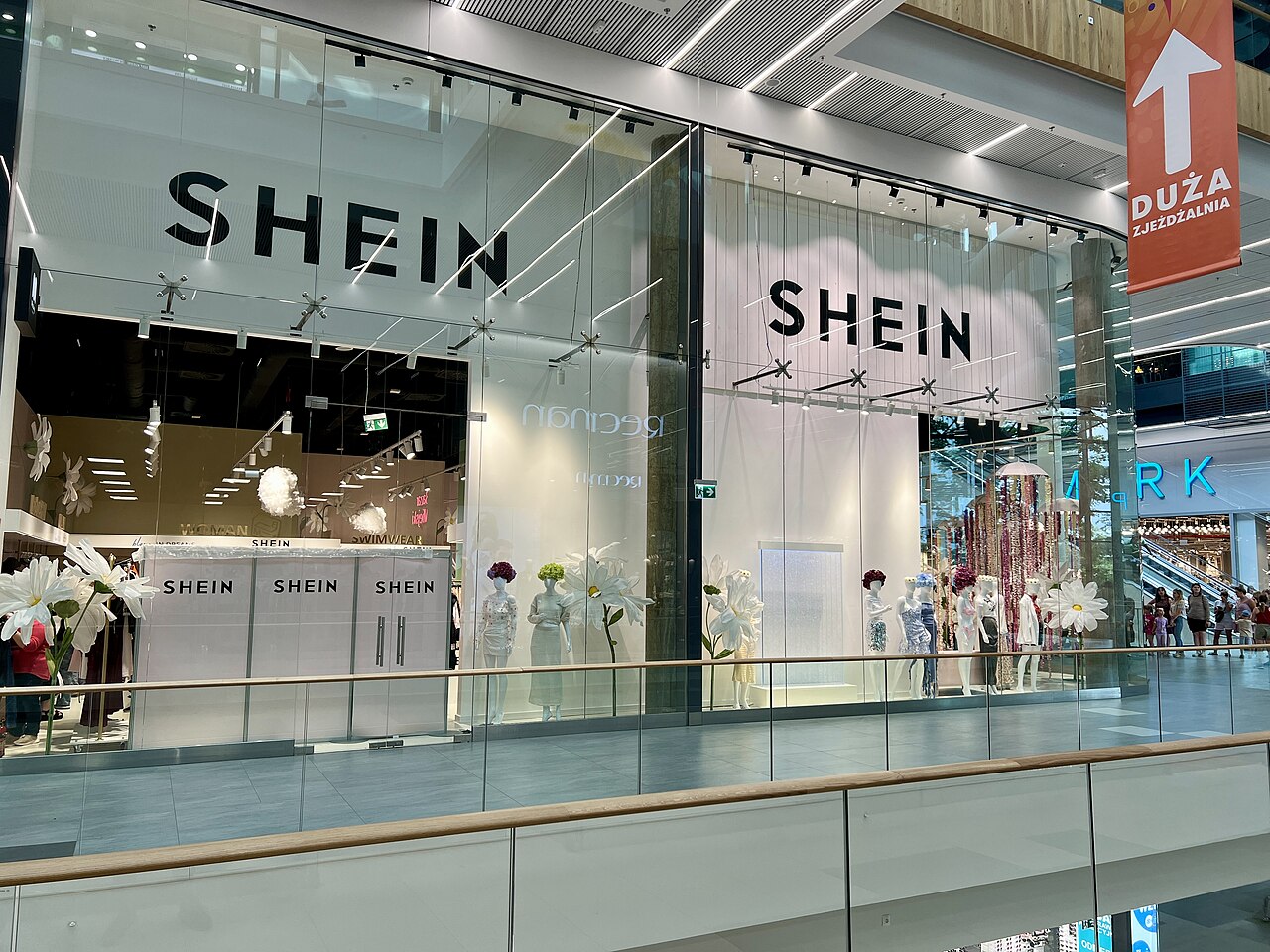
Its model is the real identity. New designs are ordered in tiny first batches, around 100 pieces, and only scaled when they sell. The promise is novelty at a price nobody else can match.
The costs are reputational. Shein has faced a string of intellectual-property suits, most settled out of court, alongside sustained scrutiny of supply-chain labour conditions, and its listing plans shifted from London to Hong Kong. For brand builders, Shein is the sharpest case of a name everyone knows and few will admit to loving.
The challengers
7. Urban Revivo: China’s answer to Zara
Founded in 2006 by Leo Li Mingguang, Urban Revivo has more than 400 stores in China, more than Zara or H&M have there. It is routinely called China’s Zara, a nickname it is now trying to outgrow by positioning itself as more design-led at similar prices.
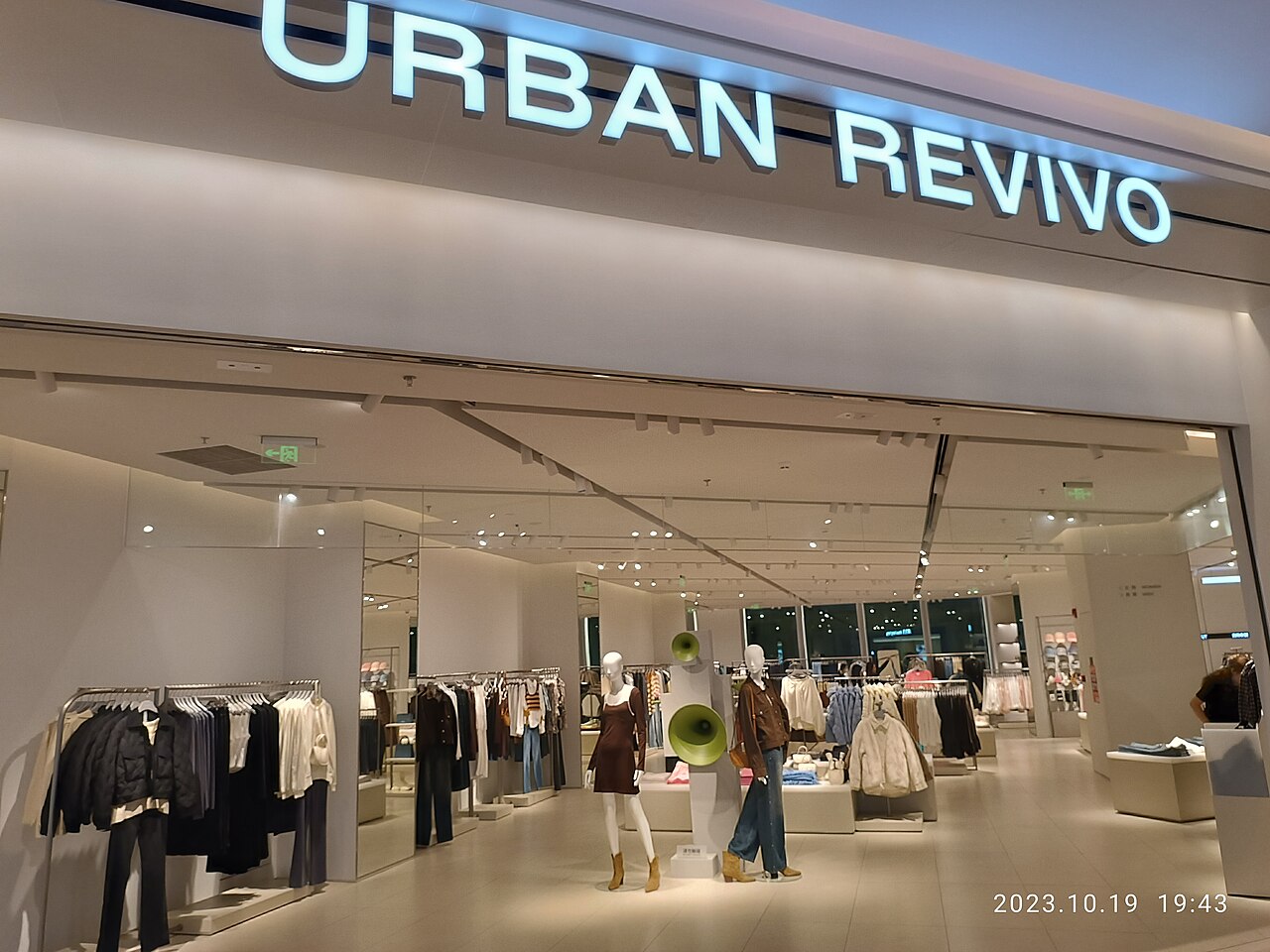
Its overseas route is instructive. Early outlets went to Singapore, Bangkok and Manila; newer flagships sit in London’s Covent Garden and New York’s SoHo. Picture a shopper in Neal Street who has never heard of the brand. The store itself must do the explaining.
That is the real test for every name on this list. At home, scale does the talking. Abroad, a brand starts from zero, usually against rivals with decades of head start.
8. Xtep: the brand that picked one race
Xtep began in 2001 and hired Hong Kong actor Nicholas Tse as its face that same year, an early example of entertainment stars selling sportswear in mainland China. In 2015 it narrowed its focus to professional running, and it has since sponsored more marathons in mainland China than any other sportswear brand.
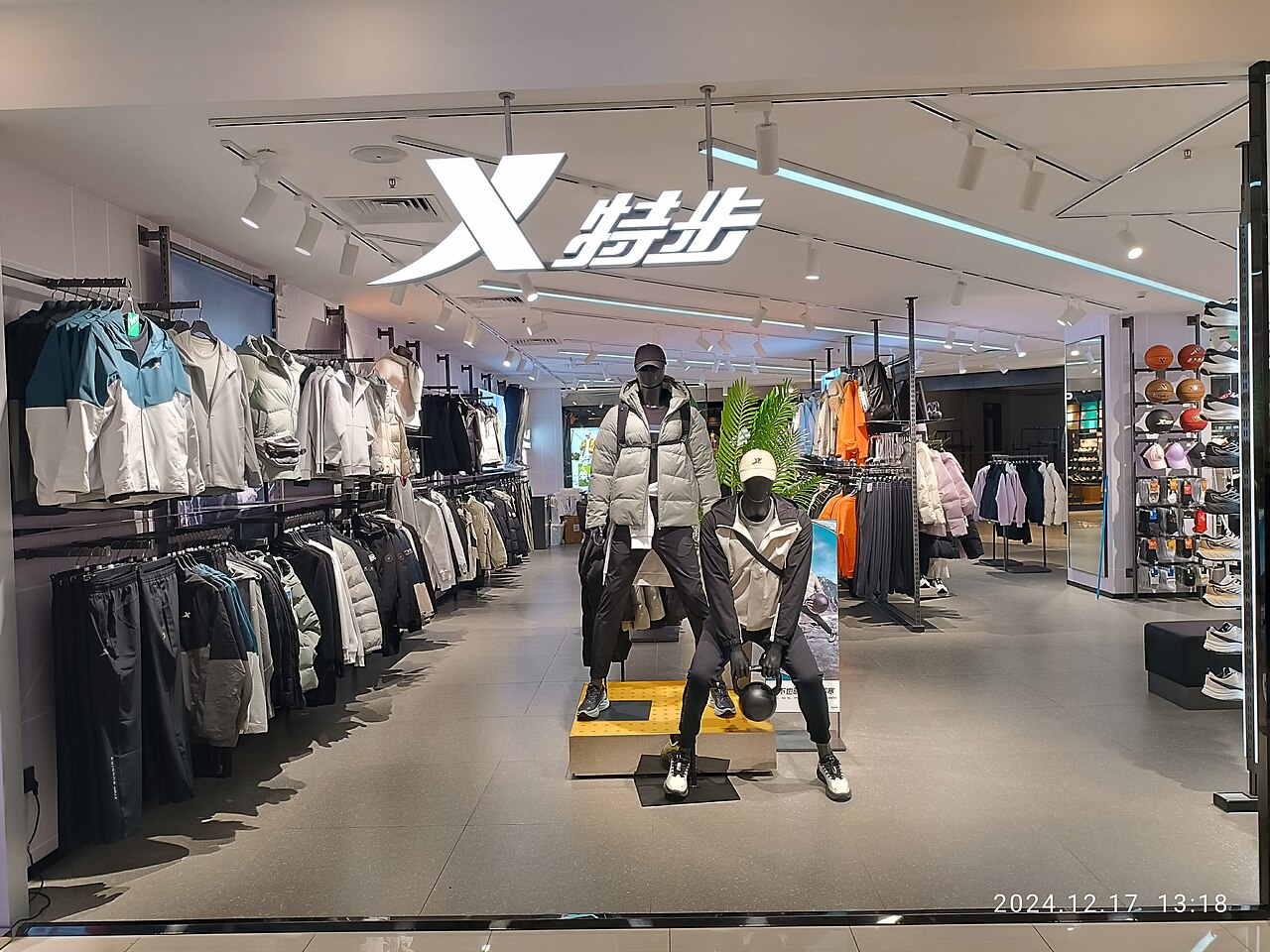
That single choice did more than any celebrity. When a brand owns the start line of the nation’s races, every finisher photo becomes advertising. Xtep also learned the limits of buying foreign names: it acquired K-Swiss and Palladium in 2019 for US$260 million, then in 2024 agreed to sell that business to its chairman.
For a smaller label the lesson scales down neatly. Own one community’s ritual before you try to dress everybody.
Who dresses China’s children?
9. Semir and Balabala: the family wardrobe
Qiu Guanghe founded Semir in Wenzhou in December 1996. The casual-wear brand is respectable; the masterstroke was Balabala, a children’s line launched in 2002. The company now runs more than 7,000 stores across China and over a dozen other markets.
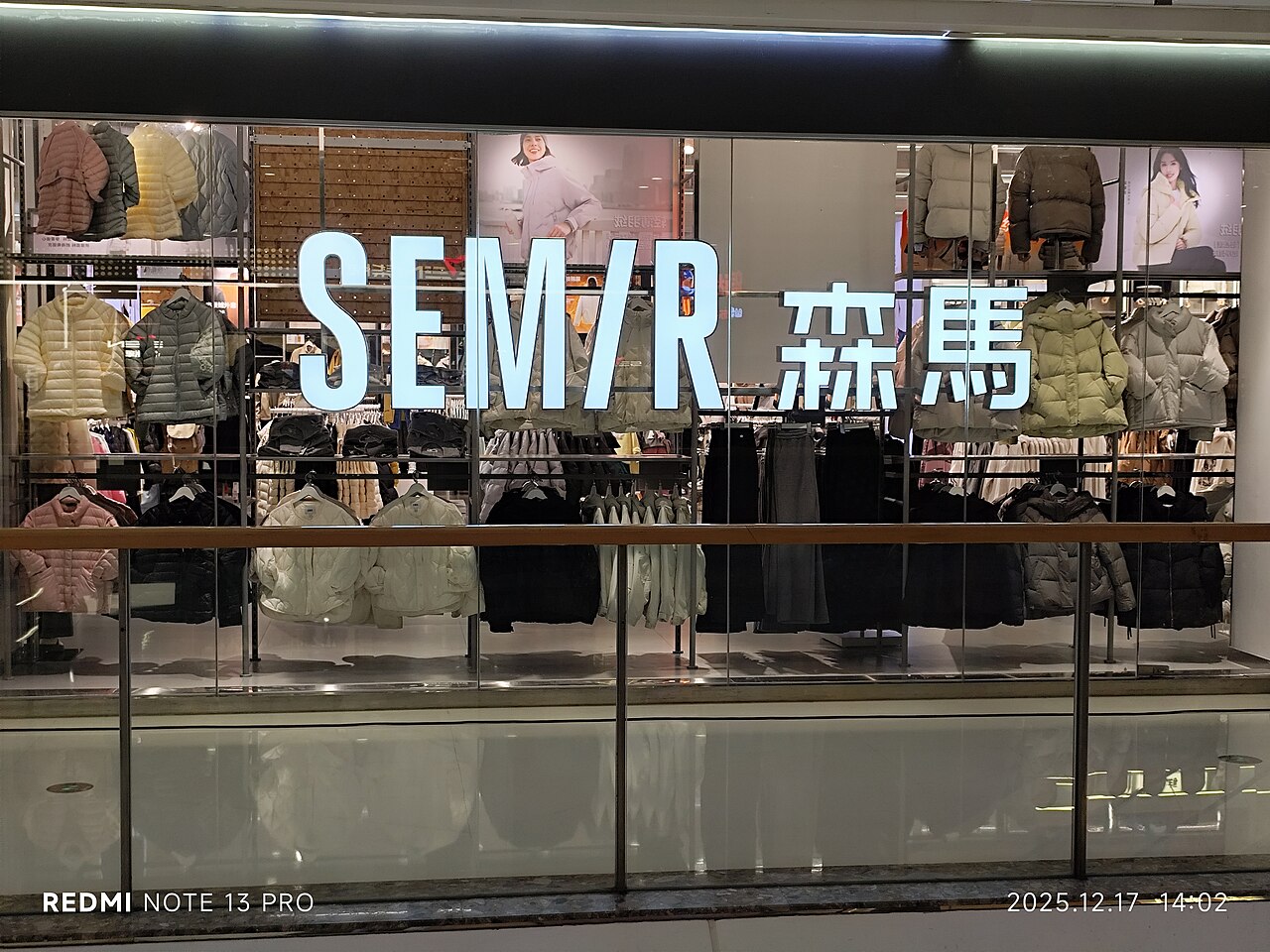
The name is a playground sound, and that is the point. Children’s fashion is bought by parents but chosen, increasingly, by children. A brand that sounds like a game wins both votes.
Can a Chinese label become a true luxury house?
10. Shang Xia: craft over logo
Shang Xia, meaning “up and down”, was founded in 2010 as a collaboration between Hermès and designer Jiang Qiong-er. Its first bag, the Lan Yue, imitates the form of a bamboo bowl in leather; its furniture reworks Ming dynasty lines. In 2013 it opened in Paris.
Ownership has since shifted. Exor invested around €80 million in December 2020 and became majority owner in 2021, when the brand also showed at Paris Fashion Week under creative director Yang Li.
Shang Xia is small, but it carries the argument for Chinese luxury built on material culture rather than monograms. Laopu Gold is winning that argument commercially. Shang Xia keeps making it intellectually.
What the ten have in common
Look across the list and a few habits recur. They are worth stealing.
The first is specialism before stretch. Bosideng owned down, Xtep owned running, Chow Tai Fook owned purity. Each earned permission in one field before reaching for prestige.
The second is cultural confidence, carefully dosed. The strongest guochao brands rarely plaster dragons on everything. Li-Ning lets Chinese characters and colours carry the message; Laopu reworks old symbols with a light hand. When national pride becomes the whole product, shoppers tire of it.
The third is ownership of the customer moment. Shein owns the scroll. Anta owns the court. Laopu owns the queue outside its door, which in a market obsessed with social media is the best advertising money cannot buy.
Pricing is a quieter habit. Laopu charges for design rather than weight; Bosideng raised its sights with Areal; Urban Revivo prices like Zara but argues that it designs better. Even Shein, the cheapest name here, uses price as a statement rather than an apology. None of them treats price as an afterthought.
There is a warning in the list, too. Names that sound Chinese can still face a trust gap abroad, while names engineered for global search, such as Shein, often escape the “made in China” association entirely. Neither route is wrong. But choose it on purpose, before the first logo is drawn.
Questions from the front row
Which Chinese fashion brand is the most valuable?
In Brand Finance’s Apparel 50 2026, jeweller Chow Tai Fook is the highest-ranked Chinese brand at US$4.7 billion, followed by sportswear group Anta at US$3.5 billion.
What does guochao mean in fashion?
Guochao, roughly “national trend”, describes Chinese brands that use Chinese culture, colours and characters in contemporary design. Li-Ning’s 2018 New York Fashion Week debut is widely seen as a defining moment for the movement.
Is Shein a Chinese company?
Shein was founded in Nanjing in 2008 and still relies heavily on Chinese suppliers, but it moved its headquarters to Singapore in 2022.
If your own label is ready for a bigger stage, start with a clear brand strategy before you book the runway.






