On 1 September 2026, Apple changed chief executives for the first time in fifteen years. Tim Cook became executive chairman and John Ternus, who had run hardware engineering, took the top job. The hand-over had been announced in April.
Nobody stops trusting an iPhone because the name on the org chart changes.
That steadiness is what a great corporate brand buys. It is reputation stored up in advance, ready to carry a company through a succession, a scandal or a strategy shift.
A corporate brand is the name, reputation and set of associations attached to a company as a whole, rather than to a single product, and it shapes how customers, employees, investors and regulators judge everything that company does.
This year the most valuable of those brands are overwhelmingly American, and mostly technology companies. Here are the ten, how we chose them and what each one teaches.
How was this list built?
Our basis is simple and checkable. The list contains every brand from an American company that appears in the global top ten of either of 2026’s two major brand-valuation league tables: the Brand Finance Global 500 2026, published in January, and the Kantar BrandZ Most Valuable Global Brands 2026, published in July. Exactly ten American brands pass that test.
Seven of them sit in Brand Finance’s top ten: Apple, Microsoft, Google, Amazon, Nvidia, Walmart and Facebook. Kantar’s top ten adds three more: Instagram, Oracle and McDonald’s. We list them in Brand Finance order first, then the three Kantar additions in Kantar order, with our commentary. So the numbering follows the tables; it is not our own verdict.
The American dominance is not subtle. Brand Finance counts 192 American brands among its 500, worth more than half of the table’s total value of about US$10.4 trillion. Kantar’s top 100 reached a record US$13.1 trillion, up 22%. For the first time four brands (Google, Apple, Microsoft and Amazon) each crossed the trillion-dollar mark.
Why do two rankings disagree by a trillion dollars?
The gap is hard to miss. Brand Finance values Google at US$433.1 billion. Kantar values it at nearly US$1.5 trillion.
Both are serious, long-running exercises. Both are right on their own terms.
The difference is method. Brand Finance uses a royalty relief approach: it estimates what a company would pay to license its own brand if it did not own it, then discounts those payments to a present value. Kantar sets out to quantify how much the brand contributes to the whole enterprise’s value, which produces larger numbers.
So read any league table within itself, not across tables. Rank and direction of travel tell you more than the headline dollar figure.
A brand rising in both tables, as Nvidia did this year, is genuinely gaining. A brand that leads one table and is second in the other, like Apple and Google, is in a contest worth watching.
The trillion-dollar four, part one
1. Apple
Steve Jobs, Steve Wozniak and Ronald Wayne founded Apple on 1 April 1976. On 9 January 2007, the day Jobs unveiled the iPhone, Apple Computer became simply Apple Inc. That dropped word was a statement of ambition: the brand no longer belonged to one product category.
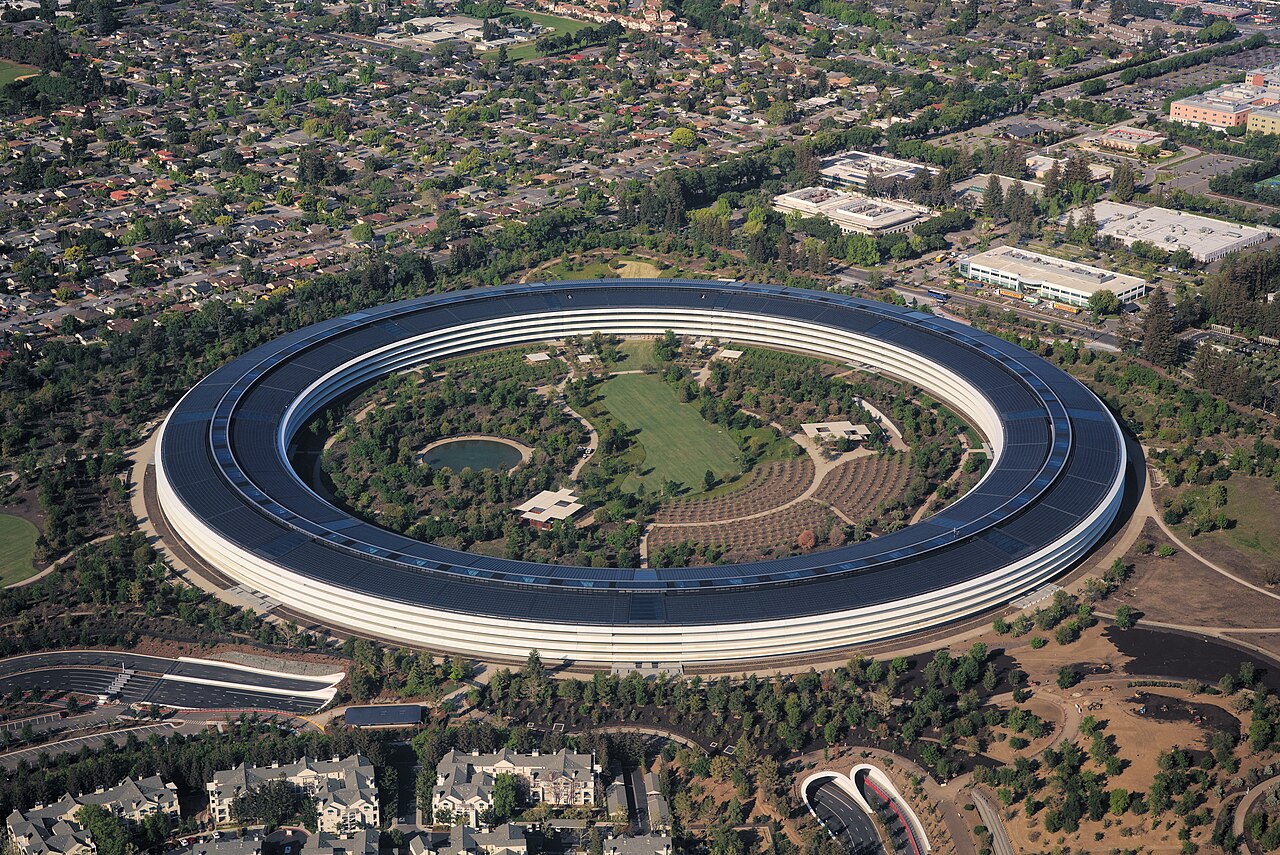
Apple is first in the Brand Finance Global 500 2026 at US$607.6 billion, up 6%, but second in Kantar’s table after four straight years at the top. Its lesson is coherence. From the “Think different” advertising of 1997 to the launch of Apple Intelligence at its developer conference in 2024, the company has asked customers to buy into a sensibility, not a spec sheet.
The hand-over to John Ternus is the next test. Does that sensibility belong to the brand, or to the people who ran it?
2. Microsoft
Bill Gates and Paul Allen founded Microsoft in Albuquerque on 4 April 1975. For decades its brand meant Windows and Office, reliable and slightly dull. The 2012 logo hinted at something broader: four coloured squares standing for Windows, Office, Xbox and Bing, a portfolio rather than a product. When Satya Nadella became chief executive in February 2014, he set about making that true.
"One Day, One Microsoft": the company’s own film presenting a single, unified corporate brand.
Microsoft’s multi-billion-dollar partnership with OpenAI, agreed in January 2023, and the Copilot assistant across its software have recast an old name as an AI company. Brand Finance has it second at US$565.2 billion, up 23%. A corporate brand can be modernised without being renamed, provided the products give people a reason to update their opinion.
Microsoft revives a classic Excel advert for 2026, showing how the brand is retelling old products through AI.
The trillion-dollar four, part two: search and shopping
3. Google
Larry Page and Sergey Brin founded Google in September 1998, its name a misspelling of googol. In 2006 the word entered the Oxford English Dictionary and Merriam-Webster as a verb. That is the rarest prize in branding, and also a legal risk, since trademark owners fight to stop their names becoming generic.
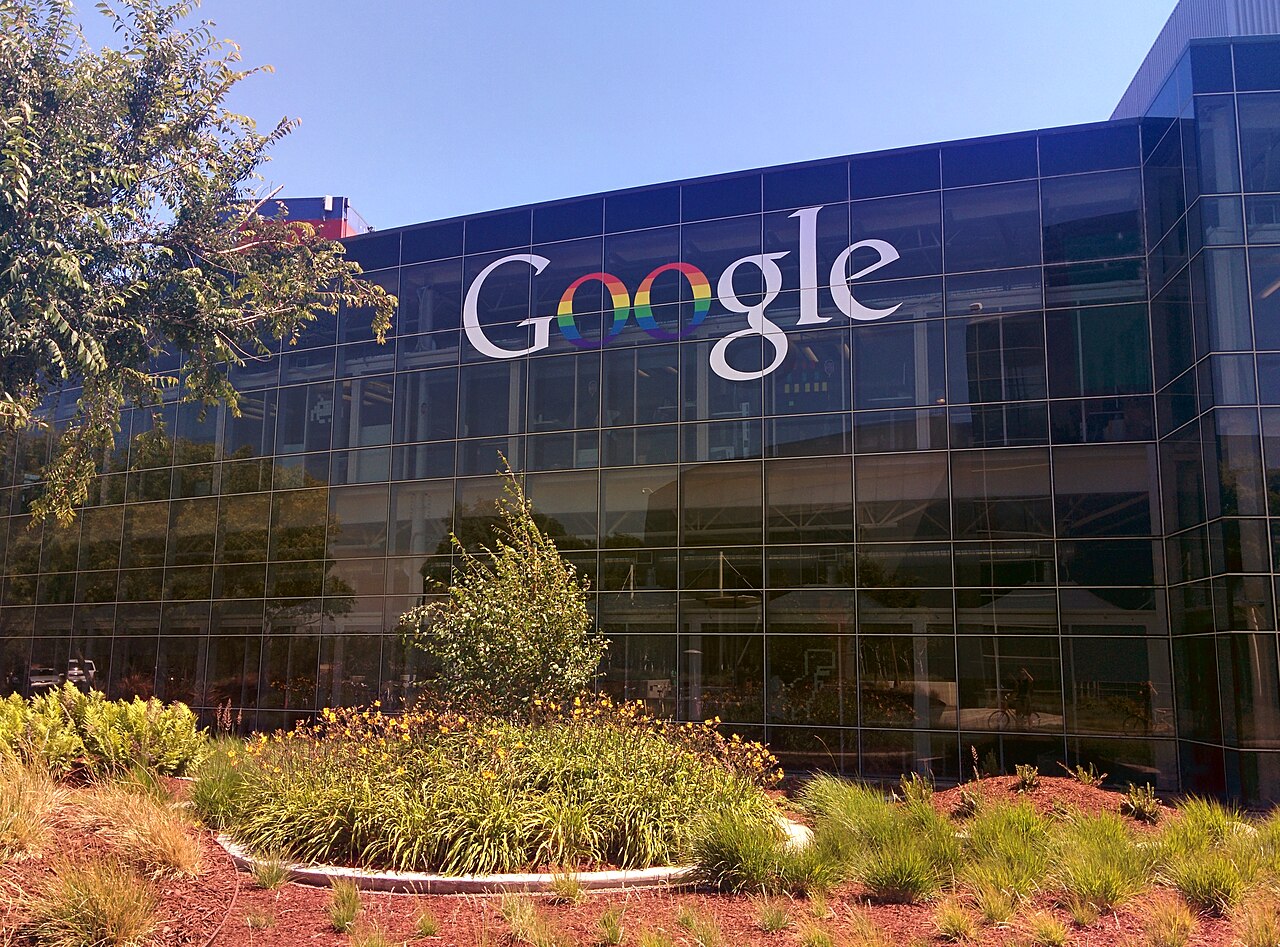
In August 2015 the company announced Alphabet as a parent holding company, letting Google stay the consumer-facing brand while experiments lived elsewhere. Its AI assistant began as Bard in 2023 and is now Gemini.
Kantar puts Google first for the first time since 2018, at nearly US$1.5 trillion, up 57%. Brand Finance has it third at US$433.1 billion. Either way, the market has decided that Google is winning its AI argument, at least for now.
4. Amazon
Jeff Bezos founded the company on 5 July 1994 in Bellevue, Washington, under the name Cadabra, and renamed it Amazon in November that year, after the world’s largest river. Scale was in the name from the start.
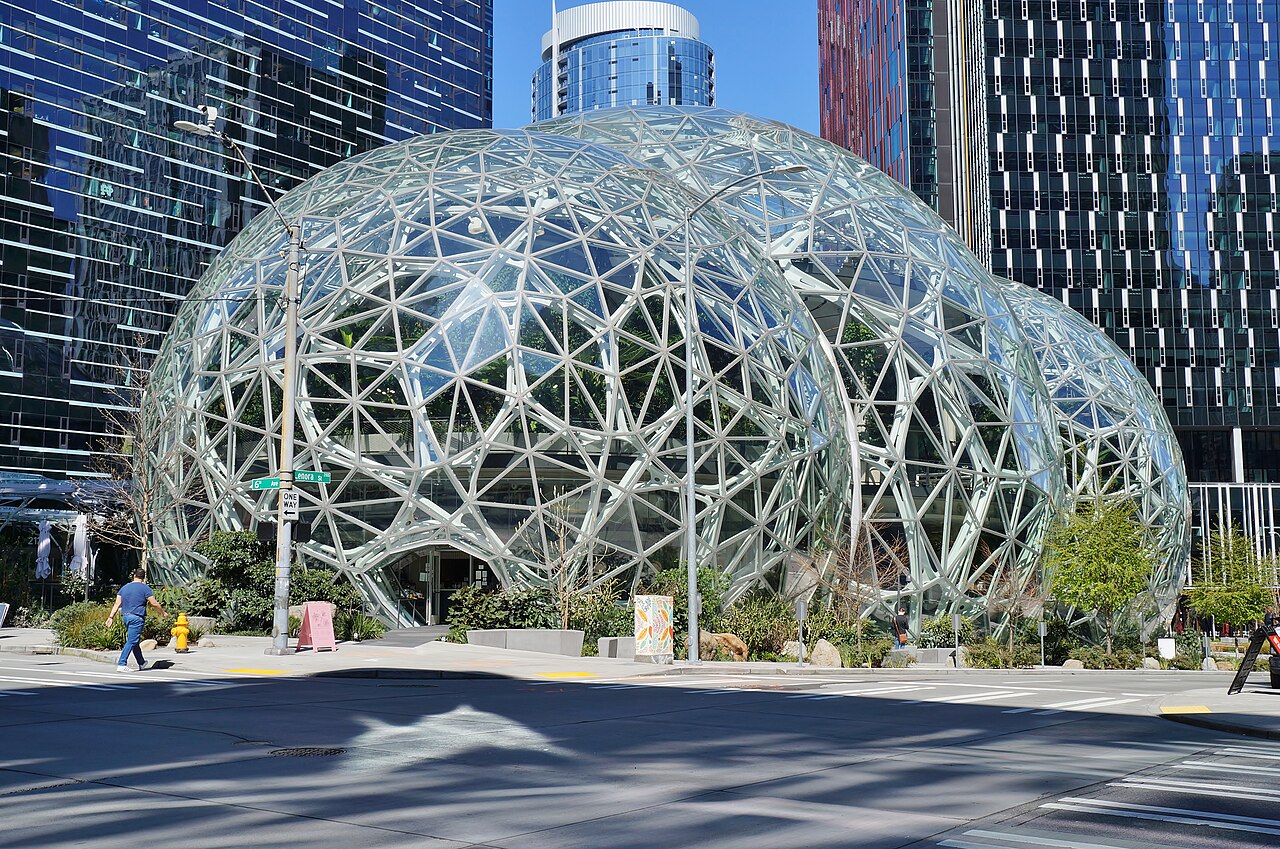
Amazon’s corporate brand rests on one idea Bezos repeated for years: customer obsession. It sounds soft. It is brutally operational, delivered through speed, range and convenience. Amazon Web Services, launched in 2002, extended the same promise of reliability to businesses.
Andy Jassy succeeded Bezos as chief executive in July 2021. Brand Finance ranks Amazon fourth at US$369.9 billion, and Kantar fourth at just over US$1 trillion.
The AI windfall
5. Nvidia
Jensen Huang, Chris Malachowsky and Curtis Priem founded Nvidia in April 1993. The name comes from invidia, the Latin for envy, which now reads like prophecy. In 1999 the GeForce 256 became the company’s first product explicitly marketed as a GPU, a category label that Nvidia, more than anyone, made famous.
For two decades Nvidia was a brand gamers loved and everyone else ignored. Then AI computing made its chips some of the most sought-after hardware on earth.
It became the first company to close above US$4 trillion in market value in July 2025, and above US$5 trillion that October. Brand Finance values the brand at US$184.3 billion, up 110%, enough to overtake TikTok, Walmart, Samsung and Facebook and reach fifth. Nvidia shows that a B2B brand with a clear technical identity can become a household name almost overnight.
6. Walmart
Sam Walton opened the first Walmart in Rogers, Arkansas, on 2 July 1962. Its brand has always been price, stated with near-religious discipline.

In 2007 the slogan “Always Low Prices, Always”, used since 1988, gave way to “Save money. Live better.”, a subtle shift from what Walmart does to what it does for you. In 2008 the hyphen went and a yellow spark arrived, and the logo was refreshed again in January 2025.
Walmart’s brand now stretches well beyond Arkansas. Its 2018 purchase of a 77% stake in India’s Flipkart made it a major player in Asian e-commerce, and it moved its share listing to Nasdaq in December 2025, a signal that it wants to be seen as a technology retailer. Brand Finance places Walmart seventh at US$141 billion, up 3%.
It is also the world’s largest private employer, with about 2.1 million staff. Its corporate brand is as much an employer brand as a consumer one.
One company, two brands
7. Facebook
Facebook launched on 4 February 2004 in Cambridge, Massachusetts, founded by Mark Zuckerberg and four co-founders. On 28 October 2021 the parent company renamed itself Meta Platforms, while keeping Facebook as the name of the app.
That decision is a lesson in brand architecture. People still argue over whether the rename was a fresh vision or an escape from a battered reputation. Either way, it separated the corporate brand from its most famous product and let each carry its own baggage.
In November 2025 a US court ruled that Meta had not violated antitrust law. Facebook is ninth in Brand Finance’s table at US$107.1 billion, up 17%, and sixth in Kantar’s.
8. Instagram
Kevin Systrom and Mike Krieger launched Instagram on 6 October 2010 as an iPhone-only app, its name a blend of “instant camera” and “telegram”. Facebook agreed to buy it in April 2012 for about US$1 billion, a price that now looks like one of the shrewdest acquisitions in corporate history.
Instagram passed one billion monthly users in June 2018. It survived by borrowing ruthlessly: Stories arrived in 2016, widely seen as a response to Snapchat, and Reels in 2020 to answer TikTok.
Kantar ranks Instagram seventh at US$286.2 billion, up 25%. Its story shows that inside a corporate group, a product brand can grow more valuable by staying distinct than it would by being folded in.
The infrastructure and the burger
9. Oracle
Larry Ellison, Bob Miner and Ed Oates founded Software Development Laboratories on 16 June 1977, and the company took the Oracle name in 1983, after the codename of a CIA project that had been its first customer. For most of its life it was a database brand known to IT departments and almost nobody else.
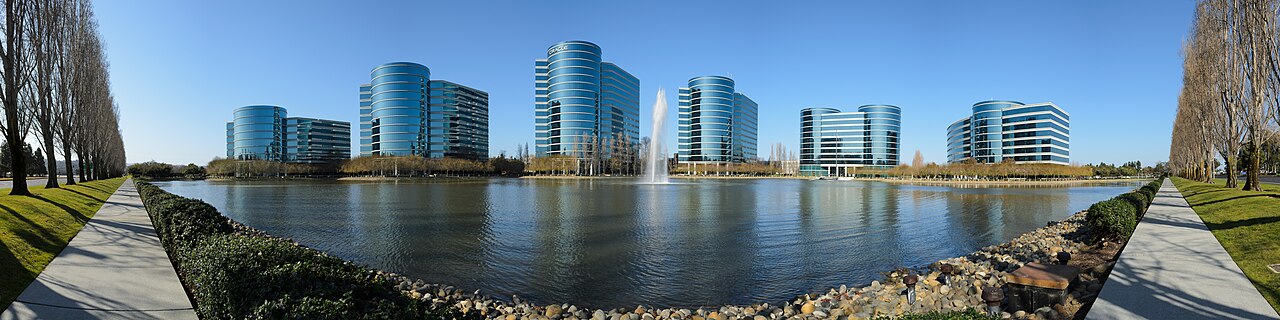
AI changed that too. In January 2025 Oracle joined OpenAI, SoftBank and MGX in Stargate, a joint venture announced with plans to invest US$500 billion in American AI infrastructure. In September 2025 it promoted Clay Magouyrk and Mike Sicilia to co-chief executives.
Kantar places Oracle ninth at US$235.8 billion, up 10%. A dull brand can become a strategic one when the market suddenly needs exactly what it sells.
10. McDonald’s
Richard and Maurice McDonald opened their first restaurant in San Bernardino, California, on 15 May 1940. Ray Kroc became their franchise agent in 1955 and bought the brothers out in 1961. The Golden Arches first appeared as a building design in 1953.
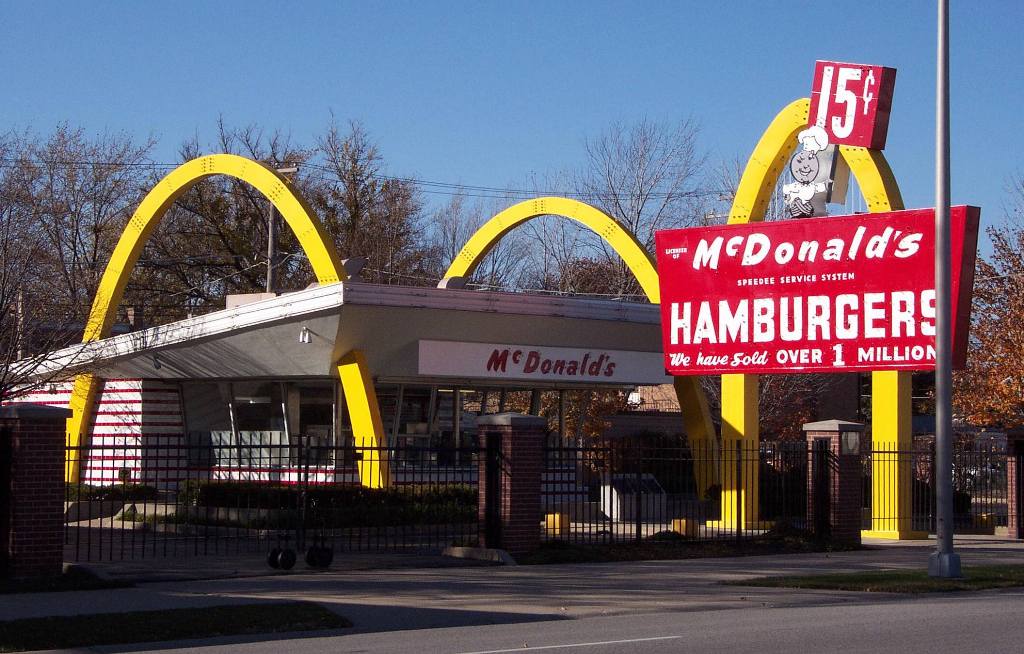
McDonald’s is the only restaurant on this list and the clearest example of a corporate brand as a system. It had 45,356 restaurants in more than 100 countries at the end of 2025, about 95% run by franchisees, all selling the same promise of predictability.
It can also borrow culture when it wants to: the BTS Meal in 2021 rolled out in 50 countries. Kantar ranks McDonald’s tenth at US$235.1 billion, up 6%, a whisker behind Oracle.
What makes a corporate brand worth that much?
Strip away the dollar figures and the ten share one trait. What the leadership says the company is for, how the people inside behave, and what outsiders believe about it are closely aligned.
Think of it as vision, culture and image kept in step. Trouble arrives wherever a gap opens.
Facebook’s reputational problems were an image gap. Microsoft’s revival closed a culture gap. Walmart’s spark tried to close a gap between cheap and caring.
The second lesson: the American lead is not guaranteed. In Brand Finance’s table China’s TikTok, South Korea’s Samsung and China’s State Grid all sit in the global top ten, and YouTube was rated the world’s strongest brand.
Kantar counts 23 Asian brands in its top 100, with Tencent back in the top ten. ChatGPT posted the largest rise of any brand in Kantar’s ranking, up 285%. The next decade’s corporate brands may not yet be on anyone’s list.
For a smaller company in Singapore or the region, the takeaway scales down neatly. Decide what the company stands for, and make sure staff and customers would say the same thing. Picture a Tuas engineering firm whose engineers, sales team and clients all describe it, unprompted, in the same three words. That alignment is the cheapest brand asset there is.
Before you go
What is the most valuable brand in the USA in 2026?
It depends on the ranking. Apple is first in the Brand Finance Global 500 2026 at US$607.6 billion, while Google is first in the Kantar BrandZ 2026 table at nearly US$1.5 trillion.
What is the difference between a corporate brand and a product brand?
A corporate brand represents the whole company, such as Meta, while a product brand represents one offering, such as Instagram. Some companies use one name for both; others keep them separate.
Why are brand valuations so different between rankings?
Each consultancy uses its own method. Brand Finance estimates the royalty a company would pay to license its brand, while Kantar measures the brand’s contribution to overall enterprise value, which yields higher figures.
If you want your company’s name to carry that kind of weight, talk to us about brand consulting.






