Every year, a brand valuation consultancy publishes a number that Singapore’s boardrooms quietly check. In April 2026 the headline was familiar: DBS was the country’s most valuable brand for the fourteenth year running. The surprise was the runner-up. Not another bank, but a casino resort with a swimming pool on its roof.
That one result says a good deal about how Singapore’s corporate reputation is changing. Banks and telcos still dominate, but tourism, travel technology and a ride-hailing super-app have pushed their way into the top ten.
A corporate brand is the name and reputation attached to a company as a whole, rather than to any one product, and it shapes whether customers, investors, employees and regulators will trust that company with their money, time and careers.
Here is the 2026 top ten, what each brand has done to earn its place, and what the list does and does not prove.
How this list is ranked
This ranking follows the Brand Finance Singapore 100 2026, published on 23 April 2026, the most recent brand-valuation league table for Singapore. The order and the brand values are Brand Finance’s. The commentary is ours.
The method is called relief from royalty. It asks a hypothetical question: if this company did not own its name and had to license it, what royalty would it pay? Each brand gets a strength score out of 100, which sets a royalty rate within a range typical for its sector. That rate is applied to forecast brand revenue, and the result is discounted back to today’s money.
Two cautions. Brand value is an estimate, not a market price, and valuation firms use different models, many of them variations on a few basic approaches. Treat any single figure as one informed opinion.
And value is not strength. A big bank can top the value table simply by being big; a smaller brand can be more loved. We return to that gap below.
Together, the top 100 brands are worth US$84.1 billion this year, up 7 per cent.
Why are banks always at the top?
Because brand value is partly a function of size, and in Singapore the biggest consumer-facing businesses are banks. When revenue runs into the tens of billions, even a modest royalty rate produces a very large number.
Scale is not the whole story, though. Banking is a trust business. Customers hand over their savings and expect them back, so the brand does real commercial work: it lowers the cost of winning deposits, supports premium wealth services and gives a bank somewhere to stand when things go wrong. Three of the top four places belong to banks, and an insurer owned by one of them sits fifth.
The top 10, numbers 1 to 3: two banks and a skyline
1. DBS (US$18.6 billion, up 8%)
DBS began on 16 July 1968 as The Development Bank of Singapore. It bought POSBank in 1998 for S$1.6 billion and took the shorter name DBS Bank in 2003, the move from development agency to consumer brand that underpins its position today.
DBS’s ‘Our Milestones’ film traces the bank’s journey from The Development Bank of Singapore, founded in 1968, to the brand it is today.
The modern brand was built on a bold claim. In 2014 DBS launched a digital transformation under the slogan “Make Banking Joyful”, and Euromoney named it the world’s best digital bank in 2016 and 2018. Buying Citigroup’s consumer business in Taiwan, completed in August 2023, made it the largest foreign bank by assets there. Piyush Gupta led the bank from 2009 to 2025; Tan Su Shan became chief executive in March 2025.
The brand has also been tested. After repeated digital disruptions in 2023, the Monetary Authority of Singapore ordered a six-month pause on non-essential IT changes and barred the bank from shrinking its branch and ATM network. A digital-first promise turns every outage into a brand event.
2. Marina Bay Sands (US$8.0 billion, up 35%)
Marina Bay Sands opened in 2010, designed by architect Moshe Safdie and owned by Las Vegas Sands. Its SkyPark spans three hotel towers and holds a rooftop pool with a 146-metre vanishing edge. It has become visual shorthand for Singapore itself.
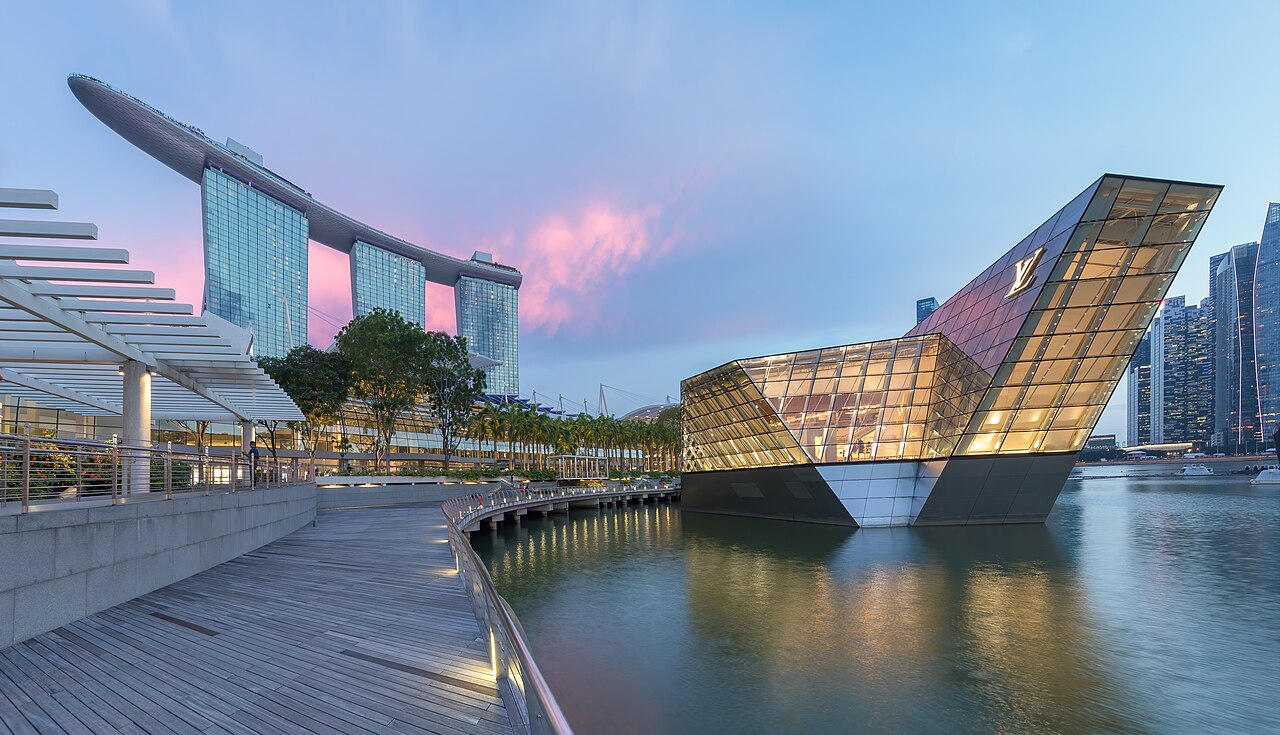
Brand Finance credits strong revenue and a US$1.8 billion upgrade programme for the jump. The bigger branding point is that Marina Bay Sands sells a silhouette. Few corporate brands are recognised by their building alone. A major expansion, including a fourth tower, broke ground in July 2025.
3. OCBC Bank (US$6.8 billion, up 7%)
OCBC was formed on 31 October 1932 from the merger of three banks: Chinese Commercial Bank, Ho Hong Bank and Oversea Chinese Bank. Its brand portfolio is quietly sophisticated. It owns Great Eastern and runs the private bank Bank of Singapore under their own names, yet it folded Wing Hang in Hong Kong and NISP in Indonesia into the OCBC name.
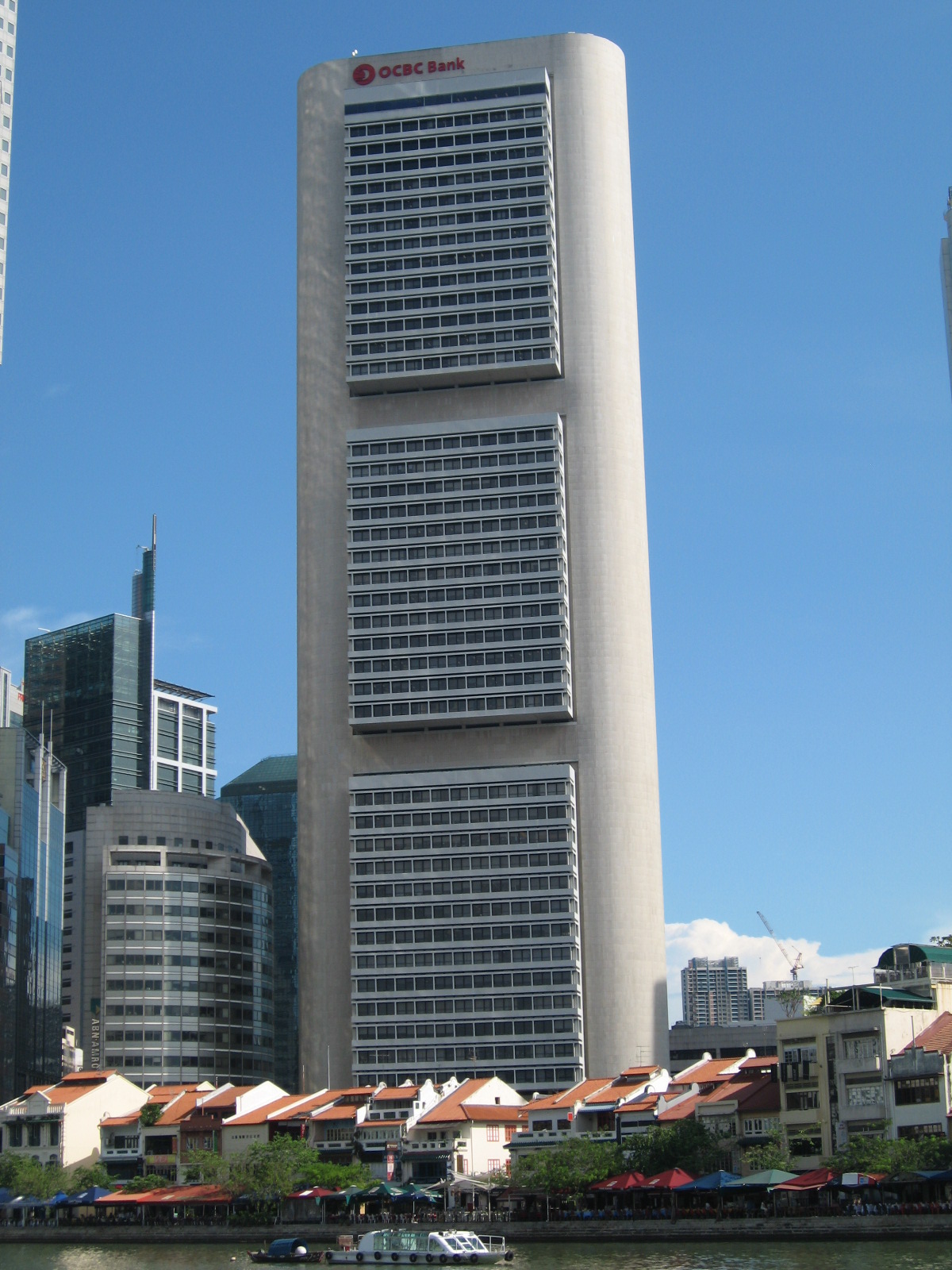
That is brand architecture done deliberately. Keep the separate name where it carries trust of its own. Consolidate where one master brand is stronger.
Numbers 4 to 7: the steady incumbents
4. UOB (about US$6.8 billion)
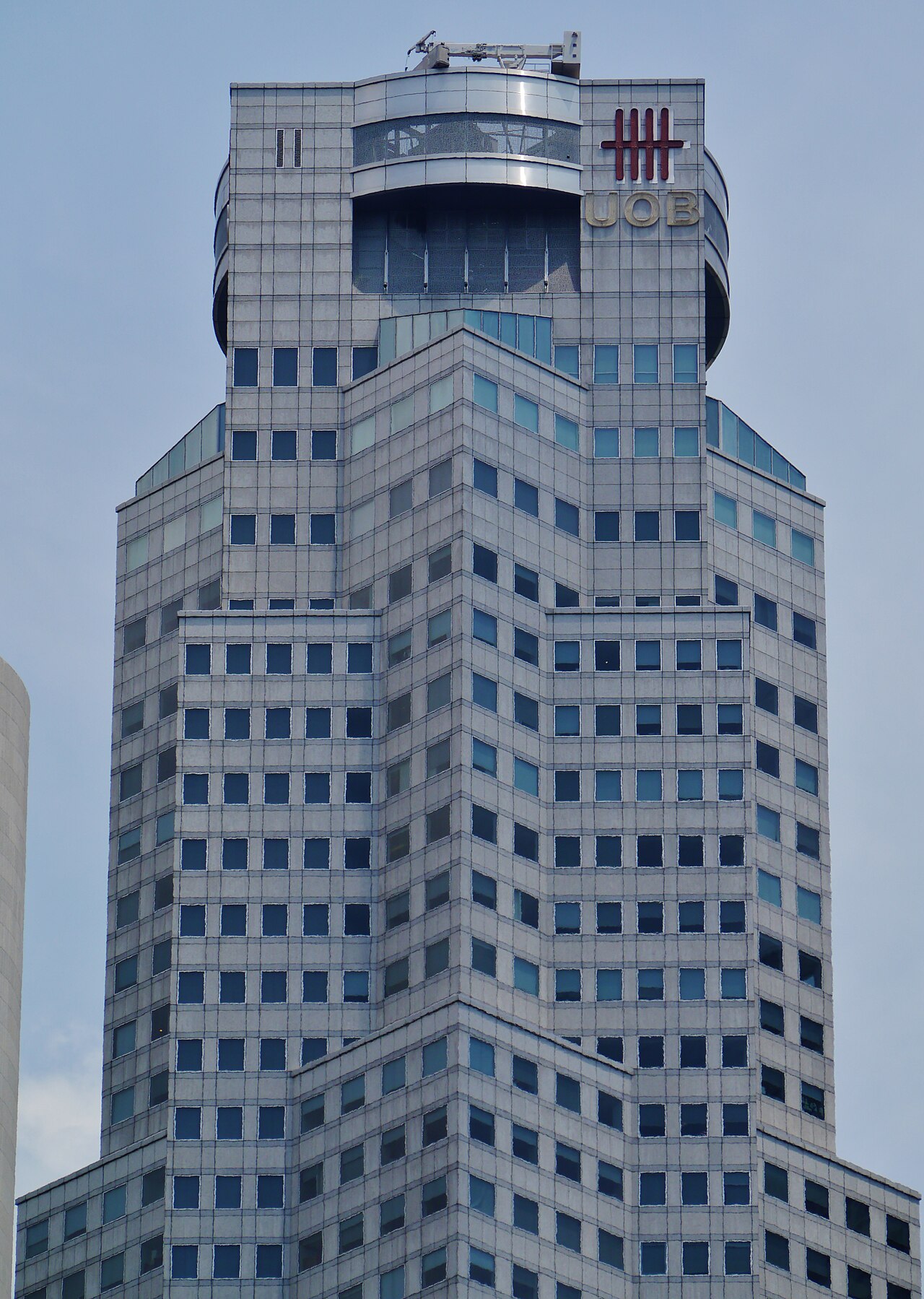
UOB began in 1935 as United Chinese Bank, founded by Sarawak-born businessman Wee Kheng Chiang and six partners, and became United Overseas Bank in 1965. Its biggest recent brand move was regional. In 2022 it bought Citigroup’s consumer banking franchises in Indonesia, Malaysia, Thailand and Vietnam for about S$5 billion, putting the UOB name in front of a large new base of retail customers across Southeast Asia.
5. Great Eastern (US$4.9 billion)
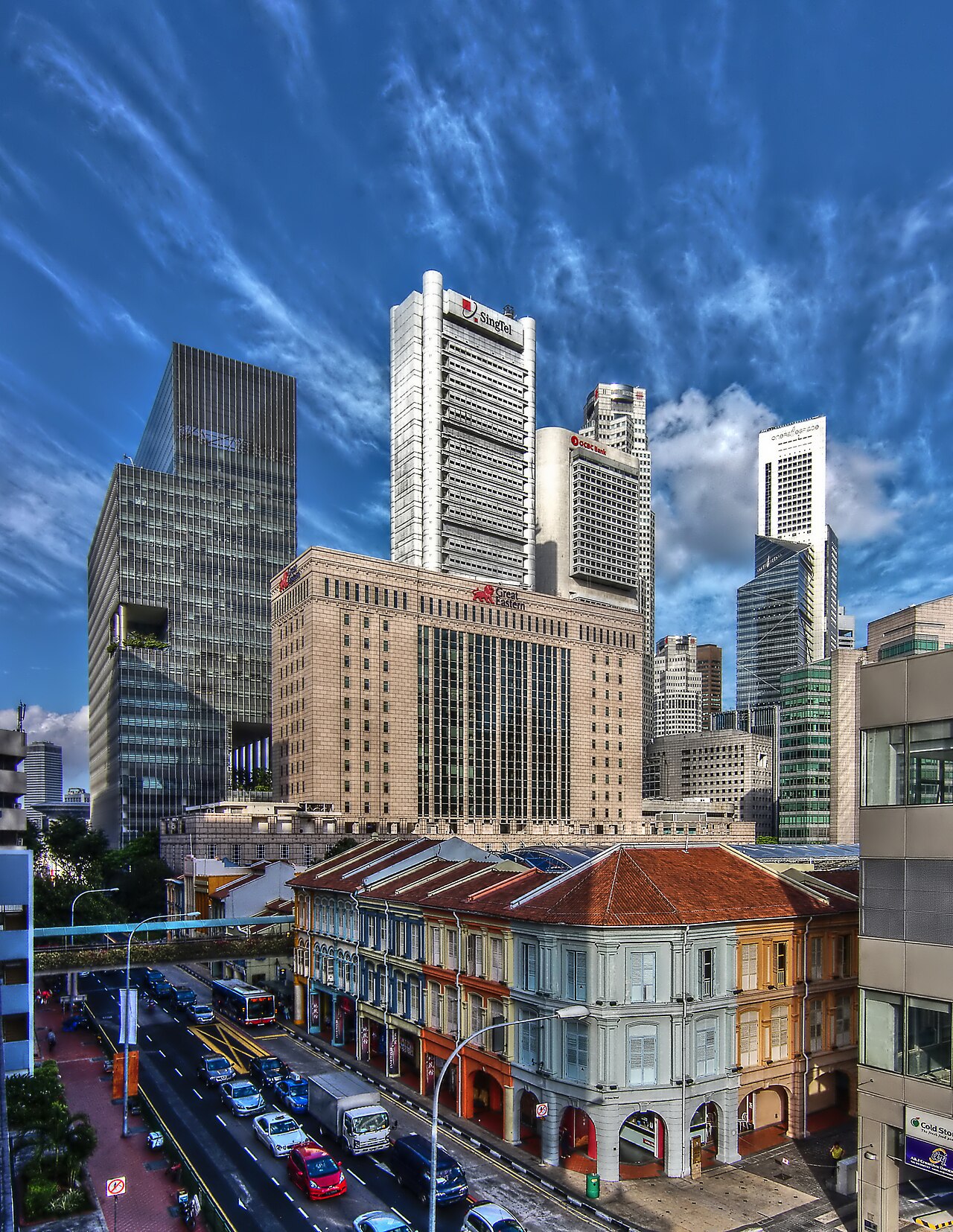
Great Eastern was incorporated in Singapore on 26 August 1908 and describes itself as the largest and oldest life insurer in Singapore and Malaysia. It became a subsidiary of OCBC in 2004, and OCBC raised its stake to 93.72 per cent in 2024. A century-old insurance brand sells something hard to manufacture: proof of having kept promises across generations.
6. Singtel (US$4.1 billion)
Singtel traces its roots to a private telephone exchange in 1879 and listed publicly in 1993. It bought Optus in Australia in 2001 and holds stakes in regional operators including AIS in Thailand, Globe in the Philippines, Bharti Airtel in India and Telkomsel in Indonesia.
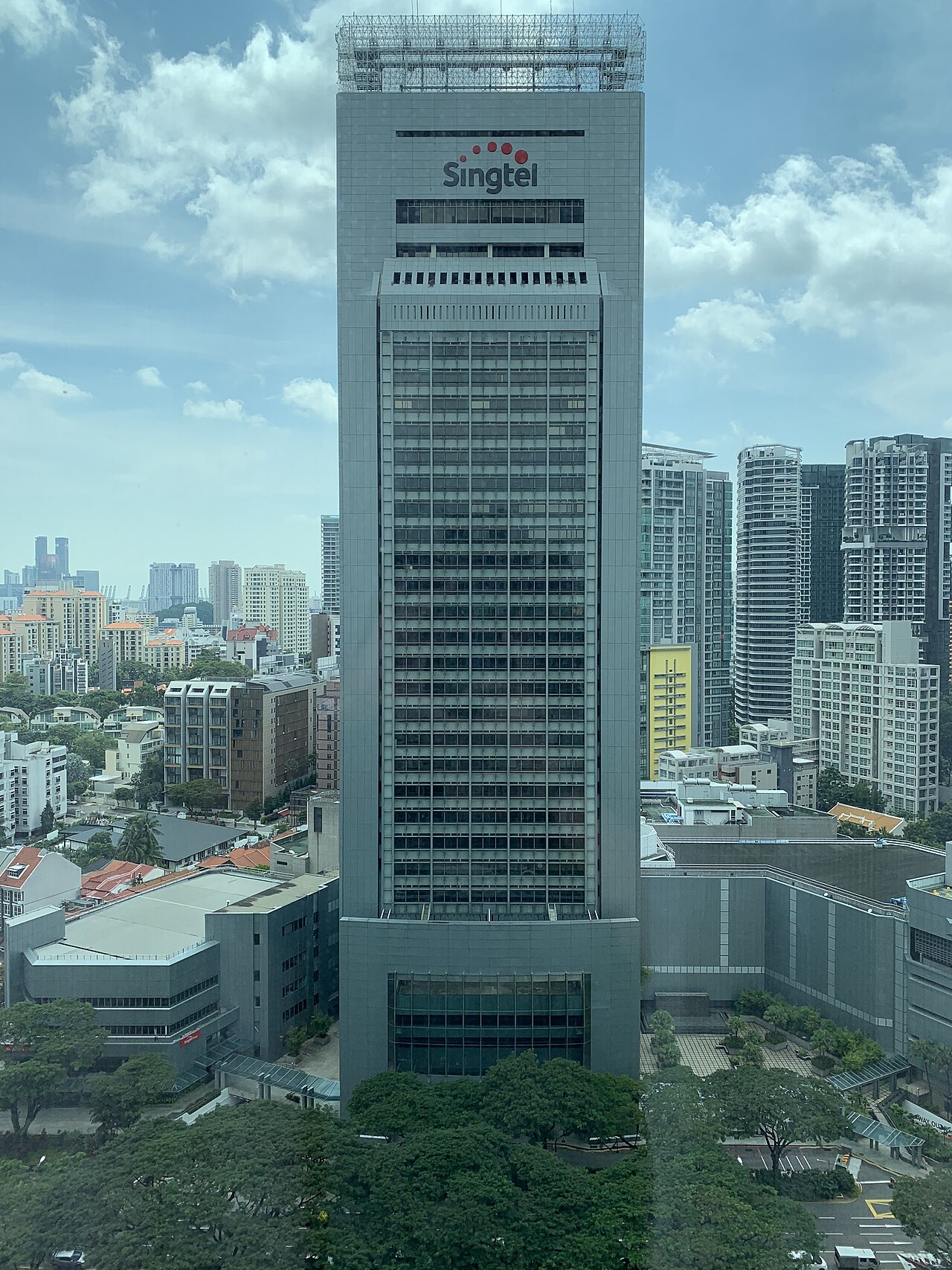
Its brand challenge is the classic telco one. Customers depend on it but rarely love it. Brand Finance’s 2025 edition credited growth to the IT services arm NCS and to investment in AI and data centres, a sign that the corporate brand is being steered towards technology.
7. Singapore Airlines (US$3.1 billion)
Singapore Airlines began flying under that name on 1 October 1972, after the split of Malaysia-Singapore Airlines, and its logo has not changed since. Its brand is built on service, personified for decades by the Singapore Girl, and Skytrax has named it the world’s best airline five times.
Singapore Airlines’ short film ‘The Briefcase’ carries the airline’s service-led brand story beyond the cabin.
Brand Finance’s 2026 research adds a newer strength: Singaporean respondents rated it highest for sustainability efforts across environmental, social and governance measures. Since November 2024 it has also held a 25.1 per cent stake in Air India, following the Vistara merger.
Numbers 8 to 10: the newcomers
8. Agoda (US$1.8 billion)
Agoda was co-founded in 2005 by Michael Kenny and Robert Rosenstein, folding in a Phuket-based booking site, and was acquired by Priceline, now Booking Holdings, in 2007. It is headquartered in Singapore and Thailand. It entered the ranking only in 2025, at ninth. Its rise shows how a digital brand can build value without a single shop window.
Agoda’s own film goes behind its new brand identity, the face of a digital brand that has built its value without a single shop window.
9. Grab (US$1.7 billion, up 53%)
Grab started in Kuala Lumpur in 2012 as MyTeksi, founded by Anthony Tan and Tan Hooi Ling after Tan conceived the idea at Harvard Business School. It became Grab in 2016, absorbed Uber’s Southeast Asian business in 2018 and listed on Nasdaq in December 2021. It is now headquartered in Singapore.
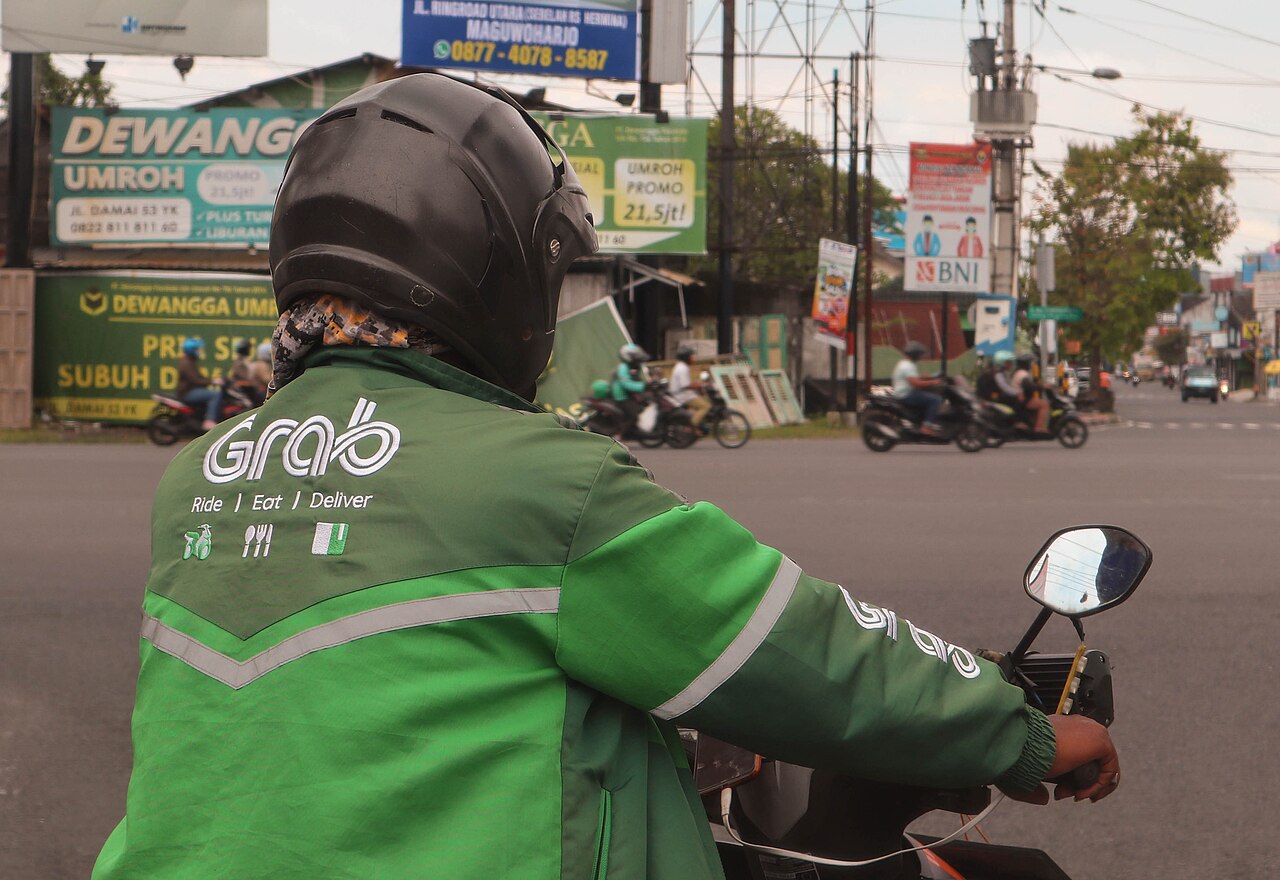
Brand Finance named it the fastest-growing brand in 2025, crediting the recovery of food delivery and new AI features. Grab grew by widening its promise from rides to everyday life.
10. Olam (US$1.6 billion, up 38%)
Olam is the least known name on the list to consumers, and one of the most interesting. It began in Nigeria in 1989 as an export operation set up by the Kewalram Chanrai Group, moved its operations from London to Singapore in 1996 and listed on the Singapore Exchange in 2005.
Olam’s 2021 corporate video speaks to the business customers behind a B2B brand built on reliability, traceability and reach across supply chains.
In 2020 it announced a split into two operating businesses, Olam Food Ingredients (ofi) and Olam Global Agri. Its brand is a B2B one, built on reliability, traceability and reach across commodity supply chains. Few shoppers will ever see the name. Its customers are other companies, and they care about different things.
What counts as a Singapore brand?
Look closely and the top ten is a passport collection.
Marina Bay Sands is owned by an American casino company. Agoda belongs to Booking Holdings. Grab was born in Malaysia. Olam started in Nigeria.
They belong in a Singapore league table because they are based and run here. For anyone building a company, that is the more useful definition: a Singapore brand is less about the founder’s passport than about where decisions are made and what customers associate with the name.
Several of these brands borrow credibility from Singapore’s reputation for reliability. That is an asset any local firm can claim.
Strongest is not the same as most valuable
On Brand Finance’s strength index, the leaders this year are Changi Airport at 91.2 out of 100, FairPrice at 90.9 and Bank of Singapore at 88.9, all rated AAA+. None is in the value top ten.
That gap matters for smaller companies. Brand strength measures how much customers prefer, trust and recommend a brand, and any firm can work on it regardless of size.
The two leaders tell the story. FairPrice’s brand value fell 7 per cent this year, yet price freezes and discounts strengthened loyalty. Changi’s value rose 16 per cent on record traffic and service investment.
Strength is the leading indicator. Value tends to follow.
How has the list changed?
Brand Finance’s 2016 top ten included Wilmar, Keppel, Frasers Centrepoint and Sembcorp. The 2021 edition still featured SPC, Wilmar and Tiger. By 2026 those names had given way to Marina Bay Sands, Agoda and Grab.
The direction is clear. Singapore’s most valuable brands are moving from industrial and commodity businesses towards experiences, travel and digital services, sectors where the brand is something people choose every day. The banks have held their ground by investing in digital experience, which is exactly why their outages draw such scrutiny.
What a smaller company can take from the table
Most firms reading this will never appear in a national top ten. The table is still useful, because the brands on it share habits that work at any size.
Name the trust you are selling. DBS sells security with convenience, Great Eastern sells more than a century of continuity, Olam sells reliable supply. Each knows which kind of trust its customers are buying, and invests there first.
Treat operations as brand. If your brand says “fast”, “reliable” or “always on”, your systems, staff and suppliers are carrying that promise every day, whether marketing likes it or not.
Decide your architecture on purpose. Every company that acquires a business or launches a second line faces OCBC’s choice: keep the name, or fold it in.
And measure strength as well as size. A small firm cannot match a bank’s revenue, but it can track whether customers prefer it, trust it and recommend it. Those measures move first.
Questions from the trading floor
What is the most valuable brand in Singapore?
DBS is Singapore’s most valuable brand in Brand Finance’s Singapore 100 2026, with a brand value of US$18.6 billion. It has held the top spot for 14 consecutive years.
What is the strongest brand in Singapore?
Changi Airport is the strongest Singapore brand in 2026, with a Brand Strength Index score of 91.2 out of 100 and an AAA+ rating. FairPrice and Bank of Singapore follow.
How is brand value calculated?
Brand Finance uses the relief-from-royalty method. It estimates the royalty a company would pay to license its own brand, applies that rate to forecast brand revenue and discounts the result to present value.
Curious what your own brand is worth, and where it is weak? Start with a brand audit.






