Stand in a car showroom on a quiet weekday and close a door. Not a slam. Just a firm push.
Listen to what comes back: a low, soft, slightly muffled thump, and then nothing. No rattle. No ring. That small sound has probably been argued over in meetings, measured in a laboratory, rebuilt in prototype and tested on strangers before you heard it.
Most talk about sound in branding stops at jingles and sonic logos. The quieter, stranger work happens in the noises products make by themselves. Sound branding is the deliberate design of the noises a company makes, from product sounds and interface alerts to registered sound trademarks, so that people recognise the brand and judge its quality partly through their ears.
The ear is a suspicious organ. It hears quality before the eye has finished looking. Follow that suspicion through car doors, cereal bowls, computers, electric cars and railway platforms, and you arrive at a question every business should ask: what does our brand sound like when nobody is advertising?
What is sound branding, if it isn’t a jingle?
A jingle is a message you choose to send. A product sound is a message you send whether you like it or not.
Every object that clicks, whirs, beeps or thuds is talking about itself. A lid that pops says the seal was intact. A pen that creaks says it might break. A hair dryer that screams sounds powerful, perhaps too powerful.
Product designers have a name for the sweet spot where a sound meets expectations so well that nobody notices it: the zone of indifference. It is the goal more often than you might think. Surprise is risky; a sound that surprises people can delight them, or alarm them.
So sound branding has two jobs. The first is defensive: remove the sounds that whisper “cheap” or “broken”. The second is expressive: add a sound so characteristic that it could belong to nobody else.
Most companies never get past the first job. The interesting ones manage both.
The thud: engineering the sound of money
Car doors are the classic case because the stakes are so obvious. A buyer opening and closing a door in a showroom is running an informal quality test, and the door sound is often the first piece of evidence they collect.
Engineers learned long ago that the reassuring thump owes less to weight than to design. In 2014 Mercedes-Benz’s manager of sound quality and design explained that it comes from the acoustic design of the door structure, the latches and the seals. Ford has described the door-closing sound as its first chance to make a buyer feel a car’s quality. Lexus went as far as making a promotional film about the door sound of its UX crossover.
What do listeners hear as expensive? Low frequencies, softness, and a short after-sound that dies away cleanly. Tinny slams read as cheap and flimsy. That is why door cavities are stuffed with foam and mats, why latch mechanisms are tuned to produce exactly the right click, and why carmakers record and analyse door sounds before a model ever reaches production.
It is also why safety rules quietly changed the soundtrack. When manufacturers added reinforcing bars to side doors to meet stricter safety rules, the doors started to sound different. Even regulation has a voice.
The broader lesson reaches well beyond cars. Picture a Singapore furniture brand selling a mid-priced sideboard. If the drawer runner squeals and the door shuts with a hollow clack, no amount of brochure copy about craftsmanship will survive the first week at home.
Why does a crunch taste fresher?
Food makes the case even more vividly, because sound changes what people believe they are tasting.
In an Oxford experiment, volunteers bit into Pringles while researchers altered the pitch and volume of the crunch they heard. When the crunch was louder and higher-pitched, people judged the crisps fresher, even though nothing about the food had changed. The work was published in 2004 and won an Ig Nobel Prize in 2008.
The implication for brands is blunt. If you sell something crunchy, the sound is part of the recipe. A crisp that goes soft in the bag isn’t just stale. It is quieter, and the quietness is what tells you so.
Kellogg’s understood this decades ago. Rice Krispies turned the noise of cereal meeting milk into its brand: three characters called Snap, Crackle and Pop, the first of whom appeared on the packet in 1933, drawn by the illustrator Vernon Grant. Very few brands have turned a product sound into a cast of mascots. Kellogg’s later pushed the idea into playful territory by commissioning the designer Dominic Wilcox to build a gramophone-style bowl that picks up the crackle with a microphone and plays it back, louder, through a horn.
That is sound branding at its purest. The brand did not invent the noise. It noticed the noise, named it and claimed it.
The chime: when a machine says hello
Computers once announced themselves. For decades, switching on a Mac produced a warm major chord that told you the machine had passed its self-tests and was ready to work.
The modern version of that chime came from Jim Reekes, an Apple sound designer who disliked the earlier startup tones because they resembled the eerie arpeggios Macs played when hardware failed. He built his chord on a synthesiser and, with help from friendly engineers, got it into the machines’ memory.
A variant debuted on the iMac G3 in 1998 and greeted Mac users until early 2016. Pixar used it in WALL-E in 2008, when the robot finishes recharging, and in 2012 it became a registered trademark in the United States. Few interface sounds have made it into a feature film.
Then, starting with the 2016 MacBook Pro, Macs booted in silence. The online reaction showed exactly why product sounds matter. Long-time users complained that the chime had been a practical tool: it told them whether the machine had genuinely restarted, and their troubleshooting routines depended on it.
Others said it felt like a starting bell for the working day. A smaller camp welcomed the silence, recalling the embarrassment of a Mac booting loudly in the middle of a meeting.
Apple brought the chime back with macOS Big Sur in 2020, a semitone lower than before, and let users switch it on or off. That last detail is the smartest part. A signature sound that people cannot control eventually becomes a nuisance.
In China, Tencent went to considerable lengths over a far humbler noise. Its alert sound, a rapid run of “di-di-di” notes, became the subject of the country’s first successful administrative appeal for a sound trademark in 2018. A beep, in other words, worth fighting for.
What should an electric car sound like?
Electric vehicles created a problem no carmaker had faced before: a product that is too quiet to be safe.
Regulators answered first. In the European Union, new types of electric and hybrid cars approved from July 2019 had to carry an acoustic vehicle alerting system, and all new quiet vehicles registered from July 2021 had to follow. The sound must run continuously at speeds up to 20 km/h, loud enough to be heard but capped at a maximum level. The United States and Japan wrote their own rules, with Japan issuing guidelines for near-silent vehicles as early as 2010.
The law says a car must make a noise. It doesn’t say which noise. That gap is a branding opportunity, and BMW seized it.
In 2019 it brought in the film composer Hans Zimmer to work with its acoustic engineer and sound designer Renzo Vitale on BMW IconicSounds Electric, starting with the Vision M Next concept. Their idea was that acceleration should feel like moving through slowly shifting sound textures, an emotional replacement for the engine note drivers had loved for a century.
BMW presents IconicSounds Electric, the Hans Zimmer and Renzo Vitale soundscape that turns a legal requirement into a brand signature.
Here the two jobs of sound branding meet. The defensive job is regulatory: warn pedestrians. The expressive job is emotional: make an electric BMW sound like a BMW, even though the noise is entirely composed.
Places that sound like themselves
Brands are not only products. Cities, transport networks and stations have sounds too, and a few have designed them with real care.
Japan’s railways offer the finest example. In the national railway era, stations used metallic departure bells that many passengers found harsh. After the national railway was privatised, local managers began replacing them with short melodies. JR East introduced one at Sendai in November 1988, and in March 1989 calming melodies developed by Yamaha arrived at Shinjuku and Shibuya.
Some stations went further and gave themselves sonic identities. Ebisu plays The Third Man theme, a tune Sapporo Breweries used in its Yebisu Beer television advertising; the station began life as a shipping point for that very beer. Takadanobaba, near the offices of Tezuka Productions, plays an arrangement of the Astro Boy theme. Commuters know where they are with their eyes shut.
Singapore has joined in. SMRT tested new arrival and departure chimes from October 2023 and made them permanent from February 2024 at more than 70 stations.
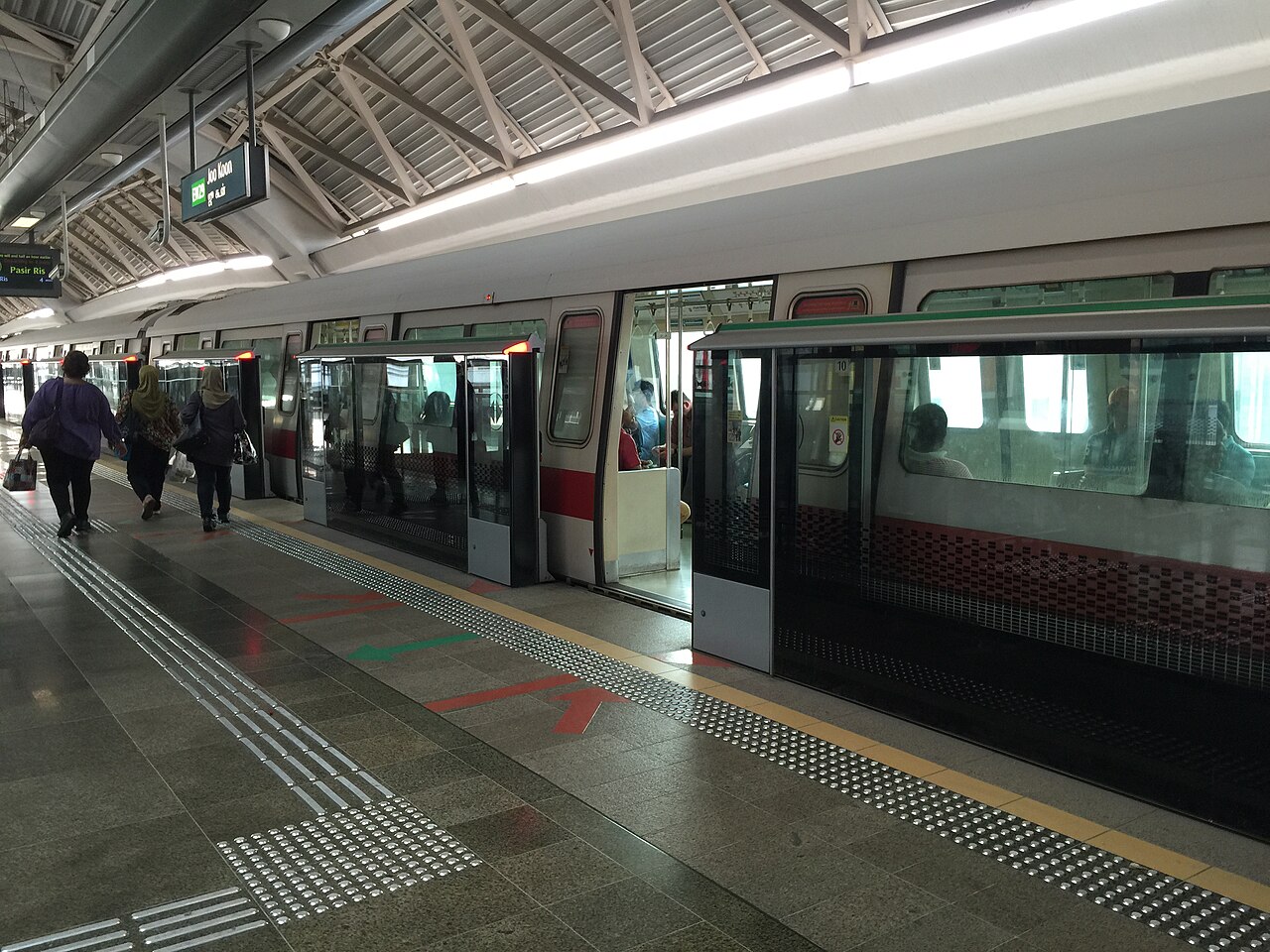
Each line got a melody drawn from a local tune: San Lun Che, a Chinese children’s song about the trishaw, on the North-South Line; the Malay folk song Chan Mali Chan on the Circle Line; and the Tamil work Singai Naadu on the East-West Line. The chimes were conceived by the creative team at The TENG Company, a Singapore music group, and were designed to help visually impaired commuters and riders less fluent in Singapore’s official languages.
This is sound branding with a civic purpose. The sound identifies the line, reflects the city’s mix of cultures and helps people who depend on their ears.
Can you trademark a noise?
Sometimes. With difficulty.
The most famous failure is Harley-Davidson. In 1994 it applied in the United States to register the distinctive rumble of its V-twin engine. Rival manufacturers objected that their engines made much the same sound, and after six years of dispute Harley withdrew its application in 2000. A sound shared by a whole category belongs to nobody.
Europe for years insisted that every trademark be capable of graphic representation, which made sounds awkward to file. From 2005 the EU office accepted sonograms filed electronically with an MP3 of the sound. China’s trademark rules have permitted sound mark applications since 2014, which opened the door for cases like Tencent’s.
The pattern across jurisdictions is consistent. Short, distinctive, deliberately composed sounds are easier to protect than the natural by-products of a technology. An engine note is engineering. A five-note tune is authorship.
If you want to own a sound, design one. Don’t just hope the one your product happens to make is unique.
How to hear your own brand
Most businesses have never listened to themselves on purpose. Try it.
Spend an afternoon writing down every sound a customer meets: the door chime at your shop, the hold music on your phone line, the ping of your app, the noise your packaging makes when it opens, the whir of the machine behind your counter.
Picture a Singapore kopi chain with twenty outlets. Its customers hear a pager buzzer, a till beep, a milk steamer and a radio tuned to whatever the outlet manager prefers. None of it was chosen. All of it is branding.
Then work through it the way product-sound consultancies do. Decide what each sound should communicate, prototype alternatives, record them properly, play them to real customers and adjust until the reaction matches the intention.
Defensive fixes first: anything that sounds cheap, shrill or broken. Expressive choices second, and sparingly. One signature sound people love is worth more than ten that compete for attention.
Above all, give people control where it matters. The startup chime returned with an off switch for a reason.
Quick answers, said softly
What is the difference between sound branding and a sonic logo?
A sonic logo is a short composed tune used in advertising and on screens, while sound branding also covers product sounds, interface alerts and environmental sounds such as station chimes. The broader discipline treats every noise a customer hears as part of the brand.
Why do expensive car doors sound different?
Carmakers tune door structures, seals and latches so the door closes with a low, soft thud and a clean decay, which buyers associate with quality. Tinny or rattling sounds are perceived as cheap.
Can a company trademark a sound?
Yes, in many countries, if the sound clearly identifies one company rather than a whole product type. Harley-Davidson withdrew its engine-sound application in 2000 after competitors argued their engines sounded similar.
If you would like to find out what your brand sounds like when nobody is advertising, we can help you listen.






