Every marketing textbook teaches the same instinct. Find out what customers want. Give it to them.
Make buying easy, frictionless, cheaper if you can. Grow by reaching more people.
The great luxury houses read that page and do the opposite. They ration supply, raise prices every year, refuse to discount, keep their best products off the internet and decide, with exquisite politeness, who is allowed to buy. It should not work. It does.
A luxury brand is a brand that deliberately keeps desire ahead of availability, using rationed supply, rising prices, controlled distribution and a story of heritage and craft, so that owning it signals taste and standing rather than mere spending. The playbook behind that sentence is stranger than it looks.
The rules were always upside down
In 2009 Jean-Noël Kapferer, a marketing professor at HEC Paris, and his co-author Vincent Bastien set down what luxury practitioners had long known in their bones. They called the principles the anti-laws of marketing, and there are 24 of them.
Forget positioning against competitors. Don’t respond to rising demand. Make buying difficult. Keep raising prices. Don’t sell openly online. Keep stars out of the advertising.
Every one of those rules would get a junior brand manager fired at a consumer-goods company. That is the point.
Luxury is not premium with a bigger price tag. Premium competes on being better than the alternatives. Luxury refuses to be compared at all.
The anti-laws are not a menu. They are a system, and they fail when cherry-picked. A brand that raises prices but floods outlet malls is not running the luxury playbook. It is running a pricing experiment with a short shelf life.
Is luxury scarcity real or manufactured?
This is the question that surfaces again and again when engineers and economists argue about Birkin bags online. The honest answer is both, and the craft is in keeping the two indistinguishable.
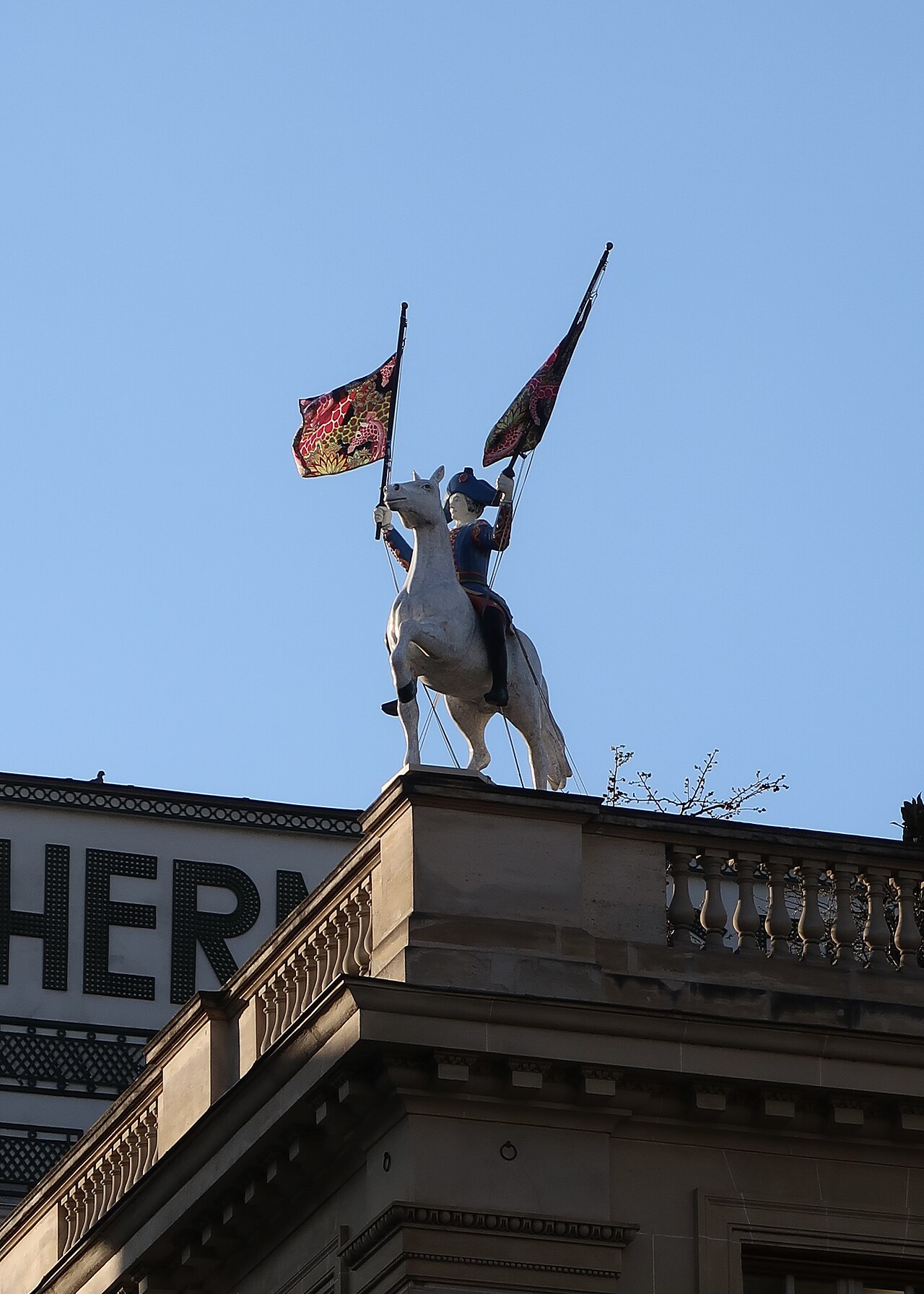
Some scarcity is real. Hermès, founded in Paris in 1837 as a saddlery serving riders and their horses, still makes its leather goods by hand, rules out assembly lines and trains craftspeople for years before they master some processes. There are only so many skilled hands, and hands cannot be scaled like machines.
Some scarcity is chosen. Ferrari deliberately builds fewer cars than customers want, ranks buyers internally by loyalty, and reserves its most exclusive models for people who have already owned several. The waiting list for a limited series can run to many times the production run.
In 2024 the company shipped 13,752 cars. A mass-market carmaker builds that many in a matter of days.
Rolex sits between the two. Owned since 1960 by the Hans Wilsdorf Foundation, a private trust, it produced an estimated 1.2 million watches in 2024, which is hardly tiny. Yet waiting lists at authorised dealers are part of the legend, and in 2023 Rolex agreed to buy Bucherer, its long-standing retail partner, tightening control over how and where its watches meet customers.
The rule underneath: never let supply catch up with desire. The moment a customer can have it whenever they like, it stops being a prize.
Can you just walk into Hermès and buy a Birkin?
Officially, you can walk in. Practically, the answer is the most famous “not today” in retail.
The Birkin itself was born from a conversation in 1984 between the actress Jane Birkin and Jean-Louis Dumas, then head of Hermès, about the impracticality of her bag. The Kelly took its name in the 1950s after a photograph of Grace Kelly carrying one appeared in Life. Both stories place the product inside a moment of glamour that cannot be repeated or purchased.
Access is managed with discretion. Online threads are full of buyers describing a dance of relationships, purchase history and sales associates who seem to choose their clients rather than the other way round.
In March 2024 shoppers in California went as far as suing Hermès, arguing that selective sales of the Birkin broke antitrust law. A legal headache, certainly. Also, strangely, a brand story: few companies are sued because people cannot give them money fast enough.
The lesson is not that every brand should make customers queue. It is that luxury turns the act of buying into a privilege, and the privilege becomes part of what is bought.
Price is a message, not a calculation
Ordinary pricing starts from cost and competitor benchmarks. Luxury pricing starts from what the price should say.
Chanel shows the logic plainly. The US price of a medium Classic Flap bag rose from about US$1,650 in 2005 to US$4,900 in 2014, and the house kept raising it in successive rounds through the early 2020s. Each increase tells existing owners their bag has become more valuable and tells hesitating buyers that waiting will cost them. Chanel has also long refused to sell its handbags and ready-to-wear online; after sales fell in 2020, its finance chief said the approach would not change.
The two levers work together. Rising prices preserve the dream. A closed online channel preserves the boutique experience, where staff can tell the story, read the customer and control the moment of sale.
What luxury houses almost never do is discount. A sale tells every past customer they overpaid and every future customer to wait. One markdown can undo years of carefully built standing.
Talk to the people who will never buy
Here is one of the stranger anti-laws, and one of the most useful. Luxury brands communicate far beyond their customers. They want the student, the office worker and the tourist to know the name, recognise the box and understand what it costs, even though most of them will never buy.
Why spend money on people who will not spend money? Because the value of a luxury object is partly social. A watch only signals something if other people can read the signal. A bag only carries standing if passers-by know what it is.
Non-buyers are the audience that makes ownership meaningful.
The catch is that the communication must not sell. Luxury advertising rarely lists features or prices. It builds a world: a horse, a workshop, a city at dusk, a craftsperson’s hands. The practical details come later, in the boutique, delivered by a person.
This is where many aspiring premium brands go wrong. They borrow the imagery of luxury and then bolt on a promotion code, a countdown timer or a “buy now” button. The dream and the hard sell cannot share the same frame. Pick one.
What happens when a luxury brand chases volume?
It drifts down the ladder, usually without noticing until the view has changed.
Michael Kors is the cautionary tale for a generation of accessible luxury. By April 2017 the company operated more than 800 full-price and outlet stores, and that year it announced plans to close up to 125 of them as pressure on its retail business deepened.
When Tapestry, owner of Coach, tried to buy Capri Holdings, the parent of Michael Kors, US regulators sued to block the deal in 2024, and the way they described the market was telling: affordable luxury handbags. A federal judge blocked the merger that October. Whatever the advertising said, in official language the brand was now a mid-market rival to Coach.
Compare Hermès, which listed its shares in 1993 at a market value of around €600 million and was worth roughly €57 billion when it joined France’s CAC 40 index in 2018. Restraint compounded. Volume did not.
The test for any brand flirting with luxury: if your growth plan depends on reaching people who don’t care about you yet, you are running a mass strategy with luxury branding on top. Customers sense the gap faster than boards do.
Heritage is an asset you must keep spending
Luxury brands talk about the past constantly. Not out of nostalgia, but because heritage is the one competitive advantage a rival cannot buy in a year.
Even when it can be bought, it has to be reinvested. LVMH completed its acquisition of Tiffany & Co. in January 2021 for about US$15.8 billion after a fraught renegotiation.
Within months, the new owners launched the “About Love” campaign with Beyoncé and Jay-Z, featuring a Basquiat painting the company had acquired, and in April 2023 the renovated Fifth Avenue flagship reopened. Tiffany’s blue box and its New York legend were the asset. The investment was in making them feel current again.
Independence can be heritage too. In 2010 LVMH built up a stake of about 17 per cent in Hermès. The founding family responded by pooling its shares in a holding company, H51, and by the end of 2014 the two groups had reached an agreement that saw LVMH distribute most of its stake.
The family’s grip has only tightened since; by March 2025 H51 held about two-thirds of the capital. Patient, unhurried, answerable to generations rather than quarters.
Can Asia build luxury brands of its own?
The luxury canon is overwhelmingly European, which is a habit rather than a law of nature. Two Asian projects show how the playbook travels.
Shang Xia was founded in 2010 as a collaboration between Hermès and the Chinese designer Jiang Qiong’er. The name means “up and down” in Chinese. Its products reinterpret Chinese forms, from a first bag modelled on a bamboo bowl to furniture drawn from the Ming dynasty, and it opened a Paris boutique in 2013.
Exor invested around €80 million in December 2020 and became majority owner the following year. The project showed both the promise and the patience required: Chinese craft heritage is deep, but building global luxury desire from it takes decades, not funding rounds.
Japan offers a quieter case. The Toyota Century first appeared in 1967, named for the centenary of the birth of Sakichi Toyoda, the founder of Toyota Industries. It has long been the car of the Imperial House, prime ministers and senior executives.
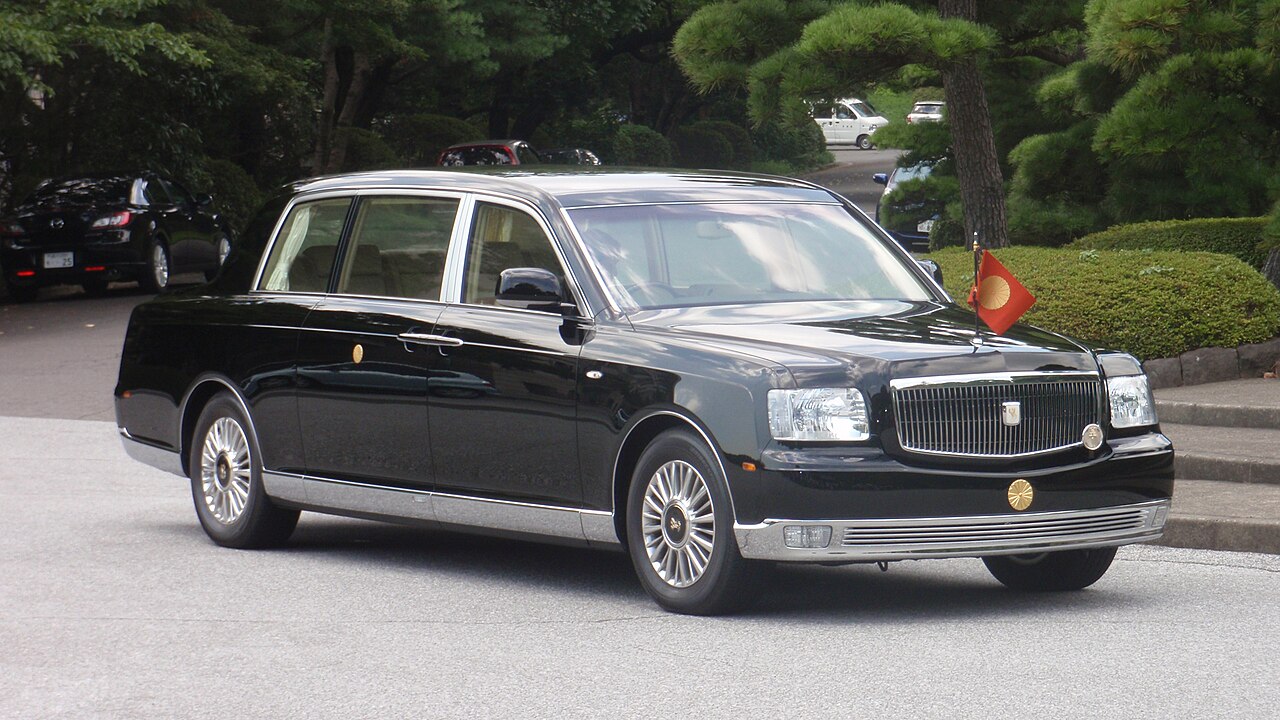
Its current saloon is limited to about 50 units a month and is described as nearly hand-made. In 2025 Toyota spun Century off as a standalone brand. Restraint, ceremony, rarity, a story of national craft: the anti-laws, written in Japanese.
For Singapore and Southeast Asian founders, the takeaway is not that you need a century of history. It is that you need a story worth a century, and the discipline to let it grow slowly. Picture a Singapore jeweller who caps production of a signature piece, never discounts it and sells it only in one atelier. In ten years, that restraint is the brand.
Why do people pay that much?
Online, the debate tends to split into two camps. One says the price is pure marketing, a Veblen good where the cost is the point. The other says owning something rare, beautifully made and hard to get is a legitimate pleasure.
Both camps are describing the same machine from different ends. Luxury sells meaning: belonging to a tradition, displaying taste, enjoying the hunt, holding an object whose value may rise rather than fall. Quality matters, but it is the entry ticket, not the reason.
That is why the playbook is so hard to copy. You can buy the leather, hire the craftspeople and open the boutique. You cannot buy the decades of consistent refusal that convinced the world your “no” means something.
Questions from the salon
What makes a brand a luxury brand rather than a premium one?
A premium brand competes by being better than alternatives at a higher price. A luxury brand avoids comparison altogether, keeping desire ahead of supply through rarity, rising prices, controlled distribution and heritage.
What are the anti-laws of marketing?
They are 24 principles set out by Jean-Noël Kapferer and Vincent Bastien in 2009, describing how luxury brands break conventional marketing rules, for example by making buying difficult, raising prices over time and not selling openly online.
Do luxury brands ever discount?
The strongest houses avoid it, because discounts signal that earlier buyers overpaid and teach future buyers to wait. Brands that rely on markdowns and outlets tend to slide towards accessible luxury.
Restraint is a strategy, not a mood; if you are ready to decide what your brand will refuse, our brand strategy team can help you write the rules.






