Park the two side by side on a wet evening outside a condominium in Bukit Timah and you can usually tell, before anyone opens a door, which owner wanted to be driven and which one wanted to drive. That is not snobbery. It is a century of branding doing exactly what it was designed to do.
BMW vs Mercedes-Benz is the long-running rivalry between Germany’s two best-known premium car brands, in which BMW sells the experience of driving, summed up as Sheer Driving Pleasure, while Mercedes-Benz sells assured excellence and status, summed up as The Best or Nothing.
Both build fast, comfortable, expensive cars. On a spec sheet the overlap is enormous. On the road of public perception, they have spent decades taking different lines through the same corner.
The starting grid: who got there first
Mercedes-Benz has the stronger claim to an origin story, and it knows it. In January 1886 Carl Benz patented his Patent-Motorwagen, widely regarded as the first automobile powered by an internal combustion engine. Everything that followed sits in the shadow of that patent.
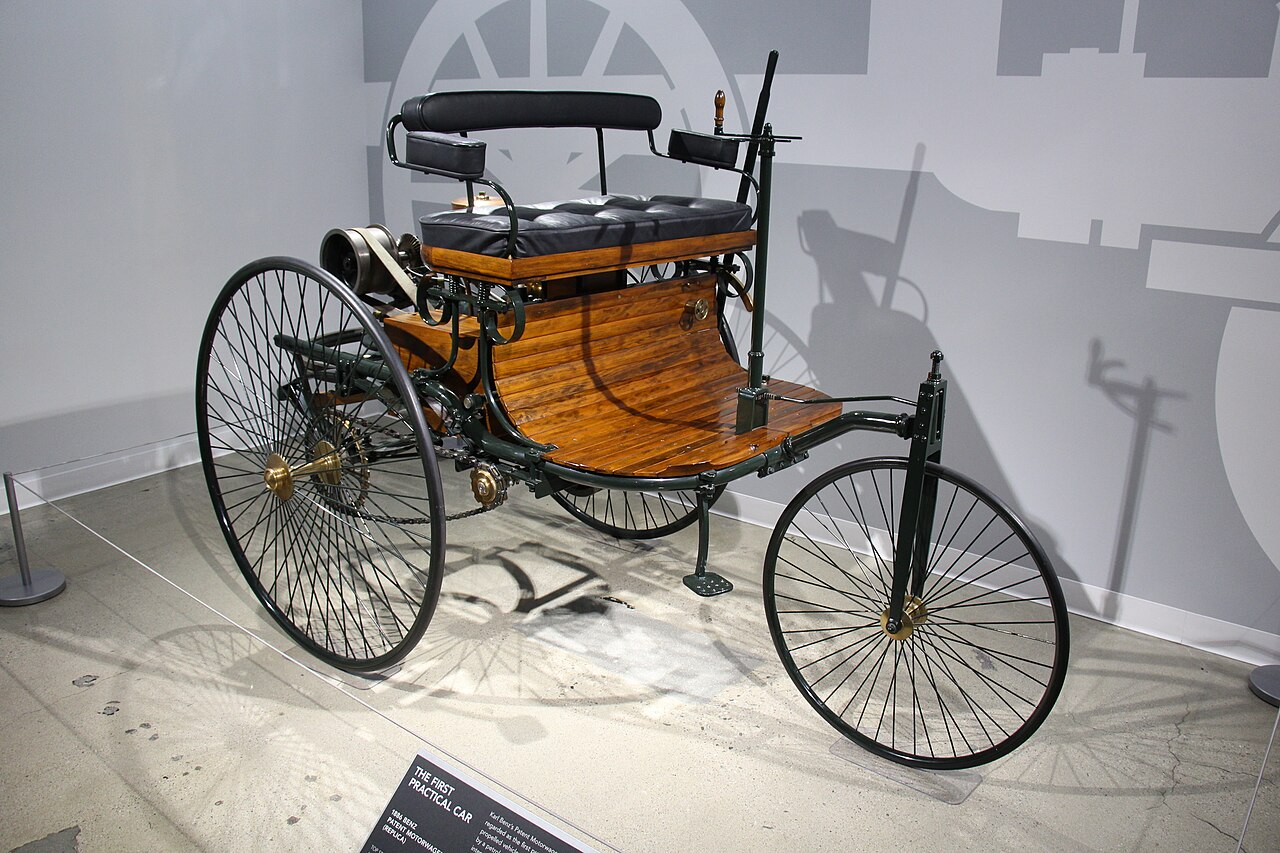
The name came later, and from an unlikely place. Emil Jellinek, an Austrian entrepreneur who worked with Daimler-Motoren-Gesellschaft, named the 1901 Mercedes 35 hp after his daughter, Mercédès, and registered the trademark in 1902. A little girl’s name became one of the most valuable words in motoring.
The three-pointed star was registered by DMG in June 1909, standing for motorisation on land, on water and in the air. On 28 June 1926 the companies of Benz and Daimler merged, and the first Mercedes-Benz cars appeared that year.
BMW arrived from the sky. Its official founding date is 7 March 1916, and its first products were aircraft engines for Germany’s military air service in the First World War. It became a carmaker only in 1928, when it bought the Eisenach factory that built the Dixi, a licensed Austin 7. The first car sold as a BMW was a rebadged Dixi.
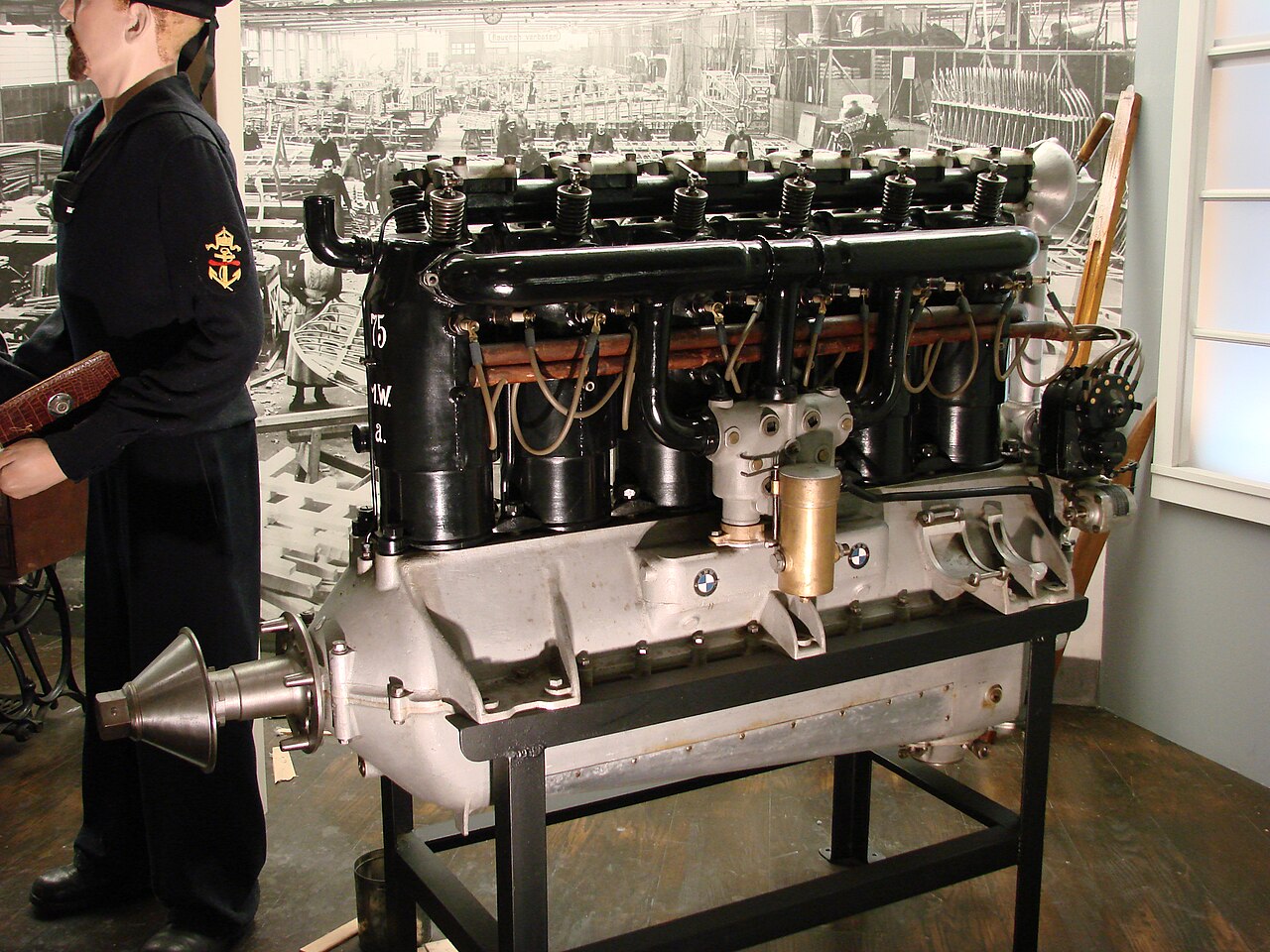
So one brand starts with the invention of the car. The other starts with engines built for aeroplanes that had to learn the road. That difference still shapes how each one talks.
Does the BMW logo really show a propeller?
No, and the myth is more useful to BMW than the truth.
The roundel grew out of the circular logo of Rapp Motorenwerke, whose engine business passed to BMW. The company kept Rapp’s black ring and filled it with blue and white quarters drawn from the Bavarian coat of arms. The propeller story most likely comes from a 1929 advertisement showing the logo over a spinning propeller, twelve years after the logo itself existed.
Almost every enthusiast you meet will tell you the propeller story. Almost none will thank you for the correction. A good brand myth survives because it fits: a badge that recalls a spinning blade suits a company that sells motion. A badge that recalls a regional flag suits a tax office.
The star needs no myth. It came with its meaning written into the trademark. Land, sea and air, an empire’s worth of ambition in three lines, for a brand that has always presented itself as the standard others are measured against.
Two slogans, two theories of luxury
Slogans are where the rivalry becomes explicit.
BMW adopted “Freude am Fahren” as its official slogan in 1972, rendered in English as Sheer Driving Pleasure. In the United States, BMW North America coined “The Ultimate Driving Machine” in 1974 and first used it in advertising after a win at the 12 Hours of Sebring in 1975.
Both lines put the driver’s hands, feet and nerve endings at the centre of the brand. Neither mentions comfort, safety or prestige. That omission is the strategy.
Mercedes-Benz took much longer to put its philosophy into a line. “Das Beste oder nichts”, The Best or Nothing, became the brand’s claim in June 2010 after a year as an internal rallying cry, and the company traces it back to Gottlieb Daimler. Where BMW talks about a feeling, Mercedes talks about a standard.
Where BMW invites you into the driving seat, Mercedes asks you to accept no compromise. Subtly different promise. It applies just as well to the rear seat.
There is a risk in that “or”. It can sound imperious, a brand declaring every rival worthless, and bravado of that kind sometimes reads as insecurity. Mercedes gets away with it because it has the history to back the claim. A younger brand borrowing the posture would sound ridiculous.
Brand personality is usually mapped along a handful of dimensions, among them excitement, competence and sophistication. Run the two slogans through that lens and the split is obvious.
BMW leans on excitement; Mercedes on competence and sophistication. Neither is better. They are different seats at the same table.
The near miss that made the rivalry possible
The most extraordinary fact in this story is how close it came to not existing at all.
In 1959 BMW was in financial trouble and very nearly passed to Daimler-Benz. Herbert and Harald Quandt invested heavily and kept it independent. Three years later the 1962 New Class saloons began building the sporting reputation BMW still trades on.
Imagine the alternative: a BMW division inside Daimler-Benz, its engineers told not to embarrass the S-Class. There would be no rivalry. There would be a product line.
Instead the two have spent more than six decades as the best possible enemies, each sharpening the other. Positioning is easier when there is a clear opposite to define yourself against, and these two have been each other’s mirror for so long that it is hard to picture either without the other.
How do the rivals actually talk about each other?
With a surprising amount of wit.
In March 2016, as BMW celebrated its centenary, Mercedes-Benz released a short message set to “For He’s a Jolly Good Fellow”, thanking its rival for 100 years of competition and adding that the 30 years before that had been a bit boring. A birthday card and a dig in one. It reminded everyone that Mercedes was older, while conceding that BMW made life interesting.
That joke works only because both brands are secure. A challenger cannot afford to tease the leader in public, and a leader with doubts would not risk the attention. The tone is that of two old racing drivers who have shared a podium too many times to pretend they dislike each other.
There is a lesson for smaller brands. A rivalry handled with good humour keeps both names in the conversation. Handled with spite, it makes both look petty.
When the promise meets the price list
A brand promise is easy to print. It is tested in the small print.
In 2022 BMW customers in South Korea discovered that heated seats could be activated through the ConnectedDrive store for ₩24,000 a month. The same store offered IconicSounds Sport, which played artificial engine sounds through the speakers for a one-off fee. For a brand built on Sheer Driving Pleasure, charging for the warmth of a seat already fitted, and selling the soundtrack of driving as an add-on, was a gift to critics.
The objections wrote themselves. If you have paid for the car, surely the hardware inside it is yours? Some longtime fans felt let down; a few defended the idea as a way to try a feature for one winter. And the scheme carried a competitive flaw: it only makes money if customers do not simply walk across the road to Mercedes.
In September 2023 BMW dropped it. Pieter Nota, its board member for sales and marketing, said uptake had been low and customers felt they were paying twice. BMW said it would no longer charge to activate hardware fitted at the factory.
That is the discipline of brand management in a single episode. The company did not change its slogan. It changed a policy, because the policy was quietly arguing with the slogan.
Do the badges mean the same thing in Asia?
Mostly, but the stakes are higher, and the translation matters.
In Chinese, BMW is 宝马, bǎomǎ, the precious horse, a name that sounds close to the colloquial “Beamer”. Mercedes-Benz is commonly called 奔驰, bēnchí, which means to gallop or to speed. Both names are small masterpieces: phonetically close to the original, semantically perfect for a car. In China, both brands get to be fast animals.
China is also where the rivalry is being rewritten. BMW opened its first Chinese plant in Shenyang in 2004, in a joint venture with Brilliance Auto, and raised its stake from 50 to 75 per cent in 2022. Mercedes builds cars there through Beijing Benz, a joint venture with the BAIC Group. For years these were among the most desirable foreign badges in the world’s biggest car market.
Why are BMW and Mercedes cutting prices in China?
Because the numbers have turned. In 2025 Mercedes-Benz Cars sold 1,800,800 vehicles worldwide, down 9 per cent, and its China sales fell 19 per cent to 551,900. The BMW brand sold 2,383,218.
Both cut prices in China in early 2026: BMW on more than 30 models from 1 January, Mercedes on core models including the C-Class and GLC in February. In the first half of 2026 BMW Group’s China volumes fell 20.4 per cent and Mercedes’ fell 28 per cent. Chinese premium brands with strong electric and connected features were taking share in the middle and upper segments.
For a brand that sells status, discounting in its largest market is a delicate manoeuvre. Price is part of the message. When a Mercedes costs noticeably less than it did last year, some buyers see a bargain and others see a badge that no longer means quite what it did.
Beyond China: Vietnam, Chennai, Pretoria
Elsewhere the story is older and steadier. Mercedes-Benz vehicles are assembled in Vietnam, through a joint venture with SAMCO since 1995, and in Malaysia, Thailand, Indonesia and India. BMW runs local assembly in Thailand and in Chennai.
In Singapore, with no local factory and an ownership system that makes every car purchase a considered one, the choice between the two is rarely about the spec sheet. It is about which story the buyer wants parked outside.
One more road, because it shows how deep the BMW identity runs. Cars were assembled at Rosslyn, near Pretoria, from 1968, and in 1975 BMW took full control, making it the company’s first plant outside Germany. In the 1980s South African engineers, working with Alpina, built a 3.2-litre six-cylinder 333i in tiny numbers for the local market.
That is Sheer Driving Pleasure translated not into Chinese but into local ingenuity. Rosslyn now builds the X3, including the plug-in hybrid for export.
Who is winning?
It depends which scoreboard you read. In 2018 Mercedes-Benz became the world’s largest premium car brand by volume, selling 2.31 million passenger cars; BMW has since moved ahead on deliveries. In Interbrand’s 2025 Best Global Brands, Mercedes-Benz sat tenth, valued at 50.1 billion dollars, though down 15 per cent on the year.
The better answer is that both are winning at different games. BMW wins when the buyer’s question is “how will it feel?” Mercedes wins when it is “what will it say?”
The danger for either is forgetting which question it answers. A BMW that sells engine noise as a download, or a Mercedes discounted like an ordinary car, is a brand drifting into its rival’s lane. Or worse, into nobody’s.
From the pit wall
What is the main branding difference between BMW and Mercedes-Benz?
BMW positions itself around the experience of driving, through Sheer Driving Pleasure and The Ultimate Driving Machine. Mercedes-Benz positions itself around assured excellence and status, through The Best or Nothing.
Is the BMW logo a propeller?
No. The roundel developed from Rapp Motorenwerke’s circular logo, with blue and white quarters from the Bavarian coat of arms; the propeller idea most likely comes from a 1929 BMW advertisement.
What are BMW and Mercedes-Benz called in Chinese?
BMW is 宝马 (bǎomǎ), meaning precious horse, and Mercedes-Benz is commonly 奔驰 (bēnchí), meaning to gallop or speed.
If your brand needs a promise as clear as either of these, and the discipline to keep it, talk to Firefish about brand strategy before your rival writes it for you.






