Traditional money has an unfair branding advantage. It comes with a central bank, an imposing building, a governor in a dark suit and, usually, a portrait of someone dignified and deceased. Nobody needs to market the Singapore dollar. The state does that for you, every day, by insisting you pay your taxes in it.
Cryptocurrencies have none of that. No building. No governor. Often no company. What they have instead is a name, a symbol, a community and a story, which is to say they have nothing but brand.
The branding of cryptocurrencies is the work of making a decentralised digital token feel trustworthy, memorable and worth holding, using names, symbols, communities, sponsorships and proof of reserves in place of the central bank, vault and legal tender status that traditionally stand behind money.
That has made crypto, since 2009, the most interesting branding laboratory going. Some experiments produced durable icons. Others produced stadium names that had to be peeled off buildings. The difference between them is instructive for anyone who sells trust, which is nearly everyone.
Why does a currency with no company need a logo?
Because people need something to point at. Bitcoin launched in early 2009 with a logo designed by its pseudonymous creator, Satoshi Nakamoto: a gold coin embossed with the letters “BC”. It looked like a prop from a pirate film. By February 2010 Satoshi had replaced it with a capital B with two vertical strokes, which gave it the look of a currency sign.
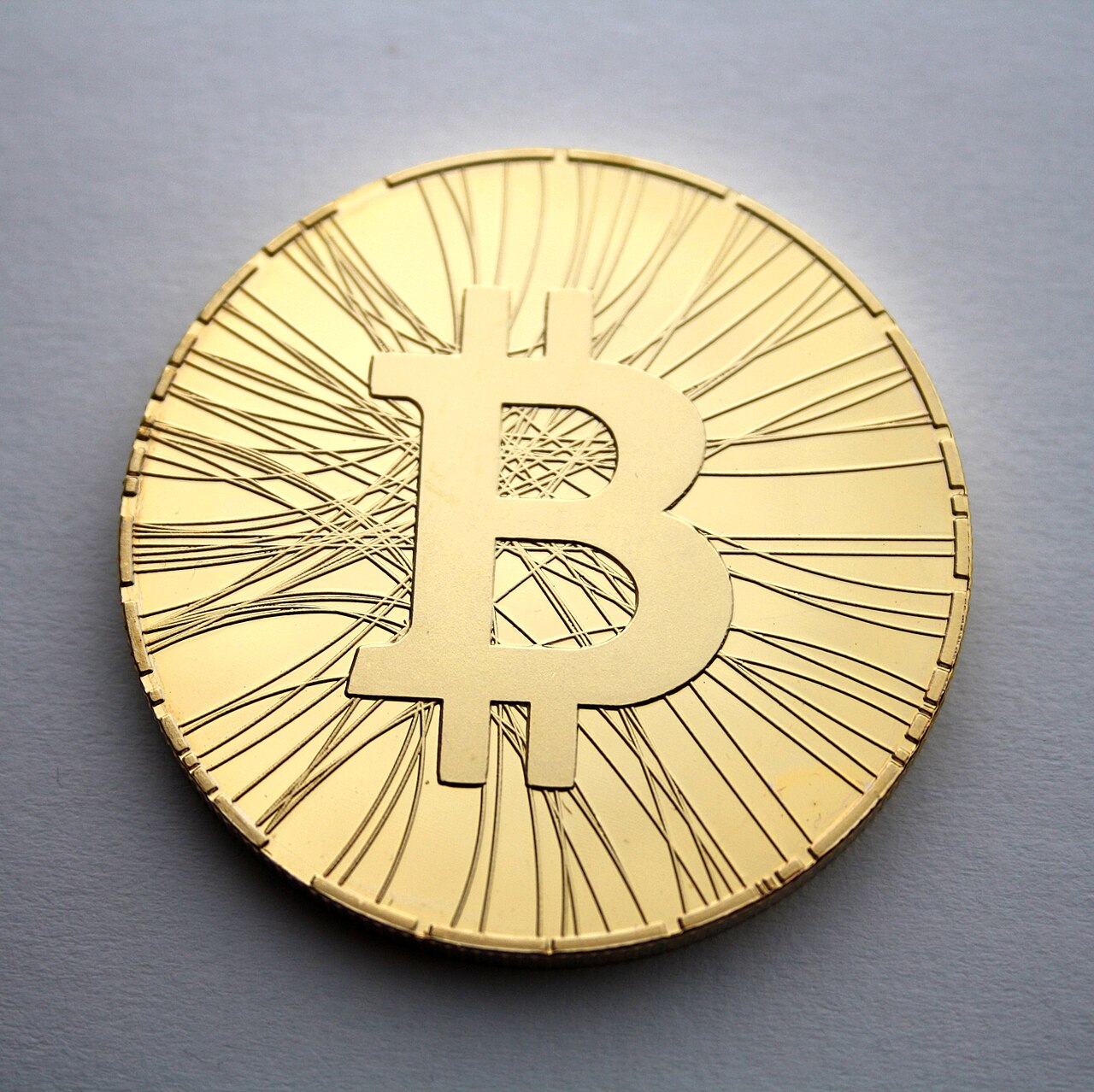
Then, in November 2010, a forum user known as Bitboy posted a cleaner version and released the artwork into the public domain. A white B, tilted to the right, on a flat orange circle. That is the mark you see today on exchange apps, conference lanyards and laser-eyed profile pictures.
Look at what happened there. The most valuable logo in crypto was designed by volunteers and owned by nobody. No agency. No brand book. No trademark lawyer guarding the tilt angle.
And yet it works, because it does what every good currency symbol does. It borrows the visual grammar of coins and currency signs, then adds one distinctive colour that is easy to remember.
The public-domain choice was also strategic, even if nobody called it that. A currency spreads when anyone can use its symbol freely. Restrict the logo and you restrict the network. Bitcoin’s brand architecture, if we can call it that, is open source all the way down.
Google added a version of the symbol to its mobile keyboards in 2019, and Twitter attached a Bitcoin emoji to the #bitcoin hashtag in 2020. When a platform builds your mark into its keyboard, you have arrived. No marketing budget required.
The dog that became a currency
If Bitcoin is the gold bar of crypto branding, Dogecoin is the novelty mug that somehow ended up in the bank vault.
Software engineers Billy Markus and Jackson Palmer launched it on 6 December 2013 as a joke. The target of the joke was the speculative frenzy around Bitcoin and its many imitators. The face on the coin belonged to Kabosu, the Shiba Inu from the “doge” meme, with its sideways glance and broken-English captions.
A joke, it turns out, is a brilliant brand platform. It is instantly recognisable, it invites participation and it disarms criticism in advance. You cannot accuse a coin of taking itself too seriously when its mascot is a dog wondering what is happening.
The community acted on the brand quickly. In January 2014 it set out to raise $50,000 to send Jamaica’s bobsleigh team to the Sochi Winter Olympics, and had $36,000 in donations by the second day.
That March it raised about $55,000 in Dogecoin to sponsor NASCAR driver Josh Wise, whose car then won a fan vote for a place in the Sprint All-Star Race. These were acts of generosity, but they were also brand-building of the most effective kind: stories that newspapers wanted to tell.
Then the joke grew teeth. Dogecoin’s market value peaked at more than US$85 billion in May 2021. During Elon Musk’s appearance on Saturday Night Live that month, the price fell by nearly 30 per cent. Palmer had by then left the crypto world altogether, having come to see the industry as fundamentally exploitative.
The Dogecoin story shows the limits of a meme brand. Humour builds awareness at astonishing speed. It does not, on its own, tell anyone what the thing is for. When the meaning of a brand rests on the mood of the crowd, the value tends to follow the mood.
Attention is the product
Here is an uncomfortable truth about crypto branding. In most markets, brand helps sell a product. In crypto, attention often is the product.
The returns on major cryptocurrencies bear little relation to the usual stock-market or economic factors. What does predict them, and strongly, is investor attention. In plain English: when more people are searching for a coin and talking about it, the price tends to move.
This changes the job of branding. A soap maker uses advertising to make a good product more visible. A token’s promoters can use advertising to manufacture the very demand that sets its price.
That is why so much crypto marketing feels feverish. It is not trying to inform you. It is trying to recruit you.
It also explains why names matter so much. Ethereum, launched on 30 July 2015 from a whitepaper Vitalik Buterin had written in late 2013, chose a name that sounds like infrastructure, something ethereal and everywhere. Its currency is called ether, though most people wrongly call it Ethereum, which tells you the platform’s brand has swallowed its coin.
When the network switched from proof-of-work to proof-of-stake in September 2022, an upgrade nicknamed the Merge, it cut its energy use by more than 99 per cent. That one change answered the loudest criticism of the network more convincingly than any slogan could.
Contrast that with a token whose name is a pun and whose roadmap is a rocket emoji. Both will attract attention. Only one is trying to sound like something you could build on.
Can a stablecoin’s name make it stable?
Stablecoins are cryptocurrencies designed to hold a fixed value, usually one US dollar. Their entire brand promise is boredom. Which makes their naming history rather revealing.
Tether was announced in July 2014 under the name Realcoin, and the first tokens were issued that October. In November it was renamed Tether, a far better choice.
“Real” protests too much. “Tether” describes the mechanism: a token tied to something solid.
But a good name only makes a promise. The business has to keep it. For years Tether’s terms said every token was backed one-to-one by traditional currency. In 2019 the wording changed to “100% backed” by reserves that could include other assets and loans to affiliated companies.
In February 2021 Tether and its sister exchange Bitfinex paid US$18.5 million to settle a case brought by the New York Attorney General, without admitting wrongdoing. In October 2021 Tether paid a US$41.6 million penalty to the Commodity Futures Trading Commission over claims that its tokens were fully backed by US dollars.
It still grew. Its market value passed US$150 billion in July 2025. Convenience and network effects can carry a brand a long way through doubt, at least while nothing breaks.
When something does break, the brand goes with it. TerraUSD, an algorithmic stablecoin from Terraform Labs, a company co-founded by Do Kwon and Daniel Shin in Seoul in 2018, promised its dollar peg without holding equivalent dollar reserves. A related lending protocol paid depositors a yield of 19.45 per cent, which drew criticism.
In May 2022 the peg failed. Within a week nearly US$45 billion of market value had vanished. Kwon was arrested in Montenegro in March 2023, pleaded guilty to two fraud charges in the United States in August 2025, and was sentenced to 15 years in prison that December.
A stablecoin that loses its peg has not just had a bad week. It has broken the one sentence its brand existed to say.
Stadiums, celebrities and borrowed trust
When an industry has no history, it rents someone else’s. Between 2021 and 2022 crypto firms rented it on a scale never seen before.
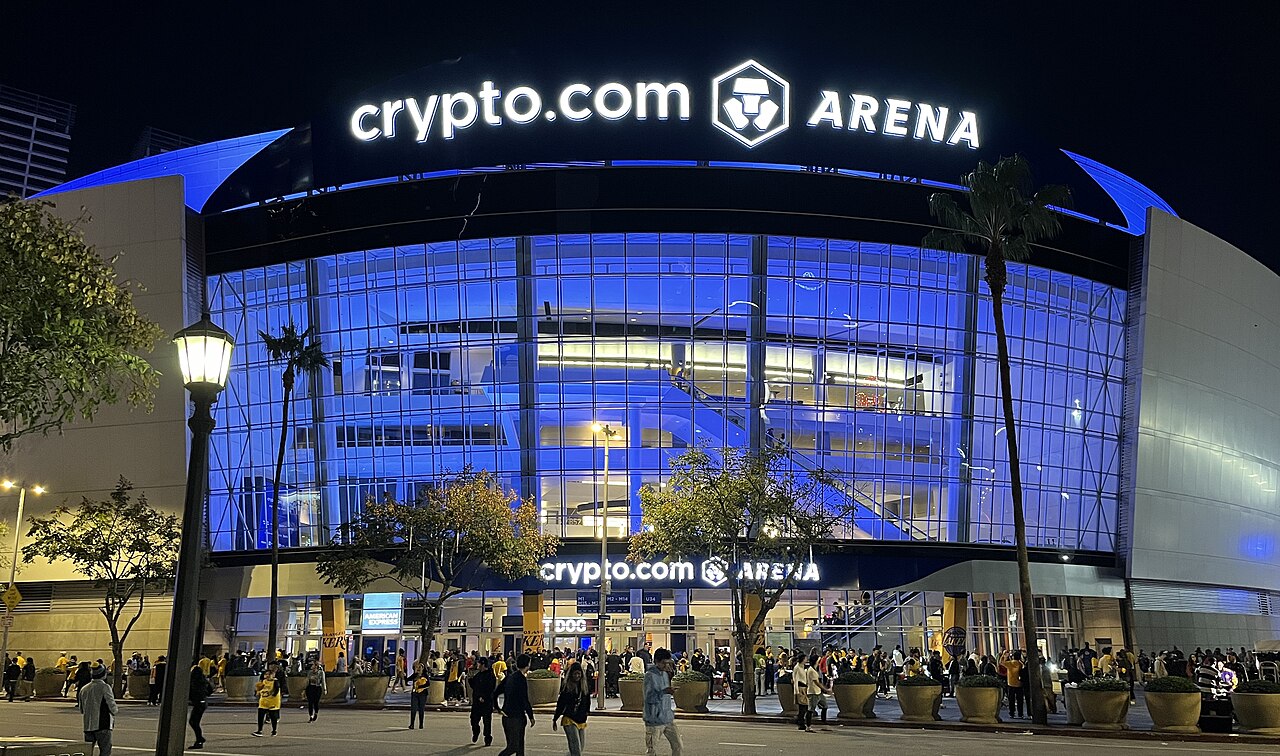
In November 2021 the Singapore-based exchange Crypto.com bought the naming rights to Los Angeles’ Staples Center, home of the Lakers, in a deal reported at US$700 million over 20 years. The previous name had cost Staples US$116 million for two decades. Many fans kept calling it the Staples Center anyway, which is a useful reminder that a name bought overnight does not replace a name earned over years.
FTX went further. Its logo appeared on Major League Baseball umpires’ uniforms and the Mercedes-AMG Formula One cars. It held the naming rights to the Miami Heat’s arena.
Tom Brady, Gisele Bündchen, Stephen Curry and Shaquille O’Neal invested in the company or were paid to promote it. In February 2022 its Super Bowl advertisement starred Larry David as a grumpy sceptic dismissing great inventions through history, from the wheel to the toilet, and finally FTX.
“Don’t be like Larry,” said the screen. The neat trick was that David never holds the product or even says its name.
In hindsight, the stadiums and the celebrity roster worked as a layer of borrowed trust. An endorsement is implied even when nothing specific is promised, because the audience assumes somebody has done the due diligence.
Nobody had done enough. In November 2022 reports raised questions about the balance sheet of Alameda Research, a trading firm linked to FTX. Within days a rescue deal from rival Binance was signed and abandoned. On 11 November FTX and more than 100 affiliates filed for bankruptcy.
The Mercedes team and the Miami Heat cut ties. Temasek, Singapore’s state investment company, wrote down its investment. The arena went looking for a new name.
The lesson is not that sponsorship is bad. It is that sponsorship transfers attention, not integrity. A stadium can make a brand famous. It cannot make it solvent.
What actually signals trust in crypto?
After FTX, the industry’s marketers went quiet. Communications firms advised clients to hold announcements. Regulated players saw an opening to explain what they actually did, and to stress that they would never do what FTX had done. Decentralised exchanges pitched the opposite: keep your own keys, trust no one.
Both responses point to the same conclusion. In crypto, the strongest brand assets are not creative. They are structural.
Singapore offers one clear example. In August 2023 the Monetary Authority of Singapore finalised a framework for stablecoins pegged to the Singapore dollar or any G10 currency and issued in Singapore. Only issuers that meet every requirement may use the label “MAS-regulated stablecoin”.
The rules cover reserve assets, capital, disclosure and redemption at par within five business days. Pretending to hold the label can attract penalties.
Consider what that label is. It is a trust mark, like a halal certificate or a safety kitemark, and it is issued by the one kind of institution crypto was originally designed to avoid. There is a rich irony in that. There is also a sound branding principle: a claim verified by an independent referee beats any claim a company makes about itself.
Picture two small exchanges launching in Southeast Asia next year. One spends its budget on a football shirt deal and a famous face. The other spends it on a licence, a published audit and a redemption policy written in plain language.
The first will be better known by Christmas. The second is more likely to still exist the Christmas after.
A short field guide to judging a crypto brand
For anyone assessing a token or exchange as a brand, the useful questions are unglamorous.
Does the name describe a function or only a feeling? Is the symbol free to use, or fiercely guarded?
Can the issuer prove what backs the token, through audits rather than attestations or adjectives? Who regulates it, and where? What happens, step by step, when you ask for your money back?
And how much of the visibility is rented? Stadiums, celebrities and Super Bowl slots are not warning signs in themselves. But when the borrowed fame is larger than the verifiable substance, the brand is running on credit.
Crypto set out to replace institutional trust with code. Seventeen years on, its most durable brands are the ones that have rebuilt institutional trust in new forms: open symbols, transparent reserves, licences and the slow accumulation of years without disaster. Money, it turns out, still needs a reason to be believed.
The small print
What makes a cryptocurrency brand trustworthy?
Verifiable structure matters more than creative work: independently audited reserves, clear redemption rights, regulation in a credible jurisdiction and a track record without failures. Sponsorships and celebrity endorsements raise awareness but do not prove solvency.
Who designed the Bitcoin logo?
Satoshi Nakamoto created Bitcoin’s first logos in 2009 and 2010. The familiar tilted white B on an orange circle was posted in November 2010 by a forum user known as Bitboy, who released it into the public domain.
What is a MAS-regulated stablecoin?
It is a label the Monetary Authority of Singapore allows on single-currency stablecoins pegged to the Singapore dollar or a G10 currency, issued in Singapore, whose issuers meet its requirements on reserves, capital, disclosure and redemption at par within five business days.
If your business also sells something people cannot touch and must simply believe in, we can help you build the brand that earns that belief.






