Most requests to “make us more premium” arrive as a pricing question. Can we charge 20 per cent more? Do we need a new logo?
Reasonable questions, asked in the wrong order. The order is most of the answer.
Making a brand premium means building enough proof of superior value, through product, naming, service, scarcity and design, that customers willingly pay more than the category average and feel the price confirms their choice rather than tests it.
Notice where price sits in that sentence. At the end. It is the last lever you pull, and it only works if the others have already moved.
Raise the price before the brand has earned it and you have not gone premium. You have simply become expensive.
Is premium the same as luxury?
No, and confusing the two wastes a great deal of money.
Luxury is a separate business model. Its practitioners deliberately break the rules of ordinary marketing: they refuse to compare themselves with competitors, make buying slightly difficult, raise prices to increase demand and avoid selling openly to anyone who walks in.
Hermès, which began in 1837 as a Paris saddler, licenses none of its products and keeps most of its production in its own French workshops. That is luxury, and it takes generations.
Premium is more modest and far more available. A premium brand still competes inside its category, still wants to grow, still sells to people who compare. It simply sits at the top of the range and stays there because customers believe it is better in ways they can name.
Most companies asking how to make a brand premium do not want to become Hermès. They want to stop being dragged into discount wars. That is a premium problem, and it is solvable.
Lever one: build a price architecture before you raise a price
Price is information. People use it to judge quality before they have tried anything, and the effect runs deeper than most marketers realise.
Put volunteers in a brain scanner, pour them wine, and serve some of the wines twice under different price labels.
The higher label produces higher ratings and more activity in a brain region associated with pleasure. Same wine. Different number. Taste the same wines blind afterwards and the same people prefer the cheapest.
The lesson is not “charge more and they will enjoy it more”. It is that price frames everything else, so the frame has to be designed.
A price architecture does that work. Each tier gets a clear reason to exist: an entry point that is honest, a core offer that carries the brand, and a flagship that exists partly to make the core look reasonable. The flagship may sell in small numbers. It sets the ceiling.
The opposite discipline matters too: protecting the floor. In August 2016 Coach announced it would pull its handbags from about 250 North American department stores, roughly a quarter of those doors.
The reason was not that those stores sold nothing. They sold too much, too often, at a markdown. Constant discounting had taught shoppers that Coach’s real price was the sale price, and withdrawing, alongside a push into more upscale lines, was a way to win back pricing power.
That is the uncomfortable part of price architecture. It usually means selling less in some places to be worth more everywhere.
Lever two: decide what the name can carry
Some names cannot climb. Not because the products are poor, but because decades of meaning point the other way.
Toyota understood this in the 1980s. Its flagship project, codenamed F1 for “Flagship One”, produced a sedan good enough to challenge the German establishment, and Toyota’s research concluded the car needed its own name and its own sales channel.
The Lexus LS 400 was unveiled in Detroit in January 1989 and went on sale that September through a new network of 81 dealerships. Buyers who would never pay luxury money for a Toyota would pay it for a Lexus, even knowing who built it.
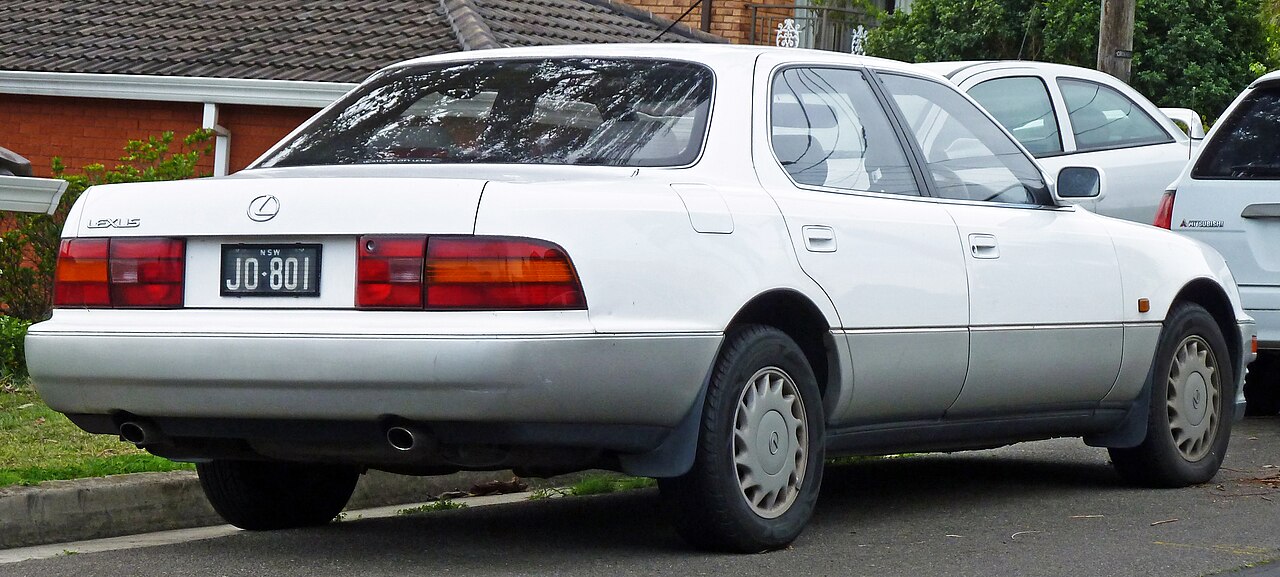
Hyundai took a version of the same route a generation later. Genesis began as a model name, and in November 2015 the company announced it as a standalone luxury brand, citing the nameplate’s seven years in the segment and customer interest in a separate division.
Notably, it did not build a fully separate American dealer network. Genesis sells through designated spaces inside selected Hyundai showrooms. A cheaper, compromised form of separation, and a reminder of how expensive the full version is.
Seiko’s answer was more surgical still. Grand Seiko had existed since 1960 as the company’s highest-grade line, but its dials carried the Seiko name at 12 o’clock, the same name found on watches costing a fraction of the price.
In 2017 Seiko began presenting Grand Seiko as a separate brand and moved the Grand Seiko mark to the top of the dial. The watches did not change overnight. What they were allowed to mean did.
Three companies, three degrees of separation. The question for your brand is the same in each case: does the existing name help the premium offer, or drag it back to the old price point?
Lever three: make the craft story provable
Every brand that wants to charge more reaches for a craft story. Hand-made, small-batch, artisanal, obsessive. These words have been worn so thin that customers read straight past them.
What still works is specificity that can be checked.
Grand Seiko does not say its watches are finely finished. It names the method. Zaratsu polishing uses the side of a hard rotating disc to create flat, mirror-like surfaces with sharp edges.
The name itself comes from Sallaz, the German maker of the polishing machines Seiko bought in the 1950s. That is a better story than a vague claim of ancient tradition, because it is true. The mechanical watches are made in a studio at Shizukuishi in Iwate Prefecture, opened in 2020 and designed by Kengo Kuma.
Grand Seiko’s tour of its Shizukuishi studio: a craft story customers can actually see.
Din Tai Fung, which grew from a Taipei cooking-oil shop founded in 1958, built an international reputation on a single number: 18 folds on each xiaolongbao. The dumplings are made to order behind a glass pane, so diners watch the craft that justifies the bill. In 2010 its Tsim Sha Tsui branch in Hong Kong received a Michelin star.
The test for your own craft story is simple. Could a sceptical customer verify it, or at least see it? If not, the story is decoration. If so, it is a reason to pay.
Lever four: manage scarcity without manufacturing it
Scarcity raises desire. Everyone knows this, which is why so much of it is now fake and customers ignore the countdown timers.
Real scarcity comes from either a constraint you cannot escape or a limit you choose and honour.
Ferrari is the obvious example of the second. It deliberately builds fewer cars than customers want, ranks buyers internally by loyalty, and reserves some models for people who already own several Ferraris. It delivered 13,752 cars in 2024, a tiny number for a company with its fame. The scarcity is a policy, openly held.
Hermès sits closer to the first. It is regularly accused of organising shortages of the Birkin and Kelly bags; the company’s position is that long production and training times explain the difficulty. Each Birkin is made by a single craftsperson over many hours. Either way, the scarcity rests on something physical.
For most premium brands, the honest version is smaller. A seasonal run that genuinely ends. A capped number of client slots. A product that sells out because you will not compromise the ingredient.
What destroys the effect is the limited edition that quietly returns next quarter. Customers remember.
Lever five: let service cost you something
Premium service is not a smile and a branded tote bag. It is what you do when something goes wrong and doing the right thing is expensive.
Lexus was barely three months old in America when it faced exactly that test. In December 1989, after two customer complaints about wiring and an overheating brake light, it voluntarily recalled all 8,000 LS 400s it had sold.
Technicians collected cars from owners’ homes, repaired them and returned them, free. For owners in remote areas, the company flew staff in and rented garage space. Handled this way, a recall became founding proof that the brand meant what it said about treating customers as guests.
The principle scales down. A Singapore tailoring business that remakes a jacket without argument when the fit is wrong. A software firm that refunds a month when its outage caused a client real trouble. Expensive in the moment, cheap over the life of the brand, because these are the stories customers tell for you.
If your service promise has never cost you money, you have probably not tested whether it is a promise.
Lever six: practise design restraint, and make place part of the product
Premium design is usually quieter than mass-market design, not louder. Fewer colours. More space. Less said.
Leaving things out signals that the brand does not need to shout.
Aesop, founded in Melbourne in 1987 by a hairdresser, Dennis Paphitis, built one of the most coveted names in skincare on understatement. Each shop is designed individually with architects, designers and artists, so no two feel the same, yet all share the same quiet, local-minded restraint.
The investment goes into the room, not the noise. L’Oréal agreed to buy the company for A$3.7 billion in 2023, which suggests the approach had some commercial merit.
Bacha Coffee shows the opposite pole of the same idea. The brand traces itself to a coffee house in the Dar el Bacha palace in Marrakech in 1910. For its first step outside Morocco, it chose ION Orchard in Singapore in 2019: a coffee room of mirrored ceilings, chandeliers and walls of canisters holding around 200 Arabica coffees, poured from gold-plated pots.
That is not restraint. It is total commitment to one coherent world, which is the deeper principle. Premium design is consistent design. Every detail agrees with every other.
What fails is the half-measure: a luxurious logo on a cluttered website, a heavy box around an ordinary product, a beautiful shop with indifferent staff. Customers spot the seam immediately.
Can a small business make its brand premium?
Yes. Small businesses often do it better than corporations, because they can make the whole experience agree with itself.
Picture a family bakery in Tiong Bahru that wants to stop competing with the chain outlets down the road. Raising prices on the same loaves would just lose customers. So it works through the levers in order.
It narrows the range to the dozen products it makes best and adds one flagship: a slow-fermented loaf, weekends only, in a fixed quantity, sold out by ten. It names its flour supplier and shows the dough resting through the window.
It remakes any order that disappoints, without discussion. It strips the counter of promotional clutter. Only then does it lift prices across the range.
Some regulars leave. Most do not. New ones arrive precisely because it costs a little more.
The constraints are real. You cannot spin off a separate brand as Toyota did, and you cannot afford to lose much volume while the repositioning settles. So start with the cheapest levers: honesty about craft, a sharper range, service that goes further. Leave the expensive ones, a new name or a flagship site, until the evidence says the market will follow.
Why do premium repositionings fail?
Usually because of sequence.
The most common mistake is raising price before proof. The customer sees a higher number and nothing else different, feels exploited, and rarely comes back to check whether things improved.
Next comes stretching the name too far. A brand known for value can climb a step, perhaps two. Asking it to leap to the top of the category without a new name or a long programme of evidence usually ends with the premium line quietly discounted.
The hardest failure to see from inside is internal disbelief. If the sales team does not believe the product is worth more, it will discount at the first objection. Premium positioning tests internal conviction as much as customer perception, which is why the conversation should start with the people selling it.
Before you raise the price
What is the first step in making a brand premium?
Audit whether customers can already name what makes you better. If they cannot, work on product, service and proof before touching price, because a higher price without visible reasons reads as greed rather than quality.
Should a premium product line have a separate brand name?
Only if the existing name actively holds the new offer back. Lexus and Genesis needed separation from their parents; many brands can climb a step under their own name by sharpening the range and the experience.
Does discounting damage a premium brand?
Frequent or predictable discounting teaches customers that the sale price is the real price. Coach withdrew from around 250 department stores in 2016 partly to limit markdowns and rebuild its pricing power.
If you are weighing which of these levers to pull first, that is a strategy question before it is a design one, and it is the kind of question we work through on our brand strategy engagements.






