Put two colas in unmarked cups and people choose more or less at random, or by whichever is sweeter on the first sip. Show them the cans and something odd happens. The preference sharpens, the arguments start, and the brain itself, observed in a scanner, behaves differently.
That small experiment contains the whole subject. We do not buy into brands because we are foolish, or because advertising has hypnotised us. A brand is a compressed bundle of memory, expectation and meaning, and the brain treats it as useful information.
So why do we buy into brands? We buy into brands because a familiar name acts as a mental shortcut: it signals what to expect, lowers the risk of a bad choice, connects us to people like us, and shapes the experience itself, so the branded product often genuinely feels better.
Take each part in turn.
The brain is a miser, and brands are its savings account
Every supermarket aisle is a cognitive assault. Hundreds of near-identical options, each claiming something. If we evaluated them all on merit, we would never get home.
So we don’t. Most everyday choices are made fast, intuitively, with little deliberate thought. Psychologists call the tools of this fast thinking heuristics: rules of thumb such as “pick the one I recognise” or “pick the one most people seem to buy”.
A brand is the perfect raw material for a heuristic. It is a name and a set of cues (a colour, a shape, a sound) that the brain can retrieve in milliseconds and attach a verdict to.
This is why recognition matters more than most founders want to believe. The brand that comes to mind first in a buying moment, and is within reach when it does, wins a disproportionate share of those moments. Not because the buyer loves it. Because it was there.
Marketing scientists in Adelaide, at the institute Byron Sharp has directed since 1995, have built a whole school of thought on how unglamorous that mechanism is; his book How Brands Grow appeared in 2010.
Familiarity also breeds a mild, unearned affection. In 1968 the psychologist Robert Zajonc showed that simply repeating exposure to a stimulus made people rate it more favourably than similar things they had not seen. Nobody had to argue for it.
Repetition did the work. A brand you have walked past a thousand times has been quietly accumulating goodwill all along, provided nothing bad was attached to it.
Is a brand name really worth paying more for?
Shoppers ask this constantly, and usually with suspicion. If store brands come off the same production lines, why pay extra? Some point out, fairly, that the contents can be very similar.
Others, including people who have worked in food factories, note that cheaper lines sometimes use different ingredients or looser quality control. And a third group says something quietly profound: they buy the major brand because its reputation is the only quality signal they have.
That third answer is the economist’s answer too. A brand is a hostage. A company that has spent decades building a name has a great deal to lose from a single bad batch, so its name works as a bond posted against disappointment. An unknown label has nothing to forfeit.
The clearest demonstration came from disaster. In late September 1982, seven people in the Chicago area died after taking Tylenol capsules that someone had laced with cyanide. Johnson & Johnson recalled roughly 31 million bottles nationwide.
Tylenol’s share of the US painkiller market collapsed from 35 per cent to 8 per cent. Yet within a year it had largely recovered, helped by triple-sealed packaging and promotions, and within several years it led the market again. The recall cost a fortune, and that was the point. It proved the hostage was real.
The label changes the taste
Here the subject stops being economic and turns strange.
In 2004 a team led from Baylor College of Medicine scanned people’s brains as they drank Coke and Pepsi. When the drinks were anonymous, activity in a part of the prefrontal cortex tracked which one people said they preferred. When the brand was revealed, knowing it was Coke changed both their stated preferences and their brain responses. The cultural meaning of the brand was being folded into the experience of the drink.
The Pepsi Challenge, which began in 1975, had long shown that blind tasters often favoured Pepsi. Single sips, though, flatter sweeter drinks. Both findings fit. What we taste in a blind sip and what we enjoy in a familiar can are different experiences, and the brand is part of the second.
Price does something similar. In a 2008 experiment, people tasted wines they were told cost different amounts. The wines were not actually different. The higher price raised ratings of pleasantness and activity in the brain region associated with experienced pleasure.
Expectation is not a filter laid over the experience. It is an ingredient.
So it is a mistake to treat brand preference as an error to be corrected. If a branded product reliably feels better to the person consuming it, the brand has delivered real value, even if a lab test would call the contents equal. The pleasure is not fake. It is just not located entirely in the bottle.
We buy things that say who we are
Our possessions help build our identities as well as display them. We extend ourselves into the things we own. A brand is the shorthand for that extension, legible to strangers at a glance.
Sometimes the signal is about status, and expensive on purpose. Sometimes it is about belonging. Supreme, founded by James Jebbia in New York in 1994, built a following through small, weekly product drops that sold out; the scarcity made the box logo a badge of being in the know. The market valued that badge accordingly: VF Corporation agreed to buy the company for US$2.1 billion in 2020, and EssilorLuxottica bought it for US$1.5 billion in 2024.
Pop Mart’s Labubu shows how fast identity signals now travel. The toothy creature, created by the Hong Kong illustrator Kasing Lung for his series The Monsters, first appeared in 2015 and gained wider fame after a 2019 collaboration with Pop Mart.
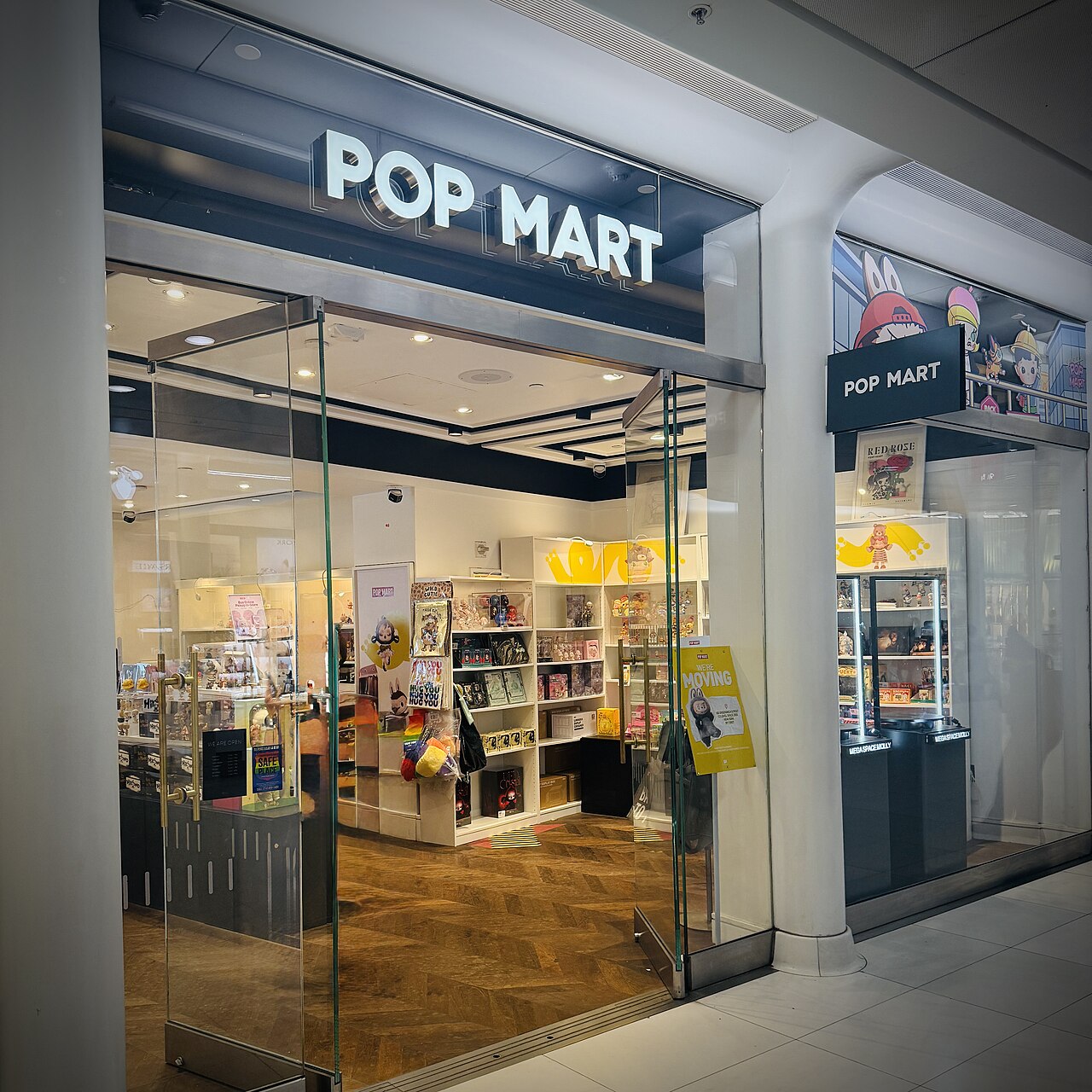
In April 2024, the Blackpink singer Lisa was seen with a Labubu keychain on her bag, and the trend swept through Thailand and much of East and Southeast Asia. By 2025 there were overnight queues and instant sellouts.
Pop Mart paused sales in its UK stores in May 2025 after reports of customers fighting over the dolls, and a 1.2-metre Labubu sold for US$170,000 at an auction in Beijing.
There is a social engine under this. When we are unsure what to do, we copy what others seem to be doing, on the reasonable assumption that they know something we do not.
The psychologist Robert Cialdini named this social proof in his 1984 book on influence. It explains why queues attract more queuers, why review counts sell products, and why a creator with a million followers is taken more seriously than one with a thousand. A brand that is visibly chosen gets chosen more. Popularity is itself a product feature.
Nobody needed a Labubu. People needed what owning one said, and the blind-box format, where you do not know which figure you will get, added the small thrill of a gamble.
Why do people stay loyal to one brand?
Loyalty is often less romantic than it looks. Many buyers own a repertoire of brands and switch among them without much feeling. Loyalty programmes, measured carefully, generate only a little extra loyalty beyond what a brand’s size would predict anyway.
Big brands have more buyers, and those buyers are slightly more loyal. Small brands suffer twice, a pattern marketing scientists have called double jeopardy since the 1960s, which is why growth nearly always means reaching more people rather than squeezing devotion out of the few you have.
But there is a deeper loyalty, and it grows from identification. When a person sees a brand as part of who they are, switching feels like a small betrayal of self. When the iPhone launched in Spain, consumers who identified with the brand they already used were slower to switch, and that brake grew stronger over time.
Effort deepens it too. Psychologists have shown that people value things more when they have helped make them: participants who assembled flat-pack furniture would pay considerably more for it than for identical pre-built pieces. Brands that invite participation, from build-your-own bears to made-to-order trainers, recruit this effect deliberately.
Ritual matters as well. Ya Kun Kaya Toast began as a coffee stall registered at Telok Ayer Basin in 1944 by Loi Ah Koon, a Hainanese immigrant whose wife suggested pairing bread with homemade kaya. Generations of Singaporeans have built mornings around it, and since the chain began franchising in 2000 it has taken that ritual overseas. When a brand becomes the setting for a habit, loyalty is less a decision than a groove.
Meaning travels, and it gets rewritten on the way
Brands are not only what companies say. They are what cultures make of them, and the best brands accept the edit.
In Japan, Kit Kat’s name echoes the phrase “kitto katsu”, roughly “surely win”, and the bars became popular good-luck gifts, including for students sitting exams. Nestlé leaned in, launching more than 300 Japanese flavours since 2000, from wasabi to soy sauce. The brand’s meaning in Japan was co-written by its buyers.
In Nigeria, Indomie arrived from Indonesia in 1988 and gained a local factory in 1995 under Dufil Prima Foods, a joint venture between Indofood and Singapore’s Tolaram Group. The noodles became so woven into everyday life that many Nigerians assume Indomie is a Nigerian product. That is perhaps the highest compliment a foreign brand can receive. It stopped being foreign.
Indomie Nigeria’s 2016 Mother’s Day film: an Indonesian noodle brand speaking fluently as a Nigerian family staple.
Experience writes meaning too. Haidilao, founded in Sichuan in 1994, turned the dreaded wait for a table into part of the brand, with snacks, games and, in some restaurants, nail services in the waiting area. Its overseas business began in Singapore in 2012. People talk about the waiting room as much as the hotpot, which is precisely the point: a memory worth retelling is the cheapest advertising there is.
What this means if you are building a brand
Behavioural science is sometimes sold as a bag of tricks. It is more useful as a reminder of what buyers are actually doing.
Be easy to recognise. Distinctive, consistent cues give the miserly brain something to grab. Changing your colours every year is like changing your phone number every year.
Be safe to choose. Reputation is a promise with collateral. Guard it, and when you fail, spend visibly to put it right.
Mean something to someone. Identity and belonging drive the strongest preferences, but only for a defined group. A brand that tries to signal everything signals nothing.
Design the experience as if expectation were an ingredient, because it is. Packaging, price, setting and story change how the product is felt.
And leave room for buyers to make the brand their own. Kit Kat did not invent exam luck. Indomie did not plan to become Nigerian.
Picture a small Ipoh coffee roaster whose customers start calling a blend “the Monday one”. The smart move is to print that on the bag.
Three things people ask
Is buying into brands irrational?
Not usually. Brands reduce search effort and risk, and the expectation a brand creates can genuinely improve the experience of using the product.
Do store brands and name brands come from the same factories?
Sometimes they do, but recipes, ingredients and quality controls can differ. The name brand’s main extra is a reputation it has strong reasons to protect.
What makes people loyal to a brand?
Habit, availability and size explain much everyday loyalty. Deeper loyalty comes when people see the brand as part of who they are.
If you want to understand what your own customers are really buying when they buy you, our brand strategy team can help you find out.






