Customers are not liars, exactly. They are kind.
Ask them whether they would buy your new product and most will say yes, because saying no to someone’s face feels rude. Ask them why they chose a brand and they will give you a tidy reason they made up on the spot. Ask what they want and they will describe what they already have, slightly cheaper.
This is the central problem of my trade. Accept it and the work gets clearer: good consumer research is less about asking and more about catching people in the act of living.
Consumer research is the systematic study of how people discover, choose, use and talk about products and brands, combining what they say (interviews, surveys) with what they do (observation, behavioural and social data) to inform business and brand decisions.
Here is how I run it, from a full programme down to a version a two-person company can manage in a fortnight.
Start with a decision, not a questionnaire
The commonest mistake I see is a team that opens a survey tool before it knows what it is trying to decide. Twenty questions later, they have a deck full of percentages and no idea what to do on Monday.
So write one sentence first: “We need to decide X, and we will decide differently depending on Y.” For example: “We need to decide whether to launch a premium line, and we would hold back if our current customers mainly choose us on price.” That sentence tells you who to talk to, what to ask and when you have enough.
Then separate two kinds of question. Exploratory questions ask what is going on and why; they need conversation and observation. Confirmatory questions ask how many people think or do something; they need numbers.
Most bad research uses a survey to answer an exploratory question, and gets confident nonsense back.
Qualitative or quantitative: which comes first?
Usually qualitative. You talk to a small number of people in depth to discover the language, motives and surprises, then you use a larger quantitative study to measure how common those things are.
Think of it as the difference between a map and a census. Interviews draw the map, showing which roads exist and where people get lost. The survey counts the traffic. Counting traffic on roads you have not mapped is how companies end up measuring the wrong thing very precisely.
New Coke is the classic warning. Before its launch on 23 April 1985, the sweeter formula beat both the original and Pepsi in taste tests, surveys and focus groups. What the research did not capture was the emotional attachment many Americans felt to the original drink.
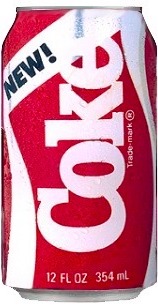
The backlash was fierce enough that on 11 July, just 79 days later, the company announced the old formula was coming back. The numbers answered the question asked. Nobody had asked the right one.
Interviews that get past politeness
One-to-one interviews are the workhorse of qualitative research. Forty-five minutes to an hour, ideally in the person’s own setting, with a loose guide rather than a script.
The rules that matter most:
Ask about the past, not the future. “Tell me about the last time you bought a skincare product” beats “Would you buy a cleanser with ginseng?” People are reasonably accurate about what they did last Tuesday and hopeless at predicting what they will do next month.
Ask about their life, not your idea. The moment you describe your product, the interview turns into a politeness test. Hold back any pitch until the end, if at all.
Chase specifics. When someone says “I usually shop around,” ask what they did the last time. Where did they look first? What made them stop?
Talk less. Silence is a tool. People fill it with the interesting part.
Startup founders keep rediscovering these rules the hard way. Their complaints never change: people compliment the idea and never buy, hypothetical questions produce fantasy answers, showing a prototype makes everyone say what you want to hear.
The fix they converge on is to interview a narrow, well-defined group, because about ten conversations in one tight segment start to show patterns, while ten conversations spread across five segments show noise.
Watching people: ethnography and observation
If interviews catch what people remember, observation catches what they do without thinking. Ethnography, borrowed from anthropology, means spending time in the places where your product is bought and used: homes, shops, offices, kitchens. This kind of fieldwork earns its cost in segmentation, positioning and brand management, because it exposes the gap between what people say and how they live.
The best-known business example is the milkshake study, a staple of Clayton Christensen’s “jobs to be done” teaching. A fast-food chain had segmented customers by demographics and asked them to describe the ideal milkshake. Sales did not budge.
Then a researcher spent a full day in one restaurant, noting who bought milkshakes, when, and whether they drank them there. A large share were bought early in the morning, to go, by commuters.
Follow-up interviews showed the shake was being “hired” to make a dull drive bearable and keep hunger away until mid-morning; it beat a doughnut because it was tidy and lasted. No survey would have found that. Watching did.
India gives a different kind of example. Godrej & Boyce, working with the consultancy Innosight, developed the ChotuKool, a small, portable cooler launched in 2010 for households that could not afford or power a conventional fridge. Its design responded to the conditions people actually lived with: frequent power cuts, little space, and the need to move.
Local communities, notably women, took part in shaping and marketing it. That is research done with people rather than on them.
Then there is the early Airbnb story. In the company’s fragile first period, its founders went door to door in New York, signing up hosts and helping them improve their listings, including taking better photographs of the apartments themselves. That was sales, but it was also research of the most direct kind. They saw exactly why listings failed.
When should you use a survey?
Once you know what to measure. Surveys are excellent at answering “how many” and “how much,” and poor at “why.”
A few disciplines make the difference:
- Write questions in your customers’ words, taken from the interviews, not your marketing team’s jargon.
- Ask about behaviour where you can. “Which of these brands have you bought in the last three months?” is more reliable than “Which do you prefer?”
- Avoid leading wording. “How much did you enjoy our new menu?” assumes they did.
- Keep it short. Every extra question costs you completion and attention.
- Pilot it on five people before sending it to five hundred. Someone will misread question four.
How many people do you really need?
The question I am asked most. The honest answer: it depends on the method.
For usability testing, the long-standing rule of thumb in the field is that around five users from one group will reveal most of the problems in a design, and that several small rounds of testing beat one big one. With clearly distinct groups, test a few from each.
For interviews, plan for roughly eight to twelve per distinct segment. Stop when the last few conversations stop surprising you. Researchers call this saturation; you will feel it as boredom.
For surveys where you want to compare groups or report percentages with confidence, you need hundreds rather than dozens, and a sampling approach that reaches people beyond your own followers. A survey of your Instagram audience tells you about your Instagram audience.
Getting the sample right matters more than getting it big. Ten conversations with the wrong people are worse than none, because they give you false confidence.
Social listening and the data you already have
Some of the best consumer research is already sitting in your business. Reviews, support emails, chat logs, returns reasons, search terms on your own website, sales staff’s notes. Read them before commissioning anything.
Social listening goes further, tracking what people say about you and your category across social platforms and forums. It is good at spotting emerging complaints, the words people use and unexpected uses of your product. It is weak at representing quiet customers, who are most of them.
Unexpected uses deserve close attention. In Japan, the name Kit Kat echoes the phrase “kitto katsu,” roughly “surely win,” and the chocolate is often bought as a good-luck gift. Nestlé has since introduced more than 300 Japanese flavours.
Whatever the exact chain of cause, the lesson for researchers is simple. Watch what people do with your product, as well as what you designed it for.
Testing changes before you make them
Research is cheapest before a change ships. Tropicana learnt that in 2009, when it replaced its familiar orange-with-a-straw carton in the United States with a new design. After about two months of negative reaction, sales had fallen by a fifth and the company went back to the old pack.
A small round of in-store research with loyal buyers, showing them the new carton next to the shelf they knew, might have revealed how much they relied on that orange to find their juice.
Field trials can also reveal that you have the wrong product altogether. M-Pesa in Kenya began as a 2005 pilot for microfinance borrowers to receive and repay loans by phone. Watching how people used it pointed towards something broader, sending money and paying for things, and the service was refocused before its full launch in 2007. The pilot was the research.
The small-budget version
No money for an agency? Here is a two-week plan I give founders.
Days one and two. Write your decision sentence. Read every review, complaint and support email from the past six months and note recurring phrases.
Days three to eight. Run eight to ten interviews with recent customers, plus three or four with people who considered you and chose someone else. Video calls are fine. Offer a voucher as thanks. Record (with permission) and take notes straight after.
Day nine. Spend a morning observing. If you sell in a shop, watch the shelf. If online, watch three people try to buy from your site while thinking aloud.
Days ten to twelve. Sort notes into themes on a wall. What surprised you? What came up repeatedly?
Days thirteen and fourteen. If you need numbers, send a short survey to test the two or three biggest themes, using customers’ own words.
Picture a Jalan Besar coffee roaster wondering whether to launch subscriptions. The interviews reveal that regulars do not want a fixed delivery; they want to be told when a new single-origin arrives.
The survey then confirms that preference is common across the customer list. The roaster builds an alert list instead of a subscription. Cheaper. And what people actually wanted.
The pitfalls that catch everyone
- Researching only fans. Talk to people who left and people who never bought.
- Confirmation bias. Decide in advance what would change your mind.
- Reporting averages that hide two very different groups.
- Treating focus-group enthusiasm as demand.
- Letting the person who designed the product run all the interviews.
- Forgetting consent and data protection. In Singapore, the Personal Data Protection Act applies to personal data you collect, including interview recordings.
Before you send that survey
What are the main types of consumer research?
The two broad types are qualitative research, such as interviews and observation, which explores why people behave as they do, and quantitative research, such as surveys and behavioural data, which measures how many do it.
How long does consumer research take?
A small project can be done in two to three weeks; a larger programme with fieldwork across several markets and a representative survey usually takes two to three months.
Can a small business do consumer research without an agency?
Yes; customer interviews, review analysis and a short survey can be run in-house for very little money, provided you ask about past behaviour and talk to the right people.
When you want the findings turned into a brand that fits what customers really do, our brand audit team can take it from there.






