Walk into any electronics store in Singapore and stand in front of the TV wall. Forty black rectangles, all playing the same looping footage of a hummingbird and a neon city at night. To most eyes, they look identical, and many share panels from the same few factories.
Yet the prices range from a few hundred dollars to several thousand, and the labels shout at you in a dialect of acronyms: QLED, OLED, QD-OLED, Neo QLED, Mini LED, QNED.
That wall is the purest branding laboratory in consumer technology.
TV branding is the work television makers do to make near-identical screens feel different: naming the company and its product lines, turning display technologies into trademarked acronyms, and buying visibility through sport and design so shoppers trust one black rectangle over another.
Five companies dominate the story. Sony, which once owned the category. Samsung and LG, the Korean pair that took it from Sony. And TCL and Hisense, the Chinese challengers now pressing hard on both.
Each has played the branding game differently, and the results are revealing.
Sony: when Trinitron was the brand
For a generation, the best TV brand in the world was not really Sony. It was Trinitron.
Sony’s colour Trinitron system arrived in October 1968, with the 12-inch KV-1210 announced that April. The name was cleverly built: “trinity” for the three electron guns merged into one, “tron” from the electron tube. In 1973, the technology won Sony an Emmy, which is a lovely oddity: a TV maker honoured by the television industry for the box itself. By July 1994, Sony had shipped its 100 millionth Trinitron screen.
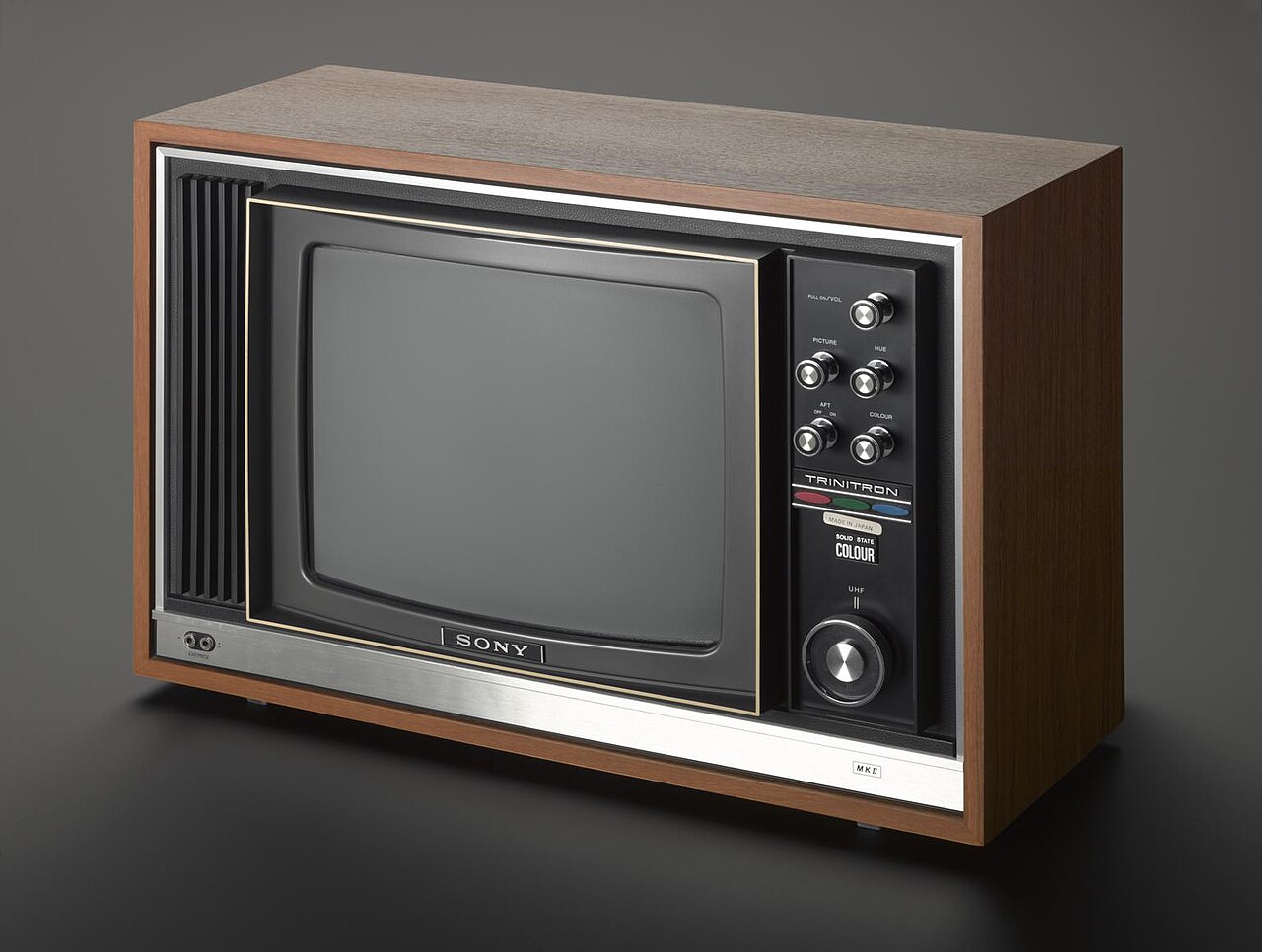
Then the patent expired in 1996, competitors adopted the design under other names, and people began using “Trinitron” loosely for any similar tube. That is the first lesson of TV branding. A technology name is only valuable while it describes something rivals cannot easily copy. Sony stopped making the tubes in Japan in 2004, and production at its Singapore plant ended in March 2008.
Can a TV brand outlive its factories?
Sony’s answer to the flat-panel era was a new name. In September 2005 it launched Bravia, replacing “LCD WEGA”, a label still associated with bulky tube sets. Bravia was a backronym, said to stand for “Best Resolution Audio Visual Integrated Architecture”, which nobody has ever needed to know.
What people remember is the launch advert: in November 2005, 250,000 coloured rubber balls bouncing down a hill in San Francisco, under the line “colour like no other”. It sold an emotion, not a specification. That restraint still looks smart.
Sony also built the world’s first OLED television, the 11-inch XEL-1, designed in 2007 and sold from the following year. Being first, though, did not make OLED a Sony word. It became an LG word instead.
The most striking chapter came this year. In January 2026, Sony agreed a joint venture with TCL to take over its TV business, with TCL holding 51 per cent and Sony 49. Definitive agreements followed at the end of March to create a company called Bravia Inc. Sony keeps ownership of the Bravia brand and handles design and technology; TCL handles manufacturing and distribution.
A Japanese pioneer is, in effect, renting its brand to a Chinese manufacturer that needs prestige outside China. Brands outlive the factories that built them.
Samsung: winning by design, then by acronym
Samsung became the world’s top TV brand by revenue in 2006 and says it has stayed there for twenty consecutive years. The product that tipped it over was the Bordeaux, a 2006 LCD range whose curved profile was inspired by the lines of a crystal wine glass. Even the name poured itself a drink.
Notice what Samsung did not do. It did not lead with a technology story. It led with an object you would want in your living room, at a moment when every rival was selling black boxes on spec sheets.
A decade later it did the same again with The Frame, launched in March 2017, which looks like a framed picture and displays art when you are not watching. Samsung now credits it with creating an “art TV” category.
The acronym came next. At CES 2017, Samsung renamed its top “SUHD” sets as “QLED”, and in April that year formed a QLED Alliance with Hisense and TCL to promote quantum-dot TVs.
The name implied an LED that emits its own light. In fact, those sets were LCDs with a layer of quantum dots lit by a blue backlight. Self-emitting quantum-dot pixels remained a laboratory technology.
The name worked brilliantly anyway, because it sat one letter away from OLED on the shelf tag and gave shoppers a premium-sounding alternative.
Why does a slightly misleading badge work so well? Brands can differentiate on attributes that sound meaningful but have little bearing on the benefit, and under the right conditions buyers infer that the attribute must be valuable. A confident acronym on a TV box is a textbook case.
When an acronym belongs to everyone
The twist is that Samsung shared its acronym, and lost control of it.
Because QLED was a category label rather than a protected product name, cheaper brands started using it widely. On technology forums, you can watch the confusion in real time: people correcting each other that a QD-OLED monitor is not a QLED, and that the “similar names” hide very different technologies. Budget models from several makers now carry “QLED” on the box.
By 2025, Samsung was attacking the very label it had popularised. A marketing campaign that year, “It’s fake. Choose real!”, mocked rivals as copycats, and Samsung sued TCL in Germany.
In March 2026, the Munich I Regional Court barred TCL from marketing models from six series, including its QLED870 line, as QLED.
TCL had argued that quantum-dot particles in its diffusion plates qualified; the court held that the set-up did not deliver the colour improvement shoppers would reasonably expect from the label. The ruling applies only in Germany and was open to appeal.
The lesson here is uncomfortable. If you invent a word to describe a category, you are building a category, not a brand. Your competitors will move in. Samsung has since stacked more names on top, such as Neo QLED and Micro RGB, which is what happens when the original badge stops doing the job.
LG: the brand that owned a technology
LG’s story is the mirror image. It began as GoldStar in 1958, built South Korea’s first domestic black-and-white TV in 1966, and became LG Electronics in the mid-1990s, adopting “Life’s Good” as its global line from 2004. Swapping a star for two initials and a cheerful promise was a deliberate reset: the new name carried no export-era baggage.
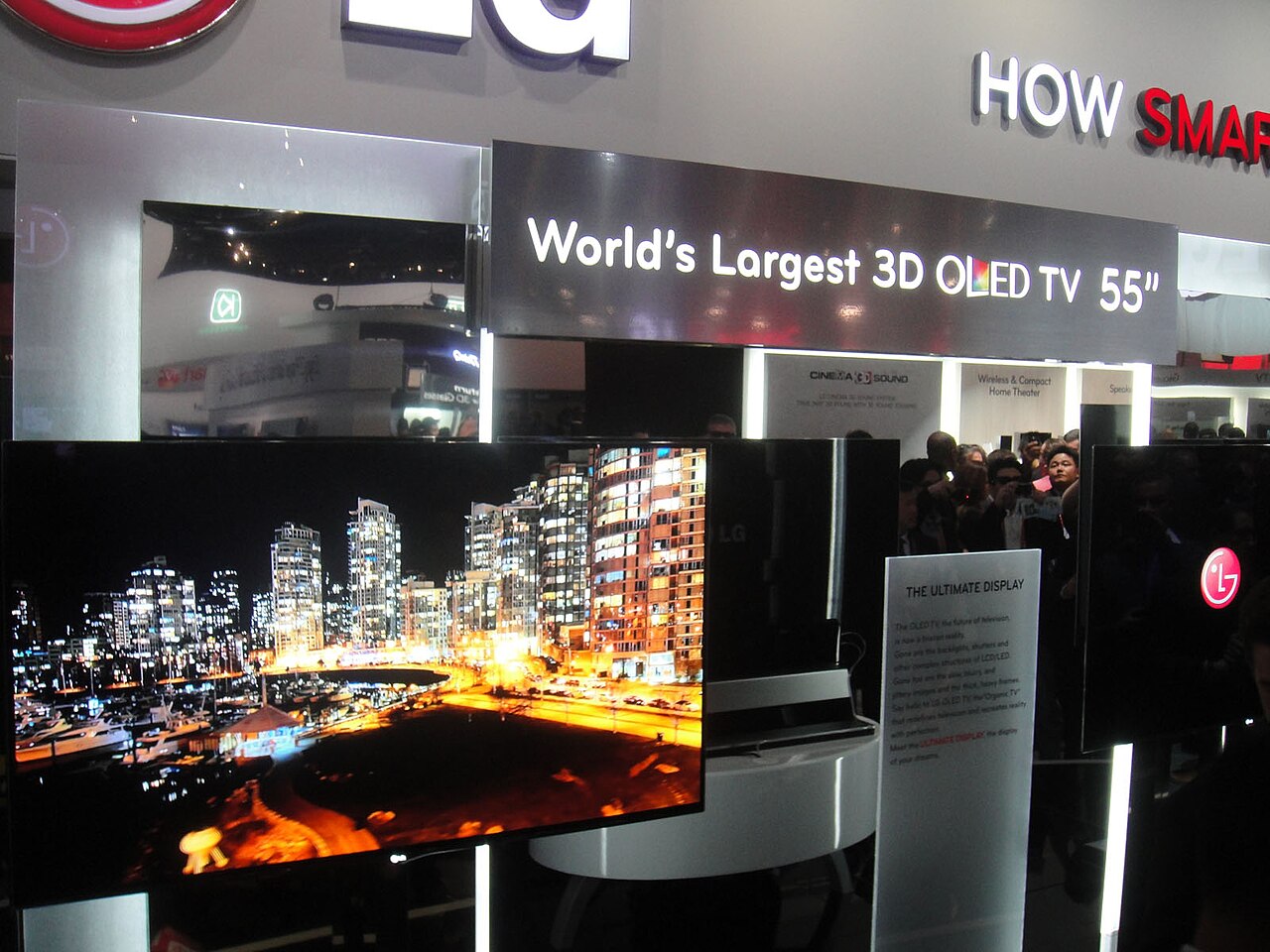
LG’s big bet was OLED. It launched the world’s first 55-inch OLED TV in 2013, and for years LG was the sole maker of OLED panels for TVs, until Samsung returned to OLED sets in 2022 with panels from Samsung Display. That meant other brands’ OLED TVs were in effect built on LG technology. Every OLED advert by anyone quietly reinforced LG’s claim to the word.
LG also understood theatre. In October 2020, it put the first rollable OLED TV on sale, a screen that sinks into its base at the press of a button. Few households would buy one; millions saw the videos. That is how a technology brand earns permission to charge more for everything else in its range.
The risk for LG is the same as Samsung’s QLED problem in slower motion. As OLED panels spread to more brands, “OLED” becomes a category, and LG must keep finding ways to be the OLED brand rather than an OLED brand.
TCL: from cassette tapes to the Olympic rings
TCL started in 1981 as TTK, a maker of audio cassettes. After a trademark dispute with TDK, it adopted the initials TCL in 1985, which originally stood for Telephone Communication Limited.
In 2014, it gave the letters a friendlier meaning: “The Creative Life”. Rebranding your initials is a cheap, effective trick. The letters stay; the story changes.
TCL’s international branding has been a series of bold purchases of attention. In November 2003 it announced a TV joint venture with France’s Thomson, taking a 67 per cent stake. In January 2013, it paid US$5 million for the naming rights to Grauman’s Chinese Theatre in Hollywood, one of the most photographed cinema façades in the world. Then, in February 2025, it signed with the International Olympic Committee as a worldwide Olympic and Paralympic partner for home audiovisual equipment and home appliances, through to 2032.
It has worked. In the last quarter of 2024, Hisense and TCL together shipped more TVs than Samsung and LG combined, and in December 2025 TCL briefly outshipped Samsung for the month, though Samsung kept the lead for the quarter. The Bravia venture adds the one asset volume cannot buy: decades of premium associations.
Hisense: the World Cup strategy
Hisense traces its roots to a radio factory founded in Qingdao in 1969, and adopted the Hisense name in the early 1990s. Where TCL bought a cinema, Hisense bought the most-watched sporting event on earth.
It was an official FIFA World Cup sponsor in Russia in 2018 and again in Qatar in 2022. Before that, it was a main sponsor of UEFA Euro 2016. For a brand that many European and American shoppers had never heard of a decade ago, pitch-side boards seen by hundreds of millions of viewers built recognition faster than any product launch could.
Hisense also bought brands outright. In 2015, it acquired Sharp’s TV factory in Mexico along with a licence to use the Sharp name on TVs in the Americas, a deal that ended in a legal fight and an agreement in 2019 returning the trademark rights to Sharp. In November 2017, it agreed to buy 95 per cent of Toshiba’s TV business. Owning a familiar Japanese name gives a challenger instant shelf credibility in markets that still trust Japanese engineering.
Early in 2026 it ranked third globally by shipments, behind Samsung and TCL. Recognition, it turns out, can be bought. Preference takes longer.
Why do TV brands invent so many acronyms?
Because the spec sheet is the last place they can still look different.
In a category where panel supply is concentrated and picture quality has become very good across the price range, shoppers cannot see much difference on the store wall. A new acronym gives a salesperson something to point to and a shopper something to repeat to their partner. It also lets a brand create a price ladder, with each tier sounding like an upgrade on the one below.
The danger is inflation. When every brand has a quantum-something and a Mini-something, the badges cancel out. Shoppers on technology forums increasingly say they would rather buy a plain display without smart features or ads, which is a sign that clever labelling has worn thin.
Which TV brand has the strongest brand?
It depends on what you are measuring.
Samsung has the most durable consumer franchise, built on design and twenty years at the top. LG owns a technology word, which is the rarest asset in the category. Sony owns the deepest prestige, which is exactly why TCL wants to share it. TCL and Hisense own momentum and scale, bought through sport and cinema and acquisitions.
Picture a Singapore family in a Courts store weighing two 65-inch sets that look the same and differ by $800. If they choose the dearer one, they are not paying for pixels. They are paying for the comfort of a name they trust, the story of a technology they half understand, and the memory of a World Cup or Olympics they watched on a screen with that logo underneath. That is the job TV branding does.
Remote control answers
What does QLED actually mean on a TV?
On most TVs sold today, QLED means an LCD screen with a layer of quantum dots to improve colour, lit by an LED backlight. It is a different technology from OLED, where each pixel produces its own light.
Who makes the most TVs in the world?
Samsung has been the world’s top TV brand by revenue every year since 2006. On shipment volume, Chinese rivals TCL and Hisense are now close behind, and TCL briefly overtook Samsung in December 2025.
Why do Chinese TV brands sponsor big sporting events?
Global sponsorships such as Hisense’s FIFA World Cup deals and TCL’s Olympic partnership build fast recognition in markets where the brands were unknown, which helps them compete with established Korean and Japanese names.
If your product sits on a crowded shelf and needs a name or story people will repeat, that is the kind of problem we solve in brand strategy.






