In a courtroom in New York in 1921, the Bayer Company lost one of the most valuable words it owned. Not to a rival’s better product. Not to fraud. It lost the word because the public had decided it no longer belonged to anyone.
The word was aspirin. Bayer had named the drug Aspirin by 1899. Barely two decades later, Judge Learned Hand concluded that ordinary shoppers used it to mean the drug itself, not Bayer’s version of the drug. They had no idea who made the tablets they bought. Pharmacists and doctors, who had been taught that Aspirin meant Bayer, still counted as trade buyers the company could protect. Everyone else had taken the word, and it passed into the language like a coin dropped into a river.
Lawyers have a grim word for this. Genericide is the loss of trademark rights that happens when a brand name becomes the common word for a whole type of product, so that the public no longer sees it as pointing to one company’s goods and anyone may legally use it.
It is the only way a brand can die of success. And it remains, for anyone who builds names for a living, the strangest cautionary tale in the business.
The paradox at the heart of it
Every brand owner dreams of the same thing: a name so famous it fills the mental space for the whole category. You want people to ask for you by name.
The law, however, has a limit. A trade mark exists to tell buyers who made something. The moment a name stops doing that, and starts merely describing what the thing is, it has stopped being a trade mark in any meaningful legal sense. A word that describes a category must be free for every competitor to use, otherwise one company would own the language its rivals need to explain what they sell.
So the very fame a brand chases can, if it goes one step too far, hand the name to everyone. Think of it as a ladder with a trapdoor on the top rung.
Exhibit A: the escalator that described itself
The Otis Elevator Company held “Escalator” as a trade mark for its moving staircase until 1950. Then a rival, Haughton Elevator, challenged it.
The decisive evidence did not come from Haughton. It came from Otis. The examiner pointed to the company’s own patents and advertising, which used “escalator” alongside the plain word “elevator”, as if it were simply another name for a type of machine. Otis had treated its brand like a noun, and the patent office took it at its word.
This is the pattern you see again and again in these cases. The owner rarely loses the name to outsiders alone. It helps them, usually without noticing, by speaking about its own product in generic terms.
Exhibit B: the flask that everyone owned
The Thermos story begins in Germany, where Reinhold Burger registered the name in 1904 for the vacuum flask he had patented. It was a brilliant product, and the name was short, crisp and faintly scientific. Perfect branding.
Decades later in the United States, Aladdin Industries announced it would sell “thermos bottles”. The King-Seeley Thermos Company sued. It lost. In 1962 the court held that “thermos” had become generic, and the appeal court upheld the outcome in 1963. The judgment laid much of the blame on the company’s own publicity, which had encouraged people to think of every vacuum bottle as a thermos, and on a lack of diligence in policing the word.
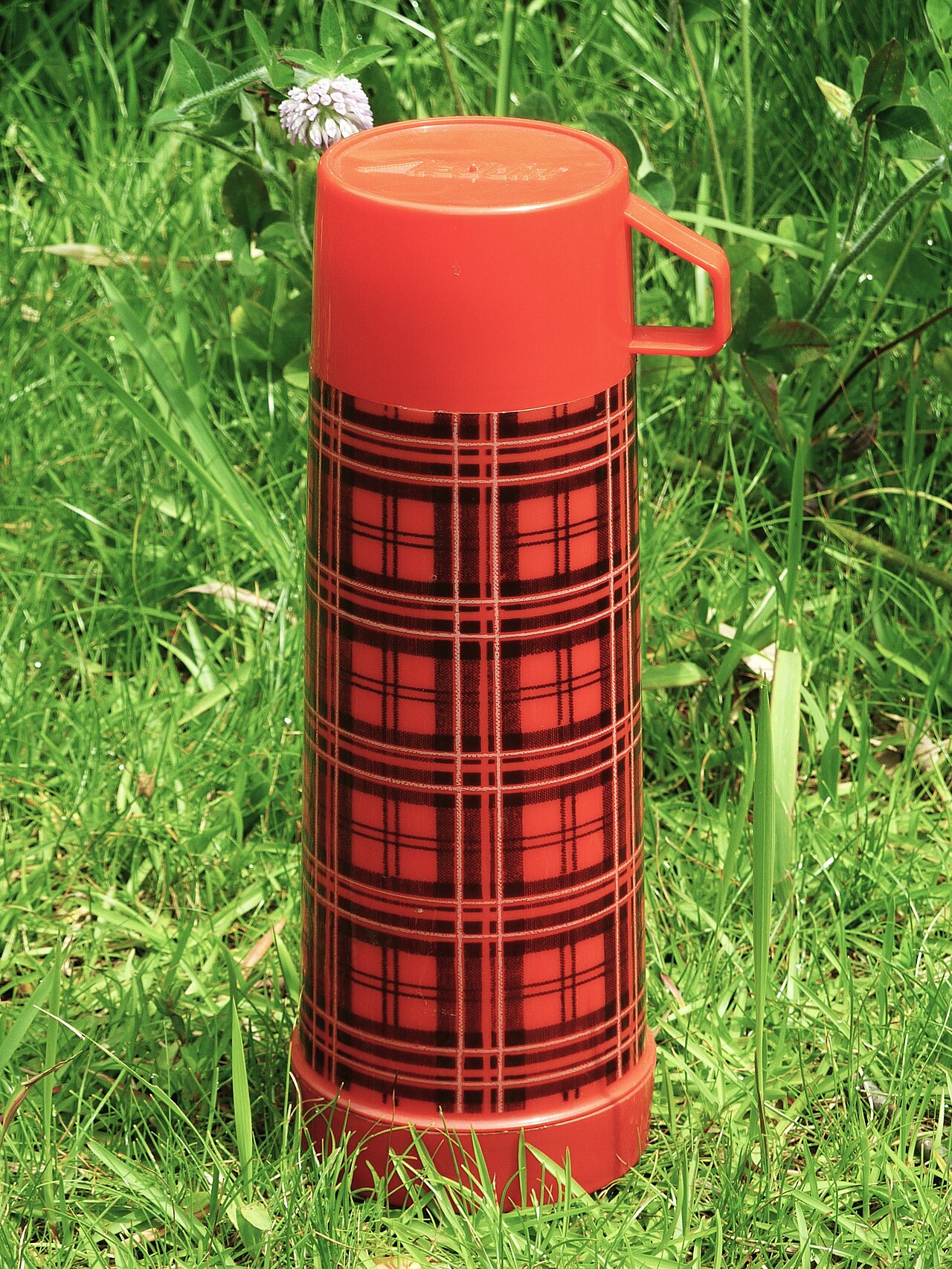
The outcome contained a curious compromise. Competitors could use “thermos” in lower case. The company kept the capitalised “Thermos” as its own. It is a legal halfway house that tells you everything about how fine the line can be: a single capital letter separating property from public domain.
Can a brand be generic in one country and protected in another?
Yes, and this is where genericide gets genuinely odd.
Aspirin is generic in the United States, but Bayer still holds it as a trade mark in some 80 countries, including Canada and much of Europe. Walk into a Toronto pharmacy and “Aspirin” is a brand; walk into one in Texas and it is a drug. The same word, the same tablet, two different legal identities.
Cellophane follows the same split. It became generic in America but remains a registered trade mark in the UK and many other countries. Thermos, too, is still protected in much of the world outside the US.
Part of the reason is history. After the First World War, the Treaty of Versailles in 1919 stripped Bayer of some of its marks in certain nations, including “Heroin”, which it had also trademarked in 1898. Part of it is language: a word becomes generic only where people use it generically, and usage varies by market.
Asia has its own versions. In the Philippines and India, people commonly say “xerox” when they mean any photocopy, the way Britons say “hoover” for vacuuming. China has an unusual rule: its courts must treat a mark as generic if the government places it on an official standards list, which gives brand owners there another front to watch.
So a brand manager in Singapore with markets across the region has to think country by country. A name can be safe at home and slipping somewhere else.
Exhibit C: the search engine that survived
If any modern brand looked like a candidate for genericide, it was Google. “Googling” entered the Oxford English Dictionary and Merriam-Webster in 2006. Children who have never heard of a search engine know how to google something.
In 2017 the question finally reached a US appeals court. In Elliott v. Google, the plaintiff argued that because people use “google” as a verb meaning “search the internet”, the trade mark had died. The Ninth Circuit disagreed, and its reasoning is worth knowing because it gave every famous brand a little breathing room.
Using a brand as a verb, the court said, does not automatically make it generic. The judges drew a neat distinction. Someone might say “I googled it” indiscriminately, with no particular search engine in mind, or discriminately, meaning Google’s own. Even the first kind of use does not prove the public has stopped seeing Google as a brand. What matters is whether the public primarily understands “Google” as the name for search engines in general, rather than for one company’s. On that question, Google won. People say they “photoshopped” a picture in much the same spirit, and Photoshop is still Adobe’s.
The lesson is not “verbs are safe”. It is that genericide turns on meaning, not grammar, and that a strong brand with distinctive associations can carry a surprising amount of everyday use without losing its legal identity.
The words we use without knowing
Some of the most ordinary words in English began life as trade marks.
Zipper was once a B. F. Goodrich mark, originally for rubber boots with a zip fastener. Trampoline belonged to the Griswold-Nissen Trampoline & Tumbling Company. Linoleum was Frederick Walton’s name for the floor covering he patented in 1860, and a court ruled it generic only about fourteen years after its invention, a remarkably fast slide from invention to common noun. Laundromat was a Westinghouse mark. Dry ice was trademarked in 1925.
None of these companies set out to give their words away. They invented something new, named it memorably, and found that the name was the only word anyone had for the thing. When there is no other word, the public will use yours. That is the deep risk for pioneers: if your product creates a category, your name is likely to become the category unless you give people another term.
The brands fighting the tide
Then there are the names still in the ring. Kleenex, Vaseline, Velcro, Jacuzzi, Jet Ski, Bubble Wrap, Frisbee, Rollerblade and Popsicle are all used loosely in daily speech, and all remain registered trade marks. In Britain, Sellotape and Biro are used generically, and Sellotape has slipped into generic status in several countries. Hoover has effectively lost the battle as a verb in the UK.
The survivors share a set of habits.
They supply the generic word themselves. Kimberly-Clark pairs Kleenex with “facial tissues”. Velcro talks about “Velcro-brand fasteners”. The point is to hand the public a category name so it does not borrow the brand.
Velcro’s own lawyers sing ‘Don’t Say Velcro’, asking people to say ‘hook and loop’ so the brand stays a brand.
They change their own copy. Johnson & Johnson altered the lyrics of its Band-Aid jingle to add the word “brand” after the name. Lego, after its key patents expired in 1978, printed requests in its manuals asking customers to say “LEGO bricks or toys” rather than “LEGOS”.
They campaign in public. Xerox ran advertising urging people to “photocopy” documents rather than “xerox” them. Nintendo encouraged the phrase “game console” so that its name would not become the word for every machine.
They argue with dictionaries. Google objected when the Swedish Language Council listed ogooglebar, a word for “unsearchable”, with a definition that did not mention the company. The council removed the word rather than rewrite it, and made plain its displeasure at a company trying to control the language.
Some of these efforts look slightly absurd from outside. Nobody enjoys being told to say “adhesive bandage”. Yet in a dispute, a record of consistent effort to protect the mark can make the difference between keeping and losing it.
Is genericide always a disaster?
Not quite. Companies occasionally choose to make a term generic on purpose, particularly when an industry needs a common word for a shared technical standard. A firm may give up exclusive rights in exchange for wider adoption of the thing it invented.
There is also a hard-headed brand argument that a generic name is a symptom rather than the illness. Bayer lost a word in America. It kept the Bayer name, and the company’s reputation was always going to ride on that.
Still, for most businesses genericide is a loss worth avoiding. A trade mark is one of the few assets that can last forever, provided you keep it alive. Losing it means competitors can use your name on their products, and you have spent years of marketing building a word for everyone.
Questions founders actually ask
Founders circle the same few worries. When people say “Kleenex” and mean any tissue, is that a problem for the brand? (It can be, eventually.) Can a word that started out ordinary, like “facebook”, become property that one company can defend? Are fast-growing names like Zoom heading towards genericide simply because people now say “let’s zoom”?
The honest answer is that everyday use is not, by itself, fatal. What matters is whether the word still points to you. That is why the defensive habits above matter so much more than trying to stop people talking.
How to protect your name before it gets famous
You will probably never need to worry about genericide. If you do, it means you have built something astonishing. But the habits that prevent it are good brand discipline anyway, and they cost little.
Choose a distinctive name. Invented or arbitrary words are stronger than descriptive ones. A name that merely describes what you sell is hard to protect from day one.
Use the name as an adjective, not a noun. Say “a Thermos flask”, never “a thermos”. Write “Velcro fasteners”, not “velcros”. Never pluralise your brand or turn it into a verb in your own copy.
Give the category a name. If you are inventing something new, coin or adopt a generic term at launch, and use it constantly beside your brand. Picture a Jurong food-tech start-up that invents a new kind of chilled snack: it should name the snack type as carefully as it names the company.
Mark it properly. Use ® where the mark is registered and ™ where it is not, at least on prominent uses.
Police it politely. Ask publishers, retailers and partners to use the name correctly. Most comply when asked nicely.
Watch every market. Register in each country you sell in, and track how the name is used in local language, including Chinese, Malay and Tamil where relevant.
None of this will stop customers loving your name. It just keeps it yours.
Questions from the bench
What is genericide?
Genericide is the loss of trademark protection when a brand name becomes the everyday word for a whole type of product. Once the public sees it as a common term, competitors can use it freely.
Is Google at risk of genericide?
A US appeals court ruled in 2017 that “Google” was not generic, despite its use as a verb. The court held that what matters is whether the public sees the name as meaning search engines in general, not how it is used grammatically.
Which famous brands have become generic?
Aspirin, escalator, thermos and cellophane are former trade marks that became generic in the United States, and zipper and trampoline also began as brand names. Some, such as Aspirin, are still protected in other countries.
Building a name you will want to keep for a century? Start with brand naming at Firefish.






