Pencils ready. Before any definitions, a warm-up.
Quiz 1. Name three brands of bottled water. Go on, out loud.
Now look at this list: Evian, Dasani, Volvic, Fiji, Acqua Panna. How many do you know?
Many people manage one or two names on the first try and nod at four or five on the second. That gap is the subject of this whole article.
The first task tested recall. The second tested recognition. Together, they make up awareness.
Brand awareness is the extent to which people can identify a brand under different conditions. It has two parts: brand recognition, which is knowing a brand when you see or hear it, and brand recall, which is retrieving it from memory unprompted when you think of its category.
Simple enough on paper. In practice, teams treat the three words as synonyms, measure the easiest one, and then wonder why “high awareness” did not turn into sales. So let us separate them properly, with a test after each.
What is the difference between brand recognition and brand recall?
Think of memory as a cupboard. Recognition is opening the door and spotting the jar. Recall is being asked, in another room, what is in the cupboard.
Brand recognition is aided. You are shown a cue (a name, a logo, a pack, a colour, a sound) and asked whether you know it. It answers the question: when they meet us, do they know who we are?
Brand recall is unaided. You are given only a category or a need (“somewhere for lunch near Raffles Place”, “an accounting app”) and asked to name brands. It answers a harder question: when they need something, do they think of us?
Recall is much harder to earn than recognition. Recognising a face in a crowd takes a split second; naming everyone you went to school with takes an afternoon and still leaves gaps. Brands work the same way.
And at the very top of recall sits top-of-mind awareness: the first brand someone names, unprompted, when asked about a category. Ask a room of people to name a fast-food chain and McDonald’s is often the first word out. That first slot is valuable real estate, because the first brand to come to mind has a head start when the choice is made.
Quiz 2. Which of these is a recognition test, and which is a recall test?
(a) “Which of these five logos have you seen before?”
(b) “When you think of courier services, which companies come to mind?”
(c) “Have you heard of Brand X?”
Answers: (a) recognition, (b) recall, (c) recognition. If you hesitated on (c), you are in good company. “Have you heard of us?” feels like a test of fame. It is the easiest question in the book.
Brand awareness is the umbrella, not a third thing
Here is where the confusion usually starts. People line the three terms up as if they were rungs on a ladder: awareness, then recognition, then recall. They are not.
Awareness is the umbrella. Recognition and recall are the two ways of measuring what sits under it.
Picture a Joo Chiat bakery whose owner says, “Everyone round here knows us.” Probably true. Neighbours walk past the shopfront every day; show them a photo and they would know it instantly. That is strong recognition.
But ask those same neighbours where they would order a birthday cake, and they may name a chain with a website and a delivery app. Weak recall.
Both are awareness. Only one is likely to win the cake order.
Which one matters more for your brand?
It depends on where the buying decision happens. Marketing scholars have long split purchases into two kinds.
Recognition-led purchases happen in front of the product. The supermarket shelf, the convenience-store fridge, the app’s search results page. You do not need to remember the brand in advance; you only need to know it when you see it, and to like what you know. Packaging, colour and shape do the heavy lifting.
Recall-led purchases happen before the product is in view. You decide you need a plumber, a bank, a lawyer, a branding agency, a pizza. Then you search your memory. If your brand is not in there, no amount of beautiful packaging will help, because the customer never reaches your shelf.
Quiz 3. Recognition-led or recall-led?
(a) Choosing a chocolate bar at a 7-Eleven checkout.
(b) Booking a wedding photographer.
(c) Picking a shampoo in Guardian.
(d) Deciding which airline to search for a Tokyo trip.
Answers: (a) recognition, (b) recall, (c) recognition, (d) mostly recall, although a comparison site can turn it into a recognition decision. That last twist matters. Aggregators, marketplaces and search results are quietly converting many recall decisions into recognition ones.
There is also a human reason to care. Offer people an everyday repeat purchase, and those who recognise one brand tend to pick it, even when a better unknown alternative sits beside it. Shoppers with no familiar name to lean on sample more and land on the better product more often.
Familiarity is a shortcut, and shortcuts are powerful. Good news for known brands; sobering news for challengers.
Recognition in action: brands you know without reading
The strongest recognition does not need the brand name at all.
Tiffany & Co. has used its robin’s-egg blue since the cover of its first Blue Book in 1845, and has held the colour as a registered trademark since 1998. You can identify the box across a room before you can read a word on it.
Mastercard went further. In January 2019 it removed its name from its logo, leaving only the two overlapping circles. Few companies can do that. It works only when recognition is so complete that the words have become redundant.
Singapore Airlines built recognition around a person rather than a symbol. The Singapore Girl and her sarong kebaya, updated by the French couturier Pierre Balmain, became so recognisable that a wax figure of her went on show at Madame Tussauds in London in 1994, the first figure there to represent a commercial business.
And Heinz ran perhaps the neatest recognition test ever turned into an ad. In 2021 it asked people on five continents simply to “draw ketchup”, without saying who was asking. Most drew a red bottle with “Heinz” written on it; others drew the 57 label or a tomato on the vine. The brand then printed the drawings on limited-edition bottles.
Heinz’s own "Draw Ketchup" film: asked to draw ketchup, most people drew a Heinz bottle.
Quiz 4. Which of these is a recognition asset?
(a) A distinctive colour
(b) A jingle
(c) A spokes-character
(d) A memorable tagline
Trick question. All four. Recognition is not only visual.
Intel launched “Intel Inside” in 1991 and turned a hidden component into something consumers could recognise on a sticker. If the cue identifies you without your name, it is a recognition asset.
Recall in action: brands that own a moment
Recall is earned differently. It comes from linking a brand to the situations in which people need the category, so that the brand surfaces when the situation arises.
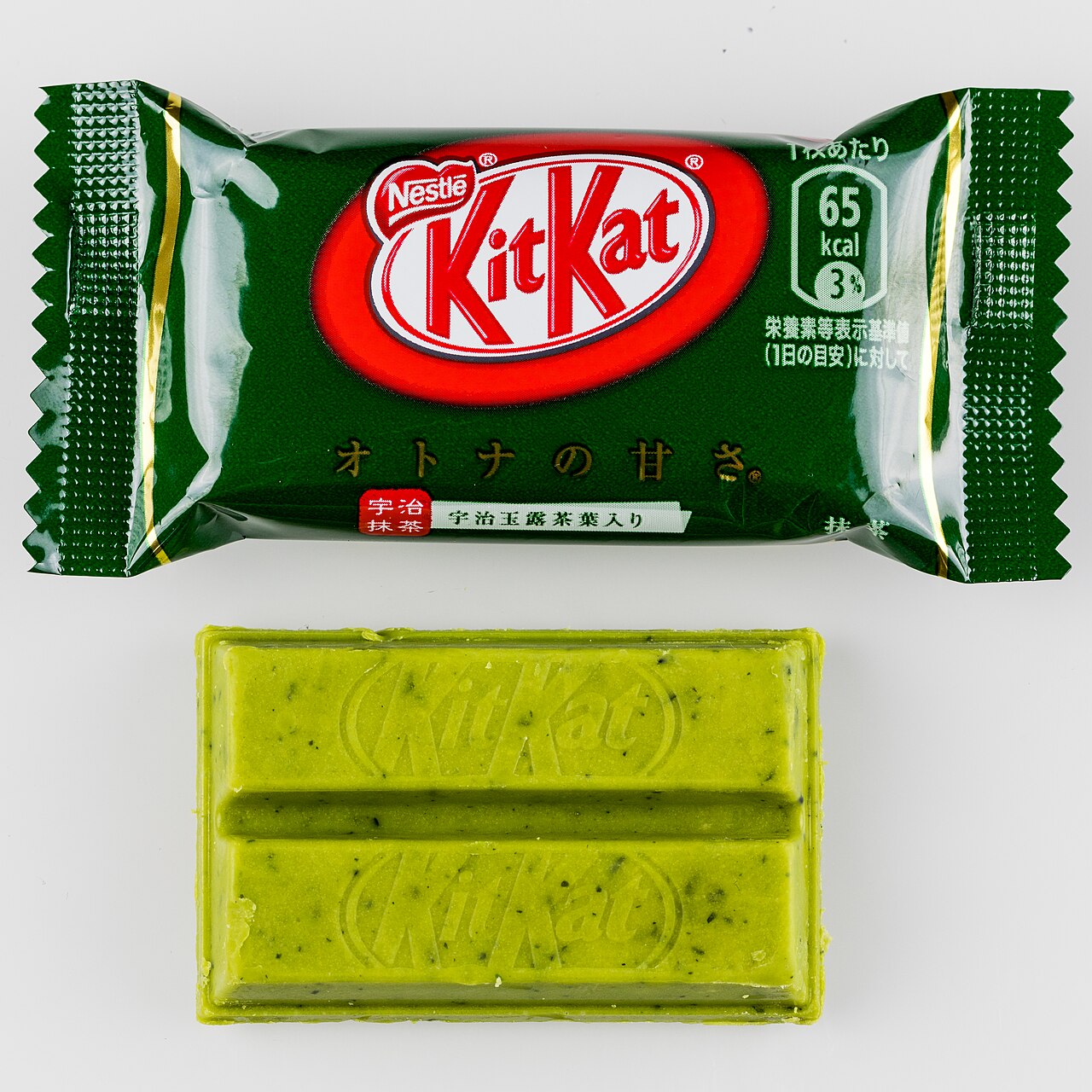
Kit Kat in Japan is the classic case. The name sounds close to the phrase “kitto katsu”, roughly “surely win”, and the bar became a popular good-luck gift. Think of someone who needs luck, think of a gift, think of Kit Kat. That is a memory link to a specific moment, and Nestlé has fed it with more than 300 flavours in Japan since 2000, each a fresh reason to buy.
Shopee, founded in Singapore in 2015, attached itself to a date. Its 9.9 shopping day in 2019 featured Cristiano Ronaldo, the brand’s new ambassador, dancing to “Baby Shark”. The ad went viral, reaching around 19 million people, and it did exactly what a recall campaign should: it made 9.9 and Shopee arrive in people’s heads together.
At the extreme end, recall can swallow a category. In 2006 “google” entered both the Oxford English Dictionary and Merriam-Webster as a verb meaning to search the web. When a brand becomes the word for the activity, it has won recall completely.
Google itself has asked people to reserve its name for the company, because a brand name that becomes a common verb risks losing trademark protection. Even the best problem has a downside.
How do you measure brand awareness, recognition and recall?
You do not need an expensive tracker to start. You need clear questions asked in the right order, because the order matters. Ask the unaided question first, or you will contaminate it.
Step 1: Unaided recall. “When you think of [category], which brands come to mind?” Record every name in the order given.
- The share of people who name you at all is your unaided recall.
- The share who name you first is your top-of-mind awareness.
Step 2: Aided recognition. Now show a list or a set of logos. “Which of these have you heard of?” The share who tick you is your aided recognition.
Step 3: Cue tests. Show your colour, pack shape or character with the name removed. Can people identify you? This tells you which assets carry recognition on their own and which ones are just decoration.
Why ask about moments, not categories?
Step 4: Situation recall. This is the step most small firms skip, and the most useful. Instead of one broad category question, ask several situation questions. “Where would you go for a quick lunch with a client?” “Who would you call if your website went down on a Sunday?”
The trade calls these situations category entry points, and the logic is simple. Buyers do not think in categories. They think in moments. A brand linked to many moments has more chances to be remembered than a brand linked to one generic label.
Two practical notes:
- Survey the right people. Ask category buyers, not your Instagram followers. Your fans will flatter every number.
- Repeat the same questions. One reading is a snapshot. The same questions every six or twelve months give you a trend, which is the only thing worth acting on.
For a small business, twenty short conversations with real customers at the counter, using exactly those questions in that order, will tell you more than a dashboard full of impressions.
Quiz 5. A brand finds that 85 per cent of category buyers recognise its logo but only 8 per cent name it unprompted. What should it work on?
Answer: recall. The brand is known but not thought of. It needs to link itself to specific buying situations, not to make its logo bigger. The opposite pattern, decent recall but weak recognition, usually means the visual identity is inconsistent and needs tightening.
Common traps (and how to avoid them)
Trap 1: Celebrating recognition alone. “Ninety per cent know us” is easy to say and often meaningless. Recognition is necessary, rarely sufficient, unless you sell purely off the shelf.
Trap 2: Counting impressions as awareness. Reach is exposure, not memory. A million impressions that nobody remembers are a million forgettable moments.
Trap 3: Chasing awareness without meaning. Awareness is not preference. Plenty of brands are famous for the wrong reasons. You want people to remember you and to remember something useful about you.
Trap 4: Changing your recognisable assets too often. Every new logo, colour or mascot resets the clock on recognition. Recognition is built by repetition, and repetition bores the marketing team long before it bores the market.
Trap 5: Asking the questions in the wrong order. Show the logo first and your recall figure becomes fiction.
Final quiz: test yourself
Quiz 6. True or false?
- Brand awareness and brand recognition mean the same thing.
- Recall is harder to achieve than recognition.
- A supermarket snack depends mainly on recall.
- Top-of-mind awareness is the first brand named without prompting.
Answers: 1 false (recognition is one part of awareness), 2 true, 3 false (it is mainly recognition), 4 true.
Four out of four? You can now explain the difference more clearly than most marketing plans do.
Quick answers
What is the difference between brand awareness, recognition and recall?
Brand awareness is the overall extent to which people know a brand. Recognition is identifying the brand when shown a cue such as a logo or name, while recall is naming the brand unprompted when thinking of its category.
Which is harder to achieve, brand recognition or brand recall?
Brand recall is harder. Recognition only requires people to know a brand when they see it, whereas recall requires them to retrieve it from memory without any cue.
How can a small business measure brand recall cheaply?
Ask category buyers, before showing anything, which brands come to mind for that category or for specific buying situations, and record the order. Repeat the same questions every six to twelve months to track the trend.
If you want to know where your brand actually sits in customers’ memories, start with a brand audit.






