Every term, someone in my workshops raises a hand and asks the same thing. “Sorry, but what’s actually the difference between branding, marketing and advertising?” Usually they apologise for asking. They shouldn’t. Plenty of people with marketing in their job title would struggle to answer cleanly, and the confusion costs companies real money.
So let us settle it, with a few analogies and a lot of examples.
Here is the short version. Branding is deciding who you are and what you stand for in people’s minds; marketing is everything you do to create, deliver and communicate value to customers; advertising is paid communication, one of marketing’s tools.
Who you are. What you do. What you say. Hold on to those three phrases; we will come back to them.
Why do people mix them up?
Because, from the outside, they often look like the same thing. You see a billboard. Is that branding?
It is certainly advertising. It is also part of a marketing plan. And if it is any good, it is expressing a brand.
The three overlap like circles drawn on a whiteboard, but they are not equal circles. Think of them as nested.
Branding sits at the centre and sets the meaning. Marketing surrounds it and turns that meaning into products, prices, places and messages. Advertising is a smaller slice inside marketing, the part where you pay for space or time to say something.
Sceptics say the distinction between marketing and advertising is mostly a way for professionals to feel sophisticated. Fair challenge. The answer is that the distinction matters most when something goes wrong, because each layer fails differently and needs a different fix.
Branding: the character before the costume
My favourite analogy for branding is a person’s character. Your character is not your clothes, your CV or your Instagram. It is the reliable pattern of what you value and how you behave, the thing your friends would describe if you left the room.
A brand works the same way. It is the set of associations that lives in people’s heads when they hear your name: what you are good at, what you are like, what you would never do. Marketing scholars call this brand knowledge, made up of awareness (do people recognise you?) and image (what do they associate with you, and are those associations strong, favourable and unique?).
The practical consequence is lovely in its simplicity. A brand has value when people respond better to a product, price or message because your name is on it than they would to the same thing unnamed.
Branding, then, is the deliberate work of shaping that knowledge. It includes strategy (what do we stand for?), naming, visual identity, tone of voice, and, importantly, the behaviours that prove the claims.
Singapore Airlines is the textbook example. When the airline succeeded Malaysia-Singapore Airlines in 1972, it built its identity around the Singapore Girl, dressed in a sarong kebaya uniform that the French couturier Pierre Balmain was hired to update.
Singapore Airlines’ own heritage film introducing the Singapore Girl, the brand idea at the heart of its identity.
The figure was so firmly a brand symbol that in 1994 Madame Tussauds in London displayed her waxwork, the first figure there to represent a commercial organisation. That is not an advert. It is a brand so coherent that a museum treated it as a personality.
Notice what branding is not. It is not one campaign. It is the character that every campaign has to stay true to.
Marketing: the whole school, not just the prospectus
If branding is character, marketing is everything you actually do to connect that character with people who might value it. The standard professional definition is broad, describing marketing as the activities and processes for creating, communicating, delivering and exchanging offerings that have value for customers and society. Notice the verbs. Creating and delivering come before communicating.
A school analogy helps here. A school’s brand is its reputation: rigorous, nurturing, sporty, artsy. Its marketing is the full set of choices that put that reputation into the world: which subjects it offers, what it charges, where its campus is, how admissions work, which open days it holds, which parents it talks to.
The glossy prospectus is part of that. So is the timetable.
That is why marketing traditionally includes product, price, place and promotion. A marketer who only does promotion is like a teacher who only marks homework. Useful, but missing most of the job.
The most charming proof that marketing can be bigger than advertising is a restaurant guide made by a tyre company. In 1900, the brothers André and Édouard Michelin published a free guide for French motorists. The commercial logic was plain: if drivers travelled further, they would wear out more tyres.
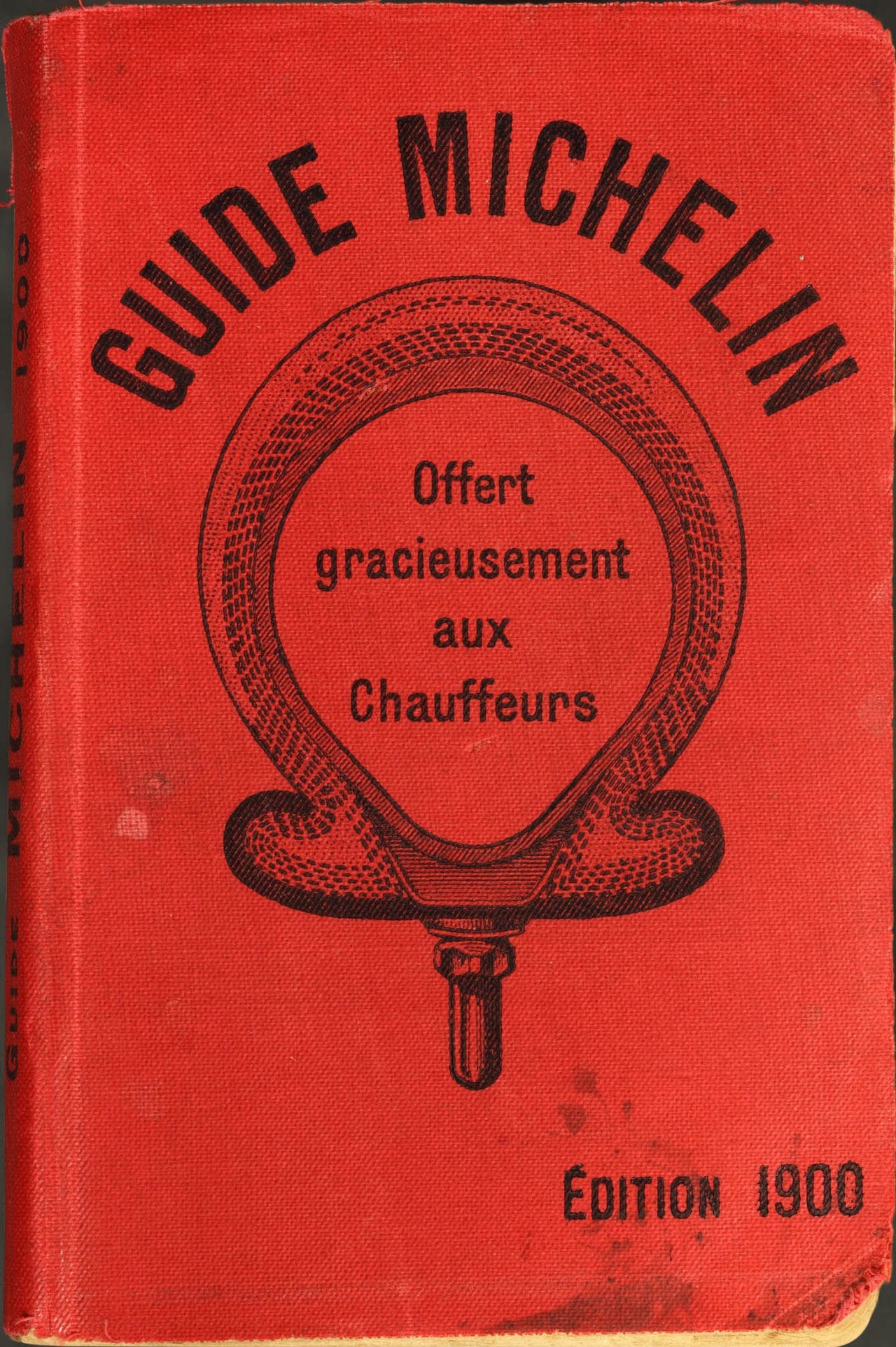
The guide began charging in 1922, introduced its first stars in 1926, and settled on the one-to-three star scale in 1931. It created demand by giving people a reason to drive.
More than a century later, the same guide made history in Singapore. In 2016 the Singapore edition gave stars to two hawker stalls, Hill Street Tai Hwa Pork Noodle and Hong Kong Soya Sauce Chicken Rice and Noodle. A tyre company’s marketing tool had become one of the most powerful brands in food. You could not buy that with a media budget.
Advertising: the loudspeaker
Advertising is the simplest of the three to define. It is paid, usually identified, communication through media you do not own: television, print, outdoor, search, social feeds, podcasts, sponsorship. If marketing is the school, advertising is the announcement over the loudspeaker. It is loud, it reaches everyone at once, and it is only as good as what is being announced.
Advertising does two jobs especially well. It builds fame quickly, and it can make a brand’s character vivid in a single image or line.
David Ogilvy’s 1951 campaign for Hathaway shirts is the classic case. He put an eyepatch on the model, never explained it, and turned a dull product shot into a little mystery. The campaign ran in The New Yorker from September 1951 and continued for decades, and Hathaway’s sales reportedly rose by more than 65 per cent over the next four years.
The eyepatch was pure advertising craft. What it built, though, was brand: an aura of the urbane, slightly mysterious man who wears this shirt.
India gives us an even longer-running example. The Amul girl, the polka-dotted mascot created in 1967 by Sylvester da Cunha and his art director Eustace Fernandes, has spent more than half a century commenting cheekily on the news on hoardings and posters, from the 1976 Emergency to corporate scandals.
Each hoarding is an advertisement. Together, across decades, they are a brand character: witty, everyday, unmistakably Indian, a little mischievous. Advertising, done consistently, can be the most visible expression of branding.
How do branding, marketing and advertising work together?
Let us take a hypothetical. Picture a small Tampines bakery called Morning Loaf.
Branding is deciding what Morning Loaf stands for. Say the owners commit to “honest bread for early risers”: slow-fermented loaves, no shortcuts, ready at 6.30am for shift workers and school runs. They choose a warm, plain-spoken name and a simple wheat-coloured identity, and they decide they will never sell yesterday’s bread at full price.
Marketing turns that into decisions. Opening hours start at 6.30am. Prices sit slightly above the supermarket because the fermentation takes longer.
They place a small stand near the MRT exit. They offer a weekly bread subscription for the neighbourhood’s young families. They post baking-time videos showing the overnight rise.
Advertising is the small, paid part. A few boosted posts targeted within two kilometres. A sponsored slot in a residents’ newsletter.
Now watch what happens when the layers fall out of line. If the advertising promises “artisan sourdough” but the shop is sold out by 8am, the advert has written a cheque the marketing cannot cash. If the marketing pushes discount bundles of day-old bread, it quietly contradicts the brand promise. Each layer can wreck the others, which is exactly why you need to know which is which.
What happens when they fall out of step?
Real brands provide the case studies.
In April 2017, Pepsi released a commercial starring Kendall Jenner in which a protest was defused by her handing a can of soda to a police officer. Critics said it trivialised protest movements and police violence, and Pepsi withdrew it about a day later with an apology saying it had missed the mark.
Here advertising tried to borrow meaning that the brand had not earned. The creative was polished. The judgement about what the brand had permission to say was not.
The reverse case is just as instructive. On 14 October 2012, Felix Baumgartner jumped from around 39 kilometres up, at the edge of space, in a project branded Red Bull Stratos, and more than 9.5 million people watched the live stream on YouTube.
Was that advertising? Not in the classic sense: nobody bought thirty seconds of airtime. It was marketing in the fullest sense, an event the company created and owned.
And it fit the brand perfectly, because Red Bull had spent years attaching its name to extreme feats. The stunt worked because brand, marketing and communication were pointing in the same direction.
Sponsorship sits on the border between advertising and marketing, and the Middle East provides a long-running example. In 2004, Emirates bought the naming rights to Arsenal’s new stadium in north London, which opened in July 2006, and the airline has renewed and extended the partnership since, most recently in August 2026 through to 2033. Every match broadcast is paid exposure. But the reason it is worth it is branding: an airline from Dubai positioning itself as a global, premium name by associating with a famous European club.
So which one should a small business invest in first?
Branding, but probably not in the way you fear.
For an SME, branding first does not mean an expensive identity project. It means answering a few hard questions before spending on anything else.
Who exactly are we for? What do we want them to remember? What will we refuse to do? Without those answers, marketing has no direction and advertising has nothing to amplify.
Then marketing, starting with the product and the experience, because those are what customers actually remember. Then advertising, used sparingly and measured carefully, to speed up what is already working.
There is a trap here that founders fall into often. They see a famously loud brand and decide to copy its tone. But being good at branding is not a business idea, and borrowing another brand’s noise costs money without building anything of your own.
Advertising is an accelerator. If the car is pointed the wrong way, it simply gets you to the wrong place faster.
A quick classroom test
Here is the exercise I give at the end of workshops. Take any activity and ask three questions.
Does it change what people believe we stand for? That is branding.
Does it change what we offer, at what price, where, or to whom? That is marketing.
Did we pay for the space or time to say it? That is advertising.
Many activities will answer yes to more than one question, and that is fine. A good advert can be all three at once. The test is not there to sort activities into boxes. It is there to make sure someone is accountable for each layer.
Questions from the back row
What is the main difference between branding and marketing?
Branding defines who a company is and what it stands for in customers’ minds. Marketing is the set of activities, from product and pricing to distribution and promotion, that delivers that brand to the right customers.
Is advertising part of marketing or branding?
Advertising is part of marketing: it is the paid communication tool within the wider marketing mix. Good advertising also expresses the brand, so it should always be consistent with the brand’s strategy.
Can a company do marketing without branding?
It can, but its marketing will lack direction and its advertising will be easy to forget or copy. Even a small business benefits from deciding what it stands for before it spends on promotion.
If you would like help working out the “who you are” before you spend on the “what you say”, that is where we start in brand strategy.






