A handbag holds a phone, a wallet and a set of keys. A luxury handbag can also hold a promotion, a first salary, a family memory or the version of ourselves we hope the world will see. The leather matters. So does everything we ask it to mean.
That is the business of desire. The strongest luxury houses make useful objects, then surround them with such recognisable design, cultural meaning and accumulated trust that a purchase becomes a personal statement. A stranger can recognise the statement across a restaurant without reading a label.
The top luxury brands in the world include Hermès, Louis Vuitton, Chanel, Rolex, Cartier, Dior, Gucci, Prada, Tiffany & Co. and Burberry. Their products differ, but each offers an unusually clear answer to the question every premium business faces: why should someone choose us when a cheaper alternative performs the same basic job?
How we chose these ten
This is Firefish’s editorial selection of ten influential personal luxury brands, covering fashion, leather goods, watches and jewellery. We considered international recognition, distinctive design assets, heritage, product authority and the strength of the branding lesson. Cars, hotels, wines and spirits sit outside this article’s scope.
The numbering is a reading order, not a league table of revenue, market capitalisation or investment performance. Those measures answer different questions. Kantar’s 2026 BrandZ report, for example, names Hermès the world’s most valuable luxury brand, overtaking Louis Vuitton. That is a specific brand-valuation result, rather than a universal verdict on desirability or craftsmanship.
Our question is what makes these names endure. The answer is more useful than a temporary position on a chart, especially for businesses building their own premium proposition.
1. Hermès: patience made tangible
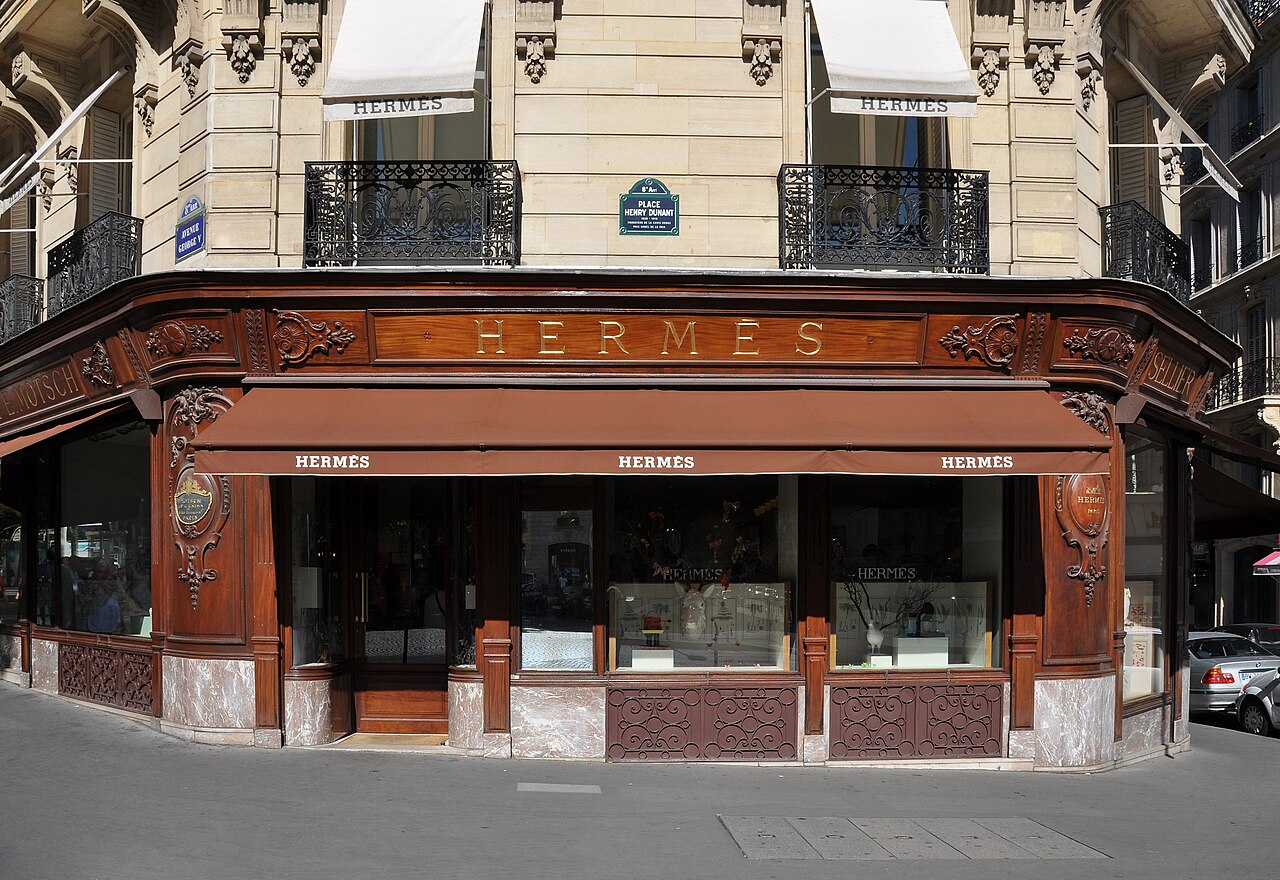
Hermès on Avenue George V, Paris. Photo: Moonik, CC BY-SA 3.0, via Wikimedia Commons.
Hermès began with horse harnesses, a product in which a weak stitch had consequences. The house traces its beginnings to a Paris workshop established in 1837. Its own account of that heritage still places the workshop at the centre of the story.
That origin gives the brand a valuable organising principle. Leather, hardware, proportion and the quality of the hand doing the work can remain central even as the product changes. A contemporary bag does not need to look like riding equipment for the connection to feel credible.
The Birkin and Kelly have become exceptionally powerful product names. They allow conversations about the house to revolve around recognisable objects, rather than a vague promise of superior quality. Orange packaging supplies another immediate cue. Long before a customer opens the box, the brand has entered the room.
The temptation is to explain Hermès entirely through scarcity. That misses the harder part. Restricting supply cannot make an unwanted object desirable. The object, its execution and its accumulated meaning must first persuade people that waiting is worthwhile.
For an ambitious business, the lesson is to make patience intelligible. If a product takes longer, explain the work that requires the time. Let customers see the material choices and finishing standards. A delay without a reason feels inefficient; a process worth understanding can support a premium.
2. Louis Vuitton: a journey that keeps finding new passengers
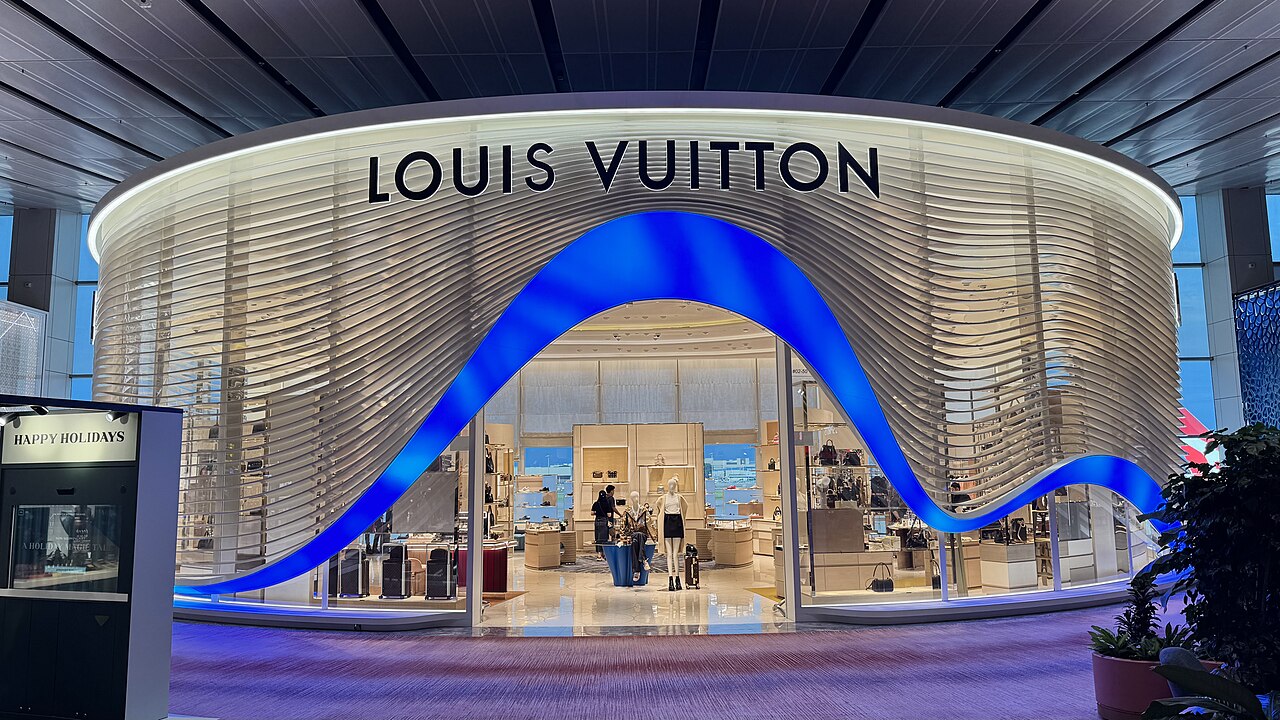
Louis Vuitton at Changi Airport, Singapore. Photo: Vadelmavene, CC BY 4.0, via Wikimedia Commons.
Louis Vuitton’s founding story starts with luggage. Established in 1854, the house built its reputation around travel; Georges Vuitton introduced the Monogram in 1896. The company’s history of the maison connects that enduring pattern to later collaborations with artists including Stephen Sprouse and Takashi Murakami.
Travel is a remarkably expandable idea. It can mean a practical journey, a move into a new social world or an encounter with unfamiliar art. That gives the brand room to work across luggage, handbags, fashion and experiences without abandoning its original territory.
The Monogram does two jobs. It identifies the maker and provides a surface for invention. Change its colour, scale or treatment, and the result can feel new while remaining recognisable. The underlying asset saves each new collection from having to introduce the brand again.
This is a useful distinction for businesses tempted by constant redesign. Novelty is easier to absorb when something stays fixed. A collaboration needs a recognisable host; otherwise, attention can accrue to the guest while the core brand disappears.
Louis Vuitton also illustrates the delicate balance between broad recognition and a premium experience. Many people can know the name, while the object, service and environment still need to justify the purchase. Fame gets a customer through the door. Details decide whether the price feels coherent.
3. Chanel: a wardrobe of recognisable codes
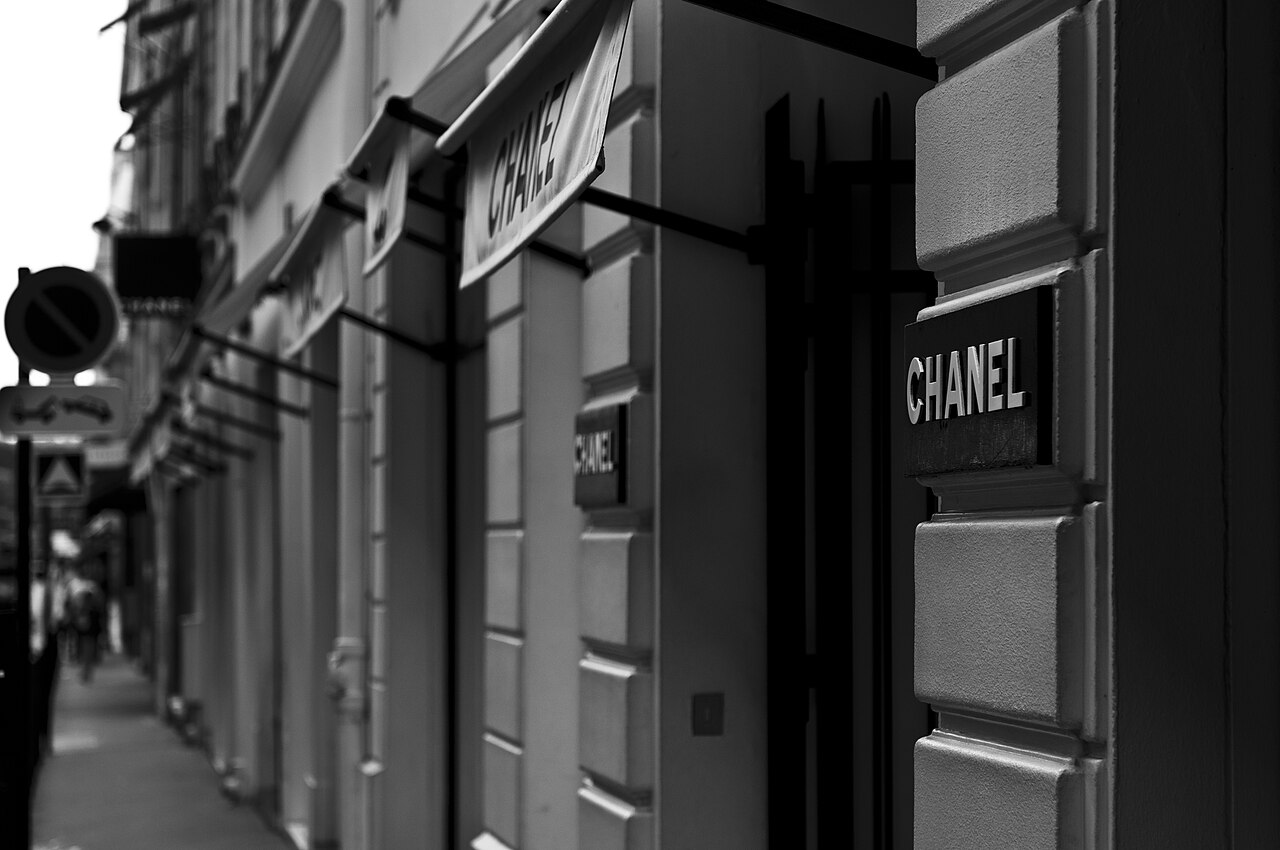
You can describe Chanel without beginning with its wordmark: quilting, chains, tweed, black and white. Few brands have such a broad vocabulary of recognisable signals. Together, these details allow very different products to feel as though they belong to the same house.
The 2.55 handbag, created by Gabrielle Chanel in 1955, is a particularly useful example. Its shoulder chain freed the wearer’s hands. A functional decision became a visual signature, and the signature acquired cultural weight through repetition.
That sequence matters. A design detail feels more substantial when it has a reason to exist. Customers may never recite the original explanation, but the product can carry a sense of purpose that purely decorative branding struggles to reproduce.
Chanel’s system also makes recognition possible at different distances. A silhouette can register across a room; quilting becomes apparent closer up; a clasp rewards inspection. The identity works through layers rather than depending on one oversized name.
For a growing brand, the equivalent might be a particular shape, a material pairing, a colour relationship or a characteristic way of opening the package. The test is whether these details still identify the business when the logo is covered.
Consistency, however, requires editing. Repeating every historic reference on every product would create clutter. Chanel’s broader lesson is to build a vocabulary, then compose with it. A recognisable language gives designers freedom because the customer already understands some of its grammar.
4. Rolex: achievement you can wear
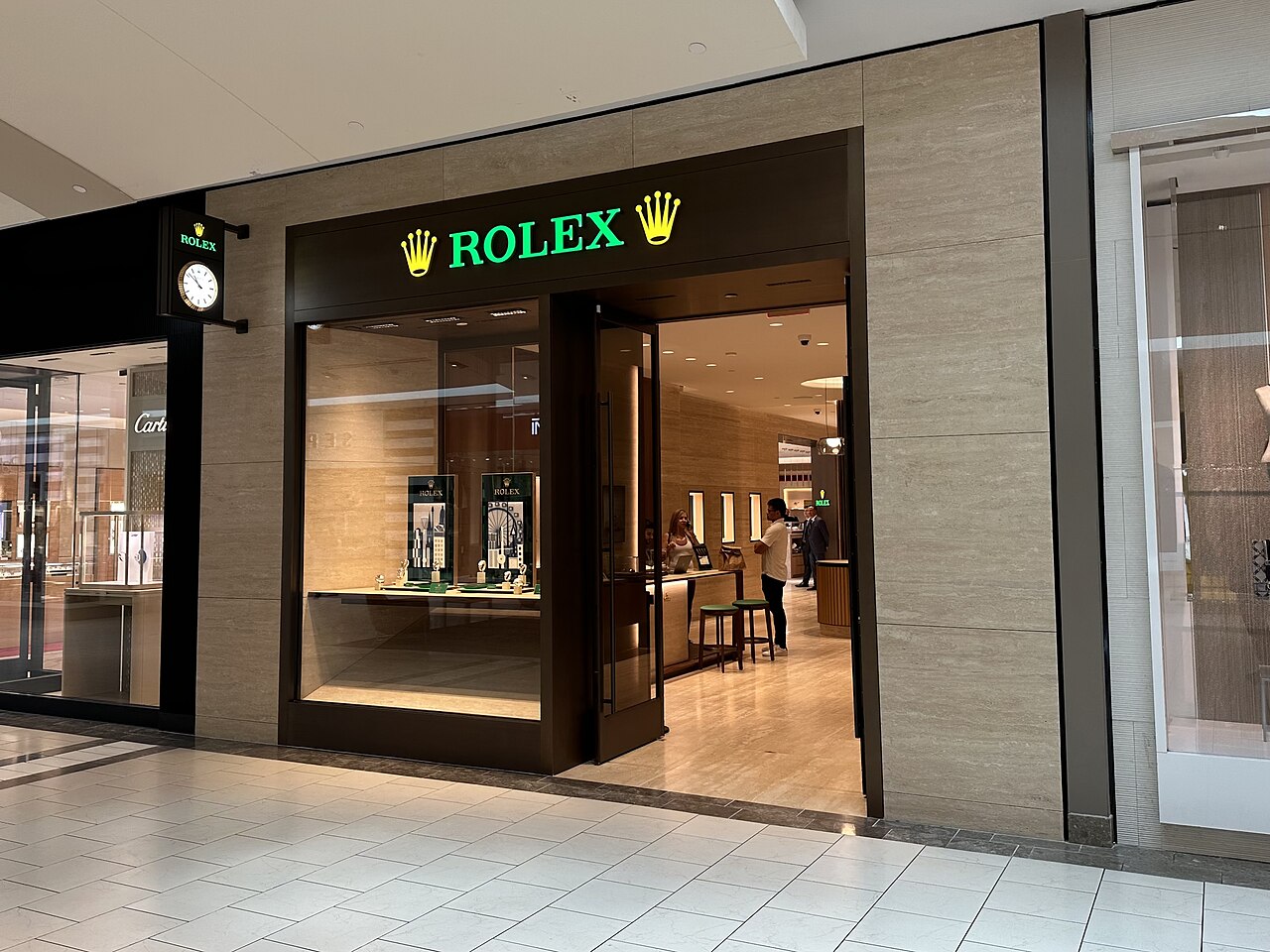
Rolex at Dadeland Mall. Photo: Phillip Pessar, CC BY 2.0, via Wikimedia Commons.
Rolex occupies a useful intersection between mechanical performance and personal achievement. The watch is an instrument, but it is also widely understood as a marker of arrival. That dual role makes it relevant to both the enthusiast inspecting the movement and the buyer commemorating a milestone.
The technical story gives the symbolism something solid to stand on. Rolex’s Oyster history records the introduction of the Oyster in 1926 and the patented Perpetual rotor in 1931. Precision, protection and automatic winding provide concrete subjects for a brand that could otherwise rely too heavily on status.
Notice the naming. Oyster, Perpetual, Submariner and Datejust are enduring product concepts. They make the range legible while allowing incremental development. Customers can recognise a family resemblance across generations, which helps a watch feel connected to a longer story.
The communication lesson is about evidence. An achievement brand benefits from associations with people who demonstrably practise, compete, explore or create. The association is stronger when excellence is visible and the connection feels sustained.
Businesses selling expertise can apply the same discipline. Show the work, the standards and the record behind the claim. A polished presentation becomes more persuasive when there is something measurable underneath it.
5. Cartier: turning a fastening into a feeling
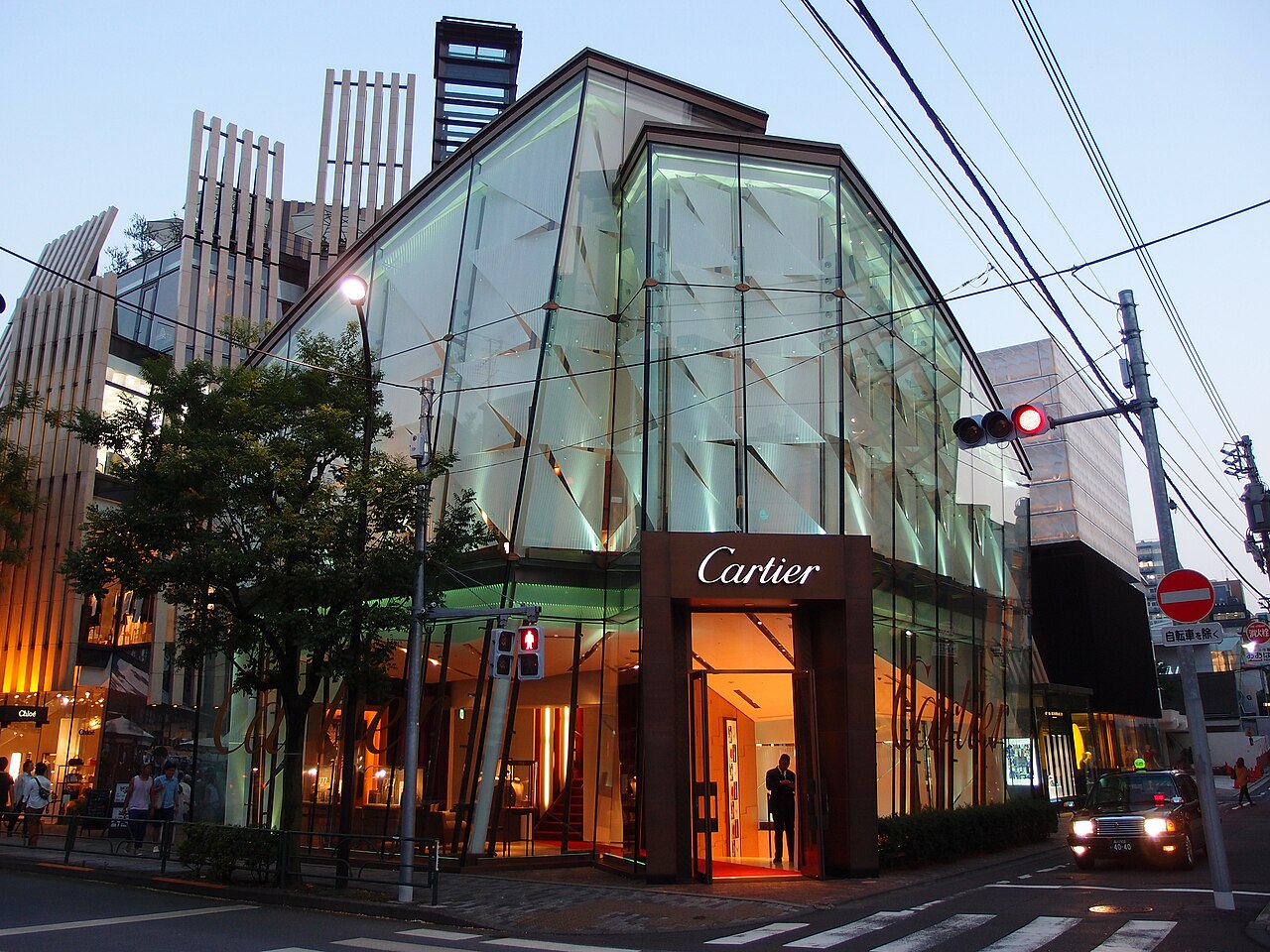
Cartier in Aoyama, Tokyo. Photo: Guilhem Vellut from Annecy, France, CC BY 2.0, via Wikimedia Commons.
A screw is not an obvious starting point for romance. Cartier made it one. Created in New York in 1969, the LOVE bracelet gives an ordinary fastening an extraordinary emotional role. Its visible screws are integral to the design and its story.
This is branding embedded in the object. The customer does not need to remember an advertising line to explain what makes the bracelet distinctive. The form supplies the conversation, while the name supplies an immediate emotional frame.
Across Cartier’s wider repertoire, the Tank watch, Trinity rings and Panthère motif provide different routes into the house. Each has a recognisable structure. Together, they create a collection of identities within a larger identity, allowing customers to choose the expression that suits them.
That is particularly effective in jewellery, where the occasion often carries as much weight as the object. A gift can stand for commitment, gratitude, independence or a new chapter. A clear design story helps the buyer make the occasion specific.
The business lesson is to begin with the human moment. What is someone trying to say when they buy your product? Which feature could make that meaning easier to express? Packaging and copy can support the answer, but the product should contribute to it.
6. Dior: making the whole world feel like the house
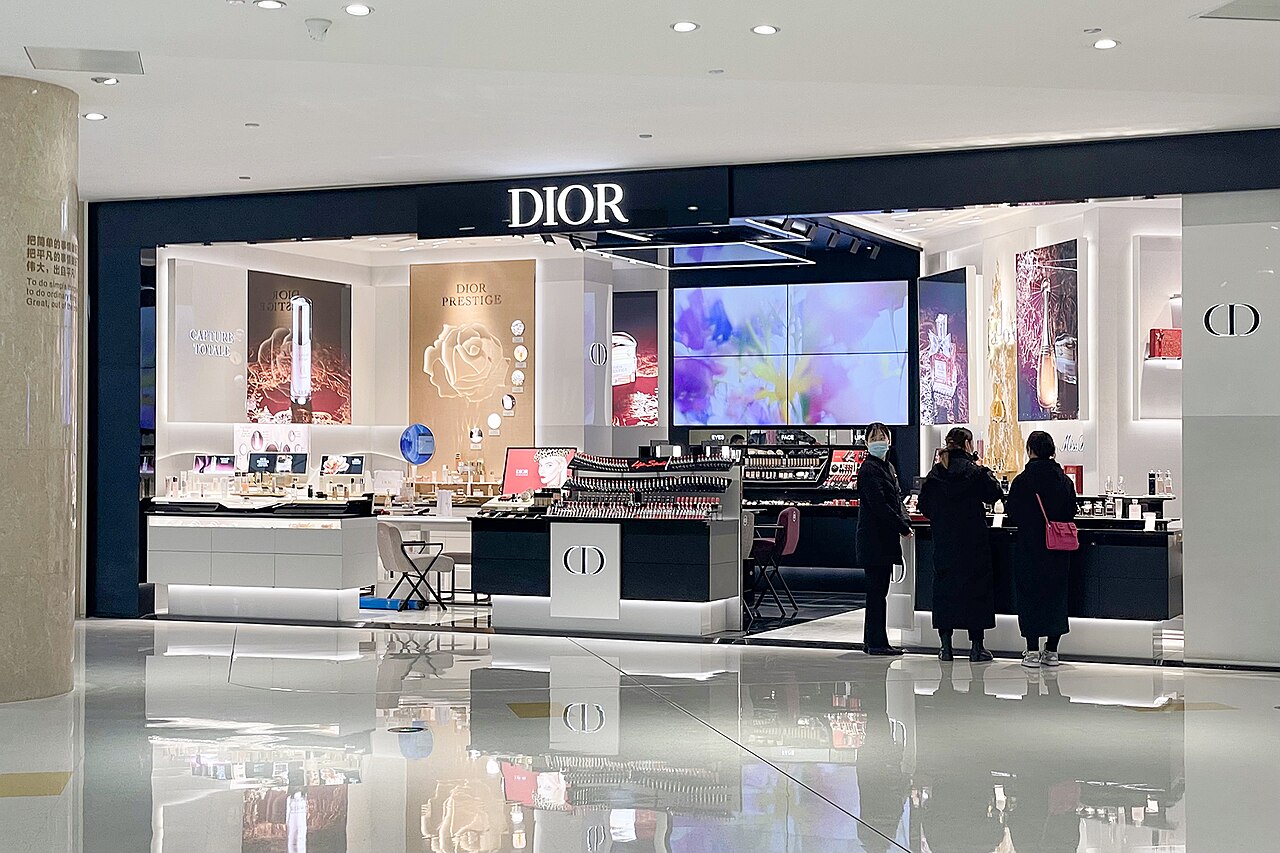
Dior beauty retail in Xinxiang. Photo: Windmemories, CC BY-SA 4.0, via Wikimedia Commons.
Dior arrived with a silhouette. On 12 February 1947, Christian Dior presented his first collection at 30 Avenue Montaigne. The house’s history identifies the Bar suit and the New Look as foundational expressions of its style.
The beginning was unusually clear: a visible proposition about how fashion could look and feel. That clarity gave later generations something to interpret. An archive becomes commercially useful when it contains ideas that can generate new work, rather than simply objects to preserve.
Dior’s reach also depends on connections between categories. A couture collection, a handbag and a fragrance occupy very different price points, yet can participate in the same imaginative world. The customer entering through beauty should still recognise the house encountered in fashion.
This relationship was present early. Dior’s account of its fragrance beginnings places Miss Dior alongside the first fashion collection in 1947. The scent was part of the proposition from the start.
For businesses extending a brand, the implication is practical. A new category needs a reason to belong. Shared colours and logos are insufficient if the new product cannot express the same taste, standards and customer promise.
Dior demonstrates the value of building a world with several entrances. Customers can arrive at different budgets and different stages of life. The challenge is to make each entrance feel considered, with enough substance to stand on its own and enough continuity to lead somewhere else.
7. Gucci: recognisable even when the mood changes
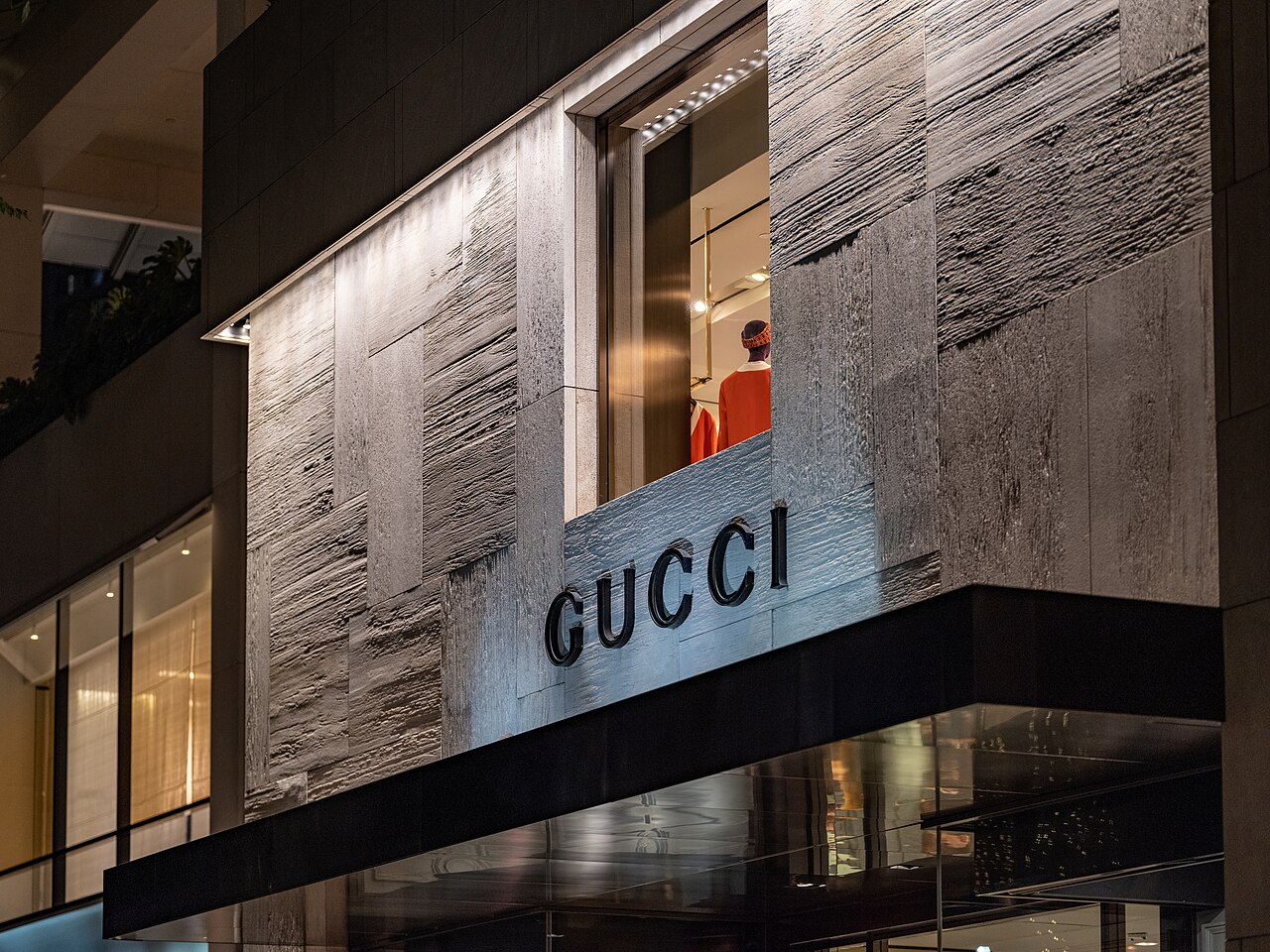
Gucci at Luxury Row, Waikiki. Photo: Tony Webster, CC BY 2.0, via Wikimedia Commons.
Gucci has repeatedly changed its fashion mood while retaining objects and symbols that customers recognise. Its official history begins with Guccio Gucci’s Florence shop in 1921 and records the introduction of the Horsebit loafer in 1953.
The Horsebit is especially instructive. A small piece of hardware links a shoe to an equestrian world, giving it a reference beyond the category of footwear. It also travels easily between products. A detail that can move without losing meaning is a valuable brand asset.
Bamboo handles and familiar patterned surfaces provide other points of continuity. These elements can appear restrained, playful or extravagant depending on how they are used. The personality of a season can shift while the customer retains a route back to the house.
That flexibility is useful, but it creates a management challenge. A brand needs to distinguish between its enduring identity and a particular creative chapter. If customers fall in love only with the current mood, a change of direction can feel like the loss of the brand itself.
The lesson for companies undergoing reinvention is to define the fixed elements before commissioning the new expression. Which product strengths, visual details and customer expectations must remain recognisable? Which can legitimately change?
Gucci earns its place here as a compelling study in that tension. Relevance requires movement. Recognition requires memory. The strongest reinventions give customers enough of both to make the next chapter feel connected to the one they already know.
8. Prada: the luxury of a different opinion
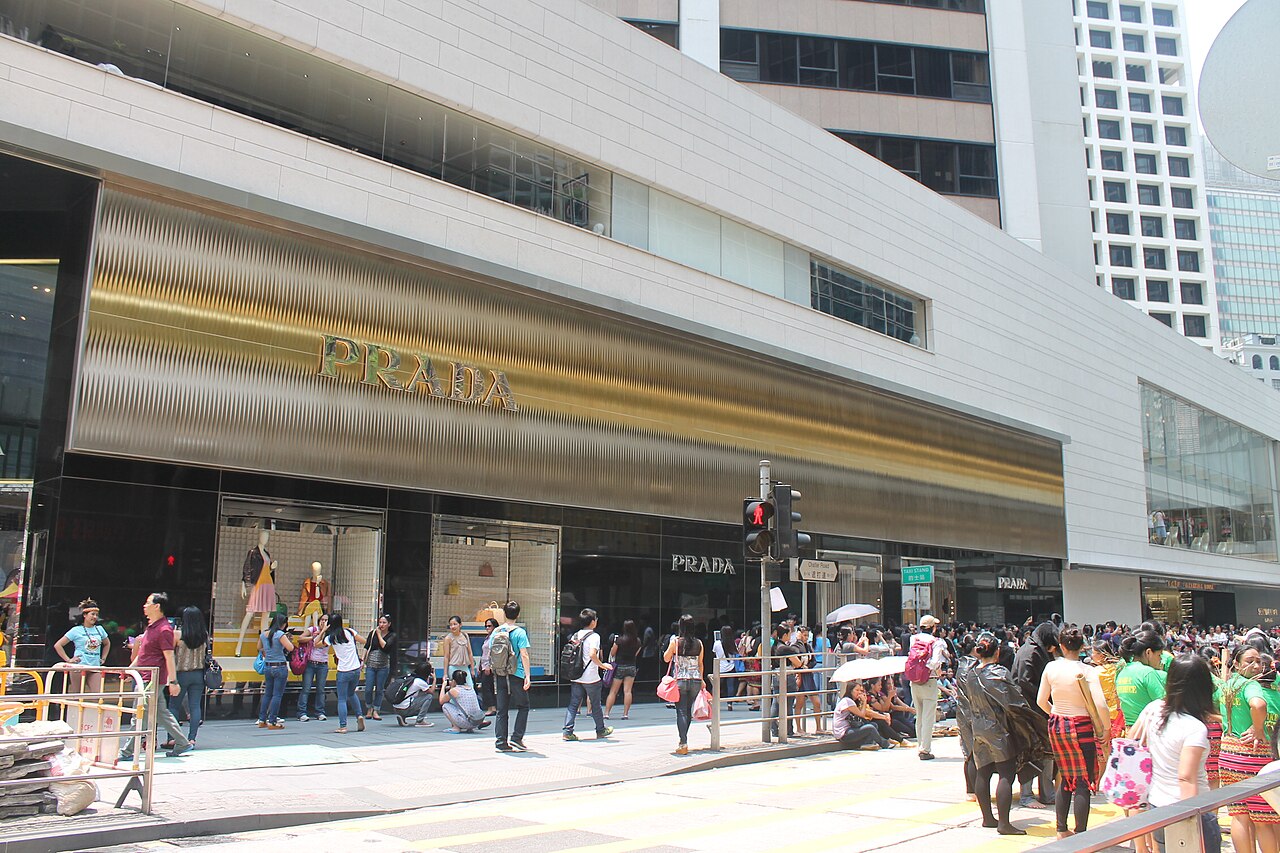
Prada in Hong Kong. Photo: Matt.morris00, CC BY-SA 4.0, via Wikimedia Commons.
Prada’s story began with a Milan store in 1913, but one of its most influential propositions involved a material far removed from conventional ideas of opulence. The company’s account of its backpack dates the first version to the autumn/winter 1984–85 collection and describes its use of Pocono nylon.
Nylon offered a different argument for luxury. Its appeal could rest on design intelligence, functionality and a particular point of view, rather than on a material’s obvious preciousness. The customer was invited to appreciate the choice itself.
That is a powerful position because it gives taste an active role. A brand becomes interesting when it can make people reconsider something they thought they understood. A utilitarian material, an awkward proportion or an unexpected colour can become desirable when the wider proposition makes sense.
Prada’s cultural interests extend beyond the collection. Its group history records the establishment of Fondazione Prada in 1993 and the opening of the experimental New York Epicenter in 2001. These projects reinforce a house interested in ideas and spaces as well as merchandise.
For brand builders, the lesson is to develop a point of view that affects decisions. Calling a business innovative is easy; choosing an unexpected material or changing the retail experience is harder.
9. Tiffany & Co.: the gift starts before the lid opens
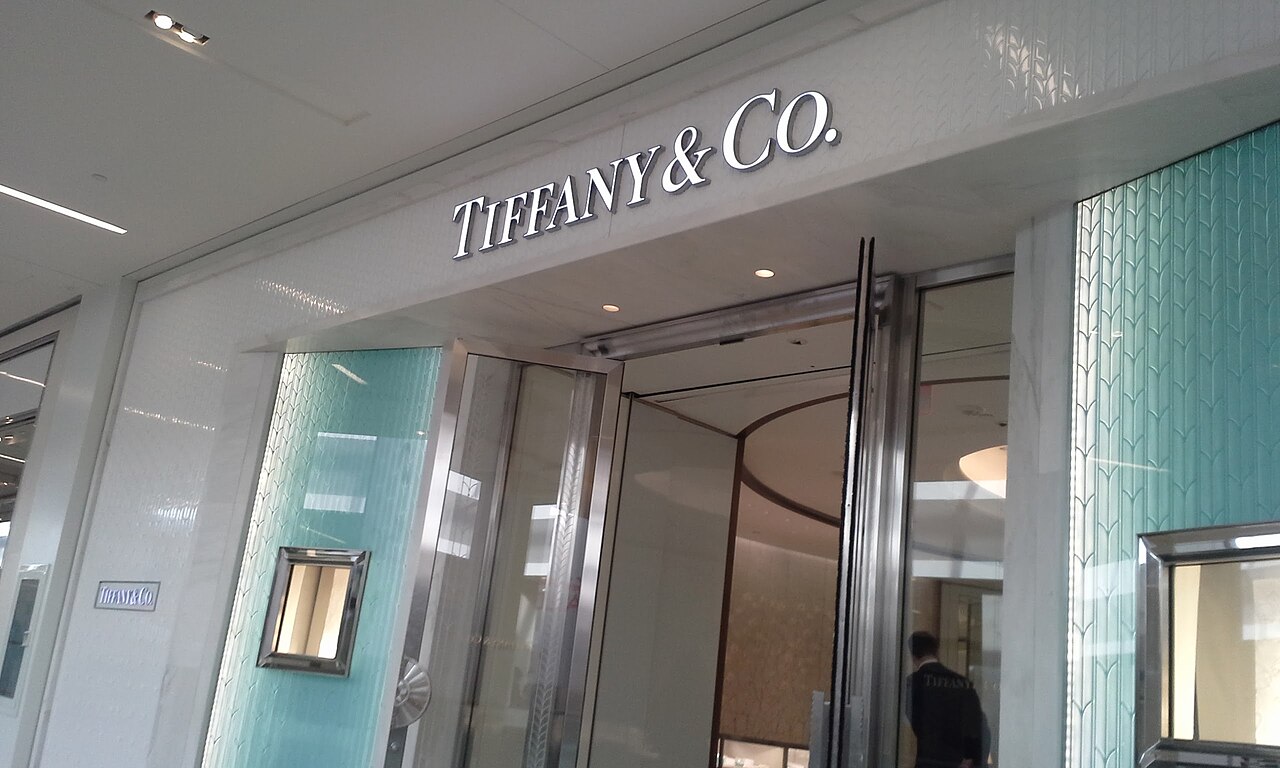
Tiffany & Co. at West Edmonton Mall. Photo: Rowanswiki, CC0, via Wikimedia Commons.
Tiffany demonstrates how much meaning a colour can carry. Its history of the Blue Box traces the signature hue to the cover of the Blue Book catalogue in 1845. The company itself was founded in 1837.
The box has become part of the gift. Before the recipient sees the jewellery, the packaging establishes a set of expectations: care, celebration, romance and the importance of the occasion. That anticipation is a significant part of the experience the customer is buying.
A useful distinction follows. Packaging can protect a product, identify a product or participate in its meaning. Tiffany achieves all three. The third function is the one that makes an ordinary operational item worth keeping.
Consistency matters at a very practical level. If the colour changes casually between a shopping bag, a website and a presentation box, recognition weakens. A distinctive asset gains power through disciplined execution across small, repeated encounters.
For a business designing its own customer experience, the opportunity is to examine moments that normally receive little creative attention. The handover, the note, the wrapping and the first reveal may be where the strongest memory forms. These details can extend the product’s emotional value.
Tiffany’s lesson is not that every company needs a signature colour. It is that a customer journey should contain a memorable, ownable moment. Design that moment around the reason people buy, then repeat it with enough care that recognition becomes anticipation.
10. Burberry: a weather forecast with a point of view
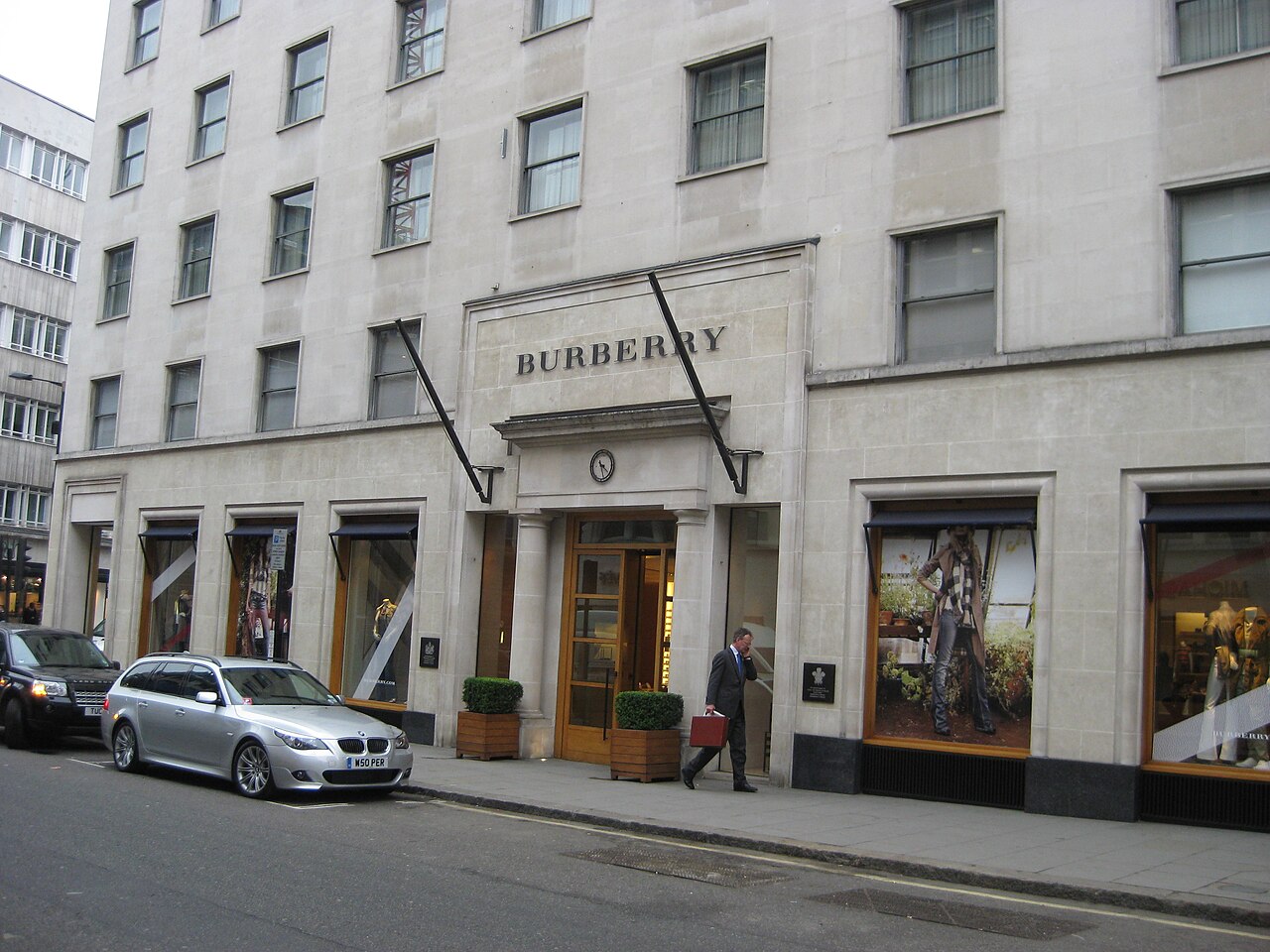
Burberry on New Bond Street, London, in 2009. Photo: Ashauk1~commonswiki (attributed), CC BY 3.0, via Wikimedia Commons.
Burberry has a specific answer to the question of where its authority comes from: British weather. Thomas Burberry founded the business in 1856 and invented gabardine in 1879. The company’s historical timeline connects that fabric innovation to the development of its outerwear.
A trench coat is useful before it is symbolic. Its form has a job to do, and that usefulness gives the brand a durable foundation. The check, the coat and the wider British setting work best when they reinforce a product story customers can understand.
This is the commercial advantage of a clear origin. A business with an authentic specialism has a basis for deciding what to make next, how to present it and which claims it can credibly own. Heritage becomes a practical resource for decisions.
It also creates a test for expansion. Does the new idea strengthen the customer’s understanding of the house, or merely add another category? A famous pattern can create immediate recognition, but recognition alone cannot answer whether a product deserves its place.
Burberry’s lesson is especially relevant to businesses tempted to hide their beginnings once they move upmarket. The workshop, climate, trade or local problem that shaped the original product may be the most convincing source of distinction available.
What these luxury brands teach ambitious businesses
Across the ten, a few habits recur. First, the strongest identities live in things customers can point to: a quilting pattern, a clasp, a watch case, a colour or a coat. Abstract promises become more believable when a product gives them a physical form.
Second, consistency creates room for invention. Louis Vuitton can reinterpret its Monogram because people recognise it. Chanel can vary a collection because its visual vocabulary is established. A business that changes every identifying detail at once spends its energy teaching customers who it is again.
Third, a premium requires an experience that supports the price. Product quality, staff knowledge, packaging and aftercare all participate in the same judgement. An impressive campaign cannot indefinitely compensate for careless execution.
Finally, each house gives people a way to express something about themselves. Achievement, discernment, affection, independence and belonging are different motivations. A clear brand strategy begins by deciding which human motivation the business can serve with credibility.
You do not need a century of history to apply these lessons. You need a product worth choosing, a reason people can understand and the discipline to make every encounter support that reason. Luxury makes the relationship between those three unusually visible.
Questions behind the price tag
Which luxury brand is the most valuable?
Kantar’s 2026 BrandZ ranking identifies Hermès as the most valuable luxury brand. Other studies use different methods and category boundaries, so comparisons should name the source and year. Brand value is an estimate of the brand’s economic contribution; it is not the same as annual sales.
What makes a brand luxury?
A high price alone is insufficient. Luxury combines a convincing product with distinctive design, controlled presentation, service, cultural meaning and a customer’s willingness to pay for that combination. Different houses balance those elements differently, which is why a single formula rarely explains the whole category.
Can a smaller business learn from these brands?
Yes. Begin with one recognisable product strength and one customer experience you can execute exceptionally well. Build repeatable visual and verbal cues around them. If your business is ready to define that proposition, explore Firefish’s brand strategy services before deciding what the next logo should look like.
Research checked in October 2026. Brand histories and the valuation context are linked throughout. Photographs are credited individually; they illustrate the brands and are not representations of current store layouts. Cover: original AI-generated editorial still life featuring unbranded objects.









.jpg)


