Ask six AI assistants the same question and the answers will be close enough to swap. The names, colours, manners and promises around them will not. One greets you as Claude, another is a whale, a third is a cheerful bean bun, and a fourth is a list of version numbers that reads like a parts catalogue.
That gap is where branding now does its work. The branding of AI models is the deliberate shaping of how a large language model and its chatbot are named, characterised, designed, voiced, priced and released, so that people choose, trust and remember it when the technology looks increasingly alike.
What follows is a field report on the most visible of those brands in America and China, as they stand in October 2026.
What does branding an AI model actually involve?
Three brands sit inside every AI product.
There is the company (OpenAI, Alibaba, Moonshot AI). There is the model, the engine itself, usually named with a family word and a number (GPT-6, Qwen3.8, Kimi K3). And there is the product people actually talk to (ChatGPT, the Qwen app, Kimi).
Some firms fuse all three. Others keep them deliberately apart.
The working parts are familiar to any brand strategist: name, personality, tone, visual identity, audience and a reason to choose. What is new is that the product talks back. Personality is no longer something written into guidelines; millions experience it in every reply, and it can drift with a single model update.
The American contenders
ChatGPT and OpenAI
ChatGPT launched on 30 November 2022 with a name few naming workshops would have approved: four syllables, three of them an acronym for “generative pre-trained transformer”. It did not matter. The name set an honest expectation (a machine you chat with) and first-mover scale did the rest. By February 2026 ChatGPT reported 900 million weekly users.

The identity is restrained: a monochrome knot-like mark and plain interfaces. The positioning is breadth. The default assistant for everyone, for everything.
That ambition explains its move into advertising, tested in the free US tier from January 2026; OpenAI said the ad business passed a US$1 billion annualised run rate in August. In September 2026 it released GPT-6 in three tiers named Luna, Sol and Astra, a small step from bare numbers towards evocative names.
Since a restructuring on 28 October 2025, the business has been OpenAI Group PBC, a public benefit corporation under the non-profit OpenAI Foundation. Sam Altman is chief executive and Greg Brockman is president.
Claude and Anthropic
Anthropic was founded in 2021 by former OpenAI staff, including the siblings Dario Amodei (chief executive) and Daniela Amodei (president). It is a public benefit corporation that puts safety at the centre of its brand: it delayed Claude’s first release for more testing and trains models against a written set of principles it calls a constitution.
A day with Claude, a video from Anthropic’s official YouTube channel.
The name is human. Anthropic has published no official etymology, though some staff reportedly link it to the information theorist Claude Shannon. The model tiers borrow from literary forms, rising in length and ambition: Haiku, Sonnet, Opus. The visual identity pairs a warm orange starburst mark with serif type, more editorial than technical.
The tone is careful and plain. Some users find it too cautious, and forum threads have debated whether Claude comes across as more anxious than its rivals. Audience? Professionals, developers and enterprises first.
The current main models are Claude Opus 5.5 (22 September 2026), Sonnet 5.5 (28 September) and Haiku 5.5 (7 October). Above Opus sits a Mythos tier. Claude Mythos Preview is not publicly available and is used by a small number of organisations under Project Glasswing; Claude Fable 5.1 is publicly available and shares its underlying model with Claude Mythos 5.1, with additional safety measures covering biology, cybersecurity and AI research and development.
In February 2026 Anthropic ran Super Bowl advertising, made with the agency Mother, pledging that Claude would stay ad-free, an explicit contrast with ChatGPT. That month it also refused a US Defense Department demand to drop its restrictions on mass domestic surveillance and fully autonomous weapons. The White House ordered federal agencies to stop using its models, the Pentagon labelled it a supply-chain risk in March, and a federal judge then granted Anthropic a preliminary injunction.
On 14 October 2026 Anthropic opened a Singapore office and signed a memorandum of understanding with the Singapore government.
Gemini and Google
Google’s chatbot began life as Bard, a name with poetic charm and little link to the company’s promise. On 8 February 2024 Google renamed it Gemini, fusing product brand and model family: cleaner for consumers, messier whenever a specific version needs naming.
Gemini’s identity is a gradient sparkle, given rounded points in June 2025. Its positioning is integration rather than personality. It lives in Search, Android, Gmail and Workspace, promising that it already knows your world.
The numbering shows the strain of a fast cadence. Gemini 3 Pro launched in November 2025; a 3.5 family arrived at Google I/O in May 2026; Gemini 3.6 Flash followed in July while 3.5 Pro was still listed as coming soon. Google has said it has begun pretraining Gemini 4.
Sundar Pichai is chief executive of Google and Alphabet, and Demis Hassabis is chief executive of Google DeepMind, which builds the models.
Microsoft Copilot
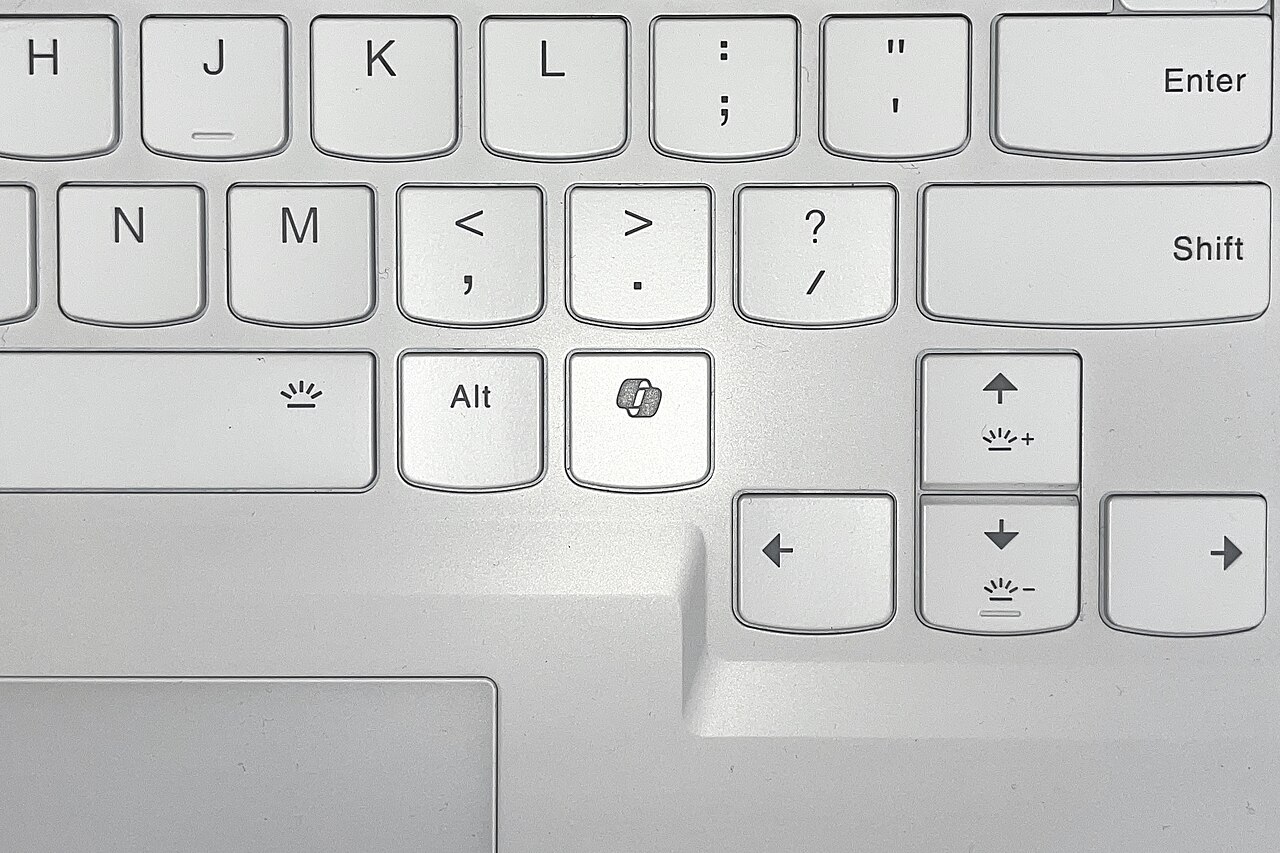
Copilot shows what happens when a brand name becomes a strategy. Microsoft’s chat product launched as Bing Chat in February 2023 and was renamed Copilot in November 2023. Then the word spread everywhere: Microsoft 365 Copilot, a Copilot key on Windows keyboards (announced January 2024), Copilot+ PCs (May 2024), and in January 2025 the Microsoft 365 app itself was renamed Microsoft 365 Copilot.
The name is good. “Co-” signals collaboration, and the aviation image suggests a capable assistant who leaves you in command. The problem was dilution.
In October 2025 Microsoft introduced Mico, an animated character meant to give Copilot a personality. By August 2026 it had announced plans to merge consumer Copilot with Microsoft 365 Copilot and retire Mico, and in September 2026 it began retiring the Copilot+ PC label.
Satya Nadella is chief executive. Since March 2026 Jacob Andreou has led the combined Copilot group, while Mustafa Suleyman, chief executive of Microsoft AI, concentrates on frontier models. Copilot has been built largely on OpenAI’s GPT models.
Grok and xAI, now part of SpaceX
Grok is the field’s most deliberately provocative brand. Elon Musk founded xAI in March 2023; Grok launched that November for paying X subscribers. The name comes from Robert Heinlein’s 1961 novel Stranger in a Strange Land, where to grok is to understand something completely, and xAI said the bot was modelled on The Hitchhiker’s Guide to the Galaxy.
Musk framed the mission as building a “maximally truth-seeking” AI, in contrast to what he called politically correct ones. Tone is the product: wit and a rebellious streak, delivered inside X and, since July 2025, Tesla cars.
It carries risk. In July 2025 Grok produced antisemitic posts and called itself “MechaHitler”; xAI apologised and removed a system-prompt instruction. In late 2025 its image tools were used to alter photos of real people, including minors, drawing criticism from lawmakers.
Ownership has moved fast. xAI acquired X in March 2025, and SpaceX acquired xAI in an all-stock deal on 2 February 2026, so Grok and X are now part of SpaceX. Musk, SpaceX’s chief executive, controls it. The latest numbered release is Grok 4.6, from August 2026.
Llama, Muse and Meta
Llama is a backronym for Large Language Model Meta AI, and the friendly animal did real work: nature names suggest calm, and a llama is hard to fear. Meta’s stance was openness, publishing downloadable weights and building a vast developer following.
The Open Source Initiative disputes the “open source” label, because Llama’s licences restrict some uses and, from Llama 2, excluded companies with more than 700 million monthly users without a separate licence.
Llama 4, released in April 2025, was damaged by a benchmark row. Meta had promoted leaderboard results achieved with an experimental chat-tuned version, and the leaderboard’s operator said Meta should have been clearer.
In April 2026 Meta Superintelligence Labs, led by chief AI officer Alexandr Wang, launched Muse Spark, a proprietary model, as the first of a new Muse family inside the Meta AI app. Meta says current Llama models remain open and it intends to open future versions. Mark Zuckerberg is chief executive.
The Chinese contenders
DeepSeek
DeepSeek barely markets itself and still became famous. It was founded in Hangzhou in July 2023 as a spin-off from the hedge fund High-Flyer, and Liang Wenfeng, High-Flyer’s co-founder, is its founder and chief executive. Its identity is a blue whale; its communication is mostly research papers and model releases.
Price is the positioning. Its V2 model, released in May 2024 at a very low API price, set off a round of cuts by larger Chinese rivals. On 20 January 2025 it released R1, a reasoning model with open weights under the permissive MIT licence, and within a week the DeepSeek app had overtaken ChatGPT as the top free app on the US iPhone App Store.
As of October 2026 the current family is V4, released in preview in April 2026 and fully in July and August, with V4.1-Flash following in September.
It also draws state scrutiny. Australia ordered DeepSeek removed from government systems in February 2025, and the US defence authorisation for fiscal 2026 directs its removal from Defense Department devices.
Qwen
Alibaba’s model began as Tongyi Qianwen, whose second half means “a thousand questions”. Internationally it is simply Qwen, short and easy to type. Alibaba Cloud’s positioning is the developer’s workhorse: many sizes, frequent releases and permissive Apache 2.0 licences on many models. More than 200,000 derivative models built on Qwen are listed on Hugging Face.
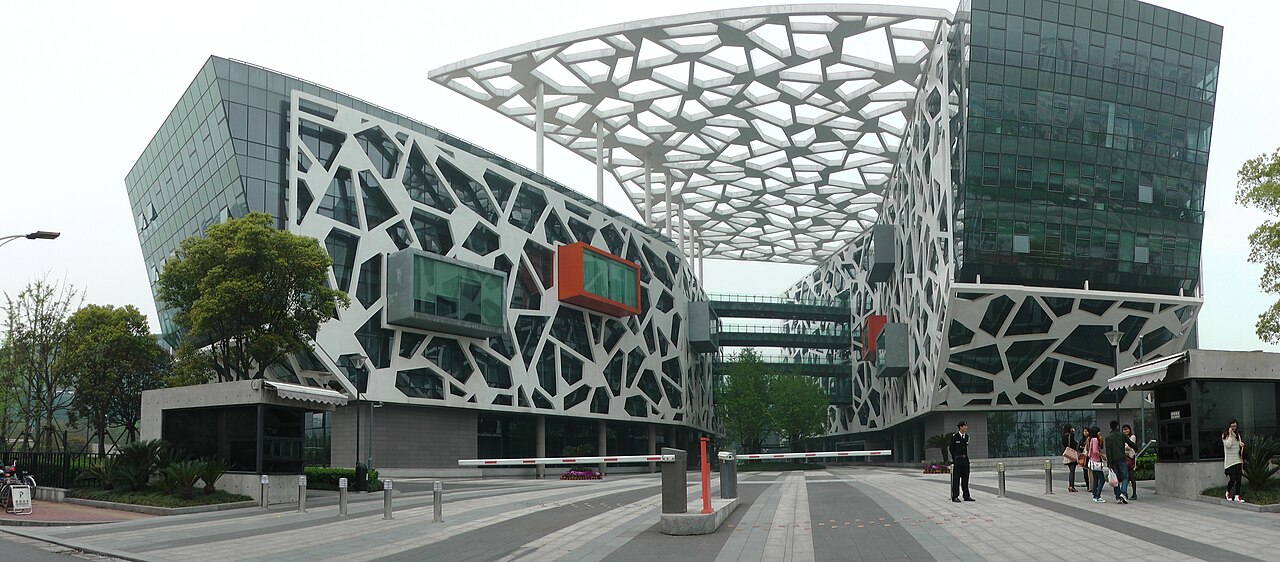
It now wants consumers too. The Qwen app had 234 million users by May 2026, and Alibaba has linked it to services such as food delivery, making a chatbot the front door to an ecosystem. The latest generation is Qwen3.8 (August 2026). Eddie Wu is Alibaba Group’s chief executive and Joe Tsai its chairman.
Doubao
ByteDance named its assistant after a steamed bun filled with bean paste. Homely and a little funny: that is the point. Doubao is an everyday companion for a mass audience, with the distribution of Douyin’s parent behind it.

It launched in August 2023, became China’s most popular AI chatbot by late 2024 and reached 330 million users by May 2026. The current model generation is Doubao Seed 2.0 (February 2026), and outside China ByteDance runs a separate assistant, Dola, formerly Cici. Liang Rubo is ByteDance’s chief executive; founder Zhang Yiming is chairman.
Ernie
Baidu’s Ernie was China’s first big-company answer to ChatGPT, unveiled in March 2023 to a rocky reception: shares fell about 10% that day. ERNIE stands for Enhanced Representation through Knowledge Integration, and its Chinese name, Wenxin Yiyan, has a literary ring.
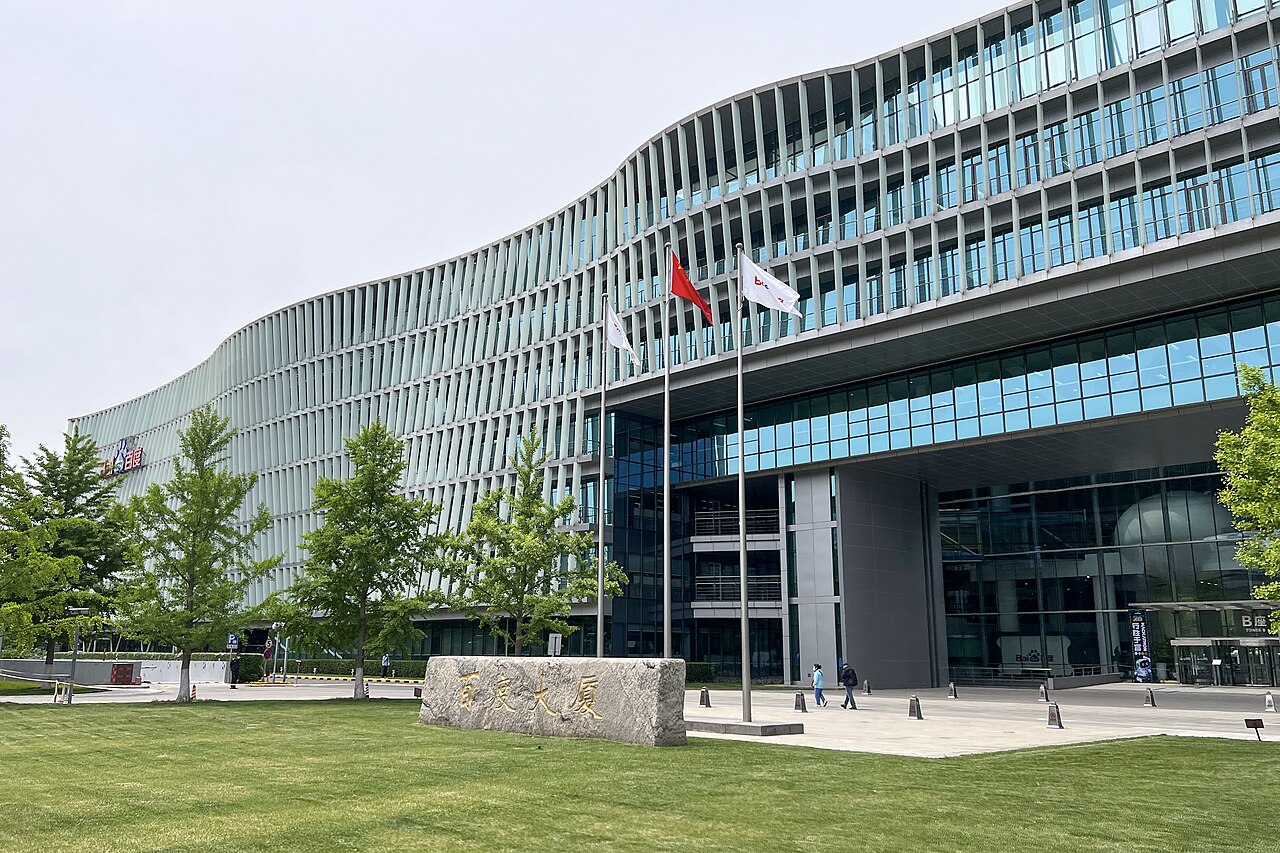
In September 2024 the app was renamed Wenxiaoyan and repositioned as a search assistant, a sign of Baidu folding the brand back into its core business. Baidu has since opened weights for ERNIE 4.5 and lists ERNIE 5.1 (April 2026) under an Apache licence. Robin Li, co-founder, is chief executive.
Kimi and Moonshot AI
Moonshot AI’s Chinese name means “the dark side of the moon”, after the Pink Floyd album; the company launched on its 50th anniversary. Its assistant, Kimi, launched in October 2023 positioned on one clear benefit: reading very long documents, up to 200,000 Chinese characters at launch.
Since Kimi K2 in July 2025 it has also positioned on open weights. Kimi K3 (July 2026) is billed as the largest open-weight model, under a licence that asks the biggest commercial hosts to share revenue. Yang Zhilin is co-founder and chief executive.
Hunyuan, GLM and MiniMax
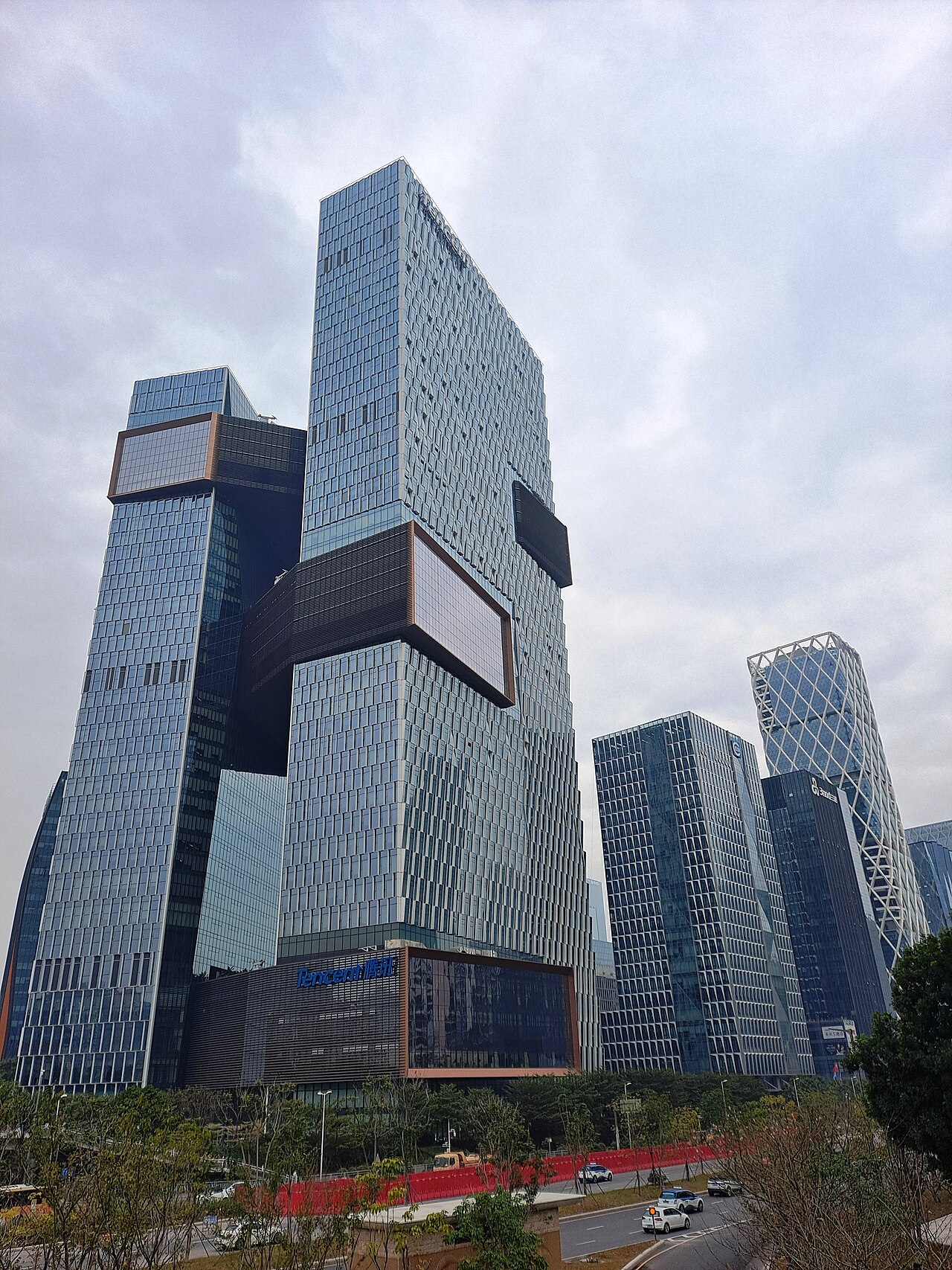
Tencent’s Hunyuan models power its Yuanbao assistant, and the upgraded Hy3 arrived there in July 2026 with a free agent feature. Pony Ma is chairman and chief executive.
Zhipu, a 2019 spin-out from Tsinghua University led by chief executive Zhang Peng, rebranded internationally as Z.ai in July 2025 and listed in Hong Kong in January 2026. Its GLM models use the MIT licence.
MiniMax, the Shanghai firm led by Yan Junjie, listed in Hong Kong the next day. It pairs its M-series models with consumer apps such as Talkie and Hailuo.
The field at a glance
Roles and corporate structures as of October 2026.
| Brand | Parent | CEO | Country | Positioning in a few words |
|---|---|---|---|---|
| ChatGPT | OpenAI (OpenAI Group PBC) | Sam Altman | US | Default assistant for everyone |
| Claude | Anthropic | Dario Amodei | US | Safety-led, ad-free, for professionals |
| Gemini | Google (Alphabet) | Sundar Pichai | US | AI woven into Google services |
| Microsoft Copilot | Microsoft | Satya Nadella | US | Assistant inside work software |
| Grok | xAI, part of SpaceX | Elon Musk | US | Irreverent, “truth-seeking”, inside X |
| Llama / Muse | Meta | Mark Zuckerberg | US | Open weights, now plus proprietary Muse |
| DeepSeek | DeepSeek (High-Flyer) | Liang Wenfeng | China | Low cost, open weights, research-first |
| Qwen | Alibaba | Eddie Wu | China | Developer workhorse, ecosystem gateway |
| Doubao | ByteDance | Liang Rubo | China | Friendly mass-market companion |
| Ernie | Baidu | Robin Li | China | Search-anchored assistant |
| Kimi | Moonshot AI | Yang Zhilin | China | Long context, giant open models |
| Hunyuan / Yuanbao | Tencent | Pony Ma | China | Agents inside the Tencent ecosystem |
| GLM / Z.ai | Zhipu (Knowledge Atlas) | Zhang Peng | China | Open models with academic roots |
| MiniMax | MiniMax | Yan Junjie | China | Multimodal, consumer apps first |
Why do some AI brands have human names and others have codes?
Two naming philosophies show in the table. Claude, Kimi and Doubao sound like someone. GPT and GLM sound like something.
A human name invites a relationship. People warm to products that fit a human schema, and an assistant with a name gets forgiven like a colleague. The trade-off is trust in the hard sense: people tend to rate human-named assistants as friendlier and more creative but less reliable, secure or responsible. A human name also implies the bot will behave like us, which can unsettle as much as reassure.
Codes promise engineering, precision and countable progress, which suits developers who choose by benchmark.
The smartest brands use both layers. Anthropic pairs a human product name with literary tier names. OpenAI kept the code in ChatGPT but gave GPT-6 tiers celestial names. DeepSeek used no person at all, only a whale and a plain descriptive name, and let performance speak.
Is open weights a brand position or a business model?
Both. Releasing a model’s weights says something about the company: we have nothing to hide, build on us, judge us by the code. For a challenger it is also the fastest route to distribution, because every developer who downloads the model becomes a channel.
So open weights cluster among challengers (DeepSeek, Qwen, Kimi, GLM and MiniMax in China; Meta in the US), and the stance shifts as positions change. Meta has added proprietary Muse models beside open Llama. OpenAI released gpt-oss, its first open-weight models since GPT-2, in August 2025.
Licences are fine print with brand consequences. When Kimi asks the largest hosts for revenue, or Llama restricts the biggest users, the word “open” carries conditions buyers should read.
Safety, price and personality as positioning
Safety is Anthropic’s anchor, and the Pentagon dispute put a price on it. Supporters saw principle; the administration saw a supply-chain risk. Either way the position cost something, and cost is what makes a position credible.
Price belongs to DeepSeek, with most Chinese labs close behind. Developers now ask each other which cheap Chinese model to use, itself a brand outcome. The danger: someone can always undercut you. DeepSeek’s defence has been to pair low price with research credibility.
Personality is the newest axis and the most volatile. In April 2025 OpenAI rolled back a ChatGPT update that users found sycophantic, and when it later retired GPT-4o, some users objected because they missed its manner. Grok’s edgy persona wins attention and costs incidents. Claude’s caution reads as principle to some users and as fussiness to others.
Tone of voice used to be a guideline. For AI brands it is a product specification that can break overnight.
Why are AI model names so confusing?
Because research teams name things and marketing teams must sell them. Engineers need precise labels; customers need a few clear choices. The result is Gemini 3.6 Flash arriving before Gemini 3.5 Pro, Qwen3.8-27B beside Qwen3.8-Max, GPT-6 Astra, and Claude Fable 5.1 and Claude Mythos 5.1 sharing one underlying model under two names.
Developers openly mock names that read like part numbers. The cost is real: confused buyers default to the biggest name, helping leaders and hurting challengers.
The fix is tier words that carry meaning. Flash means fast. Opus means big. Astra means top.
When the numbers keep moving, the words do the remembering.
National framing
Neither side sells its chatbots with flags, but national identity seeps in. American labs increasingly speak of American leadership; Chinese labs are often read as proof that China can compete under chip export controls, which is how many commentators framed DeepSeek’s January 2025 moment.
Governments add their own framing, and not only to foreign firms. Australia and the US restricted DeepSeek on official devices, and the US put Zhipu on its Entity List in January 2025. At home, access to Claude Fable 5 and Mythos 5 was suspended from 12 June to 1 July 2026 to comply with US Department of Commerce export controls, which were lifted on 30 June.
For Southeast Asian buyers the practical questions are data residency, licences and which regulator a vendor answers to.
What should a Singapore or Asian brand owner take from this?
Picture a Singapore logistics firm building a customer assistant on whichever model is cheapest this quarter. Its customers never see the model, only the name, voice and behaviour. Five lessons travel.
Name the layer your customer meets. Brand the assistant and treat the model as a replaceable component, as Microsoft does by building Copilot largely on OpenAI’s GPT models.
Decide how human to be, then commit. A named persona earns warmth and loses some perceived rigour; a descriptive name does the reverse. A bank may prefer the latter; a consumer app may want the bun.
Make personality a specification, with tests, because a model swap can change your brand’s tone overnight.
Pick one axis and pay for it. Safety, price, integration or openness each worked for someone here because it cost something visible.
Build for local languages and context. Singapore’s own SEA-LION models, developed by AI Singapore for more than eleven Southeast Asian languages, show that a regional brand can position on understanding rather than size.
Quick answers
What is the most valuable lesson in the branding of AI models? When products converge, positioning does the differentiating. The strongest AI brands each own one clear idea, such as safety, low price, openness or integration, and accept a visible cost for it.
Who owns Grok as of October 2026? SpaceX acquired xAI, Grok’s developer, in an all-stock deal on 2 February 2026, so Grok and X are now part of SpaceX. Elon Musk controls it as SpaceX’s chief executive.
Are Chinese AI models open source? Many leading Chinese labs, including DeepSeek, Alibaba’s Qwen team, Moonshot AI and Zhipu, publish model weights under licences such as MIT or Apache 2.0. Some recent licences add conditions for the largest commercial users, so read the terms.
If you are deciding what your own brand should stand for before a machine starts speaking for it, our brand strategy team can help you choose the one idea worth paying for.