For many people in Vietnam, the day starts with a phin. The little metal filter sits on top of a glass and lets the coffee drip through at its own unhurried pace. It is slow enough to give you time to look around and read the brands: a milk carton in a school bag, a noodle packet on a shop shelf, a café sign above shutters still half closed.
Vietnam is a fine place to watch food brands at work, because the competition is often a street stall a few steps away.
Vietnam’s top 10 F&B brands are the food and beverage names, born in Vietnam, that combine the widest everyday reach with strong recognition and recent growth, from mass-market milk and noodles to coffee chains and beer.
This list is selected on market presence, recognition and growth. We drew on Worldpanel’s Brand Footprint study of the brands Vietnamese households buy most often, Brand Finance’s 2026 brand valuations and company-reported expansion, and we limited it to brands founded in Vietnam, whoever owns them today. It is a curated selection, not a numbered ranking. So we have arranged it the way a hungry person would: as a day, from the first carton to the last beer.
6 a.m.: Vinamilk, the carton that became a habit
Vinamilk is where the day begins for millions of Vietnamese families. It is also the only food or drink company among the country’s ten most valuable brands: in the 2026 Brand Finance Vietnam 100 it sat second overall, at about US$2.6 billion, behind only Viettel.
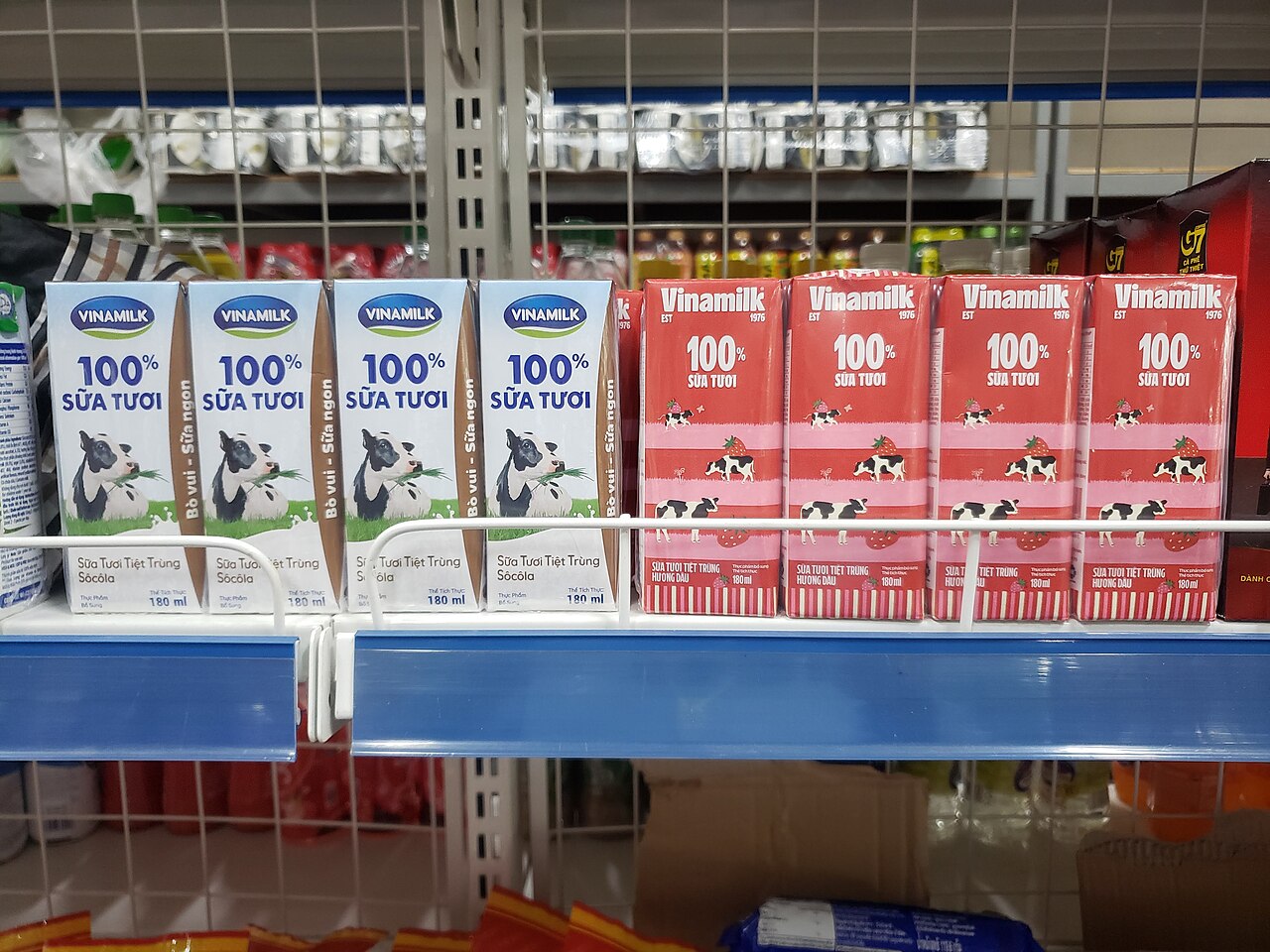
It began in 1976, formed by bringing three southern dairy factories into state hands. Today Worldpanel’s household tracking names it Vietnam’s most chosen dairy brand, a title it has held for twelve years running, with two of its condensed milks, Ông Thọ and Ngôi Sao Phương Nam, alongside it in the dairy top five.
That is the quiet achievement. Vinamilk owns not one breakfast moment but several: the carton, the tin of condensed milk that sweetens the coffee, the yoghurt pot in the afternoon.
In 2023 the company refreshed its brand identity. The risk for any heritage food brand is becoming the one your grandmother bought. A measured refresh keeps the taste familiar while the packaging catches up with the shelf around it.
6.30 a.m.: TH true MILK, the challenger with a field
If Vinamilk is the institution, TH true MILK is the argument. The letters stand for True Happiness, and the brand was born from a crisis: founder Thái Hương resolved to produce fresh milk in Vietnam in the wake of the 2008 Chinese milk scandal.
TH true MILK invites viewers to its farm, the proof of origin the brand has built into its name.
What followed was a branding decision as much as an agricultural one. TH built a vast farm at Nghĩa Đàn in Nghệ An province, on land many considered too arid for dairy, and by the end of 2022 it ran a herd of nearly 70,000 cows.
The name does the rest. “True milk” draws a line against reconstituted milk made from powder, which dominated Vietnam’s liquid-milk market when the project started.
By late 2022 the company was reported to hold around 45 per cent of fresh milk sales in urban Vietnam, and Worldpanel’s household data showed it as the second-ranked urban dairy brand, with the fastest growth of the top five. The lesson for any food brand is blunt. If you can prove where your product comes from, put that proof in the name.
7 a.m.: Hảo Hảo, the noodle in every cupboard
Hảo Hảo is the brand you find in student dormitories, factory canteens and family kitchens alike. It belongs to Acecook Vietnam, which began in 1993 as a joint venture between Japan’s Acecook and Vietnam’s Vifon, and it launched in 2000.
A 30-second spot launching Hảo Hảo Premium, with a larger, richer soup sachet, shows the brand still leading on flavour.
Its genius is flavour, not packaging. The Spicy Sour Shrimp variety, introduced in 2002, gave the brand a taste Vietnamese consumers recognised as theirs, built on Japanese noodle technology. By 2017 Acecook said Hảo Hảo had passed 20 billion packs sold. In 2023 the Vietnam Record Organization certified it as the most consumed instant noodle brand in the country between 2000 and 2023.
The household data agrees. In the most recent Worldpanel Brand Footprint report available to us, Hảo Hảo ranked first among food brands in urban Vietnam and second in rural areas. In 2023 a YouGov-based ranking by Decision Lab placed it eighth among all brands in Vietnam, up nine places.
For a cheap packet of noodles, that is remarkable brand equity.
12 noon: Chin-su, the sauce on the table
Lunch in Vietnam rarely arrives without something to dip it in, and the bottle on the table is often Chin-su. The brand belongs to Masan Consumer, part of the group founded by Nguyễn Đăng Quang, and covers chilli sauce, spice blends and seasonings.
Chin-su’s English-language film for its Original Hot Sauce reflects the brand’s push to sell Vietnamese flavour abroad.
Seasoning is a brutal category for brand-building. Every family has a view on how food should taste, and every market has cheaper alternatives. Chin-su sits in the top five food brands in both urban and rural Vietnam in Worldpanel’s rankings, and Masan’s other seasoning brand, Nam Ngư fish sauce, sits there with it.
The smart move is treating the condiment as a cultural object, not a commodity. Chin-su’s export push, including Chin-su Pho Story and appearances at Foodex Japan, sells Vietnamese flavour abroad rather than one more chilli sauce among hundreds.
2 p.m.: Trung Nguyên, the coffee with a crusade
The post-lunch slump is when Vietnam’s coffee brands earn their keep, and none tells a bigger story than Trung Nguyên. It was founded in 1996 in Buôn Ma Thuột, the highland city at the heart of Vietnam’s coffee country, by Đặng Lê Nguyên Vũ and Lê Hoàng Diệp Thảo.
Its most famous moment came in 2003. The company launched its G7 instant coffee at Saigon’s Reunification Palace with a public blind taste test, and 89 per cent of participants preferred G7 over a rival product.
A challenge to the established instant coffees, staged in the most symbolic building in the south. Theatre, yes. Also excellent positioning.
Trung Nguyên exports to more than 60 countries and has built a premium tier, Trung Nguyên Legend, around the mythology of Vietnamese coffee. After the founders separated, Lê Hoàng Diệp Thảo launched King Coffee as a separate business in 2016, so Vietnam now has two coffee brands with roots in the same story.
The Tao of Coffee, Trung Nguyên Legend’s own film, builds the coffee mythology that underpins its premium tier.
3 p.m.: Highlands Coffee, Seattle format, Vietnamese cup
Ask a group of Vietnamese office workers where to meet for coffee and someone will say Highlands. The chain was founded by David Thai, a Vietnamese American raised in Seattle who has cited Starbucks as his inspiration. Its first café opened in 2002 in Ho Chi Minh City, across from Notre-Dame Cathedral.
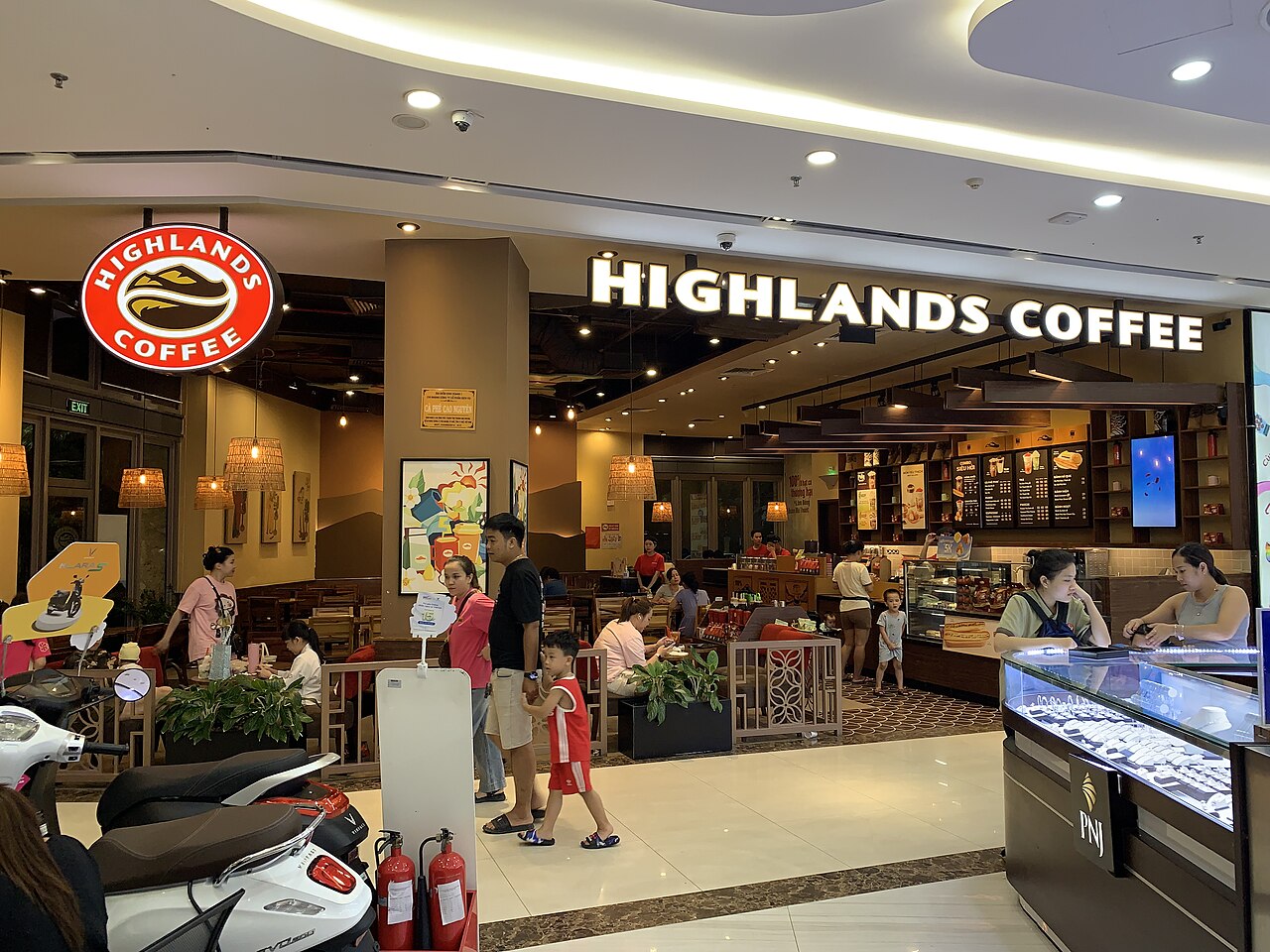
The irony is that Highlands took the Seattle format and won with Vietnamese coffee. Online discussions about why Starbucks never conquered Vietnam keep returning to the same point: many local drinkers prefer robusta-based coffee, strong and sweet, and chains like Highlands, Phúc Long and Trung Nguyên serve it. Highlands paired that local taste with a Western-style café, and the blend has worked.
In 2012 the Philippine group Jollibee bought half the company for US$25 million. Highlands and the noodle chain Phở 24, which Highlands had bought in 2011, now sit within a joint venture controlled by Jollibee. The brand still feels thoroughly Vietnamese.
4 p.m.: Phúc Long, the tea house that scaled overnight
Late afternoon belongs to tea, and to Phúc Long. Established in 1968, it spent decades as a specialty name known mainly in Ho Chi Minh City, popular with young people for its milk tea and fruit teas.
Tea of Love, a film from Phúc Long’s own channel, from the tea house founded in 1968 that Masan scaled from a Ho Chi Minh City favourite into hundreds of outlets.
Then Masan arrived. The group bought 20 per cent in May 2021 for US$15 million and took 85 per cent the following year. Phúc Long went from 72 stores in January 2022 to 860 points of sale by the end of September 2022, many of them kiosks inside Masan’s WinMart+ convenience stores. Around a third of revenue came through delivery apps such as Grab and ShopeeFood.
That is the most dramatic scale-up on this list, and it carries the most risk. A heritage tea brand trades on authenticity and the feeling of a special place. Put it in every convenience store and you gain reach but may lose the magic.
Phúc Long’s answer has been to keep investing in flagship stores, which earn most of its revenue, while the kiosks do the volume. A high-wire act worth watching.
5 p.m.: Cộng Cà Phê, nostalgia as a menu
Cộng Cà Phê proves that a brand concept can be as strong as a product. The chain was founded in Hanoi in 2007 by Linh Dung, a former singer, with its first café on Triệu Việt Vương street.
Cộng Cà Phê’s own film, Cộng in my heart, from the Hanoi chain that has travelled by exporting its nostalgic story as much as its coffee.
The concept is unmistakable: olive-green walls, military memorabilia and a retro look that recalls Vietnam’s subsidy period of the 1970s and 1980s. The coffee matters, but the décor is the brand. Customers are buying an atmosphere, and it is so specific that nobody could confuse it with anyone else’s.
By 2025 the chain ran more than 100 cafés across three continents, including in South Korea and Malaysia. Cộng travelled by exporting a story, not just a drink.
7 p.m.: Pizza 4P’s, the Japanese-Vietnamese hybrid
Dinner brings the oddest entry, and perhaps the most instructive. Pizza 4P’s was founded in Ho Chi Minh City in 2011 by Japanese entrepreneurs Yosuke Masuko and Sanae Takasugi. Vietnamese by birthplace, Japanese in its precision, Italian on the menu.
What makes it a brand rather than a restaurant is the farm. Pizza 4P’s runs its own dairy in Lâm Đồng’s Đơn Dương district, making the cheese that goes on its pizzas, and that farm-to-table story turns cheese into a brand proof point. By 2024 it had 32 locations and had expanded to Cambodia, India, Indonesia and Japan.
Pizza 4P’s marks ten million smiles with a film about the hospitality and home-made cheese at its core.
Picture a Singapore café owner studying 4P’s. The lesson is not “open a pizzeria”. It is that a single owned ingredient, told well, can carry an entire brand across borders.
9 p.m.: Bia Saigon, the beer with a history
The day ends where many Vietnamese evenings do, with a beer. Bia Saigon and its sibling 333 belong to Sabeco, whose origins go back to a brewery founded in Saigon in 1875 by Victor Larue.
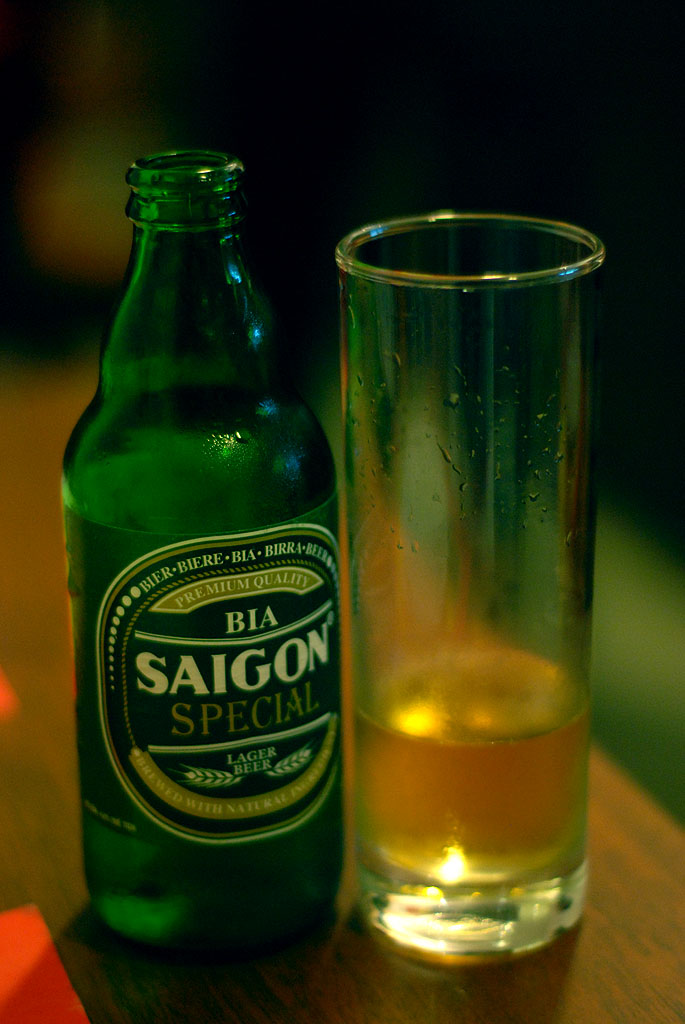
Sabeco once held more than half the national beer market, around 2010, but its share had fallen below 40 per cent by the time Thailand’s ThaiBev paid US$4.8 billion for a majority stake. Since then the brand has been working to regain ground. Worldpanel’s urban data showed Bia Saigon jumping nine places into the top ten beverage brands, with consumer reach up more than half.
Bia Saigon trades heavily on local pride. Its challenge is that the owner is now foreign and young drinkers are curious about everything. Heritage helps. It is not enough on its own.
What do Vietnam’s top F&B brands have in common?
A few patterns run through the day.
Local taste beats global format. Hảo Hảo’s sour shrimp, Highlands’ robusta, Chin-su’s chilli and Cộng’s subsidy-era cafés all win by feeling unmistakably Vietnamese.
Research on Vietnamese consumers has long found that pride in buying local lifts the intention to buy domestic products, and milk is one of the categories where that effect has been measured. The best brands here do not shout “Made in Vietnam”. They taste like it.
Ownership is more international than it looks. Hảo Hảo began as a Japanese joint venture, Highlands is controlled by a Philippine group, Bia Saigon by a Thai one, and Pizza 4P’s was founded by Japanese entrepreneurs. Customers rarely mind. Brand identity, not the cap table, decides what feels Vietnamese.
And proof outperforms promise. TH has its farm, Pizza 4P’s its dairy, Trung Nguyên its highland origin, Vinamilk its half-century of trust. Each can point to something real.
Why don’t Vietnamese food brands travel further?
It is a question that comes up again and again among coffee lovers abroad. Vietnam is one of the world’s great coffee producers, yet international shoppers know the beans better than the brands. Some suspect the dark, sweet roast style hides lower-grade beans; others champion Vietnamese robusta as an undervalued specialty.
The honest answer is that most of these brands were built for the home market first, and the home market is huge and demanding. The ones that have travelled, Cộng, Pizza 4P’s and Trung Nguyên, did it by exporting an experience or a story. Expect more to follow as Masan, Acecook and others build their export businesses.
Quick answers
What is the most valuable F&B brand in Vietnam?
Vinamilk, valued at about US$2.6 billion in the 2026 Brand Finance Vietnam 100, where it ranked second among all Vietnamese brands. It is the only food or drink brand in the country’s top ten by value.
What is the most popular instant noodle brand in Vietnam?
Hảo Hảo, made by Acecook Vietnam since 2000. It has ranked first among food brands in urban Vietnam in Worldpanel’s household data and was certified as the country’s most consumed instant noodle brand from 2000 to 2023.
Who owns Highlands Coffee?
Highlands Coffee was founded by Vietnamese American David Thai. The Philippine group Jollibee bought half of it in 2012 and now controls it through a joint venture.
Want your own food or drink brand to earn a place on a list like this? Start with a sharper brand strategy.






