The lights are already low. You press play, and before a single frame of the film you chose, the room fills with two soft knocks and a bloom of sound that seems to open like a curtain. Ta-dum. You have heard it hundreds of times. You could hum it in the dark.
The knock is a wedding ring tapping a wooden cabinet.
Netflix spent about a year finding it. Sound designer Lon Bender and the product team worked through twenty or thirty candidates before settling on that knock, a slowed-down anvil and a reversed swell taken from an old guitar recording. A goat’s bleat was in the running. Imagine.
Sonic branding is the deliberate design of the sounds a brand makes, from a few-second sonic logo to music, interface tones and voice, so that people recognise the brand, and feel something about it, without needing to look.
That last clause matters most. A logo needs your eyes. A sound simply arrives.
What counts as sonic branding?
Think of it as an orchestra rather than a single instrument.
At the front sits the sonic logo, sometimes called an audio mnemonic: a short melodic signature that closes an advert or opens a programme. Behind it come the brand theme, a longer piece of music from which shorter cues can be cut, and the interface sounds a product makes when it starts up, confirms a payment or finds a message. Further back still are the voice of the brand on phone lines and in apps, and the environment: the playlist in a shop, the chime of a lift, the hum of a car.
Most companies have all of these whether they planned them or not. The difference between noise and sonic branding is intention.
The tyranny of three seconds
Every good sonic logo is a miniature composed under pressure. Netflix allowed roughly three seconds. The company wanted something that suited the click-and-play impatience of streaming, that felt like cinema rather than a computer booting up, and that said “Netflix” without saying the word. When the team tested finalists on thousands of people, the word most often attached to the winner was “movie”.
Brian Eno faced a famous version of the same squeeze in the mid-1990s. Microsoft’s agency sent him a list of adjectives, inspiring, universal, optimistic, futuristic, sentimental, emotional, and a final instruction: it must last three and a quarter seconds. He wrote 84 pieces of music before he was done, on a Mac, as he later admitted with some glee.
The Windows 95 start-up sound that shipped ran to roughly six seconds. Nobody minded.
Intel had a harder problem. In 1991 it launched “Intel Inside”, an early experiment in branding a component nobody would ever see. Three years later the Austrian composer Walter Werzowa gave that invisible chip a voice: the bright, five-note sign-off that has closed countless computer adverts since.
A product you cannot see, made audible in about three seconds. That is the craft at its purest.
Why does a sound stick when a logo fades?
Because ears never close. You can look away from a billboard. You cannot un-hear a ringtone on a crowded train.
The Nokia tune proves the point. It began as a phrase from Gran Vals, a solo guitar piece written by the Spanish composer Francisco Tárrega in 1902. It appeared on the Nokia 2110 in 1994 as one ringtone among many and was renamed the Nokia tune in 1998. By one 2009 estimate it was being heard around 1.8 billion times a day.
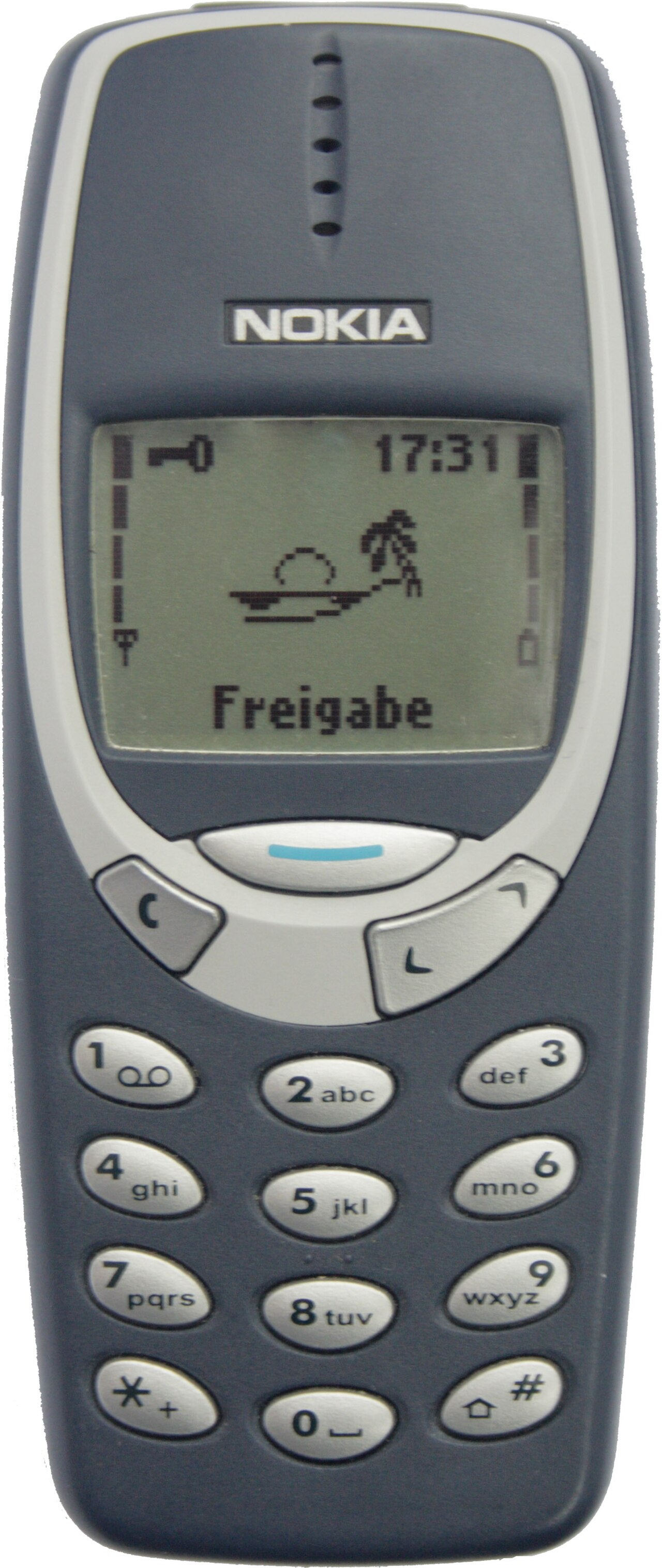
Millions of people who have never heard of Tárrega can hum a bar of his music.
Repetition explains part of it. Fit explains the rest.
Play French music by the wine shelves and French bottles move; switch to German music and the German ones do. Sound does not merely decorate a choice. It quietly frames it.
That is why the right sound feels inevitable and the wrong one grates. A bank that signs off with a frantic synth riff is not being bold. It is being confusing.
The sound of something working
The humblest sonic branding is functional, and often the most loved.
When Takafumi Fujisawa designed the start-up sound for Sony’s original PlayStation in 1994, he worked within a tiny slice of memory and wanted something that would survive any television speaker. The sound had a job: to tell players the machine was working and the disc had been read. If the disc failed, a reversed swoosh looped instead, so you knew at once that something was wrong.
He also tried a version with a whispered “PlayStation” over the music. The team chose the wordless one: with the voice, the machine seemed to be talking at the player, and silence let the music do the welcoming.
Ask people which start-up sound they love most and the answers turn startlingly emotional. Windows 95, for those who grew up with it, meant the computer had booted without trouble, which in those days was not guaranteed. The old Mac chord gave others chills, decades later.
These are interface tones, a few seconds of audio. Yet they carry the memory of a bedroom, a school computer lab, a first machine.
Function first. Feeling follows.
Consistent, not identical
The cleverest sound systems hold one idea steady and let everything else change.
Samsung introduced “Over the Horizon” on the Galaxy S II in 2011, a six-note tune composed by Joong-sam Yun. Those six notes have stayed put ever since, while the arrangement changes with the product line: Jacob Collier’s version in 2017, a full orchestra recorded at Abbey Road in 2019, the Korean pianist Yiruma in 2021, a big-band jazz take in 2025. Each one is new. Each is unmistakably Samsung.
Behind the scenes of Samsung’s 2019 orchestral recording of Over the Horizon: same six notes, new arrangement.
McDonald’s did something similar with five notes. Its “I’m lovin’ it” campaign, the company’s first global campaign, was unveiled in Chicago in June 2003 and first launched in Munich that September as ich liebe es. The jingle has survived more than two decades of changing tastes, largely in a whistled version that needs no lyrics, no language and no singer.
Netflix stretched its own signature without breaking it. In 2020 Hans Zimmer composed a sixteen-second version for cinemas, with trembling strings and rumbling percussion, because a few seconds felt abrupt before a feature film. It still lands on the familiar ta-dum.
THX shows the long view. James A. Moorer created the Deep Note in late 1982, thirty computer-synthesised voices sliding from a murmur into a vast chord, and it premiered with Return of the Jedi in 1983.
THX’s 2026 Deep Note trailer: bigger and richer, still the same sound.
In 2015 he rebuilt it with about eighty voices for modern surround-sound systems. Bigger, richer, the same sound.
Where the ear is the only screen
Some moments are audio-first by nature, and they are multiplying.
Electric cars are almost silent at low speed, which is dangerous for pedestrians. Since July 2019, new types of electric and hybrid car approved in the European Union have needed an acoustic warning system that sounds up to 20 km/h, and since July 2021 every new quiet vehicle registered there has needed one. American rules followed a similar path. Car makers that once tuned exhaust notes now compose hums.
Railways have been at this for decades. In March 1989 melodies written by Yamaha replaced harsh departure bells at Shinjuku and Shibuya stations in Tokyo. Ebisu station took the theme from The Third Man, a tune used in advertising for Yebisu beer and fitting for a station that began as a shipping point for the neighbouring brewery. In July 2010 Shimbashi briefly played a Suntory whisky jingle, the first time JR East used a melody for advertising.
Then, in February 2025, JR East announced it would phase out many local melodies in favour of standard ones, because single-person train crews cannot manage station-by-station tunes. A sound you borrow can be taken back. A sound you own stays yours.
Voice assistants, smart speakers and earbuds add more eyes-free moments every year. When the only interface is a voice and a chime, the brand has to live in sound or not at all.
Can you actually own a sound?
Sometimes. Courts and trademark offices will register a sound when it plainly identifies who is behind it. NBC’s chimes and the MGM lion’s roar are registered marks in the United States. The Deep Note was registered in 1992.
China began accepting applications for sound trademarks in May 2014, and in 2018 Tencent became the first company to win one through the courts, after a four-year fight over the rapid “di-di-di-di-di-di” alert of its QQ messenger.
Ownership has limits, though. Harley-Davidson applied in 1994 to register the potato-potato rumble of its V-twin engine. Rival manufacturers objected that their engines sounded much the same, and after six years of wrangling Harley withdrew the application in 2000. A sound that belongs to a whole category belongs to nobody.
The lesson for any brand is to aim for distinctive rather than generic. Apple’s streaming service took that route in November 2025, swapping its plain piano-chord intro for a new sonic logo composed by the musician Finneas, in a five-second version for series and a twelve-second one for films. A chord is a sound. A signature is a brand.
How should a smaller brand begin?
Picture a Singapore clinic chain with a dozen branches, a booking app and a call centre. It already makes plenty of noise: hold music bought from a stock library, the default notification ping on its app, a random track behind every social video. None of it says anything about the clinic.
A sensible path looks like this.
- Audit what you already sound like. Phone lines, app tones, video endings, shop playlists, the payment beep. Write it all down, however mundane.
- Choose the feeling before the notes. Agree on a few words for how the brand should sound, then brief a composer with those words and a hard limit on length, as Microsoft did with Eno.
- Design for the worst speaker. Test on a cheap phone, in a noisy room, at low volume. Fujisawa wrote for any television; you are writing for a phone in a food centre.
- Test blind. Play shortlisted sounds without the logo and ask people what words come to mind. Keep the one whose words match your strategy.
- Build a family, not a file. Create a core mnemonic plus variations: short and long, urgent and calm, celebratory and reassuring.
- Use it relentlessly, then protect it. Consistency builds recognition. Registration, where the sound is distinctive enough, keeps it yours.
None of this needs a Hollywood composer. Just the discipline you would bring to a logo, applied to the ear.
Encore: quick answers
What is a sonic logo?
A sonic logo is a short, distinctive sound or melody, usually a few seconds long, that identifies a brand in the way a visual logo does. Netflix’s ta-dum and Intel’s five-note sign-off are well-known examples.
How long should a sonic logo be?
Most last between two and five seconds, short enough to sit at the start or end of a video, app action or advert. Brands often add longer versions for cinema, events or brand music.
Can you trademark a sound?
Yes, in many countries, provided the sound clearly identifies a single company rather than a whole product category. Registered examples include NBC’s chimes, the MGM lion’s roar and THX’s Deep Note.
If your brand has a look but not yet a sound, let’s work out what it should sound like together.






