Most advertising is forgiven the moment it ends. A jingle fades, a billboard comes down, a clever line about joy slips quietly out of memory, and nobody writes in to complain that their life was not, in fact, transformed by a fizzy drink.
A brand promise is different. Customers carry it out of the shop and test it against their own experience, again and again, for as long as they buy from you.
A brand promise is the specific, repeatable commitment a business makes about what every customer will experience, stated plainly enough that customers can check whether it was kept, and backed by the operations that keep it.
That last clause is where most promises die. Writing the sentence takes an afternoon. Keeping it takes payroll, logistics, training, software and the occasional painful refusal of a profitable shortcut.
The audit begins the instant the first customer walks in. It never closes.
The advertisement that comes back to check
Consider who does the checking. Not a regulator, usually. Not a competitor. The auditor is the person holding a parcel that arrived a day late, or a refund that somehow needed three phone calls.
Each of them compares the words with the event, privately, and files a verdict. Enough verdicts and you have a reputation.
This is why the most durable promises tend to be almost embarrassingly concrete. When Mars introduced the line about M&M’s melting in your mouth and not in your hand in 1954, it was making a claim a five-year-old could test on a hot afternoon.
The product had been built around that claim long before the copy existed. Forrest Mars and Bruce Murrie launched their sugar-shelled chocolate in 1941, and it went to war in American soldiers’ pockets because the shell stopped it melting. The slogan simply told the public what the engineering already guaranteed.
Concrete promises are frightening. That is the point. Vague ones cost nothing to make and nothing to break, so they buy nothing either.
“Quality you can trust” will never be audited, because there is nothing to measure. Nor will it ever be believed.
What is the difference between a brand promise and a tagline?
People ask this constantly, and the confusion is understandable, because sometimes the two share a sentence. A tagline is a piece of copy. A brand promise is a commitment the whole organisation has signed. The tagline may express the promise, paraphrase it, or ignore it entirely.
A useful test: if you changed the tagline tomorrow, would anything in operations need to change? If not, it was copy.
FedEx’s famous line about parcels that absolutely, positively had to be there overnight ran as advertising from the late 1970s into the early 1980s. The promise underneath it was a network.
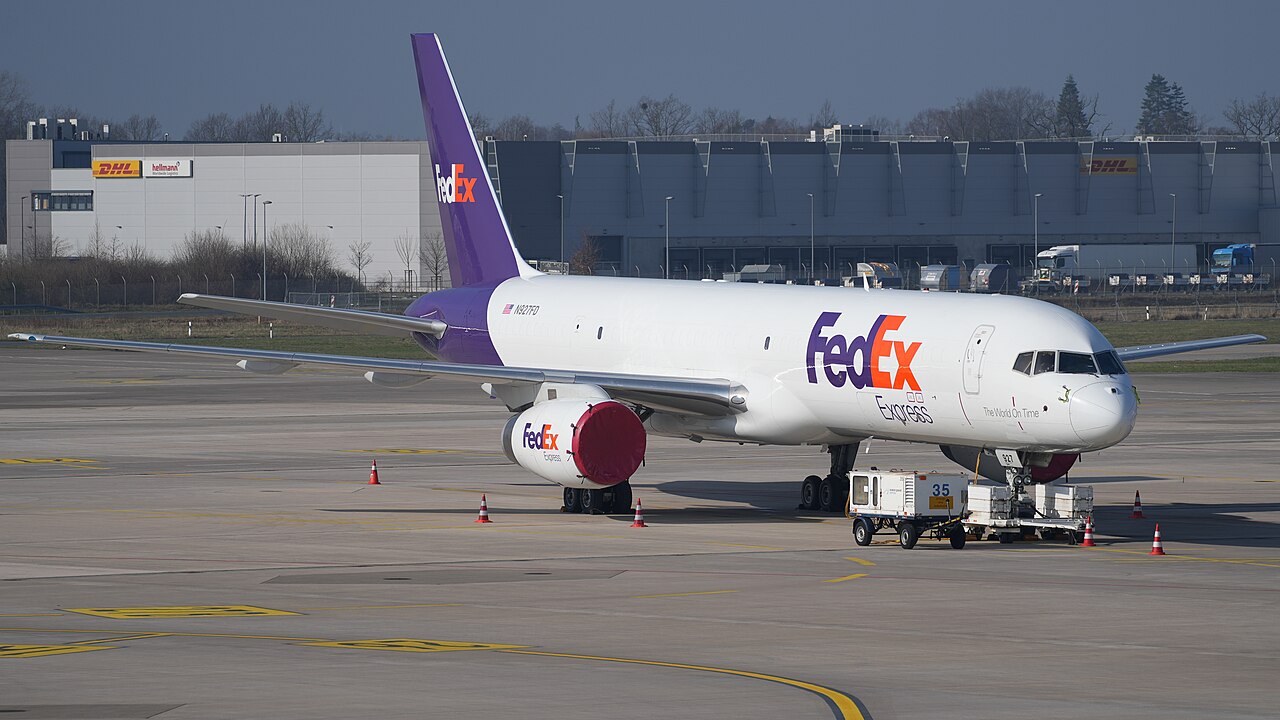
Federal Express had begun flying overnight in April 1973 with fourteen small jets, and the Memphis Super Hub, opened in 1981, was the machinery that made “overnight” more than a hope. Package tracking and a money-back guarantee for late deliveries followed. The promise became something a customer could, in effect, invoice.
The line could have been retired at any point. The hub could not. That asymmetry tells you which one was the promise.
Mission statements and value propositions muddy things further, so here is a rough sorting. Purpose is why you exist; mission is what you are setting out to do; the value proposition is why a buyer should pick you over the alternatives.
The promise is what every customer can count on, every time. It is the only one of the four that customers can catch you breaking.
Promises that built companies
Some promises are the business. They come first, and the organisation is assembled around them like scaffolding round a spire.
Singapore Airlines took to the air on 1 October 1972. Its agency, led by Ian Batey, gave it a line, A Great Way to Fly, that would have been empty bragging had the airline not set out to prove it.
The Singapore Girl was a symbol, and a curriculum for keeping A Great Way to Fly.
The proof sat largely in the cabin. Cabin crew training runs to about fourteen weeks, among the longest in the industry, and the Pierre Balmain sarong kebaya gave passengers a visible standard to hold the service against. The Singapore Girl was a symbol, certainly. She was also a curriculum.
Safaricom’s M-Pesa, launched commercially in Kenya in March 2007, made a promise that sounds modest now: you can send money with a text message. Keeping it required something far less glamorous than software. It needed agents: airtime sellers and corner shops where people could turn cash into mobile balance and back again.
Without the agents the promise was a demo. With them it changed how a country moved money.
Zappos told shoe buyers they could send things back free of charge, and over time stretched the window from 60 days to a full year, with shipping paid both ways. A company selling footwear online on those terms has quietly committed itself to an expensive returns operation and a tolerance for customers who order two sizes and keep one. Strip the returns policy out and you have a different company.
Avis, in 1962, did something unusual: it built a promise out of a weakness. Doyle Dane Bernbach’s campaign admitted that Avis was only number two to Hertz and argued that this was precisely why it tried harder. Within about a year the company had gone from losing money to making it.
Avis turned second place into a promise its staff could be held to.
The line worked because it gave staff a standard and gave customers permission to notice dirty ashtrays. A promise of effort is still a promise that can be audited.
Promises that broke companies, or nearly did
Domino’s spent years promising American customers their pizza within thirty minutes or money off. The guarantee was easy to understand, easy to check and, in the end, impossible to keep without someone paying for it on the road.
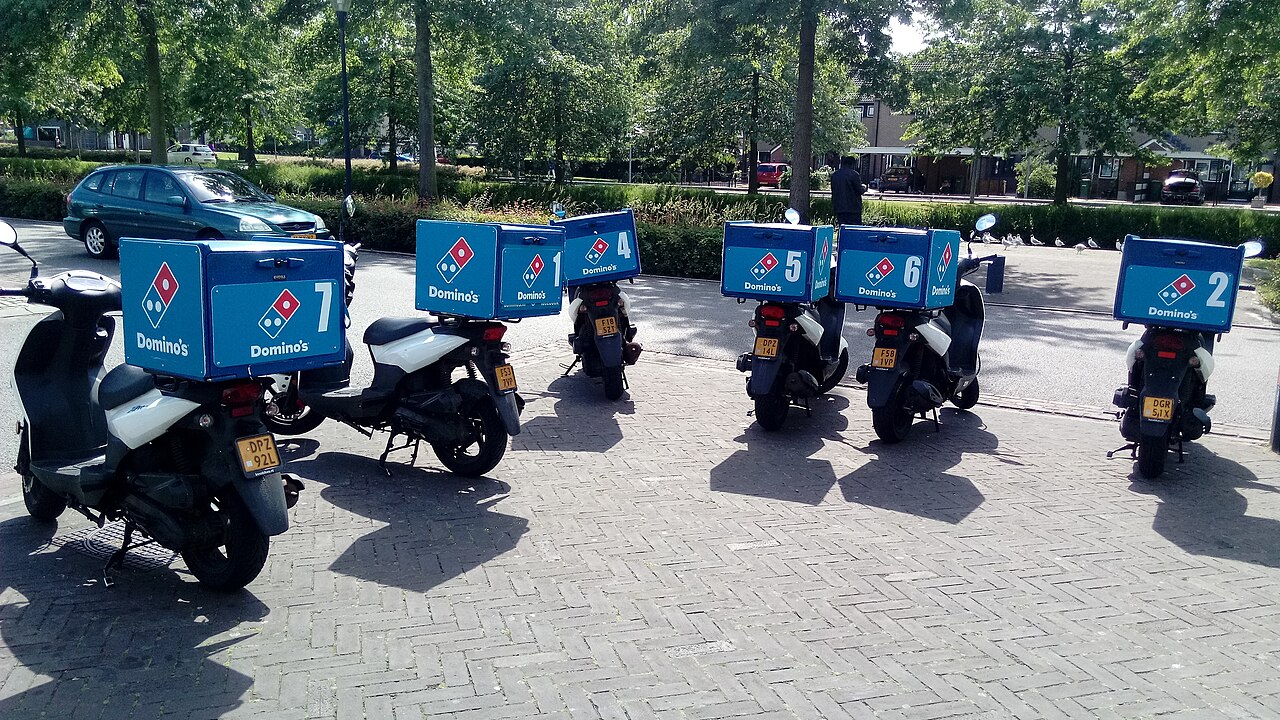
In December 1993, days after a St Louis jury awarded Jean Kinder US$78 million in punitive damages over a 1989 crash in which a Domino’s driver ran a red light, the company dropped the guarantee in the United States and replaced it with a refund for any dissatisfied customer. The promise was clear. What it asked of drivers was the problem.
The lesson is uncomfortable. A promise can be honest on the day it is written and turn dangerous as conditions shift, because the cost of keeping it lands on people the marketing team never meets.
Volkswagen’s failure was of another order. It had sold its diesels as “Clean Diesel”. On 18 September 2015 the US Environmental Protection Agency said the company had fitted cars with software that cheated emissions tests, and Volkswagen soon admitted that about 11 million diesel vehicles worldwide carried it. The chief executive resigned within days; in 2016 the company agreed a US settlement worth US$14.7 billion.
Nothing here had been strained by circumstance. The promise had never been kept at all, only sold as though it had, and when the audit came it was conducted by regulators with laboratories.
Between those poles sits a slower kind of breakage, where the promise survives in public while being quietly paid for by whoever delivers it. Japan’s convenience stores built their name on never closing.
In early 2019 Mitoshi Matsumoto, who ran a 7-Eleven in Higashi-Osaka, began shutting his store from 1am to 6am. He had been working fourteen-hour days since his wife’s death and could not find enough staff.
The company ended his franchise, and a court later ordered him to hand the store back and pay damages. 7-Eleven defended its promise. The awkward question was who had been keeping it.
Who pays for the promise?
Every promise carries a bill, and someone should insist on reading it.
It helps to treat a promise as three separate acts. Marketing makes it. Managers enable it, with staffing, tools and targets. Frontline people keep it, usually at the worst possible moment.
Most broken promises are not lies. They are the middle act, skipped.
By 2017, drivers at Japan’s Yamato Transport were struggling to take a lunch break. Their union pushed management to accept fewer parcels; Yamato dropped its noon-to-2pm delivery window and announced its first rise in basic charges in 27 years.
Customers had been enjoying a precision that drivers were subsidising with their own time. Rewriting the promise looked like a retreat from the outside. From the inside it was the first honest invoice in years.
Some companies choose to price the promise in public. In April 2018, ahead of its stock-market listing, Xiaomi’s chief executive Lei Jun pledged that the company’s net profit margin on hardware would never exceed 5 per cent, and that anything above it would be returned to users. Whatever you think of it as strategy, it is a promise designed to be audited, issued by a company about to start publishing its accounts.
Others discover that a bold promise can be cheaper than it looks. In January 2009, with American layoffs spreading, Hyundai told buyers that if they lost their job within a year of purchase, it would take the car back. Only around 350 people ever used the offer.
Hyundai’s US sales rose 8 per cent that year while most rivals’ fell sharply. Such is the arithmetic of a confident promise: the reassurance was worth far more to buyers than it cost to honour.
How do you write a brand promise you can actually keep?
Start at the other end. Before drafting a word, list what your operations already do reliably, better than competitors, at a cost you can sustain. That list is your raw material. A promise built from aspiration alone will be broken by Tuesday.
Then put each candidate through some hard questions.
- Could a customer tell, unaided, if it was kept? If establishing the answer needs a survey, the promise is too vague.
- Who pays when it is hard to keep? Name the team. If the honest answer is “the most junior people, unpaid”, rewrite it.
- What would you have to refuse? A real promise rules out some revenue. If yours rules out nothing, it commits you to nothing.
- Does it hold at peak? A promise that survives a quiet Tuesday and collapses in the week before Chinese New Year was never a promise.
Picture a small aircon-servicing firm in Jurong promising a technician at your door within four hours. That sentence is excellent marketing and terrifying operations. It decides how many vans the firm needs, where they park overnight, how jobs are dispatched and what happens when three units fail in the same condominium during the June heat. Write it only after the dispatch board can carry it.
Wording matters less than people think. But it matters. Keep the promise to one idea, in words a customer would use, without the comfortable fog of “solutions” and “excellence”. The braver the specifics, the more seriously it will be taken, by customers and by your own staff.
Finally, decide how you will audit yourself before your customers do it for you. Track the one or two measures that map directly to the promise, such as on-time rate or first-visit fix rate, and read complaints as evidence rather than noise.
A promise you measure is a promise you can repair. One you merely repeat will be measured anyway, by customers, in public, with stars.
Before you sign
Is a brand promise the same as a slogan?
No. A slogan is advertising copy that can change with each campaign, while a brand promise is the commitment underneath it that operations must keep. Some slogans state the promise; many do not.
Does a small business need a brand promise?
Yes, and small firms often keep promises better because fewer people stand between the words and the work. The promise should be narrow enough that the team can deliver it every time, including on its worst day.
What happens when a brand breaks its promise?
Customers lower what they expect and what they are willing to pay, and they tell other people. A single lapse handled honestly can be repaired, but a promise that is routinely broken turns every future advertisement into a claim nobody believes.
Write only the promise you are prepared to be audited on, then build the business that passes; Firefish’s brand strategy work starts exactly there.






