The towel arrives folded, steaming, held out with a pair of tongs. You unroll it, press it to your face, and for a second the cabin disappears.
What you notice is not the heat. It is the smell: soft, floral, faintly green. On Singapore Airlines that smell has a name, and it was designed to be remembered long after you have landed.
Smell is the most neglected of a brand’s senses, and arguably the most powerful. Scent branding is the deliberate use of a distinctive smell, in a space, on a product or on packaging, so that people associate that fragrance with a brand and recall the brand when they meet the smell again.
Logos can be ignored and jingles muted. Breathing is not optional. That makes scent an intimate medium, and an easy one to get wrong, as airlines, airports, hotels, bakeries and carmakers have each discovered.
Why does smell go straight to memory?
Anyone who has caught a whiff of a grandparent’s soap in a stranger’s bathroom knows the feeling. Smell skips the polite queue of conscious thought and arrives with a memory already attached.
For brands, the useful consequence is a practical one. When a product itself carries a scent, such as a scented pencil or a facial tissue, people remember more about that brand’s other features, and the effect can hold for up to two weeks. Product scent outperforms a fragrance merely floating in the room, because the smell is bound to one object rather than spread across everything in sight.
That distinction shapes everything below. A smell in the air creates a mood. A smell on a thing creates a memory of that thing. The best scent strategies use both, and know which is doing which job.
The airline that made a smell part of the uniform
Singapore Airlines is the textbook case. Its cabins have long been associated with an earlier house fragrance, often named as Stefan Floridian Waters, though that scent’s history is poorly documented. What matters is the principle behind the story: the same smell meeting passengers again and again across a flight, until it feels like part of the uniform.
The well-documented chapter begins in 2022, when the airline introduced a signature scent, Batik Flora, created with the Singapore perfume label Scent by Six. It draws on six of the ten native flowers in a refreshed batik motif, itself an update of a print that has appeared on the cabin crew’s sarong kebaya since 1968. The flowers include Simpoh Lak, White Kopsia and Aquatic Ginger.
Singapore Airlines introduces Batik Flora, the signature scent that links its native-flower motif to lounge, hot towel and gift shop.
Batik Flora scents the airline’s service centre at ION Orchard and its SilverKris lounge at Changi Terminal 3. It returned to the cabin when hot towels came back from September 2023 after a long pandemic absence. It is also sold as reed diffusers, pillow mists and eau de toilette, so passengers can take the cabin home.
A common confusion is worth clearing up. In 2020 Singapore Airlines announced Business Class amenity kits from the British perfumer Penhaligon’s, filled with lip balm, hand lotion and facial mist from its Quercus line. That is a co-branded product partnership. It is not the airline’s signature scent, which is its own.
Look at the logic. One smell, linked to a pattern, linked to native flowers, linked to the uniform, carried through lounge, towel and gift shop. Every touchpoint repeats the same story in a different sense.
Changi and the air of a nation
Airports are where national brands make their first impression, and Changi chose to make part of it through the nose. The Changi Scent debuted in 2016, inspired by the airport’s gardens and the orchid, with notes such as geranium, mint, citrus and Asian spices. It is released at the doors of departure halls and in other key spaces, and sold as candles and reed diffusers.
Airlines across Asia, the Middle East and beyond use the same tool. All Nippon Airways uses a forest-inspired scent at check-in counters, in lounges and in its towel service on international flights, and has handed out scented cards so passengers can carry it with them. Cathay Pacific worked with the scent company Air Aroma on a fragrance for its lounges around the world, and the same firm has created scents for Etihad and Abu Dhabi Airport.
In September 2024 Emirates teamed up with the Irish brand Voya to offer bespoke eau de toilette in First and Business Class. Air France commissioned the perfumer Francis Kurkdjian to create AF001 for its lounges and cabins.
Notice the split. Some brands commission an original scent and own it outright. Others borrow prestige from an established perfumer. Both are legitimate, but only the first builds a smell that belongs to you and nobody else.
The lobby as a perfume bottle
Hotels arrived early. In 2006 Westin launched White Tea, a scent it had spent almost a year developing, with notes of geranium and freesia chosen for their relaxing qualities. It introduced the fragrance through a scented strip in a print advertisement, a first for a hotel company, before releasing it in Westin lobbies worldwide. Guests asked to buy it, a waiting list formed, and Westin responded with a retail collection of candles, diffusers and potpourri.
That sequence matters. When customers ask to buy your ambient scent, it has crossed from atmosphere into asset.
Singapore’s malls learned the same lesson. ION Orchard developed a signature scent of 20 notes drawn from herbs, fruits and flowers, a nod to the site’s history of nutmeg, pepper and fruit orchards; shoppers tend to pick out cardamom and bergamot. Its management has described the scent as an expression of the mall’s personality, and some shoppers have asked to buy a bottle. Across Southeast Asia, hotel groups such as Shangri-La use signature scents throughout their halls, and lemongrass has become a regional shorthand for calm.
Scent can also travel to places a brand does not own. In 2023 Nespresso turned Orchard station on the Thomson-East Coast Line into a coffee-scented experience to promote its Vertuo Pop machine. The reasoning was hard to fault. Coffee is bought on aroma, so a coffee machine is best sold through the nose, in a busy underground station where commuters have nothing else to do but breathe.
Picture a boutique hotel in Tiong Bahru with twelve rooms and a limited budget. It cannot outspend Westin.
It can decide that guests should smell the same fragrance in the lobby, in the bathroom amenities and on a card tucked into the checkout bill. Three touchpoints. One memory.
Smells that sell, and smells that sabotage
Food brands have the most to gain and the most to lose, because smell and taste are inseparable.
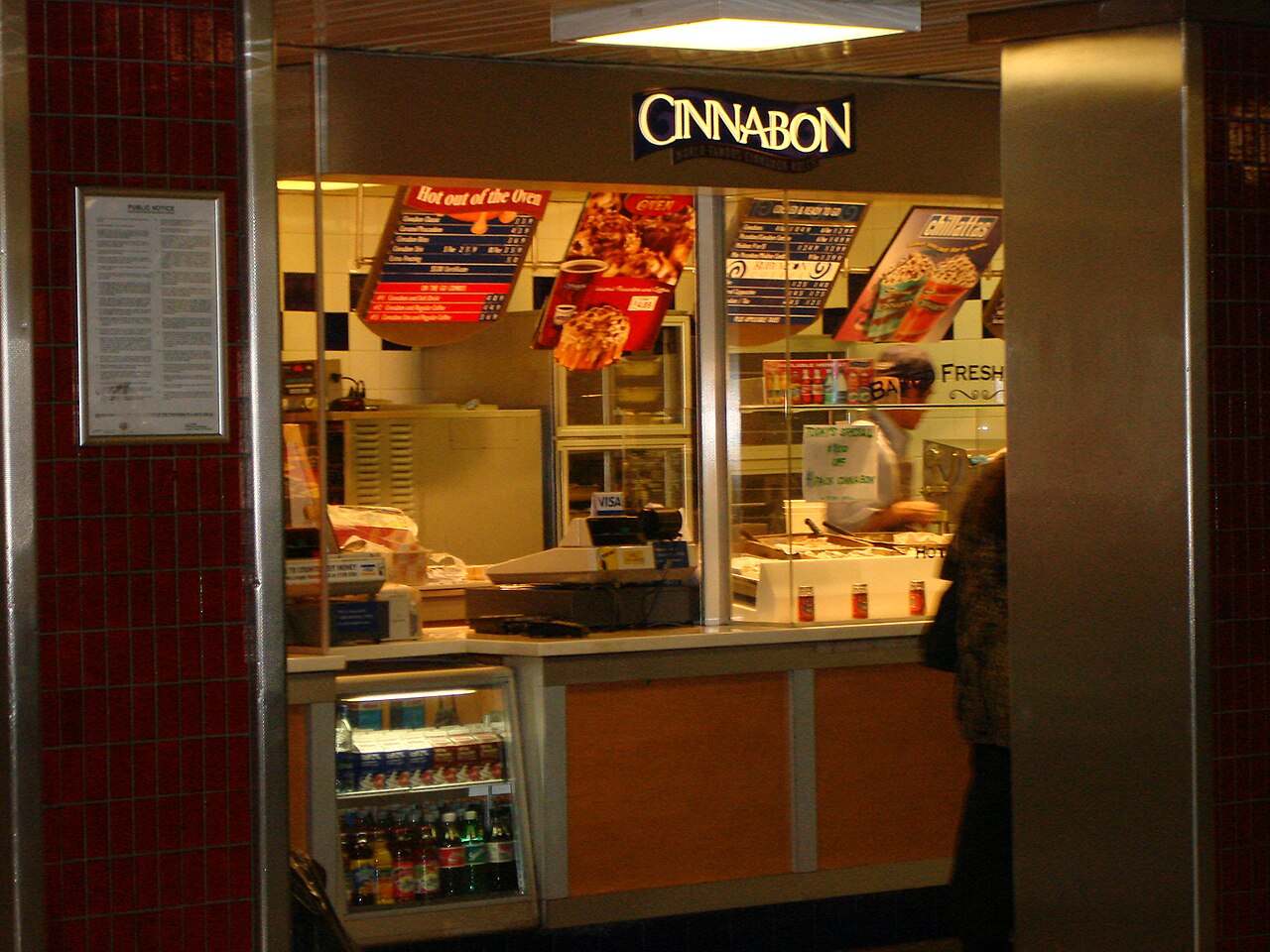
Cinnabon is the clearest example of aroma used on purpose. It places ovens near the front of its stores so the scent of baking cinnamon rolls drifts outward, and some outlets warm extra cinnamon sugar on baking trays to keep the smell going. One franchise owner described aroma as the brand’s greatest asset. Auntie Anne’s took the logic to its playful extreme in August 2024 with a pretzel-scented perfume called Knead, which sold out online within ten minutes.
Now the cautionary tale. In 2008 Starbucks found that the smell of its grilled breakfast sandwiches was overpowering the coffee aroma in its stores, and coffee sales were suffering. The company spent months reworking the sandwiches, with leaner bacon and lower cooking temperatures, before bringing them back with a gentler smell. A coffee brand whose shops stopped smelling of coffee had a branding problem, not a menu problem.
The lesson is simple. Before adding a scent, check what your space already smells of. You might already have a signature smell, or a smell that’s quietly working against you.
The smell of a car you can’t afford
Luxury carmakers treat smell as a quality signal, much as they treat the sound of a closing door.
In 2000 a number of Rolls-Royce owners complained that their newer cars did not smell like a Rolls-Royce. Moulded plastic had replaced much of the wood in older interiors, and the familiar scent had gone with it. A specialist in Luton, working with fragrance experts, analysed a 1965 Silver Cloud and found that a major part of the classic smell came from wood rather than leather. The recreated scent was applied to newer cars.
Others went further. Audi formed a “nose team” in 1985 to test components and materials by human smell. Jaguar marketed a perfume in 1989 that was designed to evoke its car interiors. Mercedes-Benz’s smell specialists worked on a new leather scent in 2002, because the traditional one relied heavily on chemicals that were by then banned.
For a car brand, then, smell is not decoration. It is evidence. Buyers who can’t articulate what is wrong with a cabin will still feel that something is.
Can you trademark a smell?
Rarely, and with difficulty. The best-known modern example is Play-Doh.
In 2018 Hasbro registered the toy’s scent with the US Patent and Trademark Office, describing it as a sweet, slightly musky, vanilla-like fragrance with hints of cherry, combined with the smell of salted, wheat-based dough. Generations of children had already done the brand-building. The trademark simply recognised it.
Scent marks remain uncommon, because a smell is hard to describe precisely on paper and many smells are simply how a product works. Trademark offices began registering more olfactory marks in the 2000s, but they remain a small niche. Copyright is murkier still: a Dutch court accepted in 2006 that the scent of Lancôme’s Trésor could be protected, while French law has since treated a perfume’s scent as ineligible.
The practical advice: assume your scent will be hard to protect legally, and protect it commercially instead, through consistency, contracts with your perfumer and widespread use, so that copycats are obviously copying.
When does scent marketing backfire?
Often, and quietly. Scan any online conversation about fragranced spaces and the same complaints come up: headaches, sneezing, a ride-hail car whose air freshener makes the passenger wheeze. Some people describe themselves as highly sensitive to scents; others simply resent having a fragrance imposed on them in a shared space. A few see scent marketing as a form of manipulation.
Take them seriously. A brand that perfumes the air is making a choice for everyone who walks in, including people with allergies and asthma.
Three rules help. Keep the intensity low enough that people notice it only when they think about it. Use the same scent consistently, because a different smell every season builds no memory at all. And leave some spaces, such as consultation rooms or treatment areas, neutral.
How to give a brand a signature scent
Start with the brand, not the bottle. What should people feel in your space: calm, energy, warmth, precision? A clinic and a sneaker shop need very different answers.
Then brief a perfumer with a story, not a list of notes. Singapore Airlines’ flowers, ION Orchard’s spice-orchard history and Changi’s gardens all gave their scents a reason to exist. Test the options on real customers in the real space, at the intensity you will actually use.
Plan the touchpoints. Ambient scent sets the mood, but product scent builds memory, so think about where the smell can sit on something people touch and take away: a towel, a card, packaging, a sample.
Keep a written record of the formula, the supplier and the dosage for every outlet, so the smell in your tenth branch matches the first. Finally, watch for the sign that it’s working. When customers ask to buy your scent, you have built a brand asset.
Questions from the nose
What is a signature scent in branding?
A signature scent is a custom fragrance a brand uses consistently across its spaces and products so that people link the smell to the brand. Westin’s White Tea, launched in 2006, and Singapore Airlines’ Batik Flora, launched in 2022, are well-known examples.
Does Singapore Airlines use a Penhaligon’s scent?
No. Penhaligon’s supplied Singapore Airlines’ Business Class amenity kits from 2020, but the airline’s own signature scent, Batik Flora, was created with the Singapore label Scent by Six.
Can a smell be trademarked?
Sometimes, though it is uncommon. Hasbro registered the scent of Play-Doh as a US trademark in 2018.
If you’d like your brand to be remembered by more than its logo, let’s design the whole experience.






