In Singapore we live with two names for almost everything. The bank on the corner, the bakery at the MRT, the chicken rice stall that went national: most carry an English name on the signboard and a Chinese name beside it, and the two rarely say the same thing.
Customers switch between them without noticing. Brand owners notice. Or they should.
Chinese brand names are the names brands adopt, or are given, in Chinese characters, by matching the sound of the original, translating its meaning or doing both at once, so that Chinese-speaking customers can say, write and remember them.
That definition hides the hard part. Chinese characters carry meaning whether you want them to or not. An English name can be pure sound, like Kodak; a Chinese name almost never can, because every syllable you choose is also a word.
Pick the wrong characters and your brand says something you did not intend. Pick none at all and the market will pick them for you.
The tadpole that taught everyone a lesson
The most quoted cautionary tale in Chinese naming is partly true, which is the best kind of tale.
When Coca-Cola first reached Chinese shops, shopkeepers improvised their own signs, choosing characters that sounded roughly like ko-ka-ko-la with no regard to what they meant. Some of those homemade versions produced nonsense, the most famous reading being “bite the wax tadpole”. The company did not commission a tadpole. The market produced it.
Coca-Cola registered its Chinese trademark in 1928: 可口可乐, kěkǒu kělè. The sound is close to the original. The meaning is close to perfect, something like tasty and fun, or letting the mouth rejoice. Nearly a century later, it is still the benchmark the naming trade holds up.
The lesson is not “hire a translator”. It is that a vacuum fills itself. If you sell to Chinese speakers and do not choose a name, your customers, distributors and the local press will invent one, and you will spend years trying to get it back.
Sound, meaning, or both?
There are three basic routes, and every brand that crosses the language border takes one of them.
By sound alone. The characters approximate the original pronunciation and carry little useful meaning. Tesla is 特斯拉; Adidas is 阿迪达斯. Names like these tell Chinese speakers the brand is foreign, which in luxury and technology is often the point.
The risk is that the characters still mean something, even if nobody intended it. McDonald’s is 麦当劳, màidāngláo, which read literally is close to gibberish about wheat and labour. It works because the brand is enormous. A small brand cannot afford gibberish.
By meaning alone. The characters translate the idea of the name and ignore the sound. Microsoft became 微软, wēiruǎn, literally tiny and soft. Apple is simply 苹果, the fruit. This works beautifully when the original is a real word with pleasant associations, and not at all when it is invented.
By sound and meaning together. Linguists call this phono-semantic matching, and it is where the masterpieces live. BMW is 宝马, bǎomǎ, the precious horse, which also echoes the colloquial “Beamer”. Mercedes-Benz is known everyday as 奔驰, bēnchí, to gallop.
IKEA is 宜家, yíjiā, suitable for the home. Costco is 好市多, roughly a market of many good things. Pizza Hut is 必胜客: the guest must win.
Each sounds like its original and says something on-brand at the same time. That double fit is rare, and valuable.
So which route works best? It depends on two things: whether the brand puts its English name or its Chinese name forward, and which method rivals in the same category have already used. The category sets expectations. If every competitor uses foreign-sounding transliterations, a meaning-based name may look out of place, and the reverse is also true.
When the beautiful name meets an ugly reality
A good Chinese name is necessary. It is not sufficient.
Carrefour arrived in Beijing in 1995 as the first foreign hypermarket in China and called itself 家乐福, jiālèfú: family, happiness and fortune. It is one of the loveliest retail names ever coined, suggesting a weekend outing with the whole family, which is exactly what a hypermarket wants to be.
In June 2019 Suning bought 80 per cent of the China business. By 2024 Carrefour was down to four stores in China, from 205 in 2021.
The name did not fail. The business model did.
A name opens the door; it cannot make people keep walking through it. Founders sometimes treat the Chinese name as a charm that will carry them through a difficult market. Carrefour is proof that it will not.
Small changes, big differences: one brand, several names
Here is something that surprises clients from outside Asia. Chinese is not one market. Mandarin and Cantonese sound different, mainland China and Taiwan write characters differently, and Hong Kong has its own naming traditions.
So brands sometimes carry different names in different places. Lexus is 雷克萨斯 on the mainland, a foreign-sounding transliteration with no particular meaning, but 凌志 in Hong Kong, two characters suggesting surpassing ambition, with classical roots. Mazda is 马自达 on the mainland (horse, self, arrive: a car that gets you there) but 万事得 in Hong Kong, roughly gaining in all things.
Sometimes the split is accidental and unhelpful. Lux soap was 力士 on the mainland, which suggests a strong man, and 丽士 in Taiwan, which suggests beauty. For a beauty soap, only one of those is right.
Singapore sits in an interesting middle position. We use simplified characters, and Mandarin is the common Chinese language in schools and media. But older customers grew up with Hokkien, Teochew and Cantonese, and many heritage brands still carry names that sound best in dialect. A Singapore brand choosing a Chinese name must decide whose ear it is designing for.
The renamings that came late
Not every brand gets it right first time, and some never get to choose.
Polaroid first went into China as 宝丽来, bǎolìlái, a pleasant cluster of precious, beautiful and come. It later moved to 拍立得, pāilìdé, roughly to snap and get it instantly. The second name describes what the product does. In a crowded market, telling people what you do beats telling them you are nice.
Airbnb revealed its Chinese name on 22 March 2017, and the reveal did not go smoothly. It chose 爱彼迎, àibǐyíng, which it said meant welcoming each other with love. Many Chinese speakers found it awkward to say and plain odd, and some offered alternatives, including 爱比邻, love thy neighbour, a nod to a well-known classical idiom. The lesson: test with real speakers, not only translators.
Airbnb’s launch film for Aibiying, the Chinese name it said meant welcoming each other with love.
Then there is the brand that lost control of its own name. Michael Jordan was widely known in China as 乔丹, qiáodān, and a domestic sportswear company, Qiaodan Sports, had registered those characters as its trademark.
In December 2016 China’s Supreme People’s Court ruled that the Chinese-character trademark infringed Jordan’s right to his name, because the public used those characters to refer to him. But it found he did not own “Qiaodan” in Roman letters, since there was too little evidence that consumers linked that spelling to him. Years of litigation over two characters. That is what an unclaimed name can cost.
Do Chinese brands need an English name to go global?
Now reverse the traffic. Chinese companies going west face the mirror-image problem, and they have tried every route.
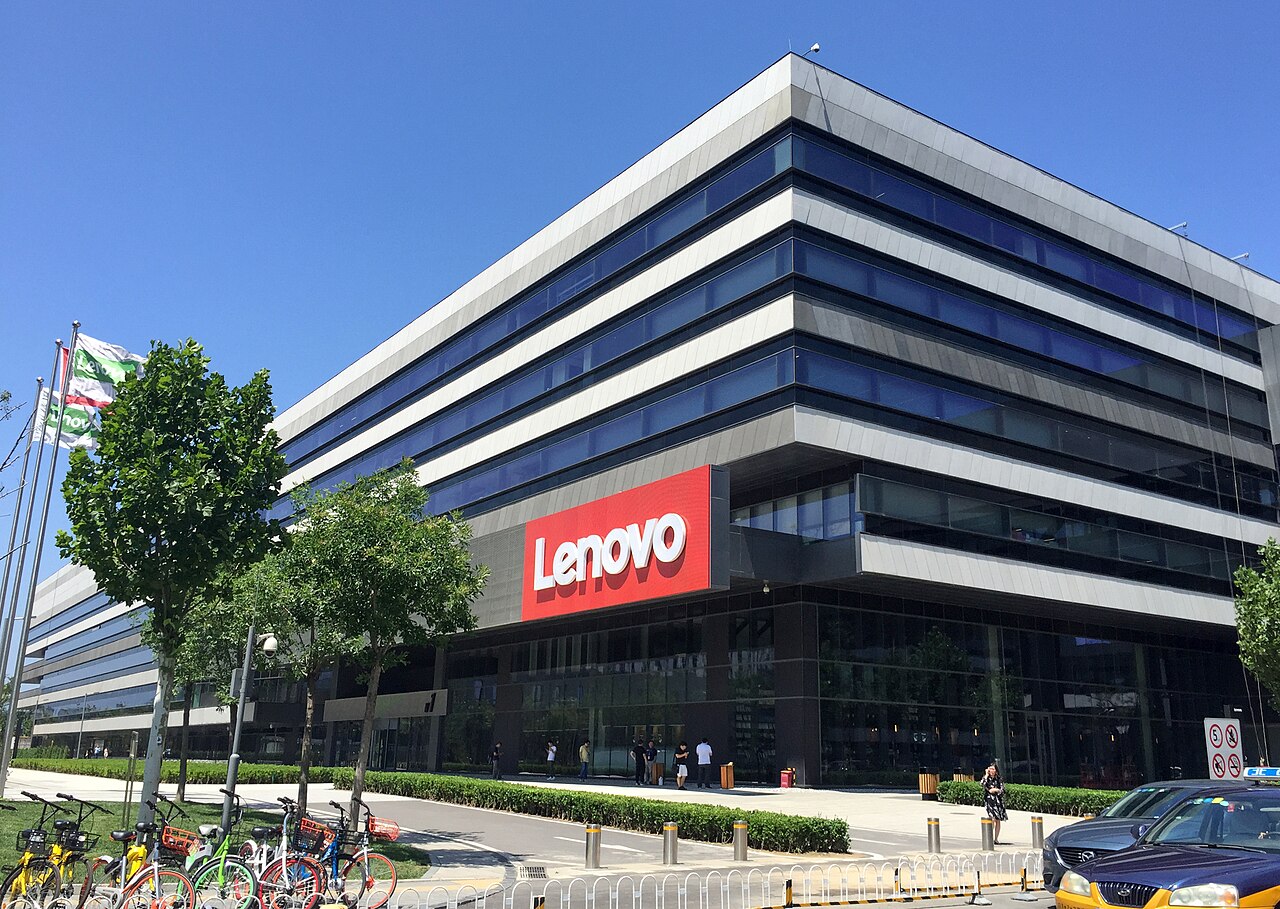
Invent a new English name. Lenovo was founded in Beijing on 1 November 1984 as 联想, liánxiǎng, meaning association or connected thinking, and for two decades traded in English as Legend. Legend could not be registered in many countries because others had claimed it first.
In April 2003 the company unveiled Lenovo, combining “Le” from Legend with novo, Latin for new. Two years later it bought IBM’s PC business, ThinkPad included, and had a name it could own wherever those laptops were sold.
Keep the Chinese name and teach it. Huawei, 华为, founded in Shenzhen in 1987, took its name from a slogan meaning roughly that China has achievements. Non-Chinese speakers stumble over it, and the company considered a change. Instead it kept the name and ran a pronunciation campaign built around “Wow Way”. The founder’s position, in essence: foreigners will learn.
Keep a short, sayable romanisation. Xiaomi, 小米, was founded in Beijing on 6 April 2010 and literally means millet. Lei Jun has linked the name to a Buddhist idea that a single grain can be as great as a mountain, and has said mi also stands for mobile internet and for mission impossible. In 2014 the company announced Singapore as its international headquarters. Its logo carries two letters, MI, that anyone can say.
Borrow from someone else. Haier, the appliance giant from Qingdao, began in a joint venture with Germany’s Liebherr, and its name comes from the last two syllables of Liebherr’s Chinese transliteration, 利勃海尔. A Chinese brand named after a German partner, which then bought GE Appliances in 2016, has a naming story no consultant could have scripted.
Each route works, and each reveals an ambition. Lenovo wanted to feel global. Huawei wanted the world to meet it on its own terms. Xiaomi wanted to be easy.
What happens if you don’t choose a Chinese name?
Some brands prefer to lead with their Roman-letter name, especially in luxury and technology, where foreignness is part of the appeal. Even then, customers need a way to say it. Apple’s logo carries no characters at all, yet in Chinese the company is simply 苹果.
For everyone else, declining is risky. Customers will improvise, as they did for Coca-Cola. Others may register likely characters, as happened to Jordan. And the brand will feel slightly foreign in a way that luxury can exploit but everyday products cannot.
One last caution. Even a careful choice can rhyme with something unfortunate. Microsoft’s search engine Bing became 必应, bìyìng, must respond: a fine meaning. The trouble is that bìng, said with a different tone, is the word for illness.
Tones are invisible on an English brief. In Beijing they are painfully audible.
A practical method for a bilingual name
This is roughly how we approach it with a Singapore client expanding into Chinese-speaking markets, or a Chinese client heading the other way.
- Decide which name leads. Will customers mostly meet you in English or in Chinese? That choice changes everything that follows.
- Study the category. List what competitors have done. Sound-based, meaning-based or both? Follow the convention or break it, but do it deliberately.
- Generate widely. Draft dozens of character combinations across all three routes. Read each aloud in Mandarin and, where relevant, Cantonese and Hokkien.
- Check for unintended meanings and homophones. Every character, every tone, every regional reading. Ask native speakers of different ages.
- Check trademarks in characters and in pinyin. The Jordan case shows they are separate assets.
- Test with real customers. Translators can tell you what a name means. Only customers can tell you whether it sounds right.
- Register early. Before you launch, before the press writes about you, before anyone else thinks of it.
A Tiong Bahru bakery opening its first outlet in Shanghai does not need a 50-page naming study. It does need steps four, five and seven.
Quick answers, in both languages
What is the best way to create a Chinese brand name?
The strongest names usually match both the sound and the meaning of the original, as with BMW’s 宝马 (precious horse) or IKEA’s 宜家 (suitable for the home). Which route works best also depends on whether the English or Chinese name leads and on what rivals in the category have done.
Do I need to register a Chinese name for my brand in China?
It is strongly advisable. In the Michael Jordan case, China’s Supreme People’s Court protected his Chinese-character name in 2016 but not its pinyin spelling, so both forms should be considered and registered early.
Why did Lenovo change its English name from Legend?
“Legend” could not be registered in many countries because other businesses already used it, so in April 2003 the company adopted Lenovo, combining “Le” from Legend with the Latin novo, meaning new.
If your brand needs a name that works on both sides of the signboard, talk to Firefish about brand naming before the market chooses one for you.






