Every technology founder eventually walks into a meeting and says some version of the same sentence: “Our tech is the real differentiator, so the brand should be about the tech.” Sometimes they are right. More often they are about to spend a lot of money teaching the public a word it will never need.
Start with a working definition. Branding a technology means deciding whether an enabling capability, such as a chip, a membrane, a codec or a protocol, should carry its own name and mark in front of end customers, and then building the proof, partnerships and rules that make that name worth asking for.
The key word is deciding. Most technologies should stay invisible. A few earn the right to a badge.
And a handful become so trusted that the product around them is judged by whether it carries their name. The skill is telling those cases apart.
Why would anyone care what’s inside?
Customers do not want technology. They want outcomes: a laptop that does not freeze, a jacket that keeps the rain out, a film that sounds like a storm is happening in the room. The technology only matters when it reduces their risk in choosing.
That is the test I give clients. A component brand becomes valuable when the buyer cannot judge performance by looking, when a bad choice is costly or irritating, and when competing products look alike on the shelf.
Under those conditions, a trusted name on the inside becomes a shortcut for the decision on the outside.
Personal computers in 1990 met all three. A beige box was a beige box. Nobody could tell a good processor from a bad one, and a dud cost a month’s salary. Into that gap stepped the most famous example in the field.
The Intel Inside playbook
Intel had a problem at the end of the 1980s. Its chips were in most PCs, yet consumers bought “a 386” or “a 486”, generation numbers that said nothing about who made the chip. Dennis Carter, a technical assistant to Andy Grove, concluded that buyers did not understand the advantages they were paying for.
The answer started in Japan. Intel’s Japanese arm had already been using an “Intel In It” mark, and Toshiba became the first PC maker to carry it, in 1989. The visual idea was borrowed from audio, where a Dolby logo on a cassette deck told you that the noise reduction inside was the real thing. After a Utah agency reworked the slogan and logo, Intel Inside launched officially in 1991.
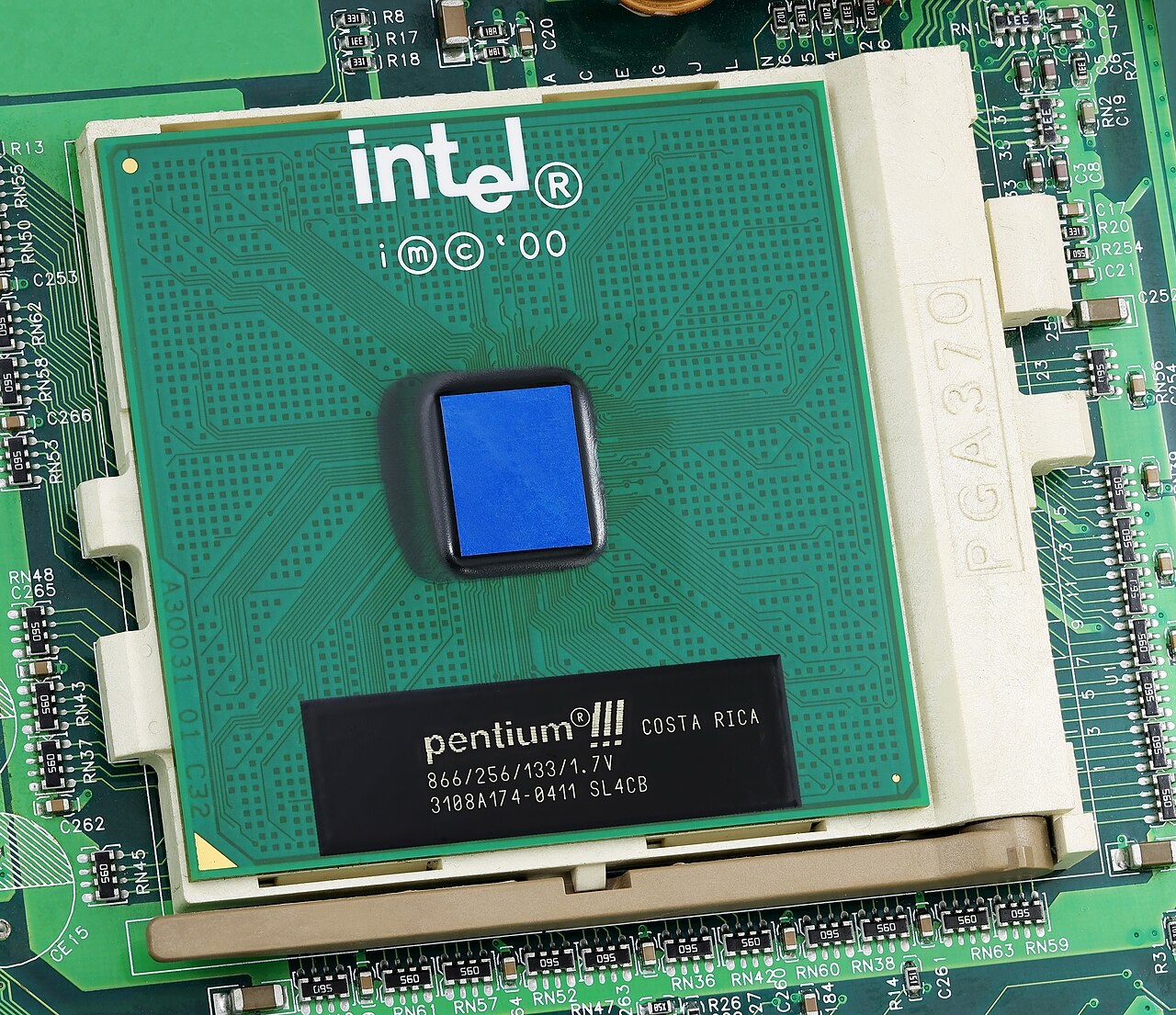
What made it work was not the sticker. It was the money behind it. Intel set aside a share of what each PC maker spent on processors in a co-operative marketing fund, which the maker could spend on its own advertising, provided the Intel Inside logo appeared.
Intel’s initial investment was $250 million. By the end of 1992, more than 500 manufacturers had joined, and 70 per cent of eligible ads carried the logo. Later in the decade the advertising trade press called it the most effective co-op programme ever run.
This is the bit most imitators miss. Intel did not simply ask partners to promote it. It made promoting Intel the cheapest way for partners to promote themselves. The ingredient brand rode on hundreds of host brands’ media budgets.
Intel’s own "Superpower" ad: the ingredient brand still talking straight to end buyers.
The bill arrives: what ingredient branding costs you
Fame cuts both ways. In 1994 a mathematics professor discovered a floating-point division flaw in the Pentium, and Intel’s first instinct was to play it down. Consumers who had been taught to look for Intel by name now knew exactly whom to blame.
Intel ended up offering replacement chips to everyone who asked and took a $475 million charge. A faceless supplier would have had a bad quarter. A household brand had a public crisis.
The host brands paid a price too. Plenty of buyers remember laptops plastered with stickers that looked like cheap toys and left gummy residue. And PC makers with hundreds of near-identical models had little leverage to say no.
One company did say no. When Apple moved the Mac to Intel processors in 2006, Steve Jobs reportedly wrote the absence of the Intel Inside badge into the contract and rejected box designs that singled out the chip. Apple would list Intel as one feature among many, nothing more. Jobs understood that every badge on your product is a little piece of your brand that someone else owns.
Fourteen years later, Apple went further. In June 2020 it announced it would move the Mac to its own chips, and in November 2020 the M1 arrived. Apple silicon is itself a branded technology, but the brand is Apple’s own. The ingredient and the host are the same company, which is the strongest position in this whole game.
Do you need a name, a badge, or nothing at all?
Founders ask this more than any other question. There are four positions, each suited to a different situation.
Stay invisible. Most enabling technology should. TSMC, founded in Taiwan in 1987 by Morris Chang, makes chips for Apple, Nvidia, Qualcomm and others and holds around 70 per cent of the global foundry market.
Its name appears on no consumer product. Its brand lives entirely with engineers, procurement teams and governments, which is exactly where its buyers are. Invisibility is a strategy, not a failure.
Self-brand the technology inside your own product. Apple silicon is the model, or a car maker naming its own hybrid drivetrain. You keep the equity, and you can stretch it across future products.
Co-brand with a famous ingredient. Leica’s name on Huawei phones from the P9 in 2016, and on Xiaomi phones since 2022, gave Chinese hardware a dose of German photographic heritage that no in-house camera brand could match overnight.
Become the ingredient brand. Intel, Dolby, Gore-Tex, Gorilla Glass. You sell to manufacturers but market to their customers.
The trade-off between the middle two is well understood. A co-branded ingredient with an established name helps a new product win acceptance quickly, while a self-branded ingredient builds more equity for the host brand’s later extensions, especially when the new feature is a modest upgrade rather than something entirely new. Translation: borrow a famous name when you need trust quickly, and build your own when you plan to stay in the category for a long time.
Lessons from the quiet giants
Not every ingredient brand needs Intel’s budget. Some of the most durable ones grew by being strict rather than loud.
Gore-Tex began in 1969, when Bob Gore stretched heated PTFE and created a microporous membrane. Outdoor brand Marmot was among the first to use it, in 1976.
Gore’s master stroke came in 1989 with the “Guaranteed to Keep You Dry” promise, a performance guarantee from a fabric supplier, which was unheard of at the time. Gore tests partner designs in simulated rain and requires taped seams. The black diamond hang tag still carries that promise more than thirty years later.
That guarantee is where the brand really lives. Ask owners of old shells and you hear stories about who honours it: jacket makers that replaced delaminated garments years later, and grumbles about exclusions for worn-out kit that were hard to find in writing.
Either way, people argue about the promise, which tells you they believe it is real. A guarantee also forces a decision on the ingredient brand: who pays when it fails, you or your partner?
Dolby is the licensing version of the same discipline. Ray Dolby founded the company in London in 1965 to cut tape hiss, and it licenses its technologies to electronics makers rather than building most devices itself.
The Dolby mark on a cassette deck, then in cinemas from the 1970s, then on phones and televisions, has signalled the same promise for six decades: the sound has been done properly. Dolby Atmos, introduced in cinemas in 2012, shows how an ingredient brand can renew itself by launching a sub-brand rather than abandoning the master name.
When does the ingredient outrank the host?
Corning’s Gorilla Glass had an even more unusual start. In January 2007, Steve Jobs unveiled the iPhone with a plastic screen, then complained it had scratched in his pocket. Apple asked Corning for toughened glass, which shipped that June.
Corning only named it Gorilla Glass in February 2008. By 2017 it was in around five billion devices, and its name now appears on phone spec sheets.
Corning’s own drop-and-stress tests for Gorilla Glass 2: a supplier marketing a component’s toughness straight to phone buyers.
And then there is Shimano, founded in Sakai, Japan, in 1921. Its components are estimated to make up about 85 per cent of the global bicycle component market by value, and its name sits on the derailleurs of bikes from dozens of other brands.
Many cyclists judge a bicycle by its Shimano groupset before they look at the frame. That is ingredient branding at its most powerful: the host brand needs you more than you need it.
How should you name a technology?
Badly, sometimes, and it still works. In 1997, Jim Kardach of Intel suggested “Bluetooth” as a codename for a short-range wireless standard, after Harald Bluetooth, the tenth-century Danish king who united warring tribes. It was meant as a placeholder until marketing came up with something cooler.
The front-runner, PAN, already had tens of thousands of web hits, and a trademark search on RadioWire could not be finished in time. So the odd Viking name stayed, and its logo is a rune.
The lesson is not “pick a weird name”. It is that a technology name must be ownable, searchable and legally clear far more than it must be descriptive. Acronyms and spec numbers usually fail on all three, which is exactly the trap Intel had climbed out of with its generation numbers.
Watch what names promise beyond the lab, too. Safaricom’s M-Pesa, launched in Kenya in 2007 with Vodafone, did not name the technology at all. “M” for mobile plus “pesa”, Swahili for money.
It branded the outcome, not the network plumbing behind it. Anyone could grasp it at once.
Product brand or master brand? A cautionary tale from Dell
The other half of branding a technology is deciding how the products built on it are named. Dell offers a timely warning.
Michael Dell started PC’s Limited in 1984 in his University of Texas dorm, selling custom-built machines directly to buyers. Over the decades its lines, including XPS, Inspiron, Latitude and Precision, built their own followings. At CES in January 2025, Dell retired them all in favour of Dell, Dell Pro and Dell Pro Max, with “Plus” and “Premium” tiers, arguing the old names did little to tell shoppers who each machine was for.
A year later, at CES 2026, Dell admitted the move had been a mistake and brought XPS back. Inspiron stayed retired.
The moral is not that simplification is wrong. It is that technology-led product names accumulate real equity among enthusiasts and reviewers, often more than the company realises. Before killing one, measure what it carries. A brand audit costs far less than a reversal.
A practical checklist before you brand your technology
Picture a Singapore deep-tech start-up with a novel water-filtration membrane, selling to appliance makers across Southeast Asia. Should it put its name on the box? Work through these questions.
- Can end buyers perceive the difference, or only engineers? If only engineers, market to engineers.
- Does your name reduce a real risk for the end buyer, such as safety, durability or authenticity?
- Will host brands welcome your badge, and what will you give them in return: funding, certification, a guarantee?
- Can you police quality across every partner product that carries your mark? If not, one bad partner can damage you.
- Is the name ownable and clear in your key languages and markets?
- Are you ready for the day something goes wrong and the public knows your name?
If most answers are no, stay invisible and build a reputation among the people who buy from you. If most are yes, start with a promise, not a logo.
Gore-Tex sold a guarantee. Intel sold confidence. Dolby sold “done properly”. The badge only works once the promise behind it is believed.
Straight answers for founders
What is ingredient branding?
Ingredient branding is marketing a component, such as a processor, fabric or glass, directly to end customers so they seek out products that contain it. Intel Inside, Gore-Tex and Dolby are classic examples.
When did Intel Inside start?
Intel Inside launched in 1991, building on an “Intel In It” mark first used on Toshiba PCs in Japan in 1989. Intel funded partner advertising that carried the logo.
Should a start-up brand its technology separately?
Usually not at first. A separate technology brand pays off only when end buyers cannot judge quality themselves and a trusted name lowers their risk.
If you are weighing whether your technology deserves a name, Firefish helps companies make that call as part of a brand strategy.






