Open the admissions pages of three Swiss hotel schools in three browser tabs and, at first glance, you see the same things: mountains, a lake or at least snow, students in tailored jackets holding tablets, a ranking badge near the top of the page.
Look again, more slowly, and the three start to tell quite different stories about who you will become.
The branding of hospitality schools is the craft of turning an expensive, intangible promise (that a few years of study will lead to a career in service, luxury or business) into a clear identity that families can compare, trust and pay for across continents.
The three names at the centre of this story are EHL Hospitality Business School in Lausanne, Les Roches in Crans-Montana and Glion Institute of Higher Education above Montreux. In the 2026 QS World University Rankings by Subject for hospitality and leisure management, published in March, they took first, second and third place.
Same country. Same podium. Very different pitches.
Why do Swiss hotel schools all look alike at first?
Because they are all selling the same inherited asset first. Switzerland is the category’s founding myth, and every school borrows from it.
EHL can claim the deepest roots. Jacques Tschumi founded the École hôtelière de Lausanne in 1893, and the school still describes itself as the oldest hotel school in the world. Glion arrived in 1962, opened by Frédéric Tissot and Walter Hunziker in the former Grand Hôtel Bellevue above Lake Geneva. Les Roches grew out of a boarding school founded in 1954 by the Clivaz brothers and became a hotel school in 1979.
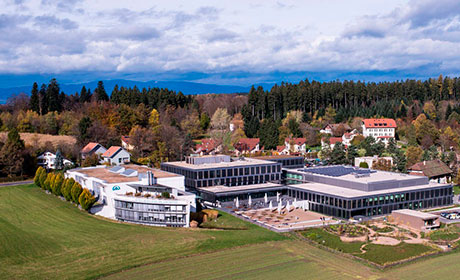
The Swiss story offers a bundle of beliefs that parents already hold: precision, discretion, clean and safe towns, a tradition of grand hotels and the people who run them.
Employers share the bias. A Swiss school on a CV can be enough to tilt a hotel manager towards an interview. That reflex, multiplied across an industry, is the asset the schools are protecting.
Neutrality has joined the pitch too. School leaders now openly cite Switzerland’s stability as a reason families in the Middle East and Asia choose it over alternatives closer to home. A promise that once meant polished silver now also means a quiet, predictable place to send your eighteen-year-old.
The catch is obvious. When every competitor uses the same mountain, the mountain stops differentiating anyone. The country-of-origin halo gets a school onto the shortlist. It does not tell a family in Jakarta or Mumbai which of the three to pick.
The ranking as a brand asset
Rankings do the next layer of work, and the schools treat them accordingly. The QS subject table is now the most visible scoreboard in the field. Positions appear in headlines, press releases and homepage banners within days of publication.
Switzerland dominates the 2026 top ten. After the top three come the Swiss Hotel Management School and César Ritz Colleges, then the University of Nevada, Las Vegas, Hotelschool The Hague, HIM Business School, Culinary Arts Academy Switzerland and Macao University of Tourism. Seven of the ten are Swiss. Only one, Macao, is in Asia.
For a school, a ranking converts reputation into a number a stranger can compare. For a parent, it is a shortcut through a field they know nothing about. Both sides need the number to mean something, which is precisely why it carries so much weight.
But a ranking is a fragile foundation for identity. Positions move: in the 2025 table Glion sat sixth, and a year later it was third. A school that builds its whole personality on a rank inherits every wobble in the methodology.
The smarter brands use the badge as proof and keep the story somewhere sturdier.
EHL: the business school that happens to start with hotels
EHL’s most revealing brand decision was a name change. In January 2022, on its 128th anniversary, the École hôtelière de Lausanne became EHL Hospitality Business School. The French words, with all their charm and pronunciation traps, left the name. The three letters stayed.
The school was candid about why. It wanted a name that reflected the managerial careers its graduates go into, and that signalled academic standing and international reach. Those graduates were being hired by banks, real-estate firms, consultancies and luxury manufacturers, not only hotels.
“Hotel school” undersold that. “Business school” claimed it.
The ground had been prepared three years earlier. In 2019, working with the agency Landor, EHL reorganised its entities under a single umbrella: the university programmes, the Swiss School of Tourism and Hospitality in Passugg (acquired in 2013) and an advisory arm with offices in Beijing, Shanghai and New Delhi. One stated aim was a name people worldwide could understand and pronounce. Three letters travel better than five French words.
Then came the physical proof. A new Lausanne campus, five years in construction and costing 250 million Swiss francs, opened with nearly 850 beds, a vast glass canopy and a dozen food and beverage outlets. The school also runs Le Berceau des Sens, a Michelin-starred teaching restaurant.
A brand that says “business school” still needs you to smell the kitchen.
In March 2022, EHL formally opened its first campus outside Switzerland, in a restored former boarding school on Lady Hill Road near Orchard Road in Singapore. Classes had begun a year earlier, and Singapore’s education minister attended the opening.
The city was itself a brand statement. Asia, yes, but the most Swiss-feeling, rule-abiding, internationally fluent corner of it.
Les Roches: global first, Swiss always
If EHL’s brand is about academic standing, Les Roches leans on mobility and modernity. It was the first Swiss hospitality school to teach all its courses in English, a decision that now reads as an early bet on an international, rather than European, student body.
Its campus map tells the story: Crans-Montana in the Valais Alps, Marbella on Spain’s Costa del Sol and Abu Dhabi in the United Arab Emirates, with a Riyadh campus in development. Around nine in ten students across its campuses are international. Its chief executive has named China as the biggest opportunity, with India and the Middle East growing.
Les Roches’ own tour of its Alpine campus, the Swiss base of a deliberately global brand.
The tone of voice follows. Where EHL sounds like a university and Glion like a concierge, Les Roches sounds like a launch pad.
Its homepage line, “Everyone says they are different – we truly are!”, would make a strategist wince at the exclamation mark. Yet it captures an energetic, slightly restless personality. Programme pages talk about sports business and events management. Private aviation management appears on the course list.
There is a resilience story too. In April 1985 a fire destroyed the main campus; students were housed in three hotels until new buildings opened in 1987. Episodes like that rarely reach a brochure, but they sit behind a school’s claim to have been proven over decades.
Glion: the boutique that sells luxury
Glion has chosen the narrowest and, arguably, sharpest position of the three. Its homepage promises “excellence in hospitality and luxury business education”. It calls itself boutique. It offers a bachelor’s degree in luxury business and a master’s in luxury experience and brand management.
The focus is well judged. Luxury is where Swiss service culture carries the most credibility, and it is a sector that hires people trained to anticipate rather than react. By wrapping the hotel-school promise around luxury, Glion widens the career story to fashion houses, jewellers and private banks while keeping its identity tightly defined.
Campus imagery supports it. A historic hotel building high above the lake. A second Swiss site at Bulle. And since 2013, a London campus in the grounds of the University of Roehampton.
Glion’s own pitch to prospective students, with the lakeside hotel building doing much of the talking.
London matters to a luxury brand in a way it might not to an engineering school. It is where much of the luxury industry’s retail, marketing and finance actually lives.
The student mix shows who the brand is speaking to: roughly half European, around 40% Asian, with growing numbers from the Middle East. Even the founding numbers have become mythology. Fifteen students from five countries, in 1962.
Who owns these schools, and does it change the brand?
Prospective students tend to ask this once the brochures are read, and the answer surprises some. Les Roches and Glion are sister schools.
Both sit inside Sommet Education, a Lausanne-based group that also owns École Ducasse, the culinary and pastry schools built around chef Alain Ducasse, along with the Indian School of Hospitality and Invictus Education. The group describes itself as five brands on more than twenty campuses.
The ownership path runs through private capital. Les Roches joined the group now called Laureate Education in 2000; Glion followed in 2002. In 2016 the French investment firm Eurazeo acquired Sommet Education, and in 2019 Sommet took a majority stake in Ducasse Education.
From a brand-architecture view, Sommet runs a classic house of brands. The parent name barely appears in student-facing marketing. Instead, two schools with overlapping subjects and the same country of origin are deliberately pushed apart.
Les Roches is the international, energetic, multi-campus option. Glion is the boutique, luxury-led one; the group’s own announcements cast it exactly so, with Les Roches as the innovator. Same owner, different personalities, so the group can compete for two kinds of family at once without its brands eating each other.
EHL, by contrast, is a branded house. Everything carries the EHL name, from the Passugg vocational school to the advisory arm to the Singapore campus. Reputation flows freely between units. So does risk: a stumble anywhere touches everything.
What the brochures don’t say
Price is the silent partner in all three brands. Swiss programmes are among the most expensive in higher education anywhere, and have been for years.
A decade ago, EHL’s three-year bachelor’s cost international students around 150,000 Swiss francs, and Glion’s longer programme, with board and lodging, around 185,000. The schools refused to cut prices when cheaper rivals appeared in Asia and the Middle East. That refusal is itself branding. In prestige categories, a discount is a confession.
The scepticism is real, though, and it is aimed at hospitality degrees in general. Is a degree necessary when much of the job is learnt on the floor? Is the debt worth it? Some call the subject soft; others point out that hotel management roles are almost always filled by people with exactly these degrees.
The Swiss schools answer with employment figures, recruiter relationships and alumni networks. Not with mountains.
There is a further tension, and it is structural. Schools must be convincingly Swiss and convincingly international at the same time, competing on academic recognition, admissions selectivity and alumni reach. Lean too hard on Swissness and you look parochial. Lean too hard on global campuses and you dilute the very thing families are paying for.
EHL’s Singapore campus, Les Roches’ Abu Dhabi site and Glion’s London outpost are three different answers to that same problem.
Lessons for any premium service brand
The Swiss hotel schools are a useful case for anyone selling an expensive, intangible service, from private clinics to consultancies. Five lessons travel well.
A category halo is an entry ticket, not a position. Being Swiss gets a school considered. It does not get it chosen. The work starts once you are on the shortlist.
Rename when your name lies about what you sell. EHL’s move from “hotel school” to “hospitality business school” was not cosmetic. It reframed the outcome from a job to a career, and the career from hotels to business.
Sister brands need a reason to exist. Sommet’s portfolio works because Glion and Les Roches have clearly different personalities, not merely different postcodes. Picture a Singapore F&B group running two café chains with the same menu, the same décor and the same tone. One of them is surplus.
Put the proof where people can walk through it. A Michelin-starred training restaurant, a 250-million-franc campus, a restored boarding school off Orchard Road. For services, buildings and rooms are the closest thing to a product sample.
Borrow rankings, but do not live in them. A badge is evidence. Positioning is what you say when the badge slips a place.
Before you apply
Which hospitality school is ranked first in the world?
In the 2026 QS World University Rankings by Subject for hospitality and leisure management, EHL Hospitality Business School in Lausanne ranked first, Les Roches second and Glion third.
Are Les Roches and Glion owned by the same company?
Yes. Both belong to Sommet Education, a Lausanne-based group acquired by the French investment firm Eurazeo in 2016, which also owns École Ducasse and the Indian School of Hospitality.
Does EHL have a campus in Singapore?
Yes. EHL Campus Singapore, on Lady Hill Road near Orchard Road, began classes in 2021 and was officially opened in March 2022 as EHL’s first campus outside Switzerland.
If your own service brand needs a position as clear as these schools have found, our brand strategy team is a good place to start the conversation.






