Somewhere in your memory there is a field. The grass is patchy, the air smells of hot rubber track and Deep Heat, and you have just finished the 2.4-kilometre run with your lungs on fire. Then you see it: a green van, a queue of children in damp PE shirts, and a plastic cup of something cold, thick and absurdly sweet.
You did not choose Milo that day. It was simply there, waiting for you at the finish line, as it had waited for your parents.
That moment is the whole trick. The branding of Milo is the system of signals, from the green tin and the athlete on its face to the van at sports day, through which Nestlé has tied a 1934 Australian malted chocolate drink to energy, sport and childhood across Asia, Africa and Latin America.
Most brand stories are about advertising. Milo’s is about being present at the right moment, for decades, until the moment and the drink became the same memory.
Where did Milo actually come from?
Not from Malaysia, which surprises people in Kuala Lumpur, and not from Singapore, which surprises people in Toa Payoh. Milo was developed in 1934 by Thomas Mayne, an Australian industrial chemist working for Nestlé, and launched at the Sydney Royal Easter Show. It was made near a Nestlé milk plant in Smithtown, New South Wales, which still produces the Australian and New Zealand supply.
Mayne’s recipe was malt extract, full-cream milk powder, cocoa, sugar and a list of minerals and vitamins. Early press called it a “tonic food”. That phrase matters. Milo did not begin life as a treat; it began as something closer to medicine you would actually want to drink, in an era worried about children’s nutrition.
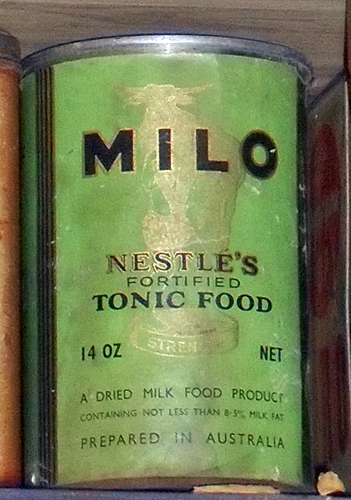
Then there is the name. Milo of Croton was a wrestler from the sixth century BC, credited with six Olympic victories. Legend says he trained by carrying a newborn calf on his shoulders every day until it was a fully grown animal. So the drink was named after a man famous for strength built slowly, through daily repetition.
Read that with a brand strategist’s eye. Daily ritual. Gradual strength. Sport. Long before anyone talked about “brand essence”, the essence was sitting in the name.
The green tin as a promise
Pick up a Milo tin anywhere from Lagos to Jurong and you will find the same grammar. Green. An athlete mid-action, often a footballer or badminton player. A word set in heavy capitals.
In Singapore, the boy kicking a ball on the old tins earned his own Hokkien nickname, “Tak Kiu”, meaning “kick the ball”. When a cartoon figure on your packaging gets a dialect name from the public, you have stopped being a product and started being a neighbour.
Packaging like this works as a distinctive asset: a colour, shape or character so strongly linked to one brand that it can trigger the brand without the name. An asset only earns that power by being both widely known and unique to you, and both qualities take years to build.
Plenty of brands get bored and redesign just as the public has finally learned the code. Milo has done the opposite. The colour, the athlete and the energy story have barely shifted in seventy years, while the formula itself has changed only through added vitamins and minerals.
There is a quiet discipline in that. Picture a Jalan Besar marketing manager pitching a “fresh, modern” packaging refresh for a brand whose tin is in every grandmother’s cupboard. The smartest decision Milo’s custodians have made is the one that never shows up in an awards annual: leaving it alone.
Why did Milo from the van taste better?
Every Singaporean and Malaysian adult eventually asks it, usually with a slight edge of grievance. Fans swear the van’s Milo is thicker, richer and sweeter than anything from a kopitiam.
One senior brand manager has joked that the van’s constant movement gives the drink its smooth texture. Nobody quite believes that. Everybody enjoys the explanation.
The less romantic answer: taste is partly context. A cold, sweet drink after hard exercise, handed over free, by a vehicle that only appears on special days, will always beat the same drink stirred at home on a Tuesday.
Milo arrived in Malaysia in 1950, and its trucks have toured the country ever since. Singapore marked 75 years of the brand in 2025. In both countries the van became fixed to school life during the 1970s and 1980s, appearing at sports days, cross-country runs and community events. Each one can serve up to 3,000 cups.
MILO Malaysia’s 2021 Merdeka film: the brand openly trading on memories passed from parents to children.
Notice what the van does strategically. It does not interrupt anything. It rewards effort at the exact moment the body wants sugar and fluid, and it does so under the banner of sport, which is precisely what the tin claims. Brand promise and brand experience meet on a school field.
It also creates scarcity without a price tag. Because the vans are deployed on a sponsorship basis, they rarely serve the general public.
When four CapitaLand malls hosted the van in April and May 2025, people lined up for free iced Milo like fans outside a concert hall. Former pupils remember free Milo tickets handed out only to children who helped teachers on sports day. A cup of malted chocolate became a medal.
Owning a moment, not a market
Most brands try to own a category. Milo owns a moment: just after physical effort. The van is the most visible piece of that, but the pattern runs through everything.
In Nigeria, Nestlé’s Milo Basketball Championship for secondary schools reached its 25th edition in 2025. It started with around 500 schools and now touches more than 13,000. In Australia, Milo’s name sits on junior cricket programmes for children aged five to twelve. In Malaysia, the 2018 Milo Aktif Negaraku movement set out to get five million people active, with football clinics run alongside FC Barcelona.
And in October 2026 the strategy went global. Nestlé and the NBA announced that Milo, alongside Nescau and Nesquik, will become official NBA partners from January 2027 across 21 markets, including Singapore, Malaysia, Indonesia, Vietnam, Nigeria and Ghana. Nestlé called it its largest international brand collaboration to date, and the activations lean heavily on youth basketball programmes rather than courtside glamour.
That last detail is the tell. Milo rarely leads with celebrity. It borrows its credibility from schools, coaches and local leagues, which means the person standing next to the brand is usually your PE teacher, not a superstar. Lower wattage, higher trust.
When customers start inventing the product
Now the story gets delightful. Milo’s most famous Singaporean expression was not created by Nestlé at all.
The Milo Dinosaur, an iced Milo buried under an undissolved mountain of extra powder, is usually traced to Indian-Muslim eateries along Upper Bukit Timah Road in the 1990s. Malaysians, naturally, dispute this, pointing to Milo shakes at roadside stalls from the same decade.
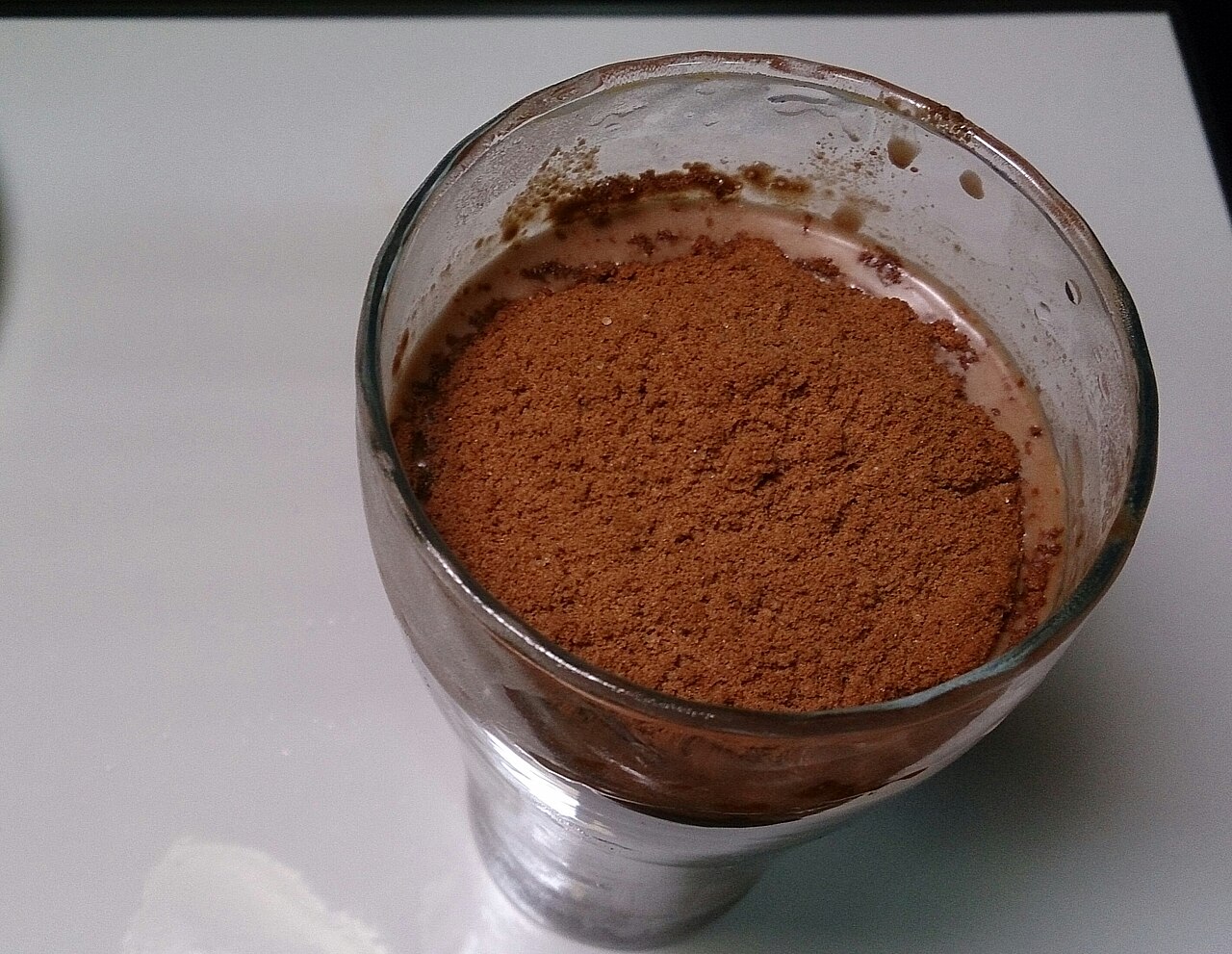
Then came the Milo Godzilla, crowned with ice cream or whipped cream. Neslo mixes Milo with Nescafé. Malaysia’s Milo Mangkuk serves it over shaved ice in a bowl. “Milo Ais” and Indonesia’s “Es Milo” have become menu items at KFC and McDonald’s in parts of Southeast Asia.
Heritage brands work like this. Much of their meaning is made by the people who use them, who picture a warm, slightly idealised world of school fields and kopitiam tables that no company could script.
The dinosaur is a folk invention. The van is a folk memory. The brand owner mostly supplies the powder and the permission.
Wise brands notice when this happens and bow to it. In 2025, Tiong Bahru Bakery’s Milo Dinosaur shio pan, created for SG60, became a permanent item. The public’s invention became someone else’s product, and Milo’s name rode along on the dough.
Nostalgia as a strategy (and its limits)
By 2025, Milo Singapore was openly selling memory. It launched Milo Van sachets in April, 12 for $7.95 at FairPrice and other supermarkets, promising that thick, sweet sports-day taste at home.
Weeks later came Singapore-exclusive plushies shaped like a cup of Milo Peng, kaya toast and soft-boiled eggs, and later a gem biscuit and a bun. Shoppers cleared shelves over a weekend. The brand even played on the 2025 general election mood by presenting the plushies as “party candidates” around Nomination Day.
Then adidas called. On 14 July 2025, the two brands dropped a collaboration under the banner “Fuelling goodness”, with tees labelled “Running”, “Lepak” and “Stay home”, pins of the Milo Dinosaur and the hot Milo mug, and the van parked outside adidas Orchard serving free cups on three Saturdays. A free “We can one” tee came with selected Milo purchases.
This is clever, joyful work. Pushed too far, it is also a warning sign. Nostalgia is a currency that spends itself, and every campaign that says “remember when?” is talking to people over thirty.
The children on today’s school field need their own memory, not a reproduction of their parents’. The Nigerian basketball league and the NBA deal suggest Nestlé understands this: build new rituals while the old ones still glow.
Is Milo actually healthy? The question the brand can’t outrun
No honest account of Milo’s branding can skip this part, because the public certainly doesn’t.
The “energy” claim was born in 1934, when calories were scarce and fortification was a public good. In 2020s Southeast Asia, where diabetes and obesity are national worries, the same claim reads differently.
Malaysian packaging has long used the line “Your health drink”. In late 2017 it emerged that Nestlé had a written agreement with the Nutrition Society of Malaysia allowing it to review studies it funded before publication, and the story made international headlines. A viral video from a local businessman questioning the sugar content followed, and many consumers found the company’s response evasive.
Nestlé’s defence was that it adds about 6 grams of sugar per 200ml serving, and that over half the total sugar comes from milk and malt.
Online, the argument goes round and round. Some people compare Milo’s glycaemic index with a plate of white rice and declare it harmless. Others ask the sharper question: even if funded research is peer-reviewed, can a sugary breakfast drink honestly be sold as a health product? Australians who grew up with Milo marketed as a children’s sports drink ask it too.
The brand’s response has been adaptation rather than retreat. Singapore now sells Milo Gao Siew Dai with 50 per cent less sugar and Milo Gao Kosong with none, names lifted straight from kopitiam ordering slang. The Philippines has used a reformulated barley-and-cassava base since 2017. Australia offers high-protein, reduced-sugar and plant-based versions.
Speaking the customer’s language softens the edge. It does not remove it. A brand built on “energy” and “sport” carries an implied health claim, and the gap between implication and nutrition label is where trust leaks. The lesson for any heritage food brand is blunt: your origin story buys you affection, not immunity.
A brand that travels by adapting
One more thing to admire. Milo is not one product wearing different labels. It is one idea wearing different recipes.
Chinese Milo contains more milk solids than Australian Milo. Singapore’s version is sweeter and maltier than Australia’s and creamier than Malaysia’s.
Milo cubes were sold as snacks in Nigeria, Ghana and Dubai from 1975. Milo nuggets arrived in Southeast Asia and Colombia in 1994. In Colombia the drink is so embedded that many people consider it local, and Colombian-made Milo reached American supermarkets in 2017.
Back in 2009, Malaysia had the highest per-capita Milo consumption in the world, with Singapore second.
Compare this with Horlicks and other malted rivals, which tend to sell a nutrition proposition. Milo sells the same nutrition, wrapped in movement.
One is the drink your mother insisted on. The other is the drink you earned. Same category, different emotional job.
So what should a brand owner take from a green tin and a van? Find the moment where your product is most welcome and show up there, physically, for years. Protect the assets the public has adopted, even the ones you did not design.
Let customers play with you. And face the hard question about your product before a stranger with a phone camera does it for you.
Quick answers from the sports-day queue
Who invented Milo and when?
Milo was developed by Australian chemist Thomas Mayne for Nestlé in 1934 and launched at the Sydney Royal Easter Show. It reached Malaysia in 1950 and has been sold in Singapore for around 75 years.
Why is Milo named Milo?
It is named after Milo of Croton, an ancient Greek wrestler famed for his strength, who legend says trained by carrying a calf every day until it was fully grown.
What is a Milo Dinosaur?
A Milo Dinosaur is iced Milo topped with a heap of undissolved Milo powder, popularised at eateries in Singapore and Malaysia in the 1990s. Its exact birthplace is disputed between the two countries.
If your brand deserves its own green van moment, Firefish designs brand activations that people remember for decades.






