Read enough purpose statements and they start to blur into one long sentence. Something about inspiring possibility, enriching lives and making the world a better place, usually beside a stock photograph of a sunrise. I have read hundreds. I could not tell you who wrote most of them, and neither, I suspect, could their own staff.
So I came to this subject intending to bury it. I left defending it. Not the sunrise sentence. The other kind.
Let me define the other kind first. Brand purpose is the reason a business exists beyond making money, stated precisely enough that it changes what the company does, and what it refuses to do, when profit and principle pull in different directions.
Everything hangs on the last clause. A purpose that never pulls against profit is not a purpose. It is a slogan with ambitions.
The case for the prosecution
The critics have plenty of evidence, and they deserve a fair hearing.
Exhibit one. In April 2017 Pepsi released an advertisement in which Kendall Jenner left a photo shoot, joined a street protest and defused a tense stand-off by handing a police officer a can of soft drink. The imagery borrowed visibly from real demonstrations, including a widely shared photograph from Baton Rouge the year before.
The backlash was immediate. Pepsi pulled the film within a day, conceding that it had clearly “missed the mark”.
Exhibit two. In January 2022 the fund manager Terry Smith, whose fund was a major Unilever shareholder, used his annual letter to accuse the company’s management of being preoccupied with displaying its sustainability credentials. His sharpest example was Unilever’s attempt to define a purpose for Hellmann’s mayonnaise.
The brand had been around since 1913, he observed. Customers had probably worked out what it was for.
Exhibit three is quieter and more damning. Dove launched its Campaign for Real Beauty in 2004 and built years of admired work on the idea that women should feel good about how they actually look. Throughout that time its parent also sold Fair & Lovely, a skin-lightening cream that by 2012 held about 80% of India’s market. When the cream was renamed Glow & Lovely in 2020, critics pointed out that the product stayed on the shelf.
The prosecution rests. Purpose, they say, is advertising wearing a halo. Much of the time they are right.
Is brand purpose just marketing?
When it lives only in marketing, yes. That is the whole problem, and it is a problem of location, not of the idea.
Look again at the three exhibits. Pepsi’s purpose existed only inside an advert. Hellmann’s was a brand-team exercise layered onto a jar of mayonnaise. Dove’s was real inside Dove and stopped at the edge of the brand, while the parent’s portfolio said something else entirely.
In each case purpose was a message. Messages are cheap. Anyone can buy airtime for a value they have never paid for.
A useful working distinction: purpose as a claim versus purpose as a constraint. A claim tells customers what you believe. A constraint tells your own people what they may no longer do, even when it would make money.
Customers have learned to ignore claims. They notice constraints, usually years later, when the company does something a competitor would not.
The only test that matters: what did it cost you?
If you want to know whether a purpose is real, skip the wording and ask for the invoice.
In September 2022 Yvon Chouinard announced that Patagonia would neither be sold nor floated. Instead, all its voting shares, about 2% of the stock, went to a new Patagonia Purpose Trust, and all the non-voting shares, the other 98%, went to the Holdfast Collective, a non-profit set up to fight the environmental crisis. Profits not reinvested in the business would flow to that collective every year. The family faced an estimated US$17.5 million gift-tax bill on the voting shares.
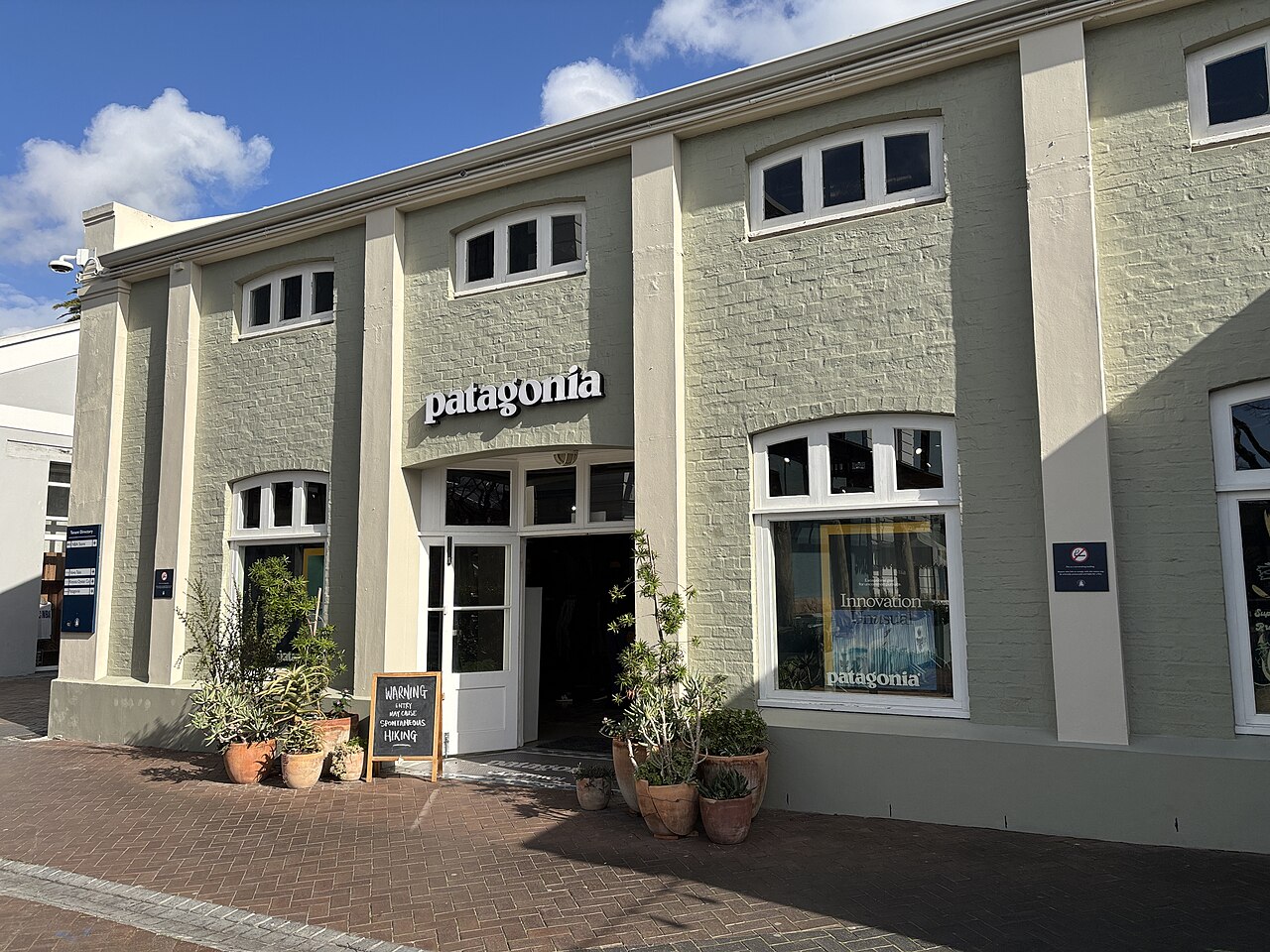
Sceptics were quick to point out what the family kept: control, through the trust, and the satisfaction of directing billions towards its own priorities. Fair enough.
But notice what was given up. The proceeds of a sale or an IPO, gone for good. That is a constraint with a very large number attached.
Grameen Danone offers the same lesson on a smaller scale. Launched in Bangladesh in 2006 by Muhammad Yunus and Danone, it sells a fortified yoghurt called Shokti Doi aimed at undernourished children, and it was set up on a “no loss, no dividend” basis. In 2009 its board waived even the modest 1% dividend shareholders had originally been promised.
The venture has struggled with cold-chain and transport costs and had not broken even years later. Agree with the model or not, nobody can call it purpose-washing. Washing is supposed to be cheap.
Then there is the bill that arrives as conflict rather than cash. When Ben & Jerry’s announced in 2021 that it would stop selling ice cream in the Occupied Palestinian Territory, it set off years of friction with its own parent, including two rounds of litigation and, in December 2025, the brand’s departure from Unilever with the rest of the ice-cream business. A purpose with teeth sometimes bites the owner.
When purpose is the product
The best defence of brand purpose does not come from a campaign at all. It comes from Nairobi.
M-Pesa, launched by Safaricom with Vodafone in March 2007, began life with development money from the British government and a narrow job: letting borrowers repay microloans by phone instead of in cash. It became a general way to send money to anyone with a handset. Research published in Science in 2016 estimated that access to the service had lifted about 194,000 Kenyan households, roughly 2% of the total, out of extreme poverty, with the largest gains in households headed by women. Other researchers dispute the size of that effect, and they should keep doing so.
What M-Pesa never needed was a purpose statement. Financial inclusion was not a message bolted onto the brand. It was the product, and the business model depended on it.
That does not make Safaricom a saint. Its fees have been criticised as steep for the poorest users, and its near-monopoly of Kenyan mobile money has drawn scrutiny for years.
Here is the nuance the purpose evangelists skip. A genuine purpose does not make a company good. It makes it accountable to a standard it chose. Critics can, and do, hold M-Pesa to its own promise.
Does every brand need a purpose?
No. And saying so out loud would save many companies a great deal of embarrassment.
Terry Smith was right about the mayonnaise. Some brands exist to be reliably excellent at a modest job, and inventing a world-changing mission for a condiment insults the customer’s intelligence.
Picture a Tampines bakery whose purpose is to sell the best kaya buns in the east, at a fair price, baked that morning. A perfectly honourable reason to exist. It will guide hiring, sourcing and pricing far better than “nourishing communities through joy”.
Every business needs a reason. Not every brand needs a cause.
Where purpose earns its keep, it usually shows up in structure, not slogans. About two-thirds of Tata Sons, the holding company at the top of India’s Tata Group, is owned by philanthropic trusts set up by the founding family.
In Singapore, NTUC FairPrice began as a union co-operative, opened its first supermarket in Toa Payoh in 1973, and still returns dividends and rebates to members. Neither arrangement makes for a stirring advert. Both quietly shape decisions every day.
FairPrice’s co-operative structure shapes decisions more than any slogan.
One for one, and other tidy promises
TOMS is the cautionary tale for anyone tempted by a purpose that fits neatly on a swing tag.
Founded in 2006, it promised to give a pair of shoes to a child in need for every pair it sold. The idea was simple, generous and enormously marketable. By 2014 Bain Capital had bought half the company in a deal reported to value it at US$625 million.
Development experts were less enchanted. The model made buyers feel good without touching the causes of poverty, and evaluations in El Salvador found little measurable benefit and some sign of dependency among recipients. In 2019 TOMS moved away from one-for-one towards giving grants. Later that year its creditors took control of the business.
The lesson is not that TOMS meant badly. It is that the mechanism was designed around the buyer’s conscience rather than the recipient’s needs. A purpose should be measured by what it does for the people it claims to serve. Not by how good it makes the purchase feel.
How to write a purpose that changes decisions
If you still want one, and many businesses should, this process survives contact with reality.
Start with decisions, not adjectives. List five real choices you made last year: a client you took, a supplier you dropped, a price you set. Ask what reason would have made each one easier.
Write the refusal list. A purpose worth having rules things out. Name three kinds of revenue you would turn down because of it. If you cannot name any, start again.
Price it. Estimate what the purpose will cost in the next year, in money, speed or opportunities declined. A purpose with no cost is a tagline.
Test it on the most cynical person in the building. If your finance lead or your longest-serving technician rolls their eyes, the sentence is decoration.
Keep it out of the advertising until it has a track record. Let customers discover it through what you do. Publicise it after you have a few stories of it costing you something. The proof is the campaign.
Questions from the back of the room
What is the difference between brand purpose and a mission statement?
A mission describes what the business does and aims to achieve. Brand purpose explains why it exists beyond profit, and it should be specific enough to change decisions when profit and principle conflict.
What is purpose-washing?
Purpose-washing is claiming a social or environmental purpose in marketing without changing how the business operates. It is usually exposed when the claim clashes with the company’s products, pricing or behaviour elsewhere.
Can a small business have a brand purpose?
Yes, and it is often easier to keep honest at small scale. A clear reason for existing, backed by a short list of things the business refuses to do, will guide hiring, suppliers and pricing better than any slogan.
If you want a purpose your team will defend in a hard meeting rather than recite in an easy one, start with one of our branding workshops.






