When you name a child, the approval process is two parents and a grandmother. The grandmother has opinions. She is overruled, sulks through Chinese New Year and recovers.
When you name a company, the approval process is the founders, the board, the head of sales, a lawyer in every country you might one day sell in, three native speakers of languages you have never studied and, somehow, the chief executive’s spouse. Nobody recovers.
Your daughter can share her name with four girls in her class. Your brand cannot share its name with anyone selling anything similar, anywhere you trade. And nobody has ever told new parents to buy the .com.
Brand naming is the process of creating, screening and legally securing a name for a company, product or service: one that people can say, spell and remember, that embarrasses nobody in any language and that nobody else already owns.
Easy. Here is how it goes wrong.
Your child can be one of many. Your brand cannot.
A name is a legal asset before it is a creative one. A trade mark is registered for particular goods and services in particular territories, and the person who got there first wins. Sentiment counts for nothing. Neither does the fact that you thought of it in the shower.
There is a familiar founder tragedy, and it goes like this. Two people start a company. They check that the .com is free, which feels like due diligence. They spend most of their money on a logo, a website, copywriting and a box of beautiful flyers.
Seven months later the phone rings. A business owner in another state explains, quite calmly, that their name is his trade mark. The website and the flyers are now very expensive scrap paper.
The .com tells you whether a web address is free. It tells you nothing about whether the name is.
If it helps, the giants get this wrong too. Microsoft called its cloud storage service SkyDrive. In June 2013 the UK High Court ruled that the name infringed the trade mark of Sky, the British broadcaster. By February 2014 SkyDrive had become OneDrive, presumably after a meeting in which somebody asked, quietly, whether anyone had checked.
Do you really need the .com?
Twitter did not start with twitter.com. It went live in July 2006 as twttr, vowels removed, and only became Twitter about six months later, when the team bought the domain from whoever had been using it.
Proof that a perfect domain is not essential to starting something. Also proof that people will forgive a name that looks like a typo if the product is good enough.
Then, in July 2023, Elon Musk renamed it X. The bird was retired, and in May 2024 the domain moved from twitter.com to x.com. Tweets officially became posts and retweets became reposts, though plenty of people still call them tweets.
A name with its own vocabulary was swapped for the 24th letter of the alphabet. Whatever you think of the decision, it is a very public demonstration that a name carries meaning a company cannot simply reassign.
So, the .com. It matters most if you sell globally or online, and less if your customers find you by walking past. A neighbourhood business in Singapore can live happily on a .sg.
What you should never do is mangle the spelling to get a domain. Every time a customer has to spell your name out loud over the phone, a small piece of your marketing budget dies. Check the obvious misspellings while you are at it. If someone else owns those, a share of your customers will end up on their website.
Should a brand name mean something?
There are two schools here. Both are right, which is irritating.
Names that describe are easy to understand on day one. Tokopedia joins toko, Indonesian for shop, to the end of “encyclopedia”, and nobody in Jakarta needs it explained. M-Pesa joins M for mobile to pesa, Swahili for money, and Kenyans knew exactly what it was for.
The trouble is that descriptive names are harder to protect, because ordinary words belong to everyone. They can also trap you. GrabTaxi grew from taxis into private cars and couriers, and in January 2016 it dropped the second word. A name that describes your first product can become a fence around your future.
Names that mean nothing are the opposite. They are easier to own and they stretch in any direction, but you have to spend money teaching people what they stand for.
George Eastman wanted something short, easy to say and unlike any other word. He was fond of the letter K, which struck him as strong and incisive, and he worked the name out with his mother using a set of anagram tiles. Kodak was trademarked in 1888. It meant nothing, which was precisely the point.
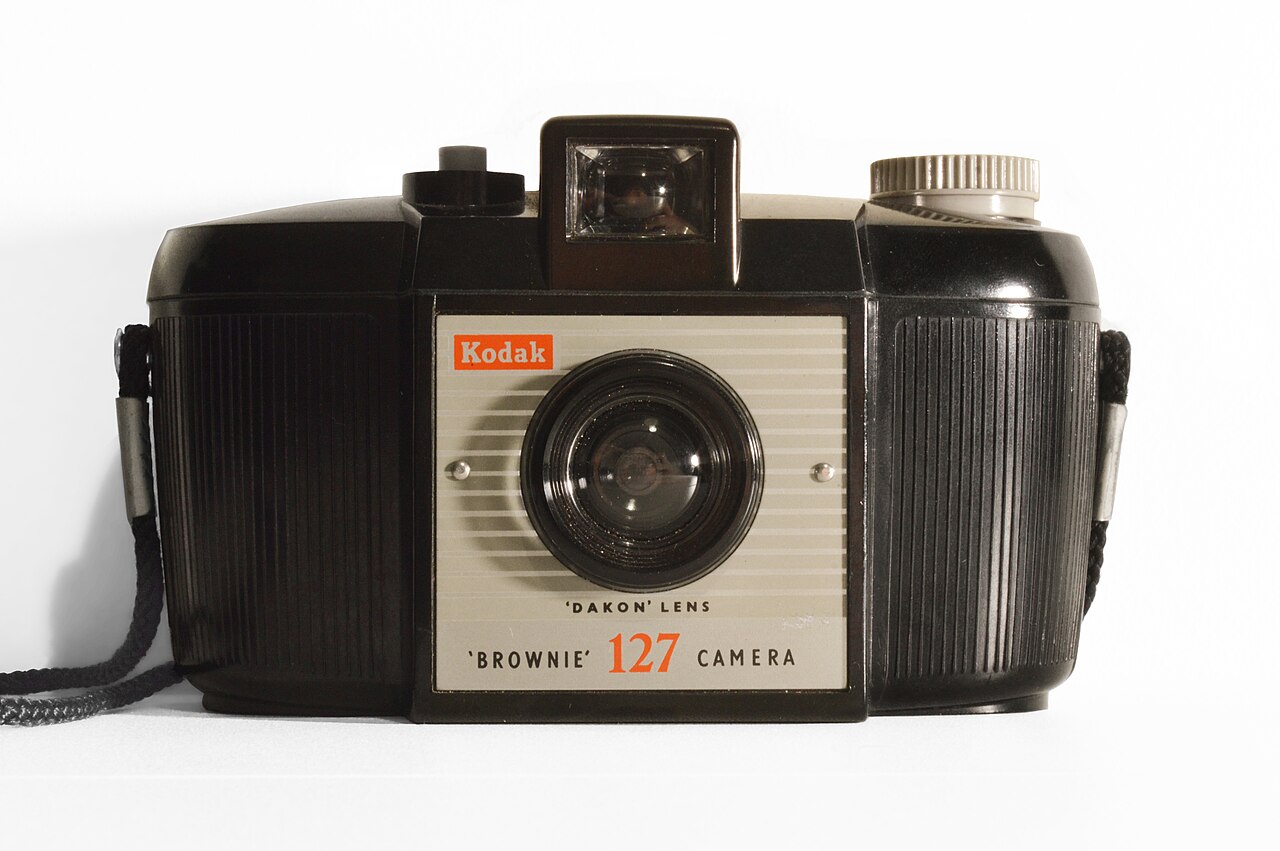
In praise of words that mean nothing
Reuben Mattus took meaninglessness further than Eastman ever did. When he launched a new ice cream in the Bronx in 1960, he wanted a name that sounded Danish, partly as a tribute to how Denmark had treated its Jews during the Second World War and partly because Denmark had a good reputation for dairy.
By his daughter’s account he sat at the kitchen table saying nonsense words aloud for hours. The result, Häagen-Dazs, is not Danish. Danish does not use “ä”, and the “zs” is closer to Hungarian. The early labels carried a map of Denmark anyway.
Häagen-Dazs: a name that means nothing in any language, and sells everywhere.
And, in a twist no focus group could have planned, “das” is Scandinavian slang for a toilet. None of which has stopped anyone ordering a second scoop.
Somewhere in between sit names that take a familiar word and make it ownable. Carousell, the Singapore marketplace founded in 2012, borrowed a common word and added an extra L. Whatever the founders’ reasons, the result is easy to say, faintly suggests things going round to new owners, and is far easier to search for and protect than the plain dictionary word.
Sound matters too, in ways that seem far-fetched until you test them. People hear some vowel sounds as small and sharp and others as big and blunt. A name built on the first kind suits a convertible or a kitchen knife and works against a four-wheel drive or a hammer.
Say your shortlist out loud. Then say it as if you were selling a hammer.
The foreign-language ambush
Your child’s name only has to survive the playground. A brand name has to survive every language your customers speak, including the rude bits.
When Coca-Cola reached China in the 1920s, it had no official Chinese name, so shopkeepers improvised with characters that roughly matched the sound. One of the more memorable versions came out as “bite the wax tadpole”.
In the 1930s the company settled on 可口可乐, kěkǒu kělè, which keeps the sound and means, roughly, something that lets the mouth rejoice. That is not translation. It is a second act of naming, and it worked.
Mitsubishi named its four-wheel drive the Pajero, after a South American wild cat. In Spanish, pajero is a vulgar insult. So in Spain and most of the Americas it became the Montero, and in Britain, for reasons of its own, the Shogun. One car, three names, one very busy legal department.
In Southeast Asia this is not an edge case. It is the job. A name for a Singapore company may need to work in English, Mandarin, Malay and Tamil, then in Bahasa Indonesia, Thai and Vietnamese, and sound inoffensive in Hokkien and Cantonese for good measure.
Ask native speakers, and ask them what it sounds like, not only what it means. Dictionaries are polite. Teenagers are not.
Why does the shortlist always die in legal?
Every naming project follows the same arc. You start with four hundred names and enormous optimism. A creative session cuts them to forty. Leadership cuts them to twelve.
Legal searches the twelve and seven are already registered in your category somewhere that matters. Of the five left, two have unfortunate meanings in Thai, one is the chief executive’s ex-boyfriend’s surname, and one sounds like a decongestant.
The last one survives. Everyone agrees it is fine. Nobody loves it. That is usually the moment to start again, because “fine” names are what committees produce when every member is allowed a veto and nobody is allowed a vote.
Sometimes, though, a deadline forces a better answer than any committee would have dared. In August 2000 an arbitration settled the divorce between Andersen Consulting and the accounting firm Arthur Andersen, and the consultancy could no longer use the Andersen name.
It needed a new name for a global consultancy, and it had one in under five months. The winner came from an employee in its Oslo office, Kim Petersen, who built it from “accent on the future” and liked that it meant nothing offensive anywhere. Andersen Consulting became Accenture on 1 January 2001.
In June 2002 Arthur Andersen was convicted of obstruction of justice over its Enron audit, a verdict overturned three years later when it no longer mattered, and by the end of that August it had given up the licences it needed to audit listed companies. The name the consultants had been forced to surrender became the most toxic word in accounting. Sometimes losing your name is the luckiest thing that happens to you.
How do you check if a brand name is available?
Here is the dull part, which is also the part that saves you.
Search trade mark registers in every market you sell in now and every market you hope to enter within five years. In Singapore, IPOS lets you search for similar existing marks before you file. A registration covers the goods and services you list, lasts ten years and can be renewed. Search the company registry, too, though a registered company name does not give you trade mark rights.
Check the domains and the social handles together, and do it quietly. Some people watch for interest in a name and register it first.
Run the linguistic checks with native speakers in each market. Say the name on the phone to someone who has never heard it and ask them to spell it back. Type it into a search engine and see what else turns up, including on page three.
Picture a Joo Chiat café about to call itself something charming in English, only to learn from a Malay-speaking customer that it means something unprintable. Ten minutes of checking would have spared it a reprint of every paper bag.
Then file early. Your favourite name is not yours until the registration says so, and someone else filing first could leave you arguing with an examiner over a mark you thought you owned.
Before you go: three quick answers
How long does it take to name a brand properly?
Allow several weeks for creating and screening names and longer for legal clearance across several markets. Trade mark registration itself can take months after filing, so start before the launch date is fixed.
Can I use a name if a company overseas already has it?
Possibly, because trade marks are territorial and usually limited to particular goods and services. But if you plan to expand into that market, or the name is famous, take legal advice before committing.
Is a descriptive name a bad idea?
Not always, since it explains itself from the first day. It is harder to register and protect, though, and it can box you in as the business grows beyond the thing it describes.
When your shortlist is down to one name that sounds like cough syrup, Firefish’s brand naming team would be delighted to start again with you.






