At 9.40 on a Tuesday morning, a flyer lands in Mei’s inbox. Sales made it overnight. The logo has been stretched to fill a gap, the red is a shade that exists only in a free template library, and the headline promises “unbeatable service”, a phrase the company retired two years ago because nobody could prove it.
Mei is not real. You have met her anyway, in every organisation that has grown past the point where the founder sees every piece of paper bearing the company’s name.
Mei is a brand guardian.
A brand guardian is the person, or team, responsible for keeping every expression of a brand consistent with what the brand has decided to stand for: its name, logo, colours, voice, behaviour and promises, across every department, supplier, agency and market that touches it.
She will spend the next ten minutes working out how to say no without becoming the person sales stops sending things to. That calculation, repeated forty times a week, is most of the job.
What does a brand guardian actually do all day?
Less policing than you would think. More translation.
The flyer gets rebuilt as a template sales can edit themselves, so the next one never needs to reach her. A packaging supplier sends a proof and the green is off; she asks for a sample printed on the actual board, because colour on a screen is a rumour.
A new agency wants to “refresh” the tone of voice, so she sends them the campaigns that worked and the one that did not, with notes. Legal asks whether a distributor in Jakarta may paint the logo on a van. HR wants a recruitment video. Someone in finance has redesigned the invoice.
Each request is small. Together they decide whether a customer who meets the brand in five places comes away with one impression or five.
The job has an unglamorous ancestor: the McDonald’s patty. Under Ray Kroc, who opened his first franchised restaurant in Des Plaines, Illinois, in 1955, the hamburger was specified to the thousandth of an inch. One point six ounces of beef, no more than 18.9 per cent fat, 0.221 inches thick, 3.875 inches across. Franchisees received a manual covering everything from milkshakes to community relations, and from 1961 they trained at Hamburger University.
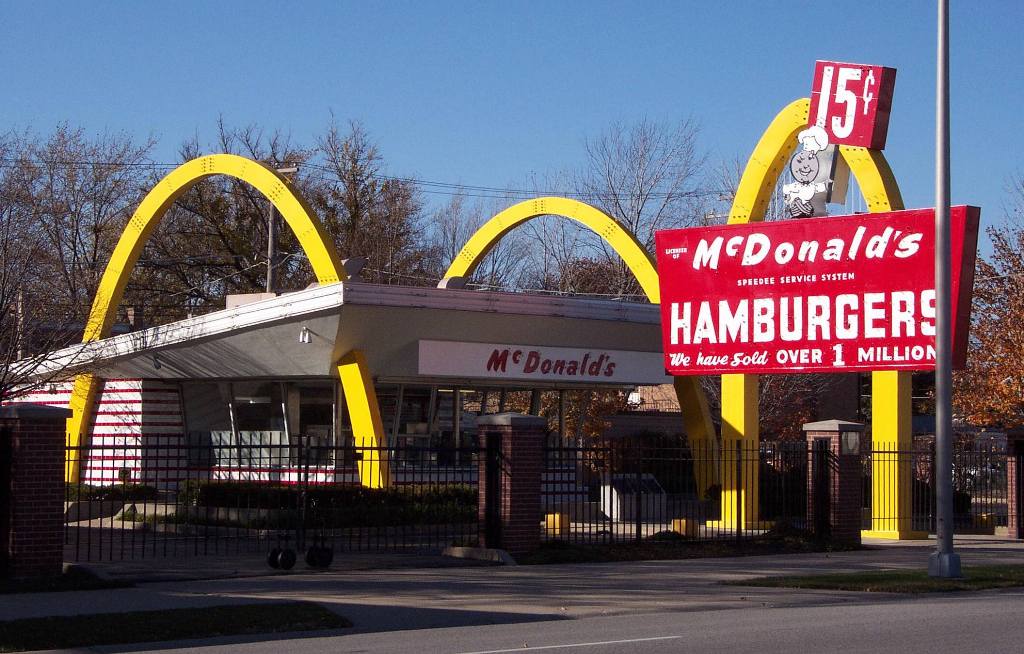
Then Kroc turned up, unannounced, to check. That is the detail that matters. A specification without someone who checks it is a wish list.
A rulebook so good people buy it as art
In 1975 NASA introduced a sleek new logotype that everyone soon called the worm. The New York studio Danne & Blackburn did not stop at the mark. They produced the NASA Graphics Standards Manual, a document that showed, application by application, how the new identity should be used across the agency. The worm went on to appear on shuttle wings, on spacesuits and on the Hubble Space Telescope.
The manual is a small masterpiece of guardianship. It did not save the logo.
In 1992 the administrator, Dan Goldin, ordered the worm retired and the older “meatball” insignia restored, and the manual went out of print. Seventeen years of disciplined consistency, reversed by one administrator’s decision.
Then came the afterlife. In 2015 two designers at Pentagram, Jesse Reed and Hamish Smyth, reissued the manual through Kickstarter, a year after their reprint of the 1970 New York City Transit Authority standards manual had raised more than $800,000 the same way. In April 2020 NASA painted the worm on a SpaceX Falcon 9 for the Demo-2 crewed flight, while stating that the meatball would remain its primary symbol.
Two lessons sit inside that story. Documentation outlives the people who write it, and a good manual becomes a brand’s memory. But documentation does not outrank power. Much of a guardian’s real work is persuading whoever occupies the corner office next that the system is worth keeping.
Is a brand guardian the same as the brand police?
Every guardian dreads this question, because in plenty of organisations the honest answer has been yes.
In 2012, after Twitter set out strict rules for how its bird could appear, someone built a website whose only purpose was to let visitors break them, one button at a time. Designers adored it.
Ask designers and developers about the brand teams they have worked with and the grievances repeat.
The guidelines arrived as an expensive, print-era PDF with no screen colour values and no usable web fonts, so the web team carried on without them. A rule insists on an exclamation mark in a brand name and nobody can explain why. The palette fails basic contrast checks. A mandated button style performs badly in testing, and nobody listens until someone produces data.
The police model fails for a reason that has little to do with personality. Rules enforced through sign-offs, reprimands and rewards produce compliance, and compliance is brittle. People do exactly what is required, resent it and drift towards the exit.
Rules people understand and believe produce the behaviour no rulebook can demand: the account manager who flags an off-message proposal before it goes out, the salesperson who drops a claim because it no longer feels true. A modest amount of enforcement helps. Too much crowds out the belief that does the real work.
You cannot decree consistency into existence. It has to be taught, which is why the word many organisations now prefer is steward. Caterpillar once ran workshops to teach its identity standards to the outside designers who had to apply them.
Disney goes further and turns brand rules into behaviour. Its character performers are trained never to tell a guest “I don’t know” (they find someone who does), and to point with two fingers rather than one, because a single finger reads as rude in some cultures. Nobody experiences those rules as policing. Guests experience them as the place being kind.
The uniform that changes without changing
The hardest assignment for a guardian is not stopping change. It is changing something while keeping its meaning intact. Singapore Airlines has spent more than half a century on that problem with a single garment.
Pierre Balmain designed the sarong kebaya for cabin crew of the predecessor carrier, Malaysia-Singapore Airlines, in 1968, and remarkably little has changed since. There are no standard sizes; every kebaya is tailored to the woman who wears it. Its colour signals rank.
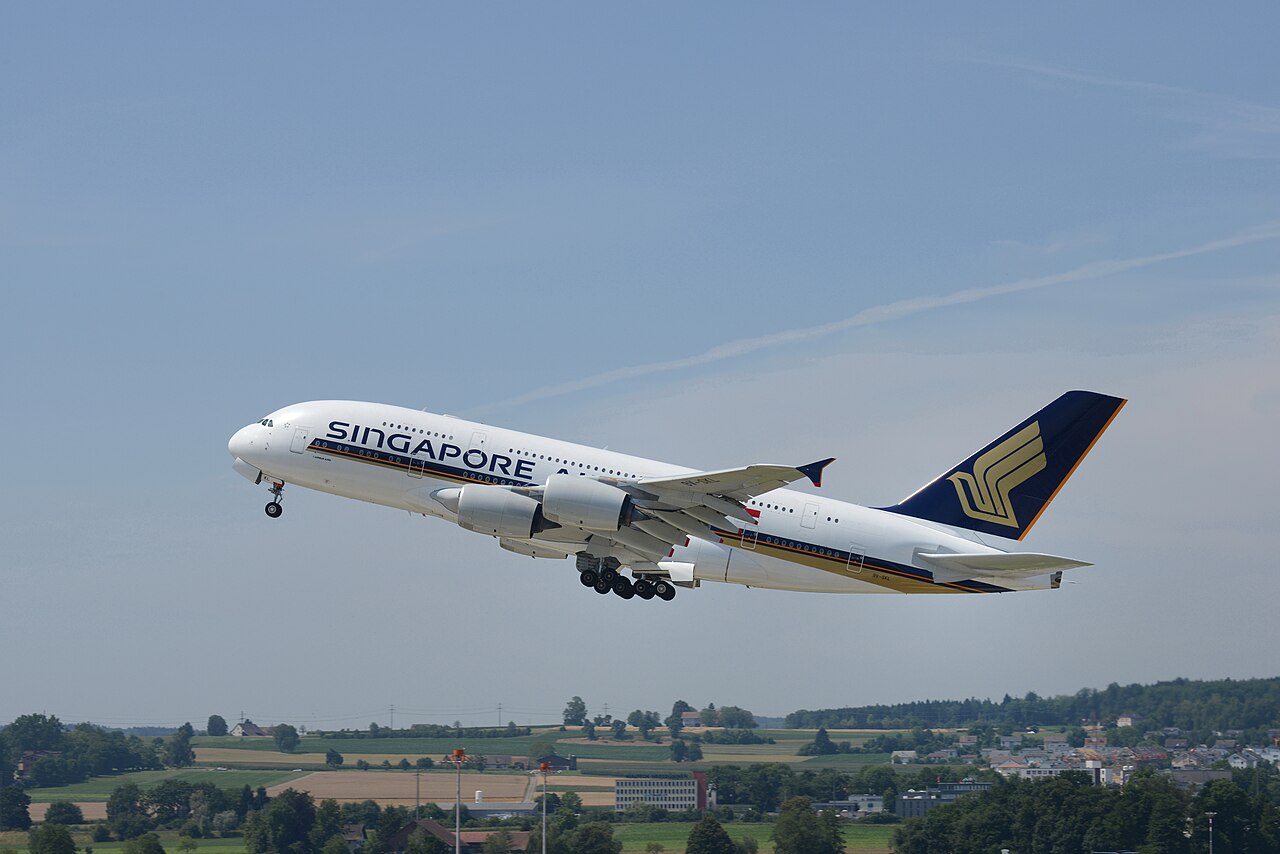
Trainees are assigned their hairstyles, make-up shades and nail colours. Earrings have had to be silver, gold, pearl or diamond and no wider than 0.75 centimetres; necklaces, not at all. To an outsider this looks like fussiness. To the airline it is the brand, carried down the aisle by people.
Now watch how such a brand handles change. In October 2026 Singapore Airlines confirmed that from January 2027 its female crew will swap Balmain’s open-toed sandals for closed-toe leather wedges. The new shoes were designed with the Singapore footwear brand Pazzion in collaboration with flight attendants, tested as prototypes on real flights, and finished in the airline’s batik print, with colours matched to each rank’s kebaya.
Safety and comfort drove the change. The craft lies in what stayed. Change the shoe, keep the batik and the rank colours, and the Singapore Girl still looks exactly like herself.
Disney made a comparable move in April 2021, when it rewrote the Disney Look for cast members at Walt Disney World. References to gender disappeared, visible tattoos became acceptable within limits, and inclusion joined safety, courtesy, show and efficiency as a fifth key that staff are taught.
The rules loosened. The guardianship did not. The standard still describes what good looks like; it now describes more people.
The guardian who says yes
The police model assumes the main risk is misuse. Some of the cleverest brand stewardship in Asia assumes the bigger risk is obscurity.
Kumamon, the bear mascot created for Japan’s Kumamoto Prefecture ahead of the Kyushu Shinkansen’s full opening in 2011, was designed by Manabu Mizuno of Good Design Company for a campaign led by the writer Kundo Koyama. The prefecture then made a striking choice. Businesses could put the bear on their products without paying a licence fee, provided they applied for permission and printed the approval number on the product. By March 2012 it had granted 3,682 permissions to 782 companies.
The gate stayed; it simply opened outward. Every approval was still a decision about what the bear could be attached to. And the generosity had a hard edge: the prefecture had registered Kumamon as a trademark in February 2011, so an unapproved bear was never a compliment. It was an infringement.
Singapore’s lion head symbol, introduced in 1986 as an informal national emblem, follows similar logic. Organisations may use it with approval, but under guidelines issued in 1999 it must not be modified, should appear in a single colour and preferably faces left. Wide access. Fixed form.
Emirates shows a third version of the same instinct. Its name in Arabic calligraphy has appeared on its aircraft engines since 1985, and when the airline redrew its livery in 2023, the calligraphy survived and even spread to the wingtips. Guardianship is partly the discipline of knowing which few things never change, so that everything else is free to.
Do smaller companies need a brand guardian?
Yes, though rarely a full-time one. The need arrives earlier than most founders expect, usually when a second designer, a first agency or a first overseas distributor starts producing material the founder never sees.
Picture a 60-person engineering firm in Jurong with three sales teams, two websites and a capabilities brochure that exists in four versions, each a little more wrong than the last. Nobody there is careless. Nobody is in charge of the whole picture either.
Two forces are pushing the role towards part-time and external models. Marketing leaders change jobs often, and when they leave, the brand’s memory leaves with them. Meanwhile fractional leadership, in which a senior specialist works embedded but part-time, often for several companies at once, has spread from finance and law into marketing.
For a business that needs judgement more than headcount, a fractional brand guardian makes sense. Senior enough to say no to a director. Close enough to know the business. Affordable enough to keep.
What should that person fix first? Usually the unglamorous things. Rebuild the guidelines for the screens where the brand actually lives, with digital colour values, accessible contrast pairings and templates people can edit without breaking.
Create one home for approved assets. Agree who signs off what, and how fast, because a guardian who takes a week to approve a flyer guarantees the next one will never reach her. Then teach, again and again, until the rules belong to everyone else.
Questions from the floor
What is the difference between a brand guardian and a brand manager?
A brand manager usually owns a brand’s commercial performance: campaigns, launches and sales targets. A brand guardian owns its integrity, making sure everything the organisation produces stays faithful to the brand’s strategy and identity. In smaller companies, one person often does both.
What skills does a brand guardian need?
Deep knowledge of the brand’s strategy, a sharp eye for detail, enough design literacy to brief and critique creative work, and the confidence to refuse senior colleagues politely. The ability to teach matters as much as taste, because the role only scales when other people understand the rules.
Can the brand guardian role be outsourced?
Yes. Many companies use an agency or a fractional brand manager who works part-time inside the business, reviewing work, maintaining guidelines and training staff. It works best when that person has clear sign-off authority and direct access to leadership.
Mei, for the record, stopped receiving rogue flyers the month she made saying yes easier than going around her. If your company needs a Mei two days a week rather than five, that is what fractional brand management is for.






