It is a quarter to six in the morning at Changi, and the aircraft door has just opened onto the airbridge. The air is cool enough to feel deliberate. The walk is short, the signs are calm, and nobody is shouting. An automated immigration gate swallows a passport, blinks and lets you through before you have finished yawning.
You have not spoken to a single employee, yet you already have a firm opinion of the country.
That is brand experience at work. Brand experience is everything a person senses, feels, thinks and does when they meet a brand, from the advertising and the queue to the product, the staff and the goodbye, and it is where the brand’s promise is either kept or quietly broken.
Advertising makes the promise. The experience settles the bill. These notes follow the settling, from an airport to a hot pot queue and back again.
Changi: the airport that sells a country
Changi opened in 1981 and was named the world’s best airport again in 2026. What it sells is not flights. Airlines sell flights. Changi sells the time in between, and it treats that time as a product with a design brief.
Wander through the transit area of Terminal 3 at two in the morning and you will find a butterfly garden, open around the clock, with more than 1,000 tropical butterflies and a six-metre grotto waterfall. Nobody needs a butterfly garden to catch a connection. That is the point.
A layover that might have been dead time becomes a story to tell, and a reason to route through Singapore next time.
Then, in April 2019, came Jewel: a doughnut of glass and steel designed by Moshe Safdie, linking three terminals and wrapped around the Rain Vortex, a 40-metre indoor waterfall ringed by a terraced indoor forest of around 3,000 trees. It was conceived for a hard-nosed reason. Hubs compete, and Singapore wanted to stay one.
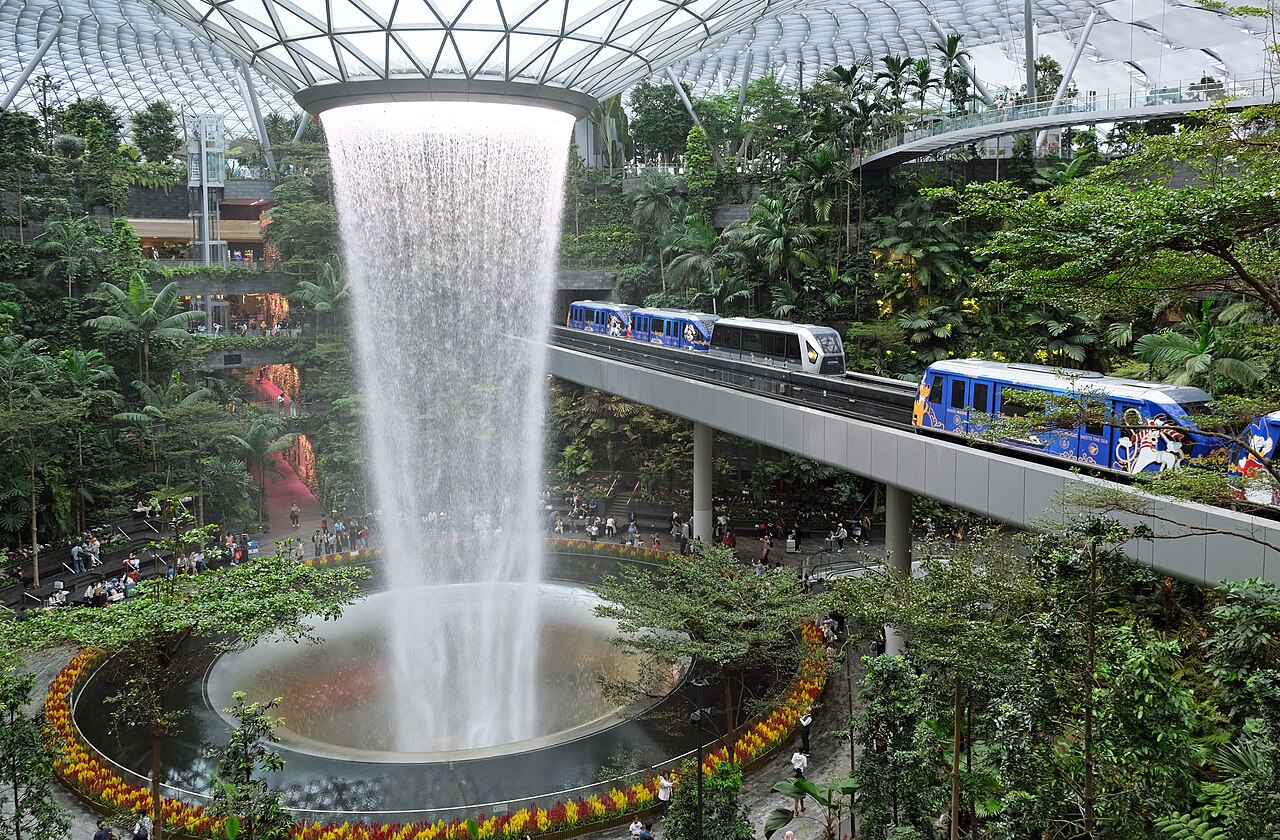
Ask frequent flyers what they love about Changi and they rarely start with the architecture. They talk about speed. The fast gates, the short walks, the lack of drama.
The waterfall gets the photographs. The smoothness earns the loyalty.
There is a risk in all this polish, and it is placelessness. Glass, greenery and good lighting can look like any wealthy city. The best moments at Changi are the ones that could only happen in Singapore.
What is brand experience, and how is it different from customer experience?
The two overlap, but they are not twins. Customer experience usually describes the service path of someone already buying: booking, paying, delivery, support. Brand experience is wider. It includes everyone who brushes against the brand, customer or not, and every cue that carries it: the shopfront glimpsed from a bus, the scent in the lobby, the tone of a rejection email, the weight of the box.
To audit it, ask four plain questions at each encounter.
What did people sense? What did they feel? What did it make them think? What did it make them do?
A brand that only ever answers the third question, with facts and features, is leaving most of the encounter blank.
The other test is the promise. Every brand experience either confirms what the brand claims or contradicts it. A hotel that advertises calm and greets guests with a 20-minute check-in queue has two brands: the one in the brochure and the one in the lobby. Guests believe the lobby.
Singapore Airlines: a scent at 35,000 feet
Board a Singapore Airlines flight and, before the safety video, someone hands you a hot towel. Breathe in.
In 1990 the airline introduced a signature fragrance, Stefan Floridian Waters, blended into the towels and the perfume worn by cabin crew. Regular passengers say they recognise it the moment they step aboard. It is the brand, distilled.
Scent is the stealth channel of experience design. It bypasses argument and goes straight to memory, which is why one hot towel can carry the feeling of a dozen previous flights.
The airline backs the senses with control. Its Book the Cook service lets passengers in Suites, First, Business and Premium Economy pre-order a main course from six weeks to 24 hours before departure. The detail matters less than the message: you were expected.
Fly west to Dubai and Emirates makes a different bet. Its A380 first-class cabin carries two shower-equipped lavatories and a spa, and premium passengers share an onboard bar and lounge.
Emirates built a shower spa into its A380 first-class cabin: a peak far more people hear about than use.
Few travellers will ever use them. Far more have heard about them. That is what a well-chosen peak does: it travels further than the people who experience it.
The peak and the ending
People do not remember experiences the way an accountant records them. No averaging. They remember the most intense moment and the way it ended, and they let those two stand in for the whole. Behavioural scientists call this the peak-end rule, and once you know it you see it everywhere.
It explains why a long flight with a wonderful final hour can feel better than a short one that ends in a lost bag. Extend an uncomfortable medical procedure by a few gentler minutes and patients remember it as less unpleasant, and are more willing to come back. Length barely registers. Endings do.
So the rule hands brands two design jobs: create at least one peak worth retelling, and refuse to let the ending sag.
Ritz-Carlton built its reputation on the second job. By the late 1990s any of its employees could spend up to $2,000 to fix a problem or resolve a complaint on the spot. Staff gathered for a short briefing at the start of every shift to reinforce the company’s values.
The hotel group won America’s Malcolm Baldrige National Quality Award twice, in 1992 and 1999. Forget the dollar figure. The point was that the person in front of the guest was trusted to fix things. A complaint handled that fast often becomes the peak of the stay, not the low point.
Chengdu: Haidilao and the art of the wait
Haidilao was founded in 1994 in Jianyang, a city in Sichuan that now falls under Chengdu’s administration. The hot pot is good. What made the chain famous, though, is what happens before you reach the table.
Picture a Friday evening queue that in most restaurants would be a sullen line by the door. At Haidilao it is closer to a party. Free snacks, fruit and drinks circulate. Board games come out.
Some branches offer nail treatments while you wait. Once you sit down, staff bring aprons, plastic bags to protect your phone from splashes, and hairbands for long-haired diners. At selected outlets, the hand-pulled noodles arrive as a performance.
None of this is subtle. All of it makes the same point: the worst part of eating out, the wait, has been turned into the part people film. The brand is literally the queue.
The model travelled. Haidilao opened its first overseas restaurant at Clarke Quay in Singapore in 2012, and by 2025 the group and its overseas arm operated more than 1,400 restaurants worldwide.
Taipei: Din Tai Fung’s glass window
Din Tai Fung began in 1958 as a cooking oil shop in Taiwan, run by Yang Bing-yi and his wife, Lai Penmei. When oil sales slumped, they turned half the shop over to steamed xiaolongbao, and by 1972 it had become a full restaurant. The original still stands on Xinyi Road in Taipei.
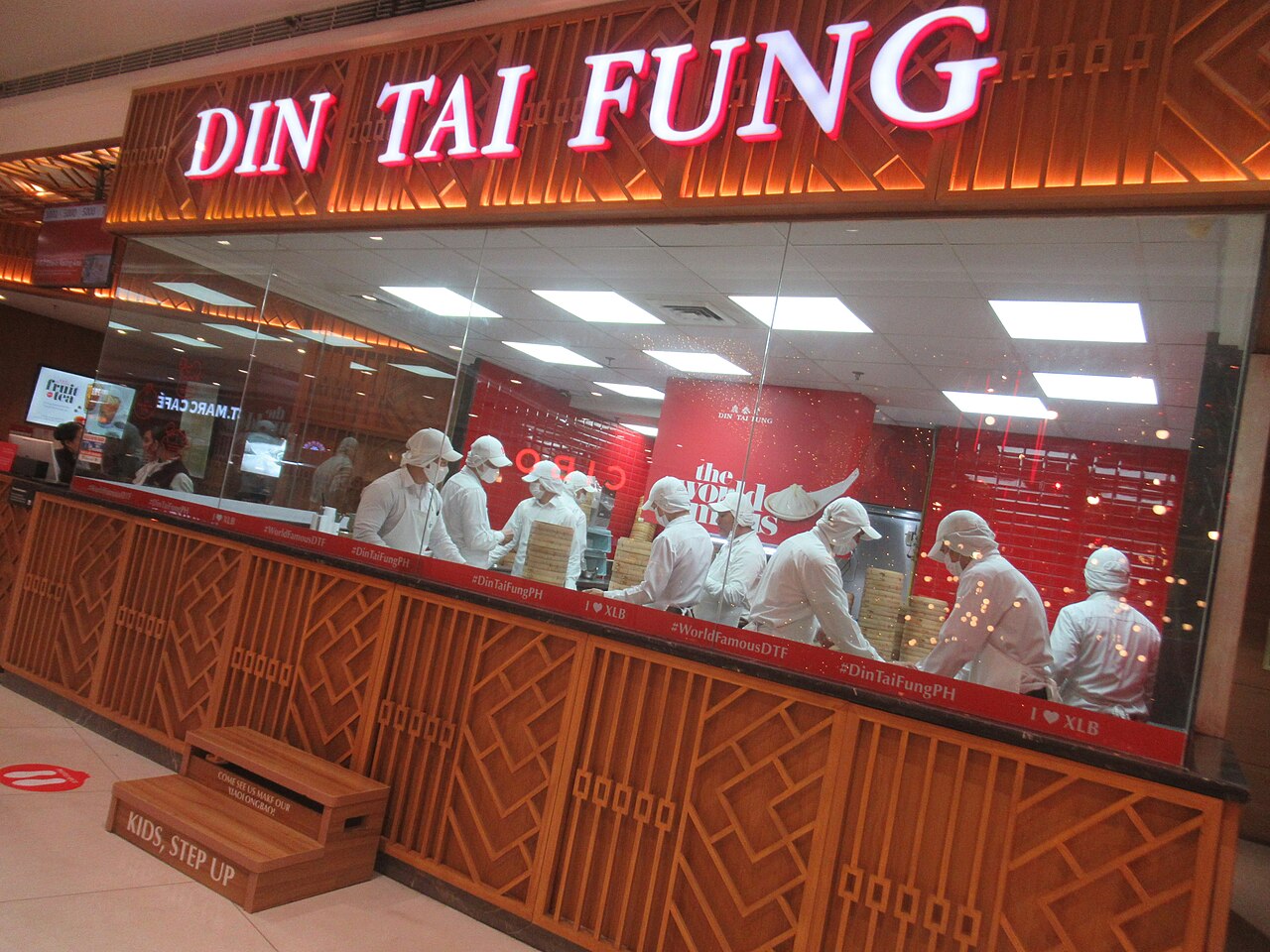
The dumplings are famous for paper-thin wrappers pinched into 18 folds, made to order behind a pane of glass. That window is the brand experience in one object.
While you wait, you can watch the cooks rolling, filling and folding. The queue becomes theatre, and the theatre becomes proof. Nobody needs a poster about freshness when they have just watched their lunch being made.
The approach earned a Michelin star for the chain’s Silvercord branch in Hong Kong in 2009. It also travels well: Singapore alone has more than two dozen outlets.
Moments of truth, counted
In the 1980s Jan Carlzon, then running Scandinavian Airlines, did a piece of arithmetic that changed how service businesses think. He reckoned that each of the airline’s roughly 10 million passengers a year dealt with about five SAS employees, for around 15 seconds at a time.
That made some 50 million brief encounters a year, none of them in the boardroom, and each one capable of making or losing a customer. He called them moments of truth.
The phrase has since been stretched to cover the shelf, the first search and the unboxing. The original insight is still the sharpest: your brand is decided at the counter, not in the boardroom.
Tokyo: Muji and the experience of quiet
Not every brand experience is a waterfall. Step into a Muji store and the first sensation is relief.
Products sit in a limited range of colours, with minimal packaging that carries only functional information and a price. No shouting. No logos competing for your eye.
Muji has pushed that calm into full stays, with hotels in Shenzhen, Beijing and Ginza, where its largest store opened in April 2019. A night in a Muji hotel is the brand turned into a room. You sleep inside the promise.
The lesson for everyone else is that experience design does not mean spectacle. It means consistency between what you claim and what people feel, down to the hush.
How do you design a brand experience without a Changi budget?
Start by becoming a stranger. Book your own service under a different name, call your own hotline, walk into your shop from the car park rather than the staff entrance. Write down every moment, however small, from first search to final invoice.
Then work through the list with four questions.
- Where is the worst wait? Every business has one: the phone queue, the delivery window, the first five minutes in the clinic. Fix it, or make it worth having, the way Haidilao did.
- Where could a peak live? Choose one moment and make it remarkable. A handwritten note, a tasting, a free upgrade nobody expected.
- How does it end? Look hard at the last thing customers experience. For online sellers it is often the return. Zappos made free delivery and free returns part of its identity, turning the most awkward ending in retail into a non-event.
- Who is allowed to fix things? Decide how much a frontline employee can spend, waive or replace without permission, and tell them. Scripts make experiences consistent. Authority makes them memorable.
Picture a physiotherapy clinic in Tampines. The treatment is excellent, but the visit ends at a cramped counter with a card machine and a sticky queue. The owner moves billing to a text message, has the physiotherapist walk each patient to the door with a printed note of three exercises, and gives the front desk authority to waive a follow-up fee when a booking goes wrong.
Nothing here costs much. Reviews start mentioning the goodbye.
Then repeat the stranger exercise every quarter, because experiences decay quietly. A new hire, a cheaper supplier or a software update can undo a peak without anyone deciding to.
Before you board
What is the difference between brand experience and customer experience?
Customer experience covers the service interactions of people buying from you. Brand experience is broader: every sensory, emotional and practical encounter anyone has with the brand, including advertising, spaces, packaging and staff, whether or not they buy.
What are moments of truth in brand experience?
Moments of truth are the brief points of contact, often only seconds long, where a customer forms a judgement about a brand. Jan Carlzon of Scandinavian Airlines popularised the idea in the 1980s, and it now covers everything from the first search result to the returns desk.
How do you measure brand experience?
Combine what customers say with what they do: review themes, net promoter or satisfaction scores, repeat visits and complaint resolution times. Watching real customers move through your service, and noting where they hesitate, often reveals more than any survey.
If your promise is lost somewhere between the poster and the queue, our brand activation team can help you design the moments people remember.






