If you read budgets for a living, “brand” is the line that looks most like a hobby. It has no invoice to match against a delivery note and a suspicious habit of growing whenever someone in marketing has been to a conference. So let us treat it the way finance treats everything else: as a claim that must show up in the numbers or be written off.
Here is the claim in one sentence. Brand equity is the extra value a name adds to a product: the higher price, extra volume, cheaper customer acquisition and faster recovery a business earns because buyers know and prefer it, compared with the same offer sold without the name.
Every part of that sentence can be measured. Not perfectly, nor cheaply. But well enough to make decisions, which is all a spreadsheet was ever for.
Your brand is not on your balance sheet. Until someone buys it.
Start with an accounting oddity most founders never notice. Under IAS 38, the international standard for intangible assets, a brand you build yourself may not be recognised as an asset. Twenty years and a small fortune, and the balance sheet shows nothing.
Sell the company, though, and the buyer books that same brand at fair value. The asset materialises the moment it changes hands.
So the clearest readings of brand equity come from acquisitions, where someone has had to put cash on the table. In July 2012 Heineken offered S$50 a share for Asia Pacific Breweries, the Singapore brewer behind Tiger Beer: a 45% premium on the previous month’s average price. By August it had raised that to S$53, about S$5.6 billion for Fraser and Neave’s interests.
Breweries can be built and distributors hired. A beer that drinkers already ask for by name cannot be recreated on any timetable a shareholder would accept.
Acquisition prices are forecasts, not facts. Unilever paid a reported US$1 billion for Dollar Shave Club in 2016, then in 2023 sold a majority stake to the private equity firm Nexus Capital, keeping 35%, at a price nobody published. The purchase cheque is the only number everyone can quote.
When the forecast goes wrong, accountants have a word for it: impairment. In February 2019 Kraft Heinz wrote down its Kraft and Oscar Mayer brands by US$15.4 billion, and its shares lost more than a quarter of their value the next day. Analysts asked whether years of aggressive cost-cutting had eroded the brands.
Equity that is not maintained depreciates. It simply does so off the books, until abruptly it is very much on them.
What does brand equity actually mean in money terms?
Strip away the vocabulary and brand equity shows up in three places: what customers pay, how many of them choose you, and how they behave when something goes wrong. Price, preference, resilience. Most attempts to measure it look only at the first, which is why most attempts mislead.
Price is the obvious one. Hermès reported revenue of about €16 billion for 2025 at a recurring operating margin of 41%, and its leather goods still grew 13% at constant exchange rates. The growth matters more than the margin. Charging a lot is easy; charging a lot while selling more is equity.

A price premium on its own proves very little. Plenty of brands charge more and simply sell less.
The more honest number is the revenue premium: your price multiplied by your volume, minus the price multiplied by the volume of a comparable unbranded product in the same category. Positive, and the name is earning its keep. Charge 30% more but sell half as much, and it is not.
This measure has a property anyone who dislikes noise will appreciate. Revenue premiums move slowly from year to year, because they reflect accumulated memory rather than this month’s promotions. A sudden drop is therefore a signal, not a rounding error.
The blind test that told the wrong story
Preference is harder to pin down, and the most expensive lesson about it is four decades old. On 23 April 1985 Coca-Cola replaced its formula with a new one that had beaten both the original and Pepsi in blind taste tests. The public revolted, swamping phone lines and sending complaint letters by the tens of thousands. On 11 July, 79 days later, the original came back as Coca-Cola Classic.
The taste tests were not wrong. They measured the wrong thing: the liquid with the name removed, when the name was the asset. Customers were not buying a flavour. They were buying memories and habits the company had just announced it was cancelling.
That failure points to the cleanest method in the field, and you can run a version of it yourself. Show one group your product or proposal with your name on it, and a matched group the identical offer without it. The difference in what they would pay, or how readily they would choose it, is your brand equity in its purest form. No difference means you own a logo, not a brand.
Some premiums rest on customers simply not knowing better. In the United States, pharmacists buy the national brand of headache pill about 9% of the time; the average shopper does so 26% of the time. Pharmacists know the active ingredient is identical. Sceptics call this irrational trust, and for painkillers they have a point.
Equity built on an information gap is the most fragile kind, because every comparison site and every better own-label range chips away at it. Equity built on experience and meaning erodes far more slowly.
Resilience: the line item that only appears in a crisis
The third component is invisible in a good quarter. Then something breaks.
In June 2015 India’s food regulator banned Nestlé’s Maggi noodles over alleged excess lead, clearing shelves of a brand that had held about three-quarters of its market by volume. The noodles returned that November. By 2018 Maggi was back at pre-crisis sales in value terms, with a little over 60% of the market.
No challenger, however well funded, could have bought that recovery. It was paid for in advance, in trust, one yellow packet at a time.
Compare Snow Brand in Japan. In 2000 its milk made more than 13,000 people ill, the country’s worst case of food poisoning. Less than two years later its meat subsidiary admitted packing imported beef in boxes labelled as Japanese during the mad cow scare, to claim money from a government buy-up scheme. Its president resigned and supermarkets pulled Snow Brand products.
One breach can be absorbed. Two in quick succession tell customers the first was no accident, and the reserve runs dry.
Tiger Balm shows how much neglect a deep reserve can absorb. In 1971 the British investment group Slater Walker took control of Haw Par, the Aw brothers’ company, and the rights in Tiger Balm’s main Asian markets were licensed out for 20 years. The licensee raised the price twice in two years while selling a cheaper balm of its own, in a hexagonal jar with an identical gold-coloured lid. Haw Par sued.
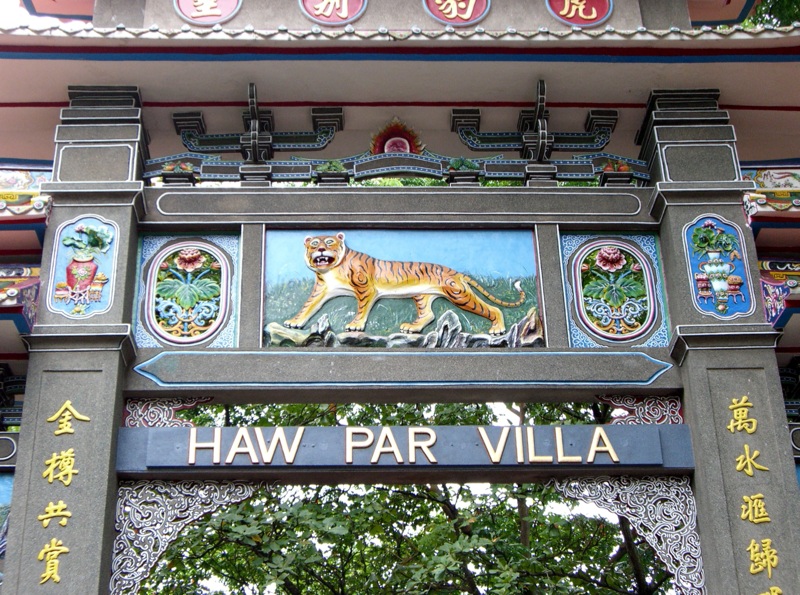
When the licence expired in 1992, Haw Par, by then an associate of Wee Cho Yaw’s UOB, regained worldwide control and rebuilt. It still guards the perimeter: a long fight with an Indian “Flying Tiger” balm reached India’s Supreme Court before the rival redesigned its packaging. Defending equity is a recurring cost. Budget for it.
How can a small business measure brand equity without a research budget?
You will not commission a global tracking study. You do not need one. Most of the evidence already sits in your sales records and quote log, and fits on a one-page ledger worth updating every quarter.
| Metric | How to calculate it | What it tells you |
|---|---|---|
| Realised price premium | Your average selling price after discounts, divided by the nearest credible no-name alternative | Whether customers pay for the name or only for the product |
| Own-brand vs white-label margin | Gross margin on your branded line minus margin on the same goods sold under someone else’s label | The cleanest small-business reading of equity there is |
| Win rate when not cheapest | Quotes won where you were not the lowest bid, divided by all such quotes | Preference, in B2B terms |
| Demand by name | Branded searches, direct visits and “asked for you by name” enquiries as a share of all new leads | Awareness that customers act on |
| Repeat rate | Customers who buy again within your normal cycle, divided by all customers | Whether the promise was kept |
| Price-rise response | Change in volume over the eight weeks after a modest price increase | How much of your demand is loyal rather than shopping on price |
The white-label comparison is gold if you have it: many manufacturers sell the same goods under their own name and a retailer’s, and the margin gap puts a direct price on the name. The price-rise test is the cheapest experiment in business, because strong brands lose noticeably less volume when they raise prices. Lift one line by 5% and watch.
Be strict about demand by name. A customer who searched “bakery near me” chose the category. One who typed your name chose you.
A worked example, and two caveats
Picture a Tiong Bahru bakery selling 400 sourdough loaves a week at S$9. Similar no-name bakeries nearby sell about 500 at S$5.50. The revenue premium is S$3,600 minus S$2,750: S$850 a week, roughly S$44,000 a year, earned by a name over a door.
If that figure shrinks for three quarters running, more posting on social media is not the answer. Finding out why is.
Now the caveats. These numbers measure outcomes, not causes: they tell you equity is moving, not which customer belief moved it. For that you still need to ask customers what they recall unprompted, which words they attach to you, and whether a competitor could claim the same words.
And choose your benchmark honestly. A lazy comparison will flatter you every time.
Building equity versus harvesting it
Every finance director has sat through this argument. Brand advertising is slow and hard to attribute. Performance marketing is fast and easy to report. On a quarterly view, the fast money always wins. Over five years it usually loses, because activation spends existing equity without adding to it.
The best-supported rule of thumb in advertising effectiveness puts roughly 60% of spend into long-term brand building and 40% into short-term activation.
The temptation to harvest is strongest exactly when equity is high, because a strong brand keeps selling for a while after investment stops. That lag makes cuts look free. Picture an online retailer doubling its discount codes: the revenue lands next week, the damage to its price perception next year. Repeat for a decade and you get a write-down that shocks only people who were not reading the ledger.
The opposite story is slower and duller, which is precisely the point. Tusker was first marketed in Kenya in 1923, named in memory of the brewery’s co-founder George Hurst, who had been killed by an elephant. In December 2025 Diageo agreed to sell its 65% stake in East African Breweries, Tusker’s owner, to Asahi, at an implied value of US$4.8 billion for the whole company: about 17 times adjusted EBITDA.
Nobody pays that multiple for brewing kettles.
Before you sign off
Is brand equity the same as brand value?
Not quite. Brand equity is the customer behaviour a name creates: paying more, choosing more often and forgiving faster. Brand value is a financial estimate of what that behaviour is worth, usually produced for an acquisition, a licence or a valuation ranking.
Can brand equity be negative?
Yes. If customers would pay more for, or more readily choose, the identical product without your name on it, the brand is a liability. It tends to happen after repeated scandals or long association with poor quality, and the repair usually starts with the product, not the logo.
How often should a small business measure brand equity?
Quarterly for the sales-based metrics, since they come straight from records you already keep. An annual customer conversation about recall and associations is enough for most SMEs, plus a check after any major price change or crisis.
If your ledger currently holds more question marks than numbers, a Firefish brand audit is a sensible place to begin the reconciliation.






