Walk up Jalan Cihampelas in Bandung on a Saturday and you will pass students in hiking jackets they will never wear up a mountain, mothers comparing headscarves by touch, and teenagers queuing for trainers whose box says nothing about Portland or Herzogenaurach. The first Eiger shop opened on this street in 1994. Thirty years on, the jacket on a student’s back says where she is from, as much as where she might go.
That shift, from “made in Indonesia” to “made by Indonesia”, is the story of this list.
An Indonesian fashion brand, as used here, is a clothing, footwear or accessories label founded and still run from Indonesia, whose name local shoppers recognise and ask for, rather than a factory producing garments under someone else’s label.
How we chose the ten
There is no brand-valuation league table for Indonesian fashion. The valuation reports that rank the country’s banks and noodles do not reach down to batik houses and hijab labels, and inventing a dollar figure would be dishonest.
So the basis is stated plainly. These ten were selected on market presence, recognition and growth: national retail reach, how often shoppers name them unprompted, and whether they have grown at home and abroad in recent years. Where a public index measures a category, as Indonesia’s Top Brand Index does for branded headscarves, we follow its 2025 scores.
The list is grouped into three waves (heritage houses, headscarf giants and the new wave) rather than ranked by size. The numbers are for navigation, not rank. A batik house in Solo and a streetwear label in Tangerang are not playing the same game, and pretending one beats the other would tell you nothing.
Why does a country that sews for the world have so few famous labels?
It is the question that comes up whenever Indonesia and fashion share a sentence. On technology forums, people swap stories about trainers, jeans and guitars whose labels read “Made in Indonesia”, and argue over whether country of origin says anything about quality. Almost nobody names an Indonesian brand. In the global imagination the country is a workshop, not a wardrobe.
That gap is a branding problem, not a craft problem. Making a garment well earns you a contract. Making people want your name on it earns you a margin, loyalty and the right to set your own price. Every brand below crossed that line, usually by doing something factories never do: telling customers who the clothes are for.
The heritage houses
1. Batik Danar Hadi
Santosa Doellah and his wife, Danarsih Santosa, started Danar Hadi in Surakarta (Solo) in 1967. It survived the long slump from the 1980s to 2000, when cheap printed batik from China flooded the market, by working with leading designers rather than fighting on price.
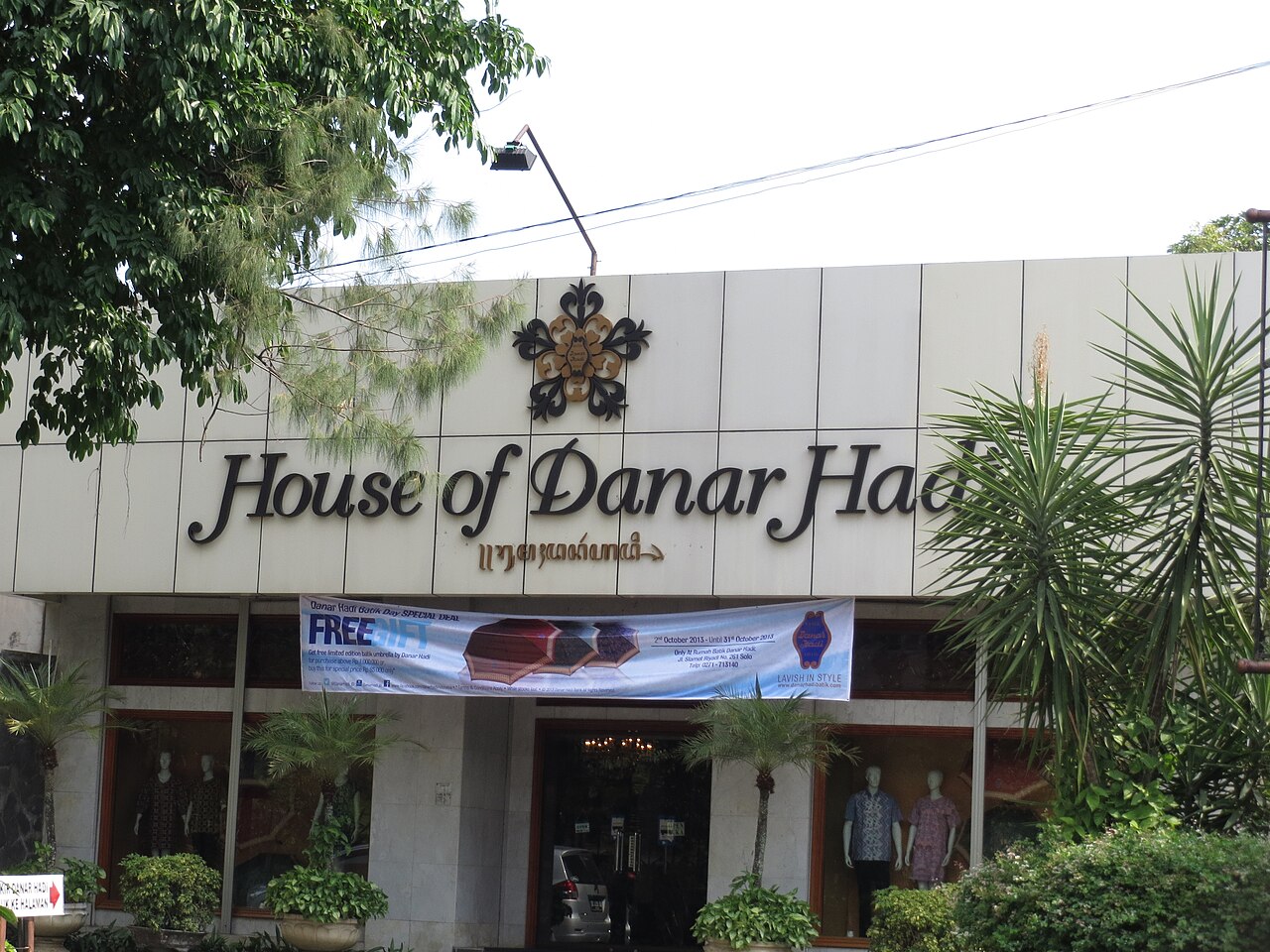
The brand’s smartest move is cultural, not commercial. In 2008 Santosa built the House of Danar Hadi, a heritage complex in Solo that holds the Batik Kuno Museum. A museum is the ultimate proof of authenticity: it tells customers the company sees itself as a custodian of batik, not merely a seller of shirts.
When UNESCO inscribed Indonesian batik on its list of intangible cultural heritage in 2009, houses like Danar Hadi were already standing in the right place. Its outlets in Singapore and Jeddah carry that custodian story abroad.
2. Exsport
Before the mountains, there were bags. Ronny Lukito began making them in Bandung in 1984 under the name Exxon. The oil giant objected, and the label was renamed Exsport.
Exsport marks its 45-year journey with a look behind the stitching, from the Bandung bag maker that was forced to rename itself in its early years.
It is the best naming lesson on this list, and a cheap one to learn second-hand. A name that borrows the sound of a famous trademark feels clever until the letter arrives. The rename forced the business to build an identity of its own, and Exsport has kept that name ever since, long enough to become a fixture of Indonesian bag shops rather than an echo of an American oil company.
It also gave Lukito the operating base, in bags, sewing and distribution, from which a far more ambitious second brand would grow. Heritage is not only about centuries. Sometimes it is about still being on the shelf decades after a forced rename.
The mountain that came home
3. Eiger
Lukito’s second act was bigger. Eiger was founded in 1989, named after the Swiss mountain as shorthand for toughness, and opened that first Cihampelas shop in 1994. It now sells through more than 250 stores in Indonesia and describes itself as rooted in “tropical mountaineering” culture.
That phrase is the brand. Instead of imitating European alpine labels, Eiger claimed the jungles, volcanoes and humidity of its home market as an expertise in their own right.
In 2023 it opened its first international store, in Interlaken, Switzerland, near the very mountain it is named after. A piece of brand theatre that turned a borrowed name into a homecoming. It has since added shops in markets including Malaysia, the Philippines, Singapore and Japan.
Eiger’s Take the First Step film follows the brand to Switzerland, where a borrowed name became a homecoming.
Which hijab brands do Indonesians buy most?
Modest fashion is not a niche in Indonesia; it is the mainstream. Branded headscarves are one of the few fashion categories with a long-running national scorecard, and the 2025 Top Brand Index shows something rare: a three-way dead heat.
4. Zoya
Zoya edged the category in 2025 with a Top Brand Index score of 23.2, up from 19.3 two years earlier. In a market where the top three are separated by less than a point, that climb shows how much ground can change hands in a short time.
The lesson for any brand in a crowded category is uncomfortable. When products look alike on the shelf, and a plain jersey headscarf can only differ so much, the brand that wins is often the one that is simply easier to find and easier to remember. Distinctiveness and availability beat cleverness.
5. Rabbani
Rabbani, founded in 1991, scored 23.0, a hair behind. It calls itself the “Profesor Kerudung Indonesia”, Indonesia’s headscarf professor, and is credited as a pioneer of the instant hijab, the pull-on style that needs no pins.
Rabbani’s own channel tries on its instant school headscarves, the pull-on style the self-styled headscarf professor is credited with pioneering.
That nickname is positioning in three words: expertise, authority and a wink of humour. Rabbani backs it with distribution, with 178 outlets recorded in its 2022 company profile, and with brand ambassadors chosen to make a practical product feel aspirational. A professor, after all, needs a lecture hall.
6. Elzatta
Elzatta led the category from 2020 to 2023, peaking at 32.1 in 2022, before falling to 21.9 in 2024 and recovering to 22.6 in 2025. That swing is the cautionary tale of the trio.
Elzatta presents its Instant Hijab Series, part of the constant newness a brand needs to hold its place in Indonesia’s crowded headscarf category.
Leadership in a crowded, fast-moving category is rented, not owned. The rent is paid in constant newness and presence.
The new wave at home
7. Compass
Compass was founded in Bandung in 1998 by Kahar Gunawan and spent years as an unremarkable, low-priced canvas shoe. Then came a 2017 rebrand led by creative director Aji Handoko, starting with a model called the Gazelle. By 2018 the brand was back.
What changed was not the factory but the story. Compass leaned into limited runs and collaborations. Its first, a military-style shoe called the Bravo made with fashion influencer Bryant (Brian Notodiharjo), sold 100 pairs in 90 minutes on day one of Jakarta Sneakers Day 2019.
Scarcity, community and a local hero. Classic levers, pulled by a brand most people had written off.
8. Kami.
Three founders, Istafiana Candarini, Nadya Karina and Afina Candarini, launched Kami. in 2009 with scarves before widening into modest fashion. It entered Malaysia in 2013 and has shown its work in the United States and South Korea.
Kami.’s Niraly signature scarf, a nod to the scarves with which the three founders launched the label in 2009.
The full stop in the name is doing quiet work. “Kami” means “we” in Indonesian, and the punctuation makes the word feel like a statement rather than a pronoun. Kami. presents itself as design-led, proof that modest fashion has room for a label with an editorial point of view.
Why do Indonesian labels chase New York and Paris?
Because the audience for a foreign runway is often at home. A local brand photographed in Times Square or beside the Eiffel Tower borrows a little of that city’s prestige, and domestic shoppers, long used to seeing imported labels as the premium choice, take notice. The two brands that close this list played that game most boldly.
9. Erigo
Muhammad Sadad started out selling batik- and ikat-themed pieces under the name Selected and Co before rebranding as Erigo in the early 2010s and moving into casual wear. It joined Shopee in 2017, and in 2020, as Indonesians shopped from their sofas, orders rose more than tenfold.
Erigo’s own footage of its Erigo X Spring/Summer 2023 show, the September 2022 New York Fashion Week runway that put an Indonesian mass-market label on a global stage.
Erigo then did something few mass-market labels dare: it bought itself a global stage. It showed at New York Fashion Week in 2021 and again in September 2022, when its Erigo X line sent 60 looks down the runway on a theme of metamorphosis.
The real audience, arguably, was never New York buyers. It was shoppers at home, looking at a photograph of an Indonesian label on a New York catwalk. Its sportswear offshoot, Erspo, has supplied the Indonesian national football team’s kit since 2024, putting the brand on the most-watched shirts in the country.
10. Buttonscarves
Linda Anggrea founded Buttonscarves in 2016 after returning from Umrah and failing to find headscarves she liked. It began online and now sits at the premium end of modest fashion, with scarves, bags and shoes. It leads a group called Modinity that manages seven brands, and runs five stores in Kuala Lumpur, including one at Pavilion.
Buttonscarves treats a headscarf like a luxury accessory, with the marketing to match. Its “Hold Me Bag” campaign placed a giant bag installation, around five metres high, in Times Square, near the Eiffel Tower and by Tower Bridge.
Buttonscarves at New York Fashion Week, presenting the headscarf as a luxury accessory on a global stage.
In 2023 Anggrea was selected as an Endeavor Entrepreneur, a sign that the business community, and not only shoppers, now sees modest fashion as a serious growth story.
Honourable mentions: Major Minor, founded in 2011 and shown at Tokyo and Paris fashion weeks, and Batik Fractal, which since 2007 has used its jBatik software to help more than 1,400 batik artisans create new patterns.
What the ten have in common
Strip away the categories and the same few moves keep appearing.
They own a context, not merely a product. Eiger owns the tropical mountain. Danar Hadi owns batik’s past. Rabbani owns the instant hijab. Each claim is specific enough to be believed and local enough to be hard to copy.
They borrow prestige, then bring it home. A Swiss shop, a New York runway, a bag beside the Eiffel Tower. These moves are aimed less at foreign customers than at domestic ones, who read them as proof that an Indonesian name can stand next to anyone’s.
They name with care. Exsport learned the hard way. Kami. and Buttonscarves chose names that carry an attitude. A name is the one asset a fashion brand uses on every single product, so it pays to get it right before the first label is sewn.
They stay present. The headscarf scores show how quickly leadership moves. In fashion, a brand that stops showing up is simply forgotten.
Picture a small label in Yogyakarta making beautiful shirts for other people’s brands. The craft is already there. What is missing is a reason for a stranger to ask for it by name, and that is exactly the gap these ten closed.
Fitting-room questions
What is the most famous fashion brand from Indonesia?
It depends on the category. Eiger, with more than 250 stores at home, stands out in outdoor wear, Batik Danar Hadi is one of the most established batik houses, and Zoya, Rabbani and Elzatta lead branded headscarves, separated by less than a point in the 2025 Top Brand Index.
Which Indonesian fashion brands have shown at international fashion weeks?
Erigo showed at New York Fashion Week in 2021 and 2022, and Major Minor has presented at Tokyo and Paris fashion weeks.
Is this list ranked by sales or brand value?
No. No published valuation covers Indonesian fashion, so the ten were selected on market presence, recognition and growth, and grouped by type rather than ranked by size.
If your label is still known mainly for who it makes things for, it may be time to build a brand people ask for by name.






