Every morning at about a quarter to seven, Uncle Lim (call him that; every coffee shop has one) walks into the kopitiam under his block and sits at the same marble table under the same slow fan. He does not order. By the time he has unfolded his newspaper, a kopi-O siew dai has landed in front of him: black, a little less sugar, in the thick cup with the chipped saucer he pretends not to notice.
Thirty years of this. The drinks stall has had three owners, and the price has crept up more times than he cares to count. Still he comes.
A marketer would call Uncle Lim a loyal customer. Brand loyalty is a customer’s tendency to keep choosing the same brand over time, through a mix of habit, genuine preference and the bother of switching, even when rivals are close by and sometimes cheaper.
By that definition he qualifies. But ask him why he comes and he will shrug: it is near, and his friends are here.
The kopi? Fine. Not one word about the brand.
That shrug holds most of what you need to know.
Is it loyalty, or just habit?
Two things have to be true before anyone should call it loyalty. The customer keeps coming back, and the customer actually prefers you to the alternatives. Repeat buying on its own proves surprisingly little.
Sort your customers by those two tests and four kinds of people appear. True loyalists buy often and would miss you if you vanished. Habitual buyers buy often but would drift to the next stall without a backward glance if yours closed for renovation.
Then come the fans who like you but rarely buy, perhaps because they moved to Punggol. And everyone else, who neither buys nor cares.
Uncle Lim sits somewhere between the first two boxes, and so do most of your customers. That is no insult. Habit is commercially valuable. It simply behaves differently: a habit breaks the moment the routine breaks, while a preference survives a detour.
Ya Kun Kaya Toast shows how a business can turn one into the other. Loi Ah Koon came to Singapore from Hainan in 1926, aged 15, and ended up running his own coffee stall at Telok Ayer Basin. The family story is full of small, unscalable kindnesses. He let regulars pay later, shared his newspapers, slept at the stall so he could serve the five o’clock crowd, and chalked orders on the counter top.
None of that was a loyalty scheme. It was a man remembering his customers, which is the oldest loyalty programme there is.
What happens to loyalty when the stall becomes a chain?
The stall was registered as Ya Kun Coffeestall in 1944, settled at Far East Square in 1998, began franchising in 2000 and opened its first overseas outlet, in Indonesia, in 2002. Nobody could chalk orders on a counter in Indonesia on Mr Loi’s behalf.
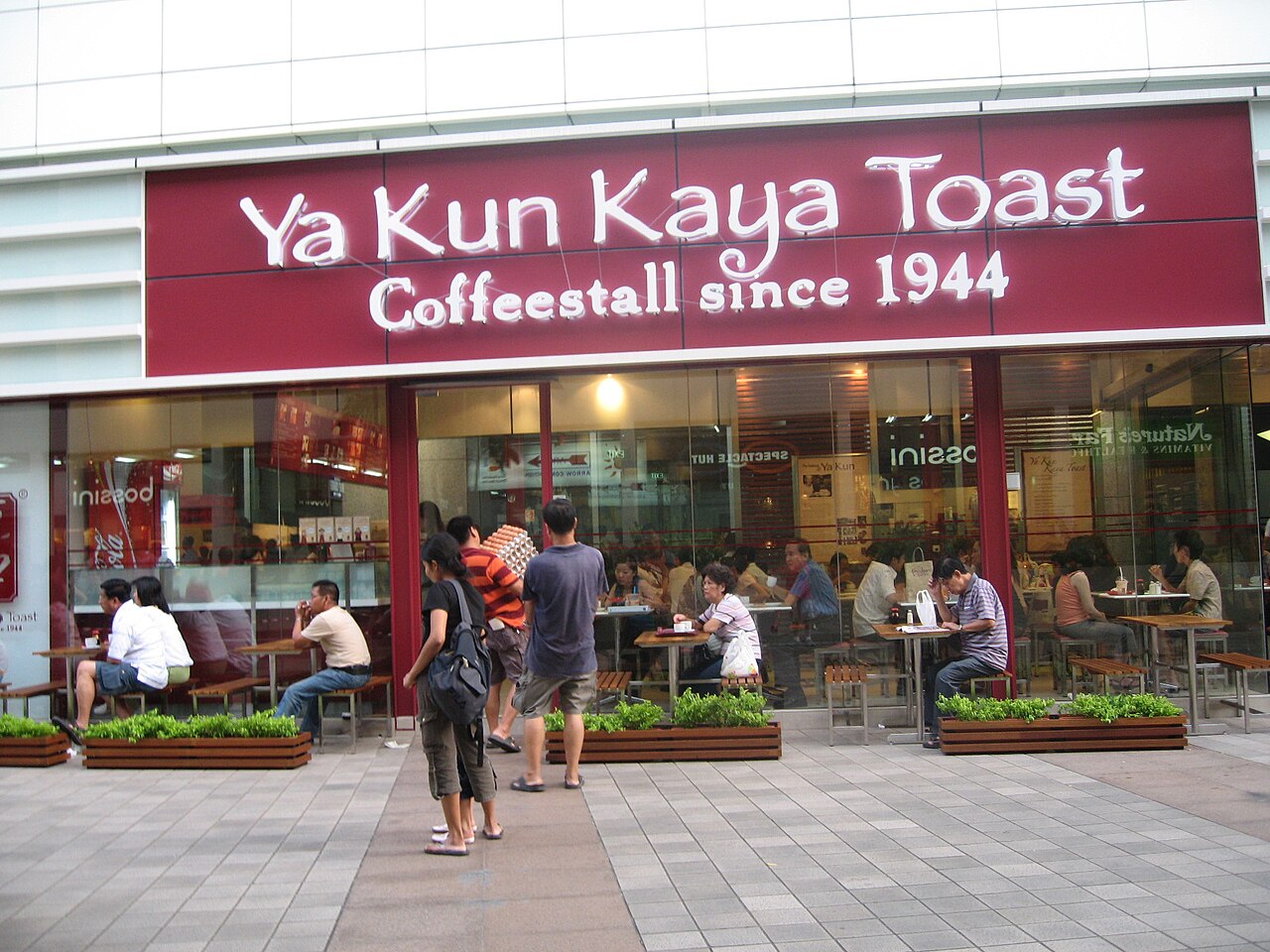
What travelled instead was the ritual. Kaya toast, soft-boiled eggs, kopi: the same set, in the same order, with the same small pleasures, repeated so faithfully that the routine itself became the brand.
When Ya Kun teamed up with Uniqlo on a clothing line in 2025, timed for Singapore’s sixtieth birthday, people could buy clothes that celebrated a breakfast. You do not wear a habit on your chest. You wear something you belong to.
Uniqlo and Ya Kun marked SG60 with clothes that celebrate a breakfast.
That is the lesson from the kopitiam. When personal memory cannot scale, a consistent ritual can stand in for it.
Why do big brands seem to have more loyal customers?
Now the awkward part. Bigger brands have more buyers, and those buyers are also slightly more loyal. Smaller brands are punished twice: fewer customers, and customers who stray a bit more often.
Marketing scientists call this double jeopardy. It was first noticed in the early 1960s in the popularity of Hollywood actors and comic strips, and it has since turned up again and again in what people buy, category after category.
You can see it in any food centre. The drinks stall with the longest queue tends to have the most regulars too. Its regulars are not more virtuous. More people simply have that stall in their routine, so it wins by default.
The practical consequence is blunt. A small brand rarely grows by squeezing extra devotion out of the customers it already has. It grows by getting into more people’s routines, and loyalty rises as a side effect of size.
The pattern also depends on what kind of market you are in. In some categories people keep a repertoire: Uncle Lim drinks kopi downstairs, a sachet at home and whatever his granddaughter buys him at the mall. In others, a mobile plan or a bank account, say, most people subscribe to one brand and stay until something pushes them out.
Researchers who went looking for markets in between found none. Work out which kind you are in before you set anyone a loyalty target.
Do loyalty programmes actually create loyalty?
Mostly, they reward loyalty that already existed. The people keenest to join are the ones already buying, so the scheme discounts goods for customers who would have bought them anyway. Measured against what a brand’s size would predict, the extra loyalty these schemes produce has repeatedly turned out to be small.
That does not make them useless. A good scheme deepens a habit, hands you data and makes switching slightly more annoying. But it is the ribbon on the gift. Not the gift.
Starbucks is instructive. Its programme began in May 2008 as a few perks for registered card holders, such as free refills of brewed coffee and no charge for soy milk or syrups. It grew into one of the best-known schemes in retail, and in 2026 the chief executive was still crediting a reworked Rewards programme, alongside menu and marketing changes, with helping to lift demand. Even the most famous scheme in coffee needs regular repairs.
Singapore, meanwhile, has built a small economy out of points. Singapore Airlines’ KrisFlyer climbs from Elite Silver and Elite Gold to the PPS Club for premium travellers, with miles earned across its Star Alliance partners. FairPrice shoppers collect Linkpoints that can be turned into KrisFlyer miles. Given enough years of weekly groceries, Uncle Lim could in theory fly to Penang.
FairPrice is the more interesting case, though. It began as a union co-operative called Welcome, and its first supermarket, in Toa Payoh, was opened by Prime Minister Lee Kuan Yew on 22 July 1973. Union members and shareholders still receive annual rebates.
FairPrice looks back on 50 years as Singapore’s co-operative supermarket.
For many households, the loyalty rests on a belief that the co-op keeps prices honest. The points sit on top of that belief. They did not create it.
What happens when you change the rules on regulars?
Notice what points have become. A currency. And currencies get devalued.
When Marriott combined its own scheme with Starwood Preferred Guest and Ritz-Carlton Rewards, a merger that took the name Marriott Bonvoy in February 2019, long-standing members went online to complain about tougher status thresholds, thinner perks and points that converted at worse rates. Several said they had already moved their stays to Hilton or IHG.
Those guests had been told, in effect, that the programme was the relationship. So changing its terms felt like a broken promise rather than a business decision.
Uncle Lim would understand. He has absorbed price rises for decades. But the day a new owner made him queue and pay up front like a tourist, he would be gone within the week.
Loyal, or just locked in?
Some loyalty is really a locked door. Ecosystems are the clearest case. Once your photos, messages, watch and laptop all live inside one company’s world, leaving means a weekend of admin and a fair amount of grief.
Apple customers are famously loyal, and many genuinely love the products. Even so, in March 2024 the US Justice Department and a group of states sued the company, arguing among other things that green message bubbles for non-iPhone users and restrictions on how smartwatches work across platforms discourage people from switching.
Whatever the courts decide, the case names a real difference: customers who stay because staying is pleasant, and customers who stay because leaving is painful. The second kind looks identical on a dashboard. It behaves very differently the moment a regulator, a rival or a better offer opens the door.
Effort is the hinge. Making things easy does more for repeat business than trying to dazzle people.
The kopi that arrives before Uncle Lim sits down is about as low-effort as service gets. No app to open, no QR code to scan.
Compare the fast-food app that saves the decent prices for people who download it. Plenty of customers will admit they install it to avoid overpaying, not because they feel anything for the burger. That is a discount dressed up as loyalty.
What does real devotion look like?
Devotion shows up when a brand becomes part of who someone is.
Harley-Davidson understood this when it set up the Harley Owners Group in 1983. Full members must own a Harley, local chapters are sponsored by dealers but run by volunteer riders, and the group has grown past a million members, the largest factory-sponsored riding club in the world. The company provides the excuse. The riders provide the meaning.
Jollibee travels on identity too. Its first overseas outlet opened in Singapore, at Katong Shopping Centre, in 1985, closed a year later and returned in 2013. In the Middle East its main customers are Filipinos working abroad, and its 2018 London opening drew a queue long enough to earn comment in the national press.
For a homesick nurse in Dubai, a plate of Chickenjoy is hardly a menu decision. It is a phone call home that you can eat.
Neither example depends on points. Both rest on belonging, and both are hard to copy, because part of the asset is the customers’ attachment to one another.
So what should a smaller business actually do?
Picture a family bakery in Joo Chiat with a faithful morning crowd and a brand-new stamp card. This is how I would think it through.
- Measure the habit honestly. Track repeat visits and, where you can, how much of a regular’s spending in your category comes to you. Then ask a few regulars one question: if we closed for a month, where would you go?
- Remove effort before adding perks. Remember the usual order, keep the queue moving and make paying painless.
- Recognise people, not transactions. A name remembered beats a free tenth bun.
- Never change the rules quietly. If a benefit has to go, tell your regulars first, and tell them why.
- Keep winning new customers. Loyalty follows size, so the stamp card cannot replace reach.
- Protect the ritual. Whatever your version of kaya toast and soft-boiled eggs is, keep it steady enough that people could order it half asleep.
Uncle Lim would recognise every point on that list. He just would not call it strategy.
Before the kopi gets cold
What is the difference between brand loyalty and customer loyalty?
Brand loyalty is attachment to a brand name and what it stands for, wherever it is sold. Customer loyalty is broader and can attach to a particular shop, person or service, which is why regulars sometimes follow a favourite barista to a new café.
Do loyalty programmes increase brand loyalty?
Only modestly. They mainly reward customers who were loyal already, though a well-run scheme can strengthen habits and give a business useful data on its regulars.
How do you measure brand loyalty?
Common measures include repeat purchase rate, share of category spending, retention over time and willingness to recommend. Pair behaviour with attitude, because frequent buying without real preference is habit rather than loyalty.
The stall downstairs won Uncle Lim one cup at a time, so if you want regulars who would follow you across the road, start with the moments that make them feel known.






