Every category has a dominant species. It looks a certain way, prices a certain way, makes the same promises in the same tone, and survives by never drawing attention to itself. Most new brands are born looking exactly like it. This guide is for the ones that would rather not.
Brand differentiation is the deliberate choice of a meaningful way in which a brand serves a specific buyer better than the alternatives, built into the product or business so that buyers notice it and rivals cannot cheaply copy it.
Notice what it leaves out. Nothing about being unique. Nothing about clever taglines. The work sits in the choosing and the building.
A warning label on the title
“Different or dead” is the sort of line printed on conference lanyards. It is also only half true, and an honest field guide should say so before you set out.
Marketing has argued about this for years. One camp holds that a brand must give buyers a clear reason to pick it, or be ground down into a commodity.
The other camp brings awkward evidence. Ask a brand’s own regular customers whether it is unique, and most will look at you blankly before carrying on buying it. In plain categories such as rice, bottled water and petrol, what people believe about a brand tracks its size far more closely than any special quality it claims.
Its prescription is distinctiveness: be instantly recognisable, easy to find, easy to remember.
Both camps are right about something. Absolute uniqueness is rare and short-lived; whatever you invent, a rival can imitate by next quarter. Relative advantage is another matter. Having more of something buyers value than the alternatives do is achievable, and it lasts when it is wired into how the business runs.
None of it pays, though, if nobody can tell at a glance that it is you.
So the working rule for this guide is simple. Differentiation gives buyers a reason. Distinctiveness gives them a recognition cue. Pack both.
Is differentiation dead, or just misunderstood?
Misunderstood, mostly. The version that died was the fantasy of a unique selling proposition that lives in a creative brief and somehow transforms an ordinary product.
The version that survives is less glamorous. Choose the buyer you are for. Choose the one or two attributes that matter most to that buyer. Then be measurably better at those than anyone nearby, in ways that cost you money, time or nerve.
That last condition is the field mark to look for. A difference that costs you nothing will cost your competitors nothing to copy.
Most guides describe one lever, the product. In the wild there are at least eight, and the healthiest brands pull two or three at once, so that the advantage becomes a system rather than a feature.
Levers in what you sell and what you charge
Product: take something away
Cirque du Soleil, founded in 1984 in Baie-Saint-Paul, Quebec, by two former street performers, did not try to build a better circus. It removed what circuses competed on: performing animals, star acts, three rings. It added what theatre audiences valued, including a storyline, original music, lighting and proper seats.
Then it charged theatre prices. Removal was the strategy. The audience it won was theatre-going adults, not children.
Field note: list everything your category does by default, then ask which of those things your best buyers would not miss.
Price and model: change who gets paid
Warby Parker went live in February 2010, started by four Wharton students who thought glasses cost far too much. Frames were $95.
Customers could try five pairs at home before buying, and each pair sold was matched by a pair given to someone who could not afford one. Demand swamped the company within days. It paused the home try-on programme and built a waiting list of 20,000.
The price was the headline. The model underneath was the advantage: selling direct removed a layer of margin, and the try-on box removed the main reason people hesitated to buy glasses online.
Levers in how you reach and serve people
Channel: start where incumbents are not
Gojek began as a call centre dispatching around 20 ojek riders, the motorcycle taxis Indonesians already used. When its app launched in January 2015 it built on two wheels rather than four, then stacked food delivery and payments onto the same app.
In May 2021 it merged with Tokopedia to form GoTo. The difference was never a feature list. It was a channel built around how Jakarta already moved.
Service: fund what nobody else budgets for
Haidilao, the hot pot chain founded in Sichuan in 1994, treats the queue as part of the meal. Waiting diners have been offered snacks, board games and free manicures. Seated diners get aprons, hairbands and plastic sleeves for their phones.
None of it is hard to copy in principle. In practice it demands staffing levels and a staff culture that most restaurant groups will not pay for, which is exactly why it holds.
Field note: the service ideas competitors dismiss as “too expensive to run” are often the only ones worth testing.
Levers in story, fit, taste and restraint
Experience and story: use a real past
Bacha Coffee traces its roots to a coffee room opened in 1910 inside the Dar el Bacha palace in Marrakech. The room reopened in 2019, and that October the brand opened its first coffee room outside Morocco, at ION Orchard, under a Singapore-based luxury food group.
It offers more than 200 Arabica coffees, poured from golden gooseneck pots, with chantilly cream offered alongside. In a city with coffee on every corner, it competes on ceremony, provenance and choice rather than speed or price. The heritage is genuine, which matters. Invented history gets found out.
Fit: design for the body in front of you
Love, Bonito started in 2005 as BonitoChico, a blogshop selling pre-loved clothes, and took its current name in 2010. Its founders, Rachel Lim, Viola Tan and Velda Tan, noticed that international labels rarely fitted petite Asian women, so they designed for Asian sizing and a tropical climate. A narrow difference. Also a defensible one, because a global label cutting for every market at once is unlikely to optimise for one region’s bodies and weather.
Restraint: make absence the signature
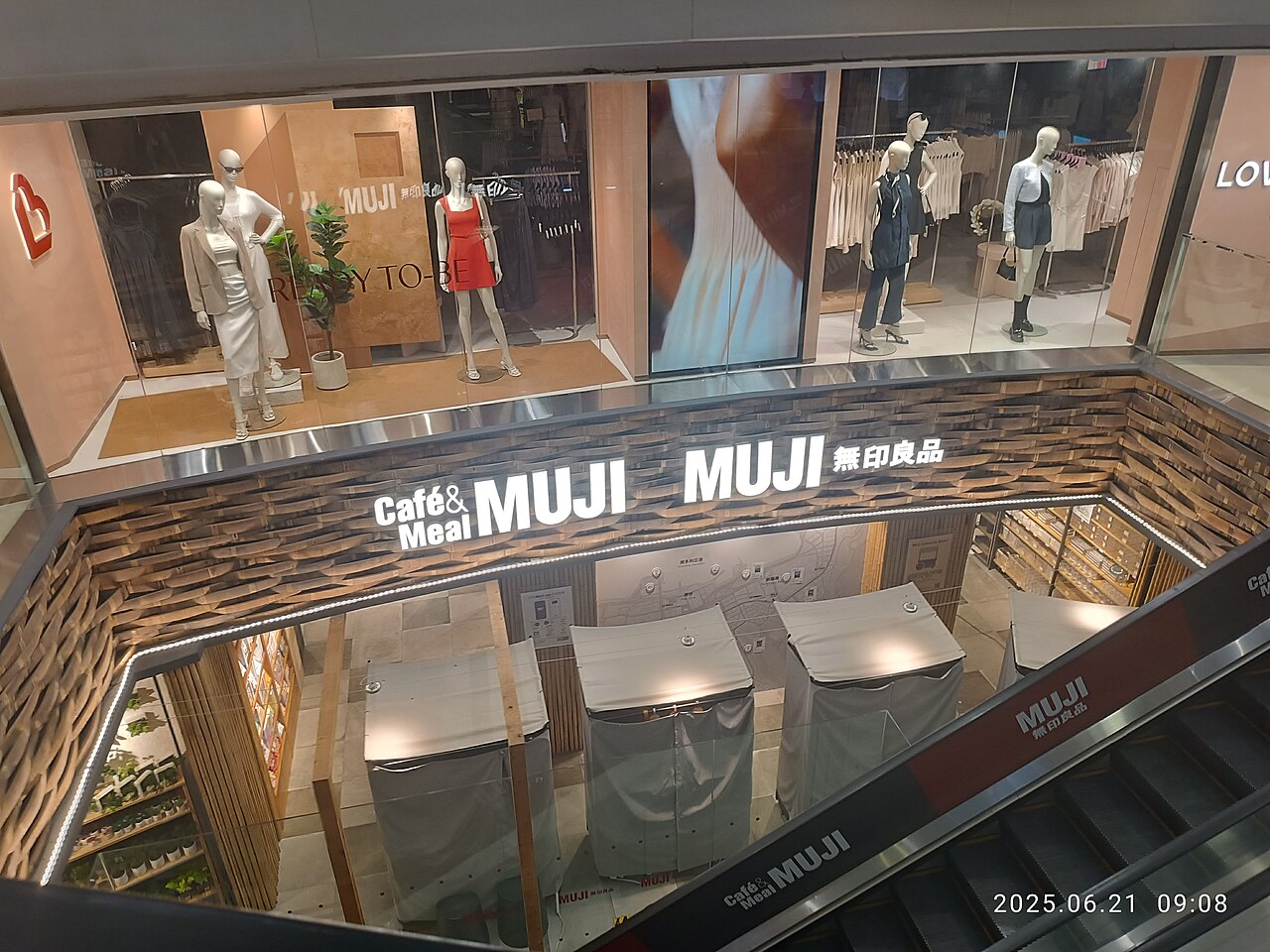
Muji began in 1980 as a line of 40 products for the Seiyu supermarket chain, under a Japanese name usually rendered as “no-brand quality goods”. In categories that competed with logos, it competed by removing them. Lovely paradox: the brand stood out by refusing to decorate itself.
Local flavour: bottle what the neighbourhood already loves
Irvin Gunawan opened a Singapore seafood restaurant in 2009, known for salted egg crab. In 2014 he began coating potato chips and fish skin in the same sauce, first as a side dish, then packed for customers who wanted to take some home. Pop-ups at Raffles Place drew long queues in 2016, the first IRVINS shop opened at VivoCity that year, and the snacks now sell in 15 markets. The difference was a flavour Singaporeans already craved, made portable.
How do you differentiate when you sell the same thing as everyone else?
Small-business owners ask this more than any other question, usually followed by “we resell the same stock” or “our service is basically a commodity”. The answer starts with a correction. The product is rarely the only thing a customer buys. They also buy certainty, convenience, the feeling of dealing with you, and the comfort of having chosen sensibly.
Picture a three-van aircon servicing firm in Woodlands. Every competitor offers the same chemical wash at much the same price. This firm commits to a two-hour arrival window with a message when the van is 20 minutes out, sends before-and-after photos of every unit, and redoes any job free within 30 days.
None of it is patentable. All of it is hard for a careless rival to sustain, because it needs scheduling discipline and a willingness to absorb rework.
A year later its reviews repeat one sentence: they turn up when they say. That sentence is the differentiation.
Field marks of a false difference
Before you commit, check your candidate against these signs that it is no difference at all.
Dollar Shave Club’s $4,500 launch film made the brand famous overnight, but fame is not a moat.
- Everyone claims it. “Quality”, “passion”, “customer-centric” and “innovative” are table stakes wearing a strategy costume. If a competitor could paste your claim onto their website without lying, it is not yours.
- Buyers do not weigh it. A difference that never affects the choice is trivia. Ask recent customers why they nearly went elsewhere.
- It lives only in the advertising. Dollar Shave Club’s 2012 launch video, which its founder said cost $4,500 to make, turned the brand famous almost overnight, and Unilever bought the company in 2016 for a reported $1 billion. A razor delivered by post is easy to imitate, though, and rivals such as Harry’s arrived with similar offers. By 2023 the brand was also on Walmart and Target shelves, and Unilever had sold a majority stake to a private equity firm. Fame is not a moat.
- It cannot survive a price cut. If a rival dropping 10 per cent erases your reason to exist, you were only ever differentiated on price.
- It needs a slide to explain. If you cannot say it in one sentence, you have not chosen yet.
Distinctiveness: how buyers spot you in the wild
Differentiation persuades people who are actively weighing you up. Most of the time, nobody is. They are scrolling, walking past, half-listening. In those moments the winners are the brands recognised in a fraction of a second, before anyone reads a word.
That is the job of distinctive assets: colours, shapes, characters, sounds and pack forms, used consistently enough to become shorthand for the brand. IRVINS has its black duck-egg mascot, Irv, and the line “Dangerously Addictive”. Bacha Coffee has its golden pots. Muji has its conspicuous lack of logos.
A good asset passes two tests. Buyers link it to you, and they do not link it to anyone else. Logos tend to pass early. Colours, fonts and slogans usually take years of disciplined, unfussy use before they belong to anybody.
The trap is treating distinctiveness as a replacement for a reason. A beautifully recognisable brand with nothing worth recognising is a well-designed exit sign.
A field method in six steps
- Map the habitat. Put competitors’ websites, packs, prices and claims on one wall. Circle every convention: the colour everyone uses, the promise everyone makes.
- Interview buyers, not the board. Ask recent customers and lost prospects what nearly changed their minds. Their words are your raw material.
- Choose one attribute to own. Pick something buyers value that you can be measurably better at, and visibly so.
- Make it expensive. Build it into hiring, pricing, process and product, so that copying it would mean rebuilding a business.
- Give it a flag. Develop a small set of distinctive assets and use them everywhere, without tinkering, for years.
- Track it. Every six months, check whether buyers link you with the attribute, and whether they can spot you with your name covered.
Questions from the field
What is the difference between brand differentiation and brand positioning?
Positioning is the place a brand aims to occupy in a buyer’s mind relative to competitors. Differentiation is the concrete advantage that earns that place. Positioning without differentiation is merely a claim.
What is the difference between differentiation and distinctiveness?
Differentiation gives buyers a reason to prefer a brand. Distinctiveness helps them recognise it quickly through consistent cues such as colour, shape, characters or sound, and strong brands invest in both.
Can a small business differentiate on price?
Only if its costs are structurally lower than its rivals’, through a different model, channel or scale. Otherwise a price cut is a temporary tactic that a larger competitor can match and outlast.
If your brand still looks like the dominant species in its category, the next expedition starts with our brand strategy team.






